Wall Mount Necklace Holder: 2026 Budget & Value Assessment
Discover the best wall mount necklace holder options for 2026. We assess budget vs. value, comparing wood, acrylic, and metal organizers.

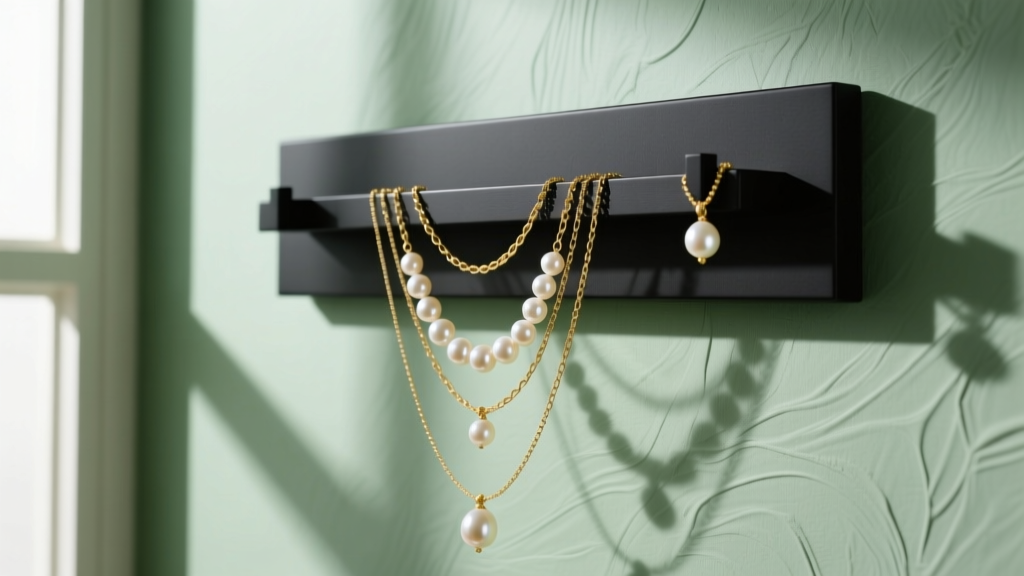
When building a curated necklace collection, the focus is almost entirely on the jewelry itself—karat weights, gemstone clarity, and chain links. Yet, the infrastructure used to store these pieces is often an afterthought. In 2026, the market for jewelry organization has exploded, but the disparity between a $12 impulse buy and a $60 precision-crafted organizer is vast. A poor storage solution doesn't just look cluttered; it actively degrades your jewelry through galvanic corrosion, micro-scratches, and catastrophic hardware failures.
This comprehensive budget and value assessment breaks down the true cost of wall-mounted necklace storage. We evaluate material science, structural integrity, and hardware limitations to help you maximize your storage ROI while protecting your most delicate pendants and heavy statement chains.
The Hidden Costs of Cheap Jewelry Storage
The allure of ultra-budget wall mount necklace holders is obvious. For $10 to $15, you can purchase a multi-tiered rack that promises to hold dozens of chains. However, these budget options introduce hidden costs that manifest over time.
Galvanic Corrosion and Tarnish Transfer
Most budget holders utilize cheap, nickel-plated iron hooks. In environments with fluctuating humidity, the thin plating wears away, exposing the reactive iron beneath. When sterling silver or copper-alloy chains rest against exposed iron, a galvanic reaction occurs. This accelerates tarnishing and can leave permanent black oxidation spots on your delicate paperclip or cable chains. According to jewelry care guidelines outlined by The Spruce, storing precious metals in climate-stable, non-reactive environments is critical for preventing irreversible surface damage.
The Micro-Scratch Hazard
Budget metal hooks are rarely polished or tumbled. They often feature microscopic burrs at the base where the wire is cut and bent. Dragging a high-polish 18k gold vermeil pendant across an unpolished iron burr will result in micro-scratches that dull the finish over time. Premium holders solve this by using solid brass, gold-plated, or smoothly finished hardwood hooks.
Material Science: Wood, Acrylic, and Metal Evaluated
The base material of your wall mount necklace holder dictates its lifespan, aesthetic integration, and weight-bearing capabilities. Here is how the three dominant materials compare in the 2026 market.
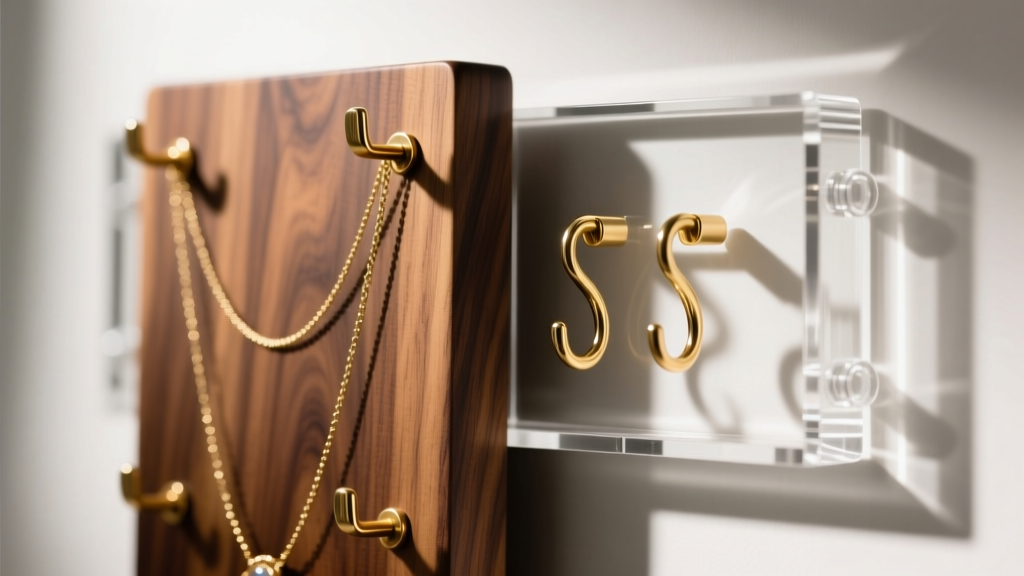
Wood: MDF vs. Solid Hardwoods
- MDF (Medium-Density Fiberboard): Priced between $10 and $20, MDF is heavy but highly susceptible to moisture. In humid bathrooms or coastal bedrooms, MDF swells, causing the screw anchors to loosen and the finish to peel. Furthermore, MDF off-gasses trace amounts of formaldehyde, which is less than ideal for enclosed vanity spaces.
- Solid Hardwoods (Walnut, Oak, Maple): Priced from $40 to $85, solid hardwoods offer exceptional dimensional stability. A solid walnut board will not warp under the asymmetric weight of heavy gemstone pendants, ensuring the board remains perfectly flush against the wall for decades.
Acrylic: Extruded vs. Cast
Acrylic organizers offer a modern, invisible look that lets the jewelry take center stage. However, not all acrylic is created equal.
- Extruded Acrylic ($12 - $25): Manufactured by pushing molten plastic through a die, extruded acrylic has a lower molecular weight. It is prone to micro-fractures around the hook holes and will yellow when exposed to direct UV sunlight over 12 to 18 months.
- Cast Acrylic ($35 - $60): Poured into molds, cast acrylic features a continuous polymer chain. It is UV-stable, optically clearer, and possesses a significantly higher tensile strength, allowing it to support heavy layered chokers without cracking.
Metal: Plated Steel vs. Powder-Coated & Solid Brass
Metal wall mounts are the workhorses of jewelry storage. Avoid cheap electroplated steel, which will inevitably rust at the weld points. Instead, look for powder-coated steel (which provides a thick, chip-resistant polymer skin) or solid brass, which develops a beautiful, protective patina over time.
Hardware and Weight Limits: Preventing Catastrophic Failure
The most overlooked aspect of a wall mount necklace holder is the mounting hardware. A heavy statement necklace collection can easily weigh 4 to 6 pounds. While this static weight seems manageable, the dynamic load of yanking a tangled chain off a hook can spike the downward force to over 15 pounds.
Most budget organizers include #4 or #6 screws paired with 1-inch plastic ribbed drywall anchors. These anchors have a sheer weight limit of roughly 12 pounds in standard 1/2-inch drywall, making them a catastrophic failure point for heavy jewelry collections.
Choosing the Right Anchors
To ensure your organizer stays on the wall, you must upgrade the hardware. As detailed in the structural guides by The Family Handyman, standard plastic anchors are insufficient for dynamic pull forces.
- For Light Collections (Under 2 lbs): Standard plastic ribbed anchors or heavy-duty adhesive strips (like 3M Command Strips) are sufficient, provided the wall is painted with flat or eggshell finish, not high-gloss.
- For Medium Collections (2 to 5 lbs): Use self-drilling threaded zinc anchors or strap toggles, which distribute the weight across a wider area behind the drywall.
- For Heavy Statement Pieces (5+ lbs): You must use #8 or #10 wood screws driven directly into wall studs, or employ heavy-duty toggle bolts (butterfly anchors) that lock securely behind the drywall.
Hook Spacing and Chain Tangling
Value isn't just about the material; it is about functional design. A common flaw in budget wall mount necklace holders is inadequate hook spacing. When hooks are placed less than 1.5 inches apart, delicate chains will inevitably overlap and tangle, especially if they feature textured links like rope or popcorn chains.
The Ideal Spacing Matrix:
- Delicate Chains (Paperclip, Cable, Box): Minimum 1.5 inches between hooks.
- Layered Chokers and Collars: Minimum 2.5 inches between hooks to prevent clasp entanglement.
- Heavy Pendants: Minimum 3.0 inches to allow the pendant to hang freely without scratching adjacent pieces.
2026 Value Assessment Comparison Chart
To help you navigate the market, we have categorized the current landscape of wall mount necklace holders into three distinct tiers based on price, material integrity, and hardware quality.
| Tier | Price Range | Base Material | Hook Material | Included Hardware | Estimated Lifespan |
|---|---|---|---|---|---|
| Budget | $10 - $18 | MDF or Extruded Acrylic | Nickel-Plated Iron | #4 Screws, Plastic Ribbed Anchors | 1 - 2 Years |
| Mid-Range | $25 - $45 | Bamboo or Powder-Coated Steel | Polished Steel or Brass-Plated | #6 Screws, Threaded Zinc Anchors | 4 - 6 Years |
| Premium | $55 - $95+ | Solid Walnut/Oak or Cast Acrylic | Solid Brass or Gold-Vermeil | #8 Screws, Heavy-Duty Toggle Bolts | Lifetime |
Installation Best Practices for Drywall
Even a premium solid brass organizer will fail if installed poorly. Repairing torn drywall costs significantly more than the organizer itself. Follow these steps for a secure, damage-free installation:
- Locate the Studs: Use a magnetic or electronic stud finder. If you can align at least one side of a wide wooden board with a wall stud, the structural integrity increases exponentially.
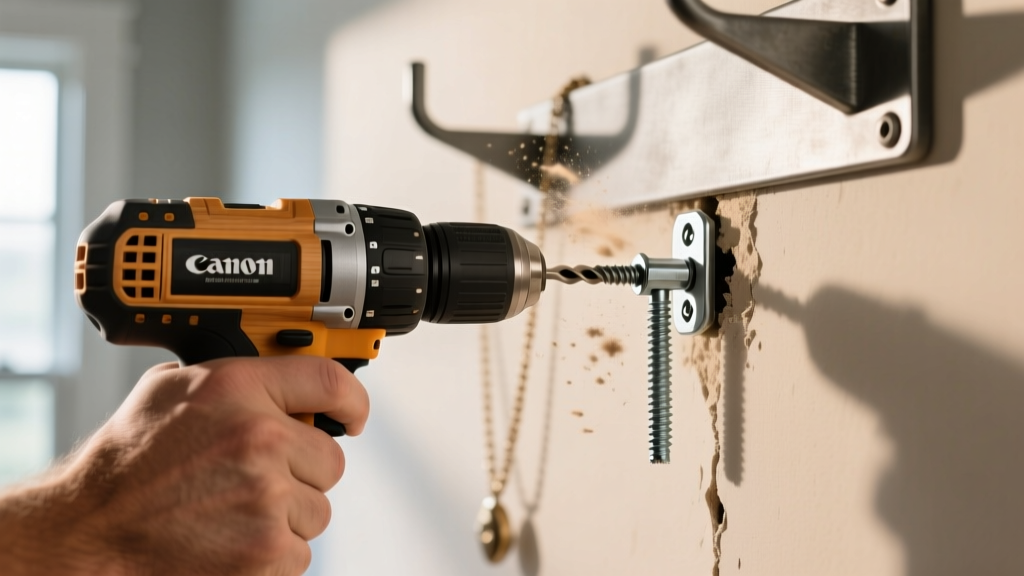
- Pre-Drill Pilot Holes: Never force a screw directly into drywall or wood without a pilot hole. For drywall, use a 1/8-inch bit; for hardwood organizers, use a 3/32-inch bit to prevent the wood from splitting.
- Leveling: Use a torpedo level. An unlevel necklace holder causes chains to slide toward the lowest hook, resulting in clustered tangles and uneven weight distribution.
Final Verdict: Where to Spend and Where to Save
When evaluating a wall mount necklace holder through a budget and value lens, the mid-range tier offers the highest immediate ROI for the average collector. A $35 powder-coated steel or bamboo organizer with upgraded toggle bolts provides 90% of the functionality of a premium solid walnut piece at half the cost.
However, if your collection consists primarily of high-karat gold, untreated sterling silver, or heirloom gemstone pendants, the premium tier is a non-negotiable investment. The cost of replacing a single tarnished or scratched chain far exceeds the $60 price difference of a solid brass and cast acrylic storage system. Ultimately, true value in jewelry storage is measured not just by the price of the organizer, but by the preservation of the treasures it holds.


