The Beginner's Guide to Buying a Watermelon Tourmaline Necklace
Discover how to choose, style, and care for a watermelon tourmaline necklace. Learn about color zoning, pricing tiers, and durability in our guide.

Understanding the Watermelon Tourmaline Phenomenon
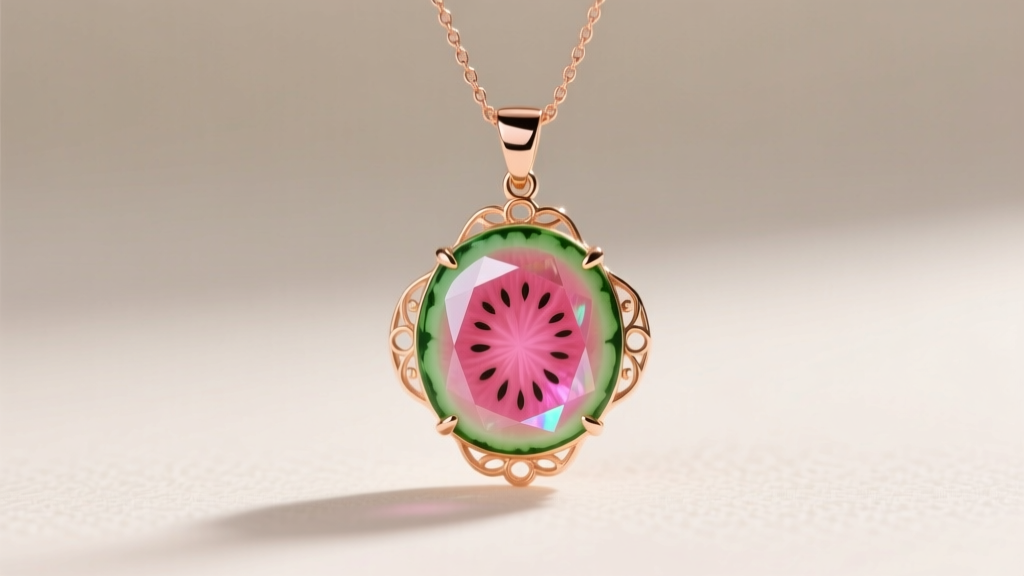
If you are stepping into the world of colored gemstones, a watermelon tourmaline necklace is one of the most striking and conversational pieces you can add to your collection. Unlike single-color gems, watermelon tourmaline is a bi-color variety of the mineral elbaite. According to the Mindat.org mineral database, this specific color zoning occurs within a single crystal as environmental conditions and chemical compositions shift during its formation.
The vivid pink center is caused by manganese impurities, while the outer green "rind" is the result of iron and titanium. Often, you will notice a distinct, colorless band separating the two hues. This white barrier is known as achroite. As we move through 2026, the jewelry market has seen a massive surge in demand for unheated, ethically sourced elbaite from Madagascar and Brazil, making it crucial for beginners to understand exactly what they are buying before investing in a pendant.
Decoding the Cut: Slices vs. Faceted Stones
When shopping for a watermelon tourmaline necklace, the lapidary cut dictates the entire personality of the piece. Because the color zoning forms in concentric rings or distinct layers within the hexagonal crystal, cutters must make strategic decisions to maximize the "watermelon" effect.
Cabochon and Flat Slices
Slicing the crystal perpendicular to its c-axis yields a cross-section that perfectly mimics a slice of actual watermelon. These are typically polished into flat discs or slightly domed cabochons. This cut is highly favored for bohemian, earthy, or organic jewelry designs. However, flat slices can be prone to chipping at the edges if not properly protected by a bezel setting.
Faceted Bi-Color Gems
For a more formal or traditional look, lapidaries will cut the crystal parallel to the color zones, usually into emerald, pear, or oval shapes. This allows the stone to display a split-color effect (e.g., half pink, half green) rather than a concentric ring. Faceting requires higher clarity material, as the flat planes will amplify any internal inclusions.
Evaluating Clarity and Inclusions
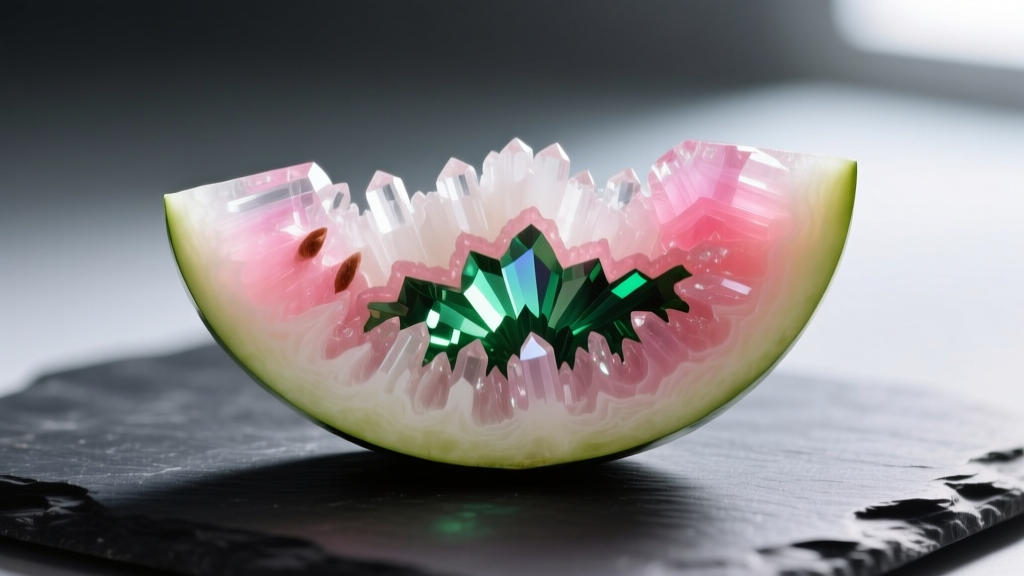
The Gemological Institute of America (GIA) classifies tourmaline as a Type II or Type III gemstone, meaning inclusions are not just common—they are expected. When evaluating a watermelon tourmaline pendant, you must differentiate between acceptable internal characteristics and structural threats.
- Acceptable Inclusions: Liquid-filled cavities, thread-like hollow tubes, and minor color zoning irregularities are standard. In fact, these "fingerprints" prove the stone is natural and untreated.
- Dealbreakers: Avoid stones with surface-reaching fractures, especially near the girdle or where the prongs will sit. Tourmaline has a Mohs hardness of 7 to 7.5, making it durable enough for necklaces but vulnerable to chipping if a fracture is exposed to pressure.
Metals, Chains, and Styling Frameworks
The metal you choose for your necklace setting will dramatically alter how the bi-color stone is perceived. Here is a practical framework for pairing metals and chains with watermelon tourmaline:
Metal Pairings
- 14k Rose Gold: The copper alloy in rose gold harmonizes beautifully with the manganese-rich pink core, making the center appear more saturated and vibrant.
- 18k Yellow Gold: Provides a warm, vintage contrast that bridges the gap between the pink and green zones, ideal for retro-inspired settings.
- Platinum or White Gold: Creates a stark, high-contrast backdrop that makes both the green and pink hues pop. Best for modern, minimalist bezel settings.
Chain Selection
Because watermelon tourmaline pendants often carry significant visual weight due to their dual colors, avoid overly delicate chains (under 0.8mm) which can look unbalanced. Opt for a 1.0mm to 1.5mm box chain or cable chain. A 16-inch choker length works best for smaller, delicate slices, while an 18-inch princess length allows larger faceted pendants to rest perfectly in the V of the neckline, drawing the eye downward.
Watermelon Tourmaline Necklace Pricing Matrix
Pricing in the 2026 market varies wildly based on origin, clarity, and the distinctness of the color barrier. Use this table to benchmark quotes from jewelers and ensure you are paying fair market value.
| Quality Tier | Stone Characteristics | Typical Setting & Metal | Estimated Price Range |
|---|---|---|---|
| Commercial | Opaque, heavily included, muddy color zones, possible dye treatment | Sterling Silver or Gold-Plated Brass | $45 – $150 |
| Fine | Translucent to transparent, distinct pink/green bands, minor inclusions | 14k Solid Gold (Prong or Bezel) | $300 – $900 |
| Collector / Gem | Eye-clean, vivid saturation, sharp achroite barrier, custom precision cut | 18k Gold or Platinum, Diamond Accents | $1,500 – $5,000+ |
Spotting Fakes and Assembled Stones
As the popularity of bi-color gems has risen, so has the prevalence of imitations. The most common fake you will encounter is the glass doublet or triplet. Unscrupulous sellers will glue a piece of pink glass to a piece of green glass, sometimes inserting a colorless layer in between to mimic the achroite barrier.
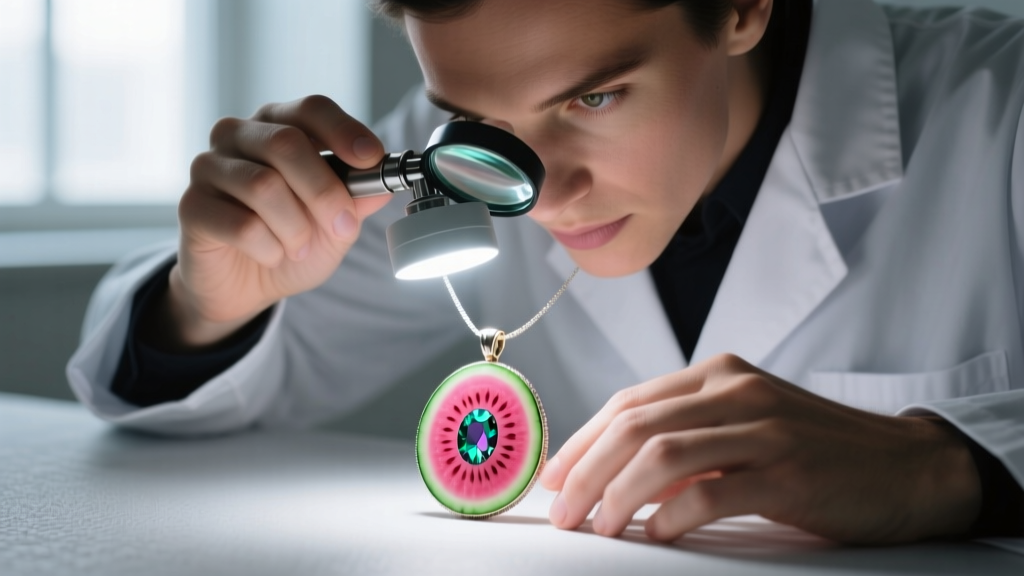
How to spot it: Use a 10x jeweler's loupe and examine the stone from the side (the girdle). If you see a perfectly flat, unnaturally straight line with tiny air bubbles trapped along the seam, you are looking at an assembled stone. Natural watermelon tourmaline features a slightly uneven, organic transition between colors, often with microscopic color bleed.
Durability, Pyroelectricity, and Daily Care
Tourmaline possesses a unique physical property: it is pyroelectric and piezoelectric. This means that when the stone is warmed by body heat or friction, it develops a slight electrical charge that attracts dust and lint. If you notice your pendant looking perpetually dusty, this is the culprit.
The Cleaning Protocol
CRITICAL WARNING: Never place a watermelon tourmaline necklace in an ultrasonic cleaner or expose it to steam. The high-frequency vibrations and sudden temperature changes will easily shatter the stone along its internal stress fractures or liquid inclusion planes.
To clean your necklace safely, mix a few drops of mild, phosphate-free dish soap in lukewarm water. Use a baby-soft toothbrush to gently sweep the back of the stone (the pavilion), where pyroelectric dust accumulation is worst. Rinse with distilled water to prevent hard water spots, and dry immediately with a microfiber cloth. Always store your necklace in a soft pouch separate from diamonds or sapphires, which sit higher on the Mohs scale and can easily scratch the tourmaline's polished surface.


