Watermelon Necklace Value Guide 2026: Price & Quality
Discover the true value of a watermelon necklace in 2026. We break down watermelon tourmaline pricing, color zoning, treatments, and setting durability.

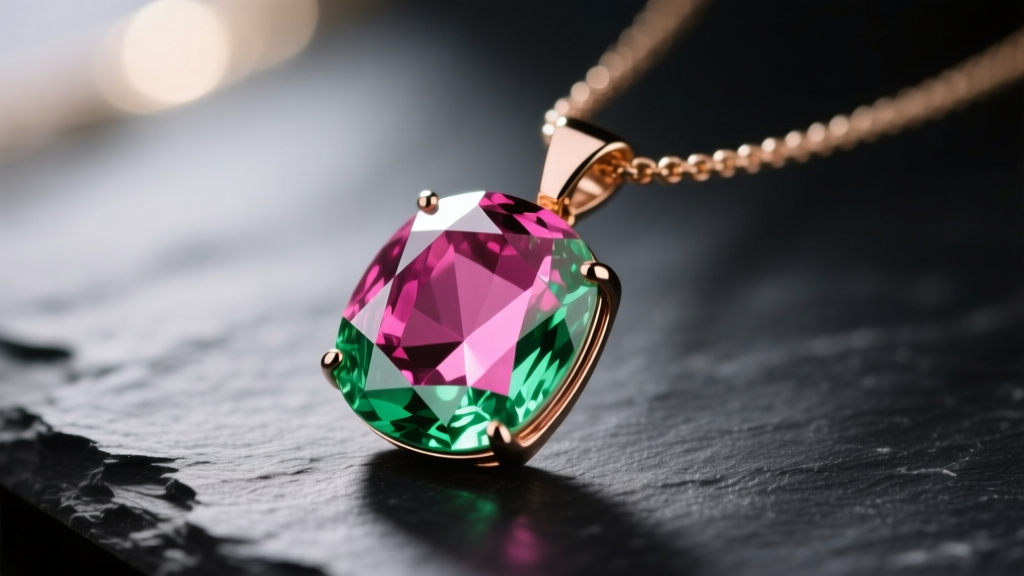
When shoppers search for a watermelon necklace, they are typically met with two vastly different categories: mass-produced enamel novelty pendants and genuine, gem-grade watermelon tourmaline jewelry. As a senior gemological appraiser, my focus is strictly on the latter. Watermelon tourmaline is one of the most visually striking and geologically fascinating gemstones on the market, characterized by its vibrant pink core and distinct green outer rind. However, assessing the true budget and value of a watermelon tourmaline necklace requires looking far beyond its playful color palette. In 2026, with the rising scarcity of high-contrast bi-color pegmatite specimens, understanding the nuances of color zoning, clarity enhancements, and structural durability is essential before making a purchase.
The Anatomy of Value: What Makes a Watermelon Tourmaline Necklace Worth Buying?
Unlike diamonds, which are graded on a rigid, universally standardized scale, colored gemstones rely heavily on visual impact and geological rarity. Watermelon tourmaline forms in pegmatite veins where the chemical composition of the crystallizing solution changes mid-growth. According to the Gemological Institute of America (GIA), the pink center is colored by manganese, while the green exterior is colored by iron and titanium. The value of your necklace hinges entirely on how sharply and beautifully this transition occurs.
Color Zoning: The Contrast Imperative
The single most critical value driver for a watermelon tourmaline pendant is the distinctness of the color boundary. In low-grade commercial stones, the pink and green bleed into a murky, brownish-gray transitional zone. In premium gem-grade stones, the boundary is razor-sharp. Furthermore, the presence of a distinct, translucent white band between the pink and green—acting as the literal "rind" of the watermelon—commands a 20% to 35% premium in the 2026 wholesale market due to its aesthetic authenticity and rarity.
cut and Orientation: Slices vs. Faceted Stones
To preserve the bi-color effect, lapidaries typically cut watermelon tourmaline into flat slices or cabochons, displaying the concentric color rings. Faceted watermelon tourmaline is exceptionally rare; it requires a massive, flawless crystal and results in significant weight loss. If you encounter a fully faceted watermelon necklace, expect the price per carat to triple compared to a standard slice, provided the color zoning remains visible through the pavilion facets.
2026 Market Pricing: From Commercial Slices to Museum-Grade Gems
Budgeting for a genuine watermelon tourmaline necklace requires an understanding of the current pricing matrix. Prices fluctuate based on the translucency of the stone, the saturation of the pink (rubellite-like pinks are most prized), and the overall carat weight. Below is a comprehensive breakdown of what you should expect to pay for the pendant alone (excluding the precious metal chain and setting) in the current market.
| Quality Grade | Visual Characteristics | Clarity & Translucency | Estimated Price Per Carat (2026) | Total Pendant Budget (5-15ct) |
|---|---|---|---|---|
| Commercial | Muddy colors, thick gray transition zone, opaque | Opaque to barely translucent | $15 - $40 | $75 - $600 |
| Fine | Good pink/green contrast, slight white rind visible | Translucent with visible inclusions | $80 - $150 | $400 - $2,250 |
| Extra-Fine (Gem) | Razor-sharp zoning, vivid neon pink, deep chrome green | Highly translucent to transparent, eye-clean | $250 - $600+ | $1,250 - $9,000+ |
Note: Custom 14k or 18k gold bezel settings will add an additional $400 to $1,200 to the final necklace cost, depending on the complexity of the metalwork and the presence of diamond melee accents.
Gemological Red Flags: Treatments, Imitations, and Synthetics
The vibrant colors of a watermelon necklace make it a prime target for imitation and undisclosed treatments. When conducting a value assessment, you must be vigilant against the following market deceptions:
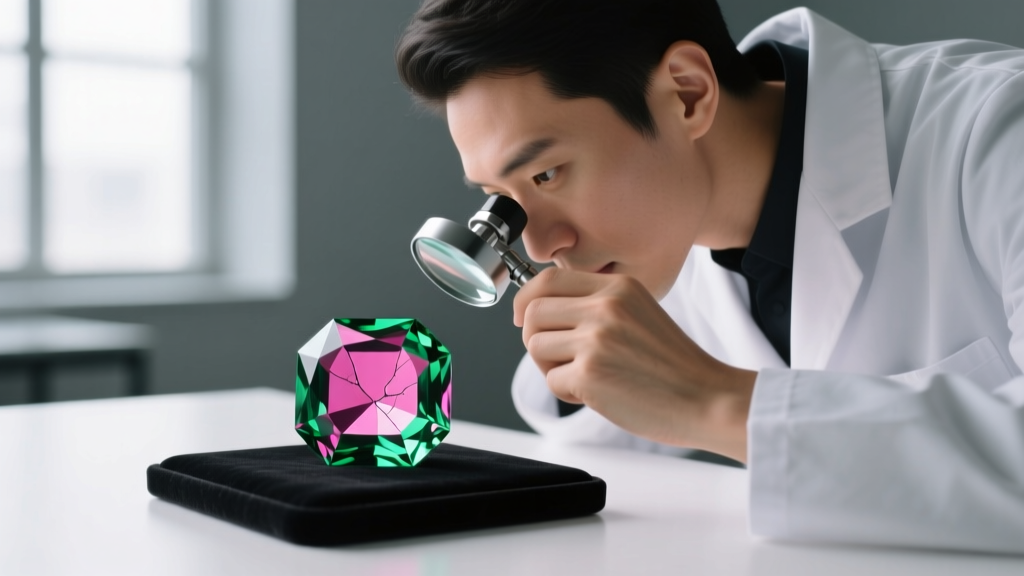
- Resin Clarity Enhancement: Tourmaline is a Type II and III gemstone, meaning it is heavily included and prone to internal fracturing. To improve apparent clarity and stability, lower-grade slices are often vacuum-impregnated with colorless or lightly tinted epoxy resins. While acceptable if disclosed, resin-filled stones should trade at a 40% discount compared to untreated stones. You can spot heavy resin filling by observing a flash effect under magnification or using a hot point test (which emits a plastic odor).
- Assembled Doublets and Triplets: Unscrupulous sellers sometimes glue a thin slice of low-grade pink tourmaline to a piece of green glass or synthetic spinel to mimic the watermelon effect. Always inspect the girdle (the edge of the stone) under 10x magnification. A perfectly straight, flat line with tiny air bubbles trapped along the seam is a dead giveaway of an assembled stone.
- Glass and Enamel Imitations: While enamel watermelon pendants are a fun, budget-friendly fashion trend (usually priced under $50), they hold zero gemological value. Glass imitations will have a lower refractive index (around 1.50) compared to genuine tourmaline (1.62 to 1.64) and will often contain spherical gas bubbles and swirl marks, as noted by mineralogical databases like Mindat.org.
Setting and Durability: Why Your Necklace Might Crack
One of the most frequent failure modes I see in jewelry repair shops involves cracked watermelon tourmaline pendants. Tourmaline ranks between 7 and 7.5 on the Mohs hardness scale, making it suitable for everyday necklace wear. However, hardness (scratch resistance) is not the same as toughness (resistance to breaking).
Watermelon tourmaline is notorious for internal tension and liquid-filled capillary fractures formed during its rapid pegmatite growth. Furthermore, tourmaline exhibits strong pleochroism and is highly sensitive to thermal shock. Exposing the stone to sudden temperature changes—such as stepping out of a hot sauna into winter air, or wearing it in a hot tub—can cause the internal liquid inclusions to expand and shatter the stone from the inside out.
"Never allow a jeweler to use an ultrasonic cleaner or a steam cleaner on a watermelon tourmaline necklace. The high-frequency vibrations will exploit microscopic internal fractures, and the sudden heat from the steam will almost certainly cause catastrophic thermal shock, splitting your gemstone in half."
The Bezel Mandate
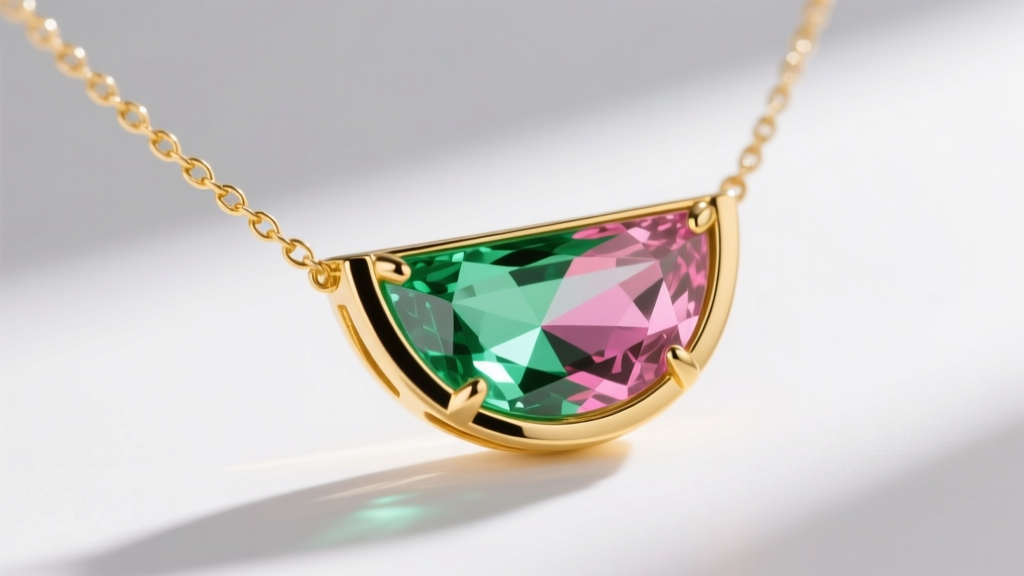
Because tourmaline slices often feature uneven, natural edges and a high risk of chipping, prong settings are a structural liability. A well-crafted watermelon necklace should always utilize a custom-fitted bezel or a semi-bezel setting. The metal rim protects the fragile perimeter of the slice from impact damage against tables and doorframes, while securely distributing pressure away from the stone's internal tension points.
The Final Verdict: How to Allocate Your Budget
If you are investing in a genuine watermelon tourmaline necklace in 2026, prioritize your budget in this specific order: Color Contrast > Translucency > Clarity. Do not overpay for flawless clarity if the stone lacks the sharp, vibrant pink-to-green transition that gives the gem its namesake charm. A slightly included, highly translucent stone with a vivid neon pink center and a distinct white rind will always hold its resale value and visual appeal far better than a perfectly clean, but muddy and opaque, commercial-grade slice.
Finally, always demand a report from a reputable gemological laboratory (such as GIA, AGL, or Gubelin) for any watermelon necklace priced over $2,000. This ensures the stone is natural, identifies any undisclosed resin treatments, and protects your investment for decades to come.


