The Science of Wearing Necklace Metals: Allergies & Durability
Discover the material science behind wearing necklace chains daily. Compare gold, platinum, titanium, and steel for skin allergies and durability.

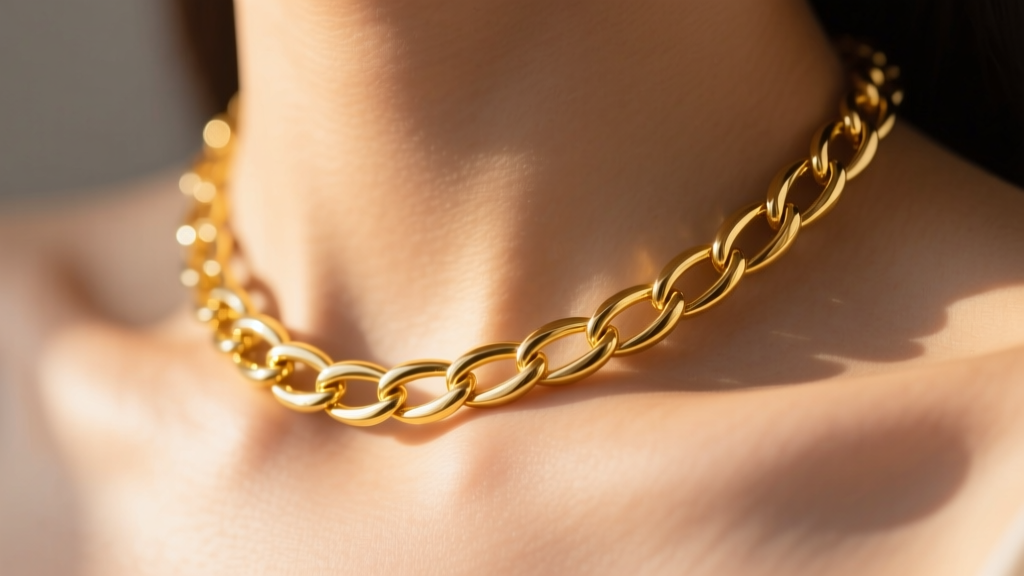
The Hidden Chemistry of Your Jewelry Box
When wearing necklace pieces daily, you are subjecting them to a remarkably hostile micro-environment. Human skin secretes sebum, lactic acid, and urea, while environmental factors introduce salt, chlorine, and microscopic abrasives. The decision of which metal rests against your clavicle is not merely an aesthetic choice; it is an exercise in applied metallurgy. As we evaluate fine jewelry standards in 2026, understanding the molecular behavior of your chains and pendants is critical for avoiding contact dermatitis, preventing structural failure, and maximizing the lifespan of your investment.
This comprehensive guide breaks down the exact material properties, allergenic profiles, and structural limitations of the most common necklace metals, providing you with a scientific framework for your next purchase.
The Allergy Factor: Nickel, Copper, and Contact Dermatitis
Allergic contact dermatitis (ACD) is the most common adverse reaction to jewelry. The primary culprit is nickel, a base metal frequently alloyed with gold to increase hardness and alter color. When wearing necklace chains containing nickel, sweat acts as an electrolyte, facilitating the migration of nickel ions into the epidermis. Once there, these ions bind to skin proteins, triggering an immune response known as haptenization.
Understanding the EU Nickel Directive
To combat this, the European Union established the EN 1811:2011 standard, which strictly limits nickel migration to 0.5 µg/cm² per week for items in prolonged skin contact. According to data published by the National Institutes of Health (NIH), approximately 15-20% of the global population exhibits some degree of nickel sensitivity. If you are purchasing white gold, always verify whether it is alloyed with palladium (hypoallergenic) or nickel (high allergy risk). Platinum, pure titanium, and niobium remain entirely nickel-free by definition.
Hardness vs. Malleability: Why Chains Break
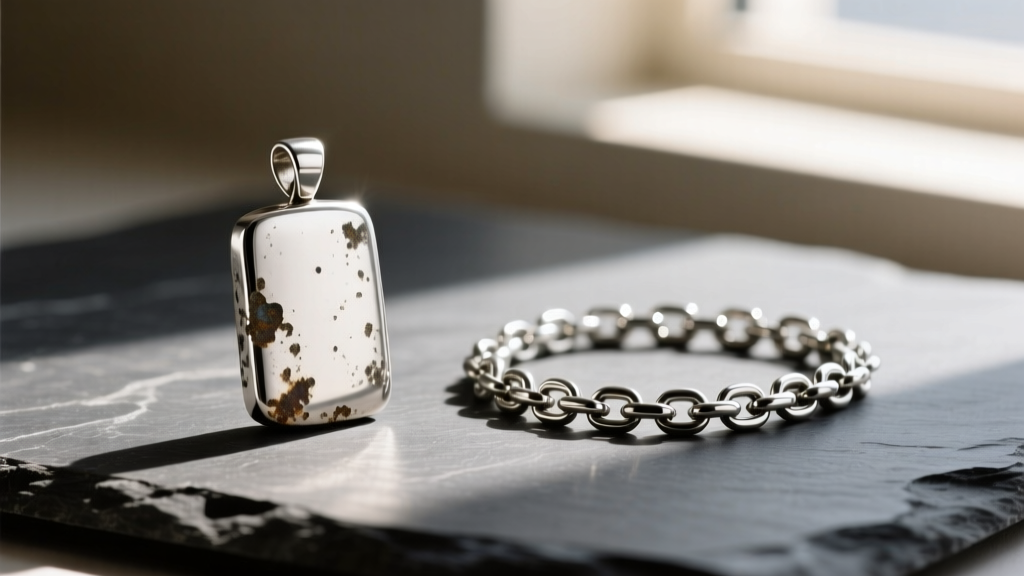
A common misconception is that "harder" metals are universally better for chains. In metallurgy, we must distinguish between Vickers Hardness (HV)—resistance to surface scratching—and tensile strength—resistance to snapping under tension. When wearing necklace styles with heavy pendants, tensile strength and ductility are far more critical than surface hardness.
Consider platinum. A 950 platinum alloy has a relatively low Vickers hardness (approx. 80-100 HV) compared to 14k gold (approx. 130-150 HV). However, platinum is highly malleable and possesses superior tensile strength. When a platinum chain link is scratched or bent, the metal is merely displaced. When a high-karat gold link is stressed beyond its yield point, it suffers from metal fatigue and will eventually snap. This is why master jewelers often recommend platinum for the structural prongs of pendants and the primary links of heavy chains.
Metallurgical Comparison Chart
| Metal / Alloy | Composition | Vickers Hardness (HV) | Tensile Strength | Allergy Risk |
|---|---|---|---|---|
| 24k Gold | 99.9% Au | 25 - 30 | Very Low | None |
| 18k Yellow Gold | 75% Au, 12.5% Cu, 12.5% Ag | 120 - 140 | Moderate | Low (Copper sensitivity rare) |
| 14k White Gold (Nickel) | 58.3% Au, Ni, Cu, Zn | 140 - 160 | High | High |
| 950 Platinum | 95% Pt, 5% Ru or Co | 80 - 135 | Very High | None |
| Grade 5 Titanium (Ti-6Al-4V) | 90% Ti, 6% Al, 4% V | 330 - 350 | Extremely High | None (ASTM F136 compliant) |
| 316L Surgical Steel | Fe, Cr, Ni, Mo | 150 - 190 | High | Moderate (Contains trace Ni) |
Data synthesized from the Gemological Institute of America (GIA) and standard metallurgical engineering tables.
Galvanic Corrosion: The Danger of Mixing Metals
Galvanic corrosion occurs when two dissimilar metals are in electrical contact within an electrolyte (like human sweat). The less "noble" metal becomes the anode and corrodes sacrificially to protect the cathode. If you are wearing necklace configurations that mix a sterling silver clasp with a gold chain, the copper and silver within the sterling alloy will rapidly oxidize and degrade in the presence of saltwater or heavy perspiration. Always ensure that the clasp, jump rings, and chain links share the exact same metallurgical profile to prevent localized structural failure.
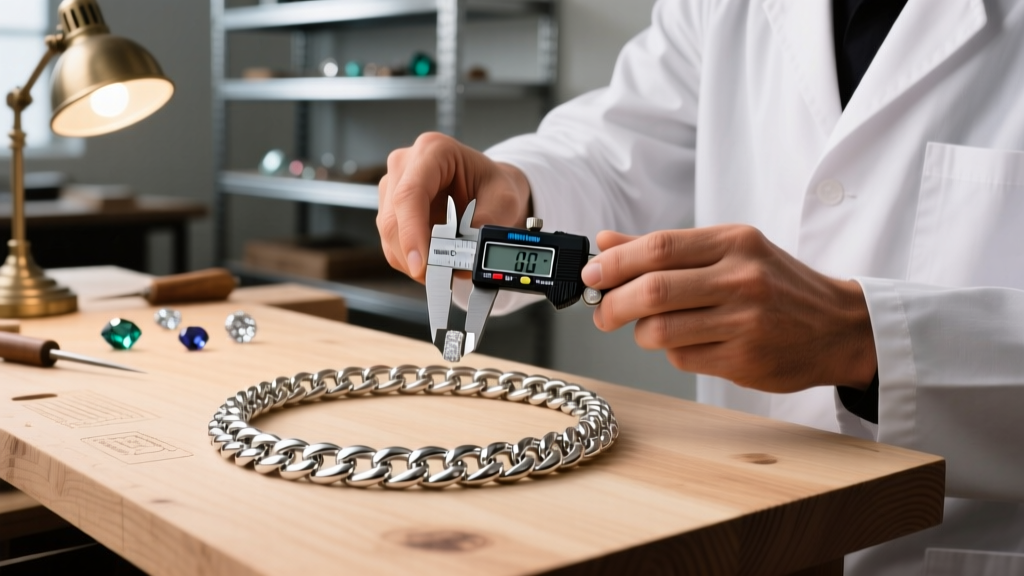
Material Breakdown: Pros, Cons, and Ideal Use Cases
Platinum & Palladium (The Platinum Group)
Platinum is the undisputed king of durability for heirloom pieces. Its high density (21.45 g/cm³) gives it a substantial, luxurious drape. However, this density means a 3mm platinum Cuban chain will cost exponentially more than its gold counterpart, both due to the raw commodity price and the sheer mass of the metal. Palladium offers a similar hypoallergenic profile and white-metal aesthetic but at roughly half the density, making it an excellent choice for oversized pendants that might cause neck strain.
Gold Alloys (14k vs. 18k vs. 22k)
The World Gold Council notes that 22k gold (91.6% pure) is highly prized in Eastern markets but is far too soft for intricate chain weaves like the Byzantine or Foxtail. For daily wear, 14k and 18k offer the ideal balance. Be aware that 14k rose gold contains up to 22% copper; individuals with highly acidic sweat (low pH) may find that copper oxidation leaves a harmless but unsightly green residue on the skin.
Titanium & Niobium (The Hypoallergenic Alternatives)
For those with severe metal hypersensitivities, commercially pure (CP) titanium or Grade 5 titanium (Ti-6Al-4V) are the ultimate solutions. Originally developed for aerospace and medical implants, titanium is entirely biocompatible. The drawback is its extreme hardness and high melting point, which makes traditional soldering impossible; broken titanium chains must be repaired using specialized laser welding or micro-TIG techniques.
Expert Maintenance Framework for Daily Wear
To preserve the structural integrity of your jewelry in 2026 and beyond, adopt this strict maintenance protocol:
- The Chlorine Ban: Never wear gold alloys in swimming pools or hot tubs. Chlorine reacts with the copper and silver in 14k/18k gold to form microscopic surface salts, leading to Stress Corrosion Cracking (SCC). A single exposure can compromise the solder points of a delicate chain.
- Ultrasonic Warnings: While ultrasonic cleaners are excellent for diamonds, they can shake loose the tension settings in gemstone pendants and fracture emeralds or opals that have been fracture-filled with oils.
- Proper Storage: Store chains flat or suspended. Tossing a delicate serpentine chain into a jewelry box guarantees micro-kinks. Once a serpentine or omega chain is kinked, the work-hardened metal is nearly impossible to perfectly flatten without breaking.
"The longevity of a fine chain is dictated not just by its initial craftsmanship, but by the wearer's understanding of environmental chemistry and mechanical stress." — Master Bench Jeweler
Conclusion
The science of wearing necklace metals extends far beyond color and karat. By evaluating the Vickers hardness, tensile strength, and allergenic properties of your jewelry, you can curate a collection that withstands the rigors of daily life. Whether you opt for the indestructible nature of Grade 5 titanium, the heirloom permanence of 950 platinum, or the classic warmth of 18k yellow gold, understanding the metallurgy ensures your pieces remain as structurally sound as they are visually stunning.


