Westwood Necklace Authentication: Materials & Hardware Guide 2026
Master westwood necklace authentication with our 2026 expert guide. Analyze brass alloys, crystal grading, and hardware forensics to spot super fakes.

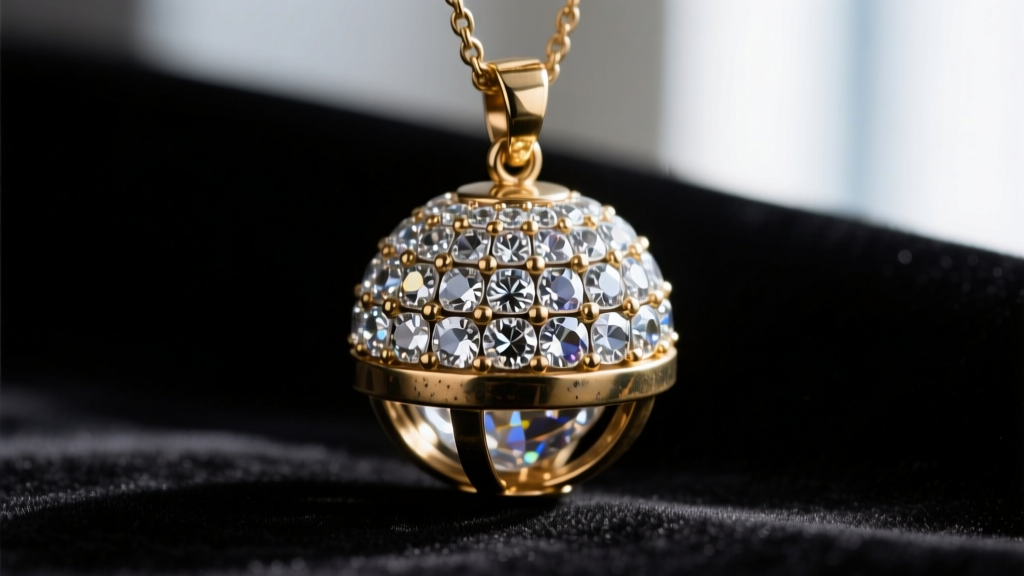
The Metallurgical Reality: Brass Alloys vs. Zinc Pot Metal
The cultural footprint of the westwood necklace has expanded exponentially, transitioning from a niche punk-rock staple to a mainstream luxury necessity. However, this immense popularity has birthed a highly sophisticated counterfeit market. In 2026, visual inspection alone is no longer sufficient to verify authenticity; super-fakes now replicate the visual aesthetics of the orb with frightening accuracy. To truly authenticate these pieces, one must perform a forensic analysis of the metallurgy, structural engineering, and gemological components.
Understanding the brand's metallurgical evolution is the first step in authentication. Genuine Vivienne Westwood jewelry manufactured over the last decade utilizes a specific recycled brass alloy as its base metal, aligning with the brand's eco-conscious initiatives outlined in the Vivienne Westwood Sustainability Manifesto. This brass is then heavily electroplated with either 925 sterling silver, rhodium, or 24-karat gold vermeil. Authentic vermeil plating requires a minimum thickness of 2.5 microns, giving the piece a distinct, warm luster and substantial resistance to tarnishing.
Conversely, the vast majority of counterfeit replicas are cast from zinc alloy, commonly referred to in the jewelry trade as 'pot metal.' Zinc alloy has a significantly lower density (approximately 6.6 g/cm³) compared to authentic brass (8.4 to 8.7 g/cm³). This density discrepancy results in a noticeable weight differential. Furthermore, counterfeiters typically use 'flash plating'—a process that deposits less than 0.5 microns of metallic coating. This ultra-thin layer oxidizes rapidly, often revealing the dull, grayish zinc base beneath within months of regular wear.
Material & Weight Specification Matrix
| Metric | Authentic VW Orb (Mini Bas Relief) | Counterfeit Replica |
|---|---|---|
| Base Metal Core | Recycled Brass / Solid 925 Silver | Zinc Alloy (Pot Metal) / ABS Plastic |
| Pendant Weight | 14.5g - 16.2g | 7.5g - 10.5g |
| Plating Thickness | 2.5+ microns (Vermeil standard) | < 0.5 microns (Flash plated) |
| Chain Link Gauge | 3.8mm - 4.2mm (Consistent) | 2.8mm - 3.2mm (Flimsy) |
Crystal Paving and Pearl Grading Forensics
When examining the iconic Bas Relief choker or the crystal-encrusted Tiny Orb pendants, the gemological components offer undeniable proof of authenticity. Genuine Westwood pieces utilize precision-cut, lead-free crystal (historically Swarovski, though recent supply chain shifts have seen the integration of Preciosa and custom-cut equivalents). These crystals feature laser-cut facets that refract light with a sharp, prismatic brilliance. More importantly, authentic crystals are secured using either micro-prong settings or a high-grade, UV-resistant jewelry epoxy.
Counterfeit crystals are frequently molded glass or acrylic with a painted foil backing to simulate brilliance. Under a 10x jeweler's loupe, fake crystals will show rounded, poorly defined facet edges and air bubbles trapped beneath the foil. Furthermore, the adhesive used on replicas is often a cheap cyanoacrylate (superglue) that yellows and becomes brittle when exposed to UV light and skin oils, leading to rapid stone loss.
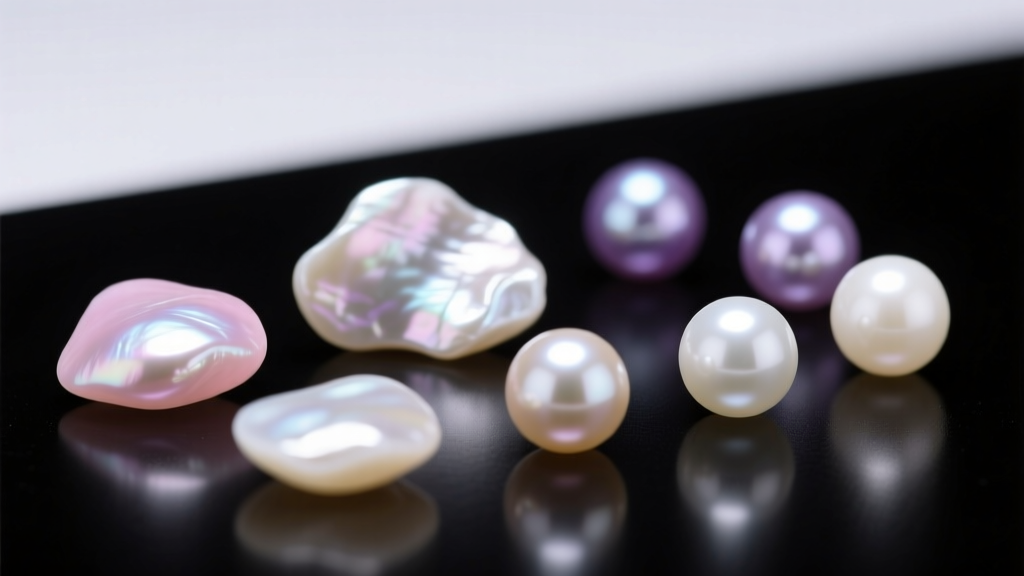
The pearl-strung variations of the westwood necklace require an entirely different analytical approach. Authentic Bas Relief chokers are strung using irregular, unbleached freshwater pearls. Because these are organic gems, each pearl possesses unique surface blemishes, varied lusters, and asymmetrical shapes. They are hand-knotted on heavy-duty silk thread, with visible, tight knots separating each pearl to prevent catastrophic loss if the strand breaks.
As documented by the Gemological Institute of America (GIA), synthetic or heavily processed pearls exhibit a uniform, almost plastic-like perfection. Fakes typically use ABS plastic beads coated in a pearlescent lacquer, or perfectly round, machine-drilled shell pearls. If the pearls on a Bas Relief choker are perfectly identical in size, shape, and overtone, and lack the subtle, gritty friction when rubbed gently against a tooth, the necklace is almost certainly a replica.
Hardware, Clasps, and Chain Link Engineering
The hardware of a necklace is where counterfeiters most frequently cut corners to preserve profit margins. An authentic westwood necklace features a heavy-duty lobster clasp cast from solid brass or silver, possessing a high-tension internal steel spring that provides a crisp, resistant 'snap' when closed. The clasp should bear a deep, laser-engraved or stamped 'Vivienne Westwood' logo. On genuine pieces, the kerning of the font is precise, and the engraving depth is uniform, with no burrs or rough edges on the metal.
Replica clasps are often made from lightweight, hollow-stamped aluminum or cheap alloys. The engraving is typically shallow, sometimes appearing pixelated or blurred due to the use of low-quality acid etching rather than precision laser engraving. Additionally, the jump rings connecting the clasp to the chain on authentic pieces are seamlessly soldered closed. On fakes, you will frequently find open jump rings with visible gaps, or crude soldering jobs that leave behind ugly, discolored flux residue.
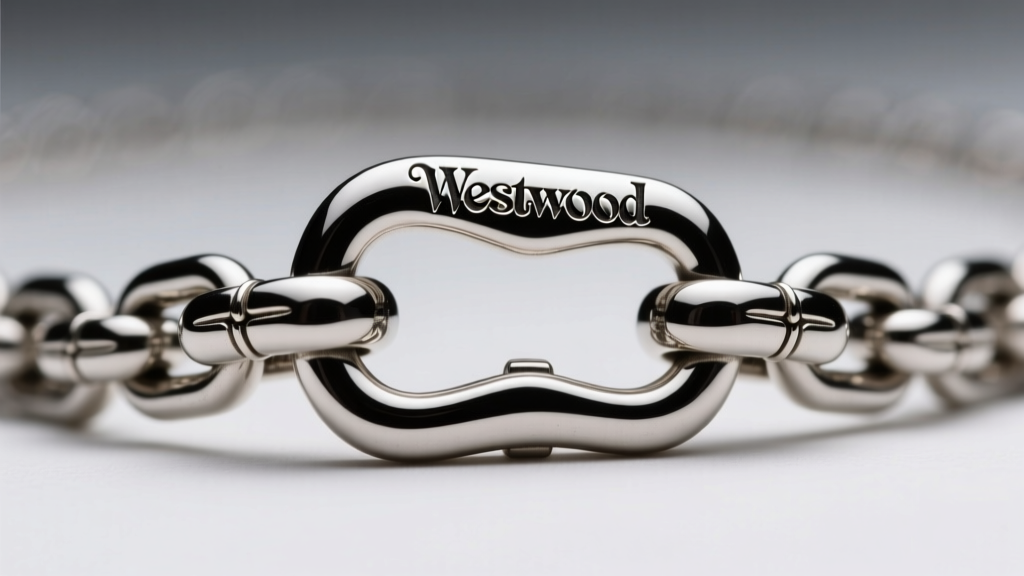
The chain itself is a critical diagnostic tool. Authentic orb necklaces utilize a specific curb or cable chain with a gauge thickness generally ranging between 3.8mm and 4.2mm for chokers, and slightly thinner for delicate pendants. The links are uniformly machine-drawn and polished, lying perfectly flat against the skin. Replica chains feel remarkably lightweight, often kinking or tangling due to poorly proportioned link ratios and lack of proper tumbling and polishing during manufacturing.
The Orb Architecture: Cast vs. Stamped Replicas
The structural integrity of the orb and its intersecting Saturn ring is a masterpiece of miniature metallurgy. On authentic pieces, particularly the Mini and Tiny orbs, the Saturn ring is either cast as a single, continuous piece with the orb body or seamlessly laser-welded with microscopic precision. The gap between the ring and the orb is mathematically consistent, allowing the ring to sit perfectly parallel to the orb's equator.
In counterfeit manufacturing, achieving this seamless integration is cost-prohibitive. Replicas often feature a Saturn ring that is mechanically crimped or glued onto the orb. If you inspect the side profile of a fake orb, you may notice the ring sits at a slight tilt, or you might see tiny seams where two halves of the orb have been poorly pressed together. Furthermore, the iconic cross atop the orb on genuine pieces has strict vertical-to-horizontal proportions; fakes often feature crosses that are too stubby or overly elongated, disrupting the sacred geometry of the original design.
Expert Troubleshooting: Non-Destructive Home Testing
If you are evaluating a vintage or second-hand westwood necklace without access to professional X-ray fluorescence (XRF) analyzers, you can employ several non-destructive testing methods to gauge authenticity:
- The Acoustic Ping Test: Gently tap the orb with a wooden toothpick. Authentic solid brass or silver produces a high-pitched, resonant 'ping' that sustains for a fraction of a second. Hollow pot metal or plastic-cored fakes produce a dull, flat 'thud' with no resonance.
- The Thermal Conductivity Test: Hold the pendant against your cheek or inner wrist. Genuine metals (brass, silver) are highly thermally conductive and will feel distinctly cool to the touch, rapidly absorbing your body heat. Zinc alloys and plastics feel closer to room temperature and warm up almost instantly.
- The UV Epoxy Check: Shine a 365nm UV flashlight over the crystal settings. Authentic jewelry epoxy is formulated to be UV-inert. If the glue securing the crystals fluoresces a bright, milky blue or purple, it indicates the use of cheap, commercial-grade cyanoacrylate, a hallmark of replica assembly.
Ultimately, authenticating a westwood necklace in the modern era requires looking past the superficial shine and interrogating the physical properties of the piece. By understanding the precise metallurgical standards, gemological grading, and structural engineering employed by the Vivienne Westwood Official Jewelry Archive, collectors and enthusiasts can confidently protect their investments against an increasingly deceptive counterfeit market.


