What Is a Statement Necklace? Expert Care & Cleaning Guide
Learn what is statement necklace jewelry and how to clean, maintain, and store these heavy, mixed-material pieces to prevent damage.

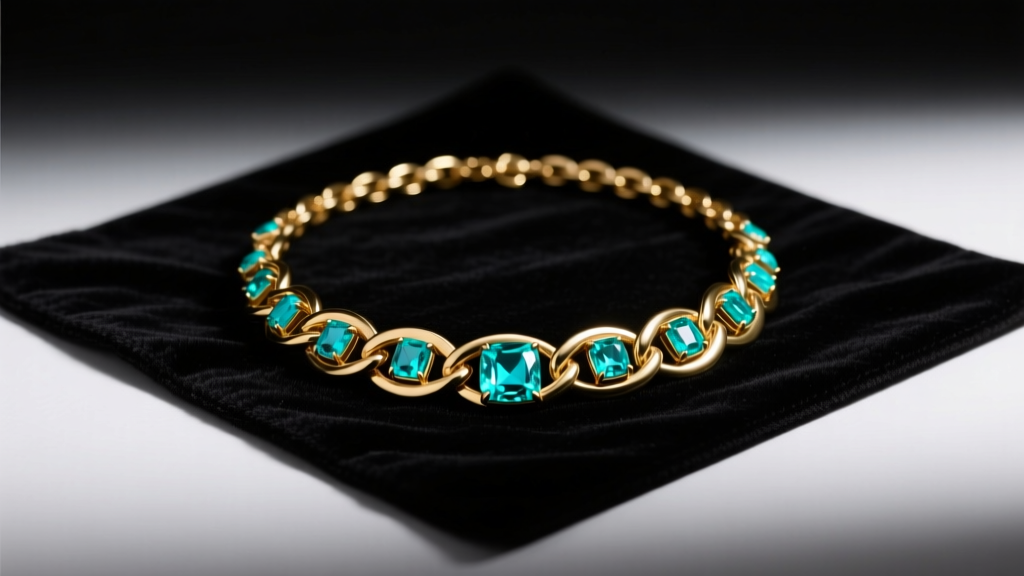
When fashion enthusiasts, stylists, and collectors ask, what is statement necklace jewelry really made of, the answer is rarely simple. Unlike delicate, single-material chains, statement necklaces are defined by their bold proportions, architectural silhouettes, and complex mixed-media construction. They frequently combine base metals, porous gemstones, acrylics, silk cords, and glass rhinestones into a single, heavy wearable sculpture. While this makes them the centerpiece of any outfit, it also creates a nightmare for standard jewelry cleaning routines.
To properly maintain these pieces, we must discard the "dip and polish" mentality. Submerging a multi-material collar in a commercial silver dip or ultrasonic cleaner will destroy adhesives, fracture porous stones, and trigger galvanic corrosion between dissimilar metals. In this comprehensive guide, we break down the exact structural vulnerabilities of statement necklaces and provide a masterclass in targeted, material-specific care.
Defining the Category: What Is Statement Necklace Construction?
Before applying any cleaning agent, you must understand the engineering of the piece. A true statement necklace typically weighs between 40 and 150 grams. This immense weight places continuous tensile stress on the findings—specifically the jump rings, clasps, and stringing materials.
Furthermore, the term "statement" often implies a mix of fine and costume elements. You might find a piece featuring genuine turquoise (a highly porous, water-sensitive stone) set in gold-plated brass (a metal prone to rapid oxidation when exposed to moisture and skin acids). According to the Victoria and Albert Museum's conservation guidelines, mixed-material historical and contemporary jewelry requires strictly localized cleaning to prevent chemical cross-contamination. When moisture acts as an electrolyte between two dissimilar metals (like copper and sterling silver), it triggers galvanic corrosion, permanently pitting the lesser metal.
Material-Specific Cleaning Matrix
Because statement necklaces are rarely homogeneous, you must identify each component before cleaning. Use the matrix below to determine the safest approach for your specific piece.
| Material Component | Safe Cleaning Agent | Application Method | Strictly Avoid |
|---|---|---|---|
| Base Metals (Brass, Copper) | Mild dish soap & distilled water | Damp microfiber cloth, immediate dry | Ammonia, commercial silver dips |
| Porous Stones (Turquoise, Lapis, Opal) | Dry, soft-bristled brush only | Gentle sweeping to remove dust/oils | Water, ultrasonic, steam, chemicals |
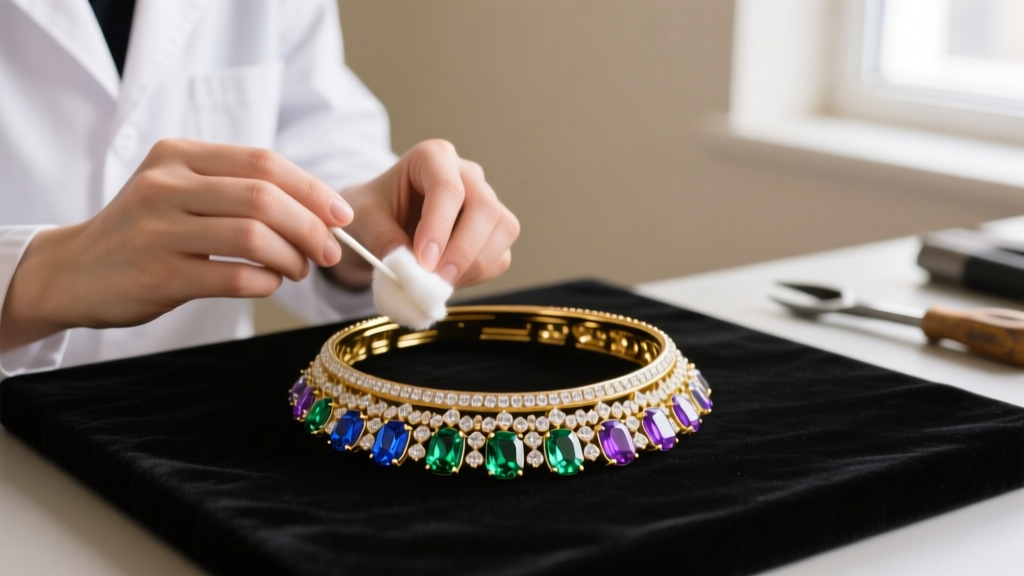
| Glass Rhinestones & Crystals | 91% Isopropyl alcohol | Cotton swab applied to the stone face | Soaking (dissolves foil backing glue) |
| Resin, Acrylic & Enamel | Dry or barely damp cloth | Gentle wiping without pressure | Alcohol, acetone, abrasive polishes |
| Silk or Leather Cords | Specialized leather/silk cleaner | Spot treat only, never saturate | Water immersion, heat drying |
The 4-Step Targeted Cleaning Protocol
When dealing with a complex, mixed-media statement collar, follow this localized cleaning protocol to restore brilliance without compromising the structural integrity of the piece.
Step 1: Dry Extraction and Inspection
Never apply liquid to a dusty necklace; you will simply create an abrasive mud that scratches soft metals and stones. Use a clean, dry makeup brush (like a soft kabuki brush) to sweep away dead skin cells, cosmetic powders, and environmental dust from under the settings. While brushing, inspect the prongs and glue lines. If you notice any epoxy yellowing or loose rhinestones, stop and seek professional repair before proceeding.
Step 2: Localized Metal Polishing
For the metal framework, use a polishing cloth impregnated with jeweler's rouge or a specialized anti-tarnish compound. Wrap the cloth around your index finger and gently rub the metal components. Crucial Warning: Never drag the polishing cloth over porous gemstones or pearls. The Gemological Institute of America (GIA) warns that polishing compounds can become embedded in the porous surface of stones like turquoise or malachite, causing permanent discoloration.
Step 3: Rhinestone and Crystal Revival
Rhinestones lose their sparkle due to a buildup of skin oils on the surface and the degradation of the foil backing. To clean the surface, dip a cotton swab in 91% isopropyl alcohol, squeeze out the excess so it is only barely damp, and gently roll it over the face of the crystal. Do not let the alcohol seep under the setting, as it will dissolve the cyanoacrylate adhesive holding the stone in place.
Step 4: The Final Dry-Down
Moisture is the enemy of statement jewelry. After any localized damp cleaning, use a hair dryer on the cool, low-air setting to blow out any trapped moisture from under the settings and within the chain links. Allow the piece to rest in a low-humidity room for at least two hours before storing.
Structural Maintenance: Preventing Gravity Damage
The most common cause of death for a statement necklace is improper storage. Because these pieces are heavy, hanging them on standard jewelry tree hooks or wall-mounted racks subjects the chain links and stringing materials to constant gravitational pull.
- The Silk Cord Stretch: If your statement necklace is strung on silk or nylon thread, hanging it will cause the fibers to stretch and warp over time. This results in a "gapping" effect where the knots pull apart, exposing the stringing wire and ruining the collar's uniform drape.
- Chain Link Distortion: Heavy pendants or oversized metal links can slowly deform the jump rings near the clasp when hung vertically, eventually leading to catastrophic snapping.
- Clasp Memory: Lobster clasps and spring rings on heavy collars can warp if the weight of the necklace rests directly on the clasp mechanism while in storage.
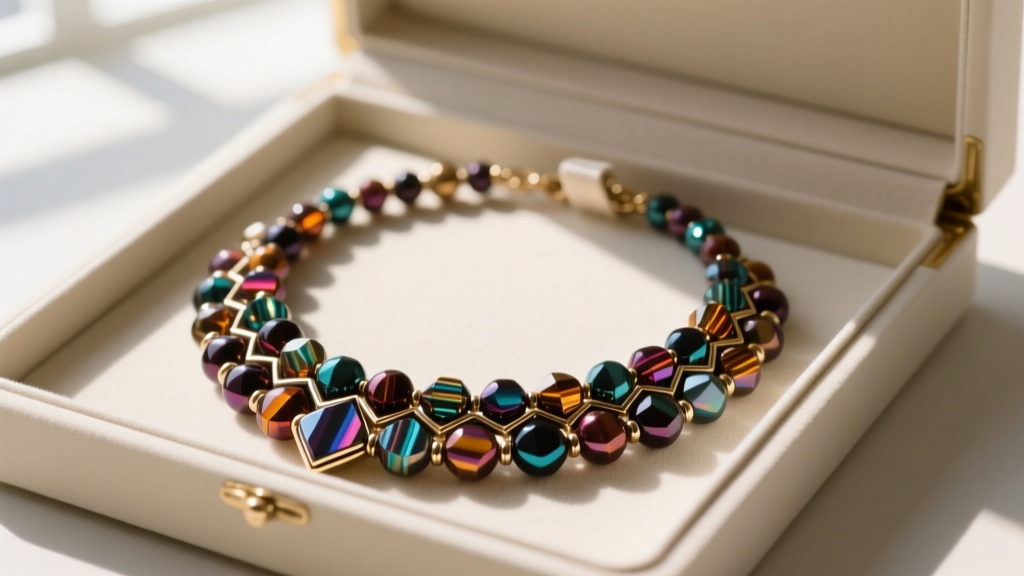
The Solution: Always store statement necklaces completely flat. Use a padded jewelry box with individual, anti-tarnish-lined compartments. If the necklace is too large for a standard box, lay it flat in a shallow drawer lined with acid-free tissue paper. Fasten the clasp to prevent the chain from tangling, and place a silica gel desiccant packet in the corner of the drawer to control ambient humidity and prevent base metal oxidation.
When to Seek Professional Conservation
While routine maintenance can be done at home, certain issues require a professional jeweler or conservator. Do not attempt DIY repairs on the following failure modes:
- Verdigris Removal on Antique Pieces: If your vintage statement necklace features copper or brass components with green, powdery corrosion (verdigris), scraping it off can remove the original patina and devalue the piece. A conservator can safely stabilize the corrosion.
- Re-stringing Heavy Beads: If a beaded collar feels stiff or the thread is visible between the knots, it is suffering from dry rot and UV degradation. A professional must re-string the piece using high-tensile Griffin silk or flexible beading wire (like Soft Flex) to support the heavy bead weight.
- Rhodium Re-plating: Many white-gold or silver statement pieces are rhodium-plated to achieve a bright, mirror-like finish. When this wears off due to friction against the collarbone, a jeweler must re-plate the piece using an electrolytic bath—a process that requires masking off any sensitive gemstones first.
By understanding the complex anatomy of your bold jewelry and respecting the specific needs of its varied materials, you can ensure your favorite pieces remain vibrant, structurally sound, and ready to make a statement for decades to come.


