When Was The Necklace Written? Timeless Lessons on Jewelry Value
Discover when was the necklace written and how Maupassant's classic tale informs modern 2026 jewelry budgeting, diamond simulants, and appraisal value.

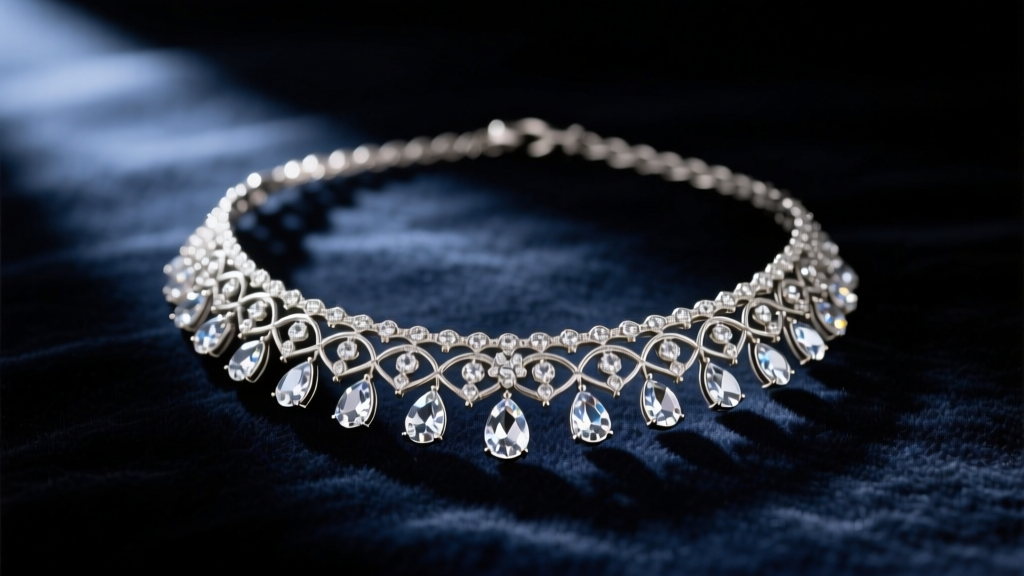
The Ultimate Cautionary Tale of Jewelry Valuation
If you have ever studied classic literature or asked when was the necklace written, you likely know the devastating twist of Guy de Maupassant’s 1884 short story, "La Parure" (The Necklace). The narrative follows Mathilde Loisel, who borrows what she believes to be a magnificent diamond rivière necklace from a wealthy friend, only to lose it. Rather than confess, she and her husband plunge into a decade of ruinous poverty to purchase a 36,000-franc natural diamond replacement. In the story's final, agonizing scene, Mathilde learns the original was "paste" (leaded glass) worth a mere 500 francs.
While Maupassant penned this masterpiece in the late 19th century to critique bourgeois vanity, for modern jewelry enthusiasts and collectors, it serves as the ultimate masterclass in material valuation, appraisal blind spots, and the catastrophic financial risks of buying blind. As we navigate the complex 2026 jewelry market—where lab-grown diamonds, advanced moissanites, and high-index simulants can easily fool the untrained eye—the lessons of Mathilde Loisel are more relevant than ever. Here is how to assess true necklace value, avoid "paste" traps, and budget intelligently for fine jewelry.
Paste vs. Precious: The 2026 Simulant Market Breakdown
In 1884, "paste" referred to high-lead glass cut to mimic diamond dispersion. Today, the simulant market is a multi-billion-dollar industry governed by advanced materials science. Understanding the exact material grades and pricing structures is the first step in protecting your jewelry budget.
| Material (Modern "Paste") | Mohs Hardness | 2026 Avg. Price (Per Carat) | Refractive Index (RI) | Identification Trait |
|---|---|---|---|---|
| Cubic Zirconia (CZ) | 8.0 - 8.5 | $10 - $25 | 2.15 - 2.18 | Thermal insulator; abraded facet edges over time |
| Moissanite (SiC) | 9.25 | $350 - $600 | 2.65 - 2.69 | Electrical conductor; strong double refraction |
| Lab-Grown Diamond (CVD/HPHT) | 10.0 | $600 - $1,200 | 2.42 | Thermal conductor; requires UV fluorescence / spectroscopy to separate from natural |
| Natural Earth-Mined Diamond | 10.0 | $4,500 - $9,000+ | 2.42 | Natural inclusions; specific nitrogen aggregation patterns |
According to the Gemological Institute of America (GIA), the visual similarity between high-grade moissanite and natural diamonds is so profound that traditional visual inspection is entirely obsolete. If Mathilde Loisel were shopping today, her friend's "diamond" necklace might actually be a $4,000 moissanite piece rather than a $50 glass replica, completely altering the financial risk profile.
Appraisal Blind Spots: How to Avoid the Loisel Mistake
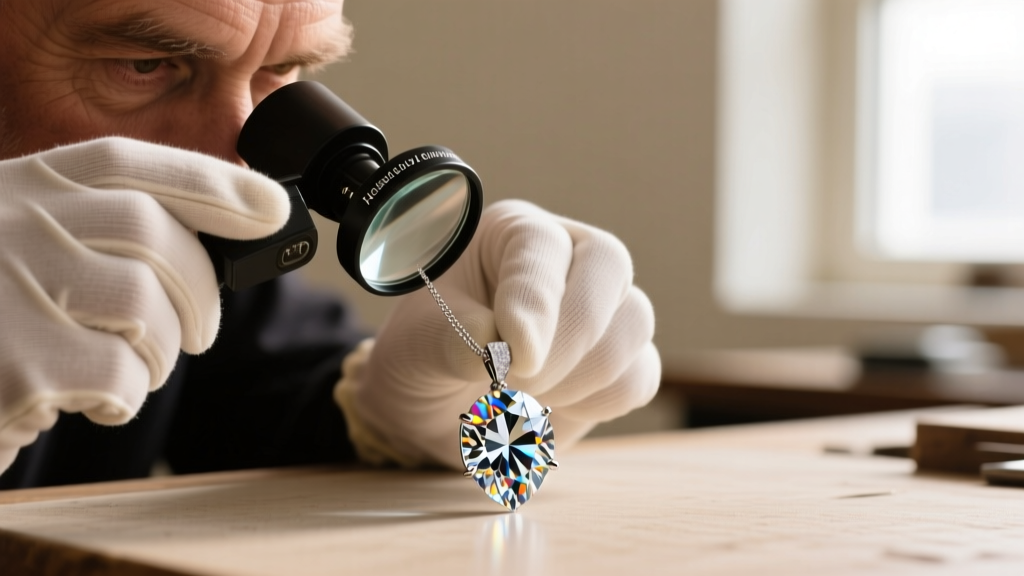
The core tragedy of "The Necklace" hinges on a failure of verification. Mathilde never had the piece appraised, nor did she understand the hallmarks of genuine 19th-century diamond jewelry. When buying vintage, estate, or secondhand diamond necklaces in 2026, you must implement a rigorous verification protocol to avoid purchasing a "Frankenstein" piece—a necklace where a modern simulant has been swapped into an antique mounting.
The Presidium Multi-Tester Protocol
Visual inspection is insufficient. Every serious buyer or collector should utilize a dual-testing mechanism. The GIA notes that moissanite shares thermal conductivity properties with diamond, meaning standard thermal diamond testers will falsely identify moissanite as a genuine diamond. To circumvent this, you must use a tester that measures both thermal and electrical conductivity, such as the Presidium Multi-Tester III. Diamonds are generally thermal conductors but electrical insulators (with the rare exception of natural blue boron-doped diamonds). Moissanite conducts both. CZ conducts neither.
Loupe Inspection for Wear Patterns
If you are evaluating an estate diamond tennis necklace claimed to be from the 1970s, use a 10x Hastings triplet loupe to examine the facet junctions. Cubic Zirconia has a Mohs hardness of 8.5. After decades of wear against other jewelry, CZ will exhibit "abraded facet junctions" (fuzzy or chipped edges where the facets meet) and a buildup of surface scratches. Natural diamonds (Mohs 10) will retain razor-sharp facet junctions even after a century of daily wear. If a supposedly vintage 1970s diamond necklace features cloudy, abraded CZ stones, you are looking at a modern simulant in a vintage setting.
Budgeting for Statement Necklaces Without the Ruin
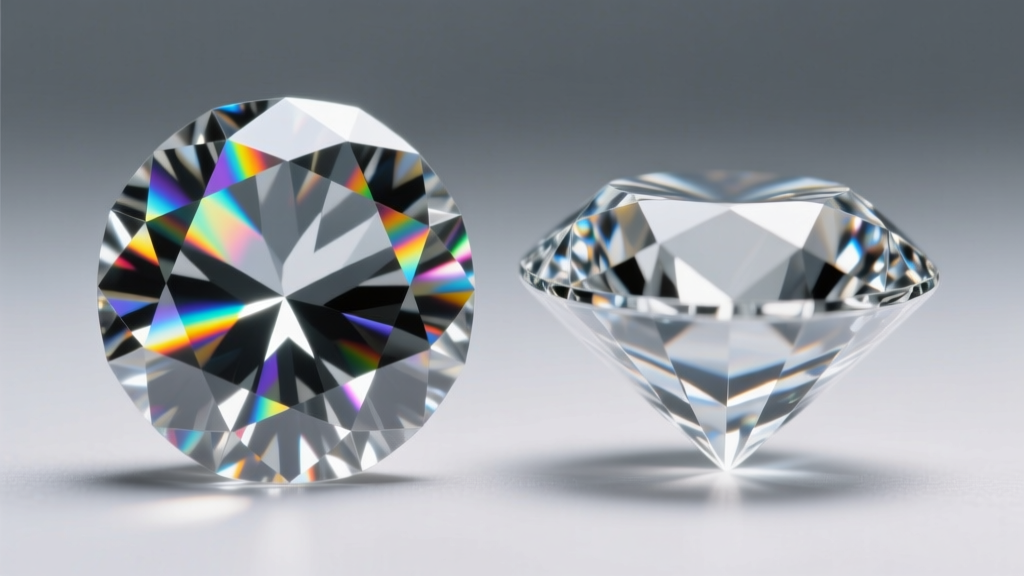
Mathilde Loisel’s fatal flaw was not just her inability to identify paste; it was her belief that social status required the assumption of crippling debt. In 2026, the democratization of fine jewelry through lab-grown diamonds and premium simulants allows consumers to achieve the "high jewelry" aesthetic without compromising their financial futures.
The Cost-Per-Wear (CPW) Framework
When allocating a budget for a statement piece—such as a 5-carat total weight (TCW) diamond drop pendant or a rivière necklace—shift your perspective from absolute cost to Cost-Per-Wear (CPW).
- The CZ Trap: A $150 CZ necklace may seem like a bargain, but CZ attracts oils, clouds permanently, and loses its surface polish within 12 to 18 months of regular wear. If it ruins your outfit's aesthetic after 20 wears, your CPW is $7.50, and the replacement cycle is endless.
- The Lab-Grown Sweet Spot: A $1,800 lab-grown diamond pendant (1.50ct, G color, VS1 clarity, IGI certified) will never cloud, scratch, or degrade. Worn twice a week for 10 years (1,040 wears), the CPW drops to $1.73 per wear, and the piece retains a secondary market resale value.
- The Natural Heirloom: A $7,500 natural diamond pendant is an asset allocation. It carries a higher upfront cost but maintains historical value retention, acting as a transferable generational asset rather than a depreciating accessory.
The 70/20/10 Jewelry Allocation Rule
To prevent a modern-day Loisel financial disaster, adopt the 70/20/10 rule for your annual jewelry budget:
- 70% on High-Impact Staples: Invest the majority of your budget in pieces worn against the skin daily (e.g., a solid 14k or 18k gold chain, a solitaire diamond or moissanite pendant). Prioritize metal purity and gemstone durability (Mohs 9+).
- 20% on Trend-Driven Layering: Allocate this to fashion-forward pieces, such as mixed-metal chokers or semi-precious stone lariats, where material cost is secondary to design and craftsmanship.
- 10% on "Paste" / Costume: Reserve a small fraction for high-fashion, runway-style costume jewelry. Here, you are paying for the brand's artistic direction, not intrinsic material value. Treat these pieces as expendable entertainment, never as investments.
Final Thoughts on Value and Perception
Guy de Maupassant’s 1884 tale remains a haunting exploration of pride, perception, and the devastating cost of ignorance. When assessing the value of necklaces and pendants today, the line between "real" and "replica" is no longer a simple matter of glass versus carbon. It requires a sophisticated understanding of gemological testing, market pricing shifts, and personal financial boundaries.
Whether you are investing in a natural diamond heirloom, selecting a lab-grown alternative for daily brilliance, or consciously purchasing a high-end simulant for travel, the key is informed consent. Know exactly what you are buying, verify it with modern gemological tools, and price it according to its true material worth. By doing so, you ensure that your jewelry collection remains a source of joy and confidence, rather than a decade-long debt sentence.


