Beginner's Guide to Buying and Styling a White Agate Necklace
Discover everything you need to know about buying, styling, and caring for a white agate necklace. Learn to spot fakes and find your perfect piece.

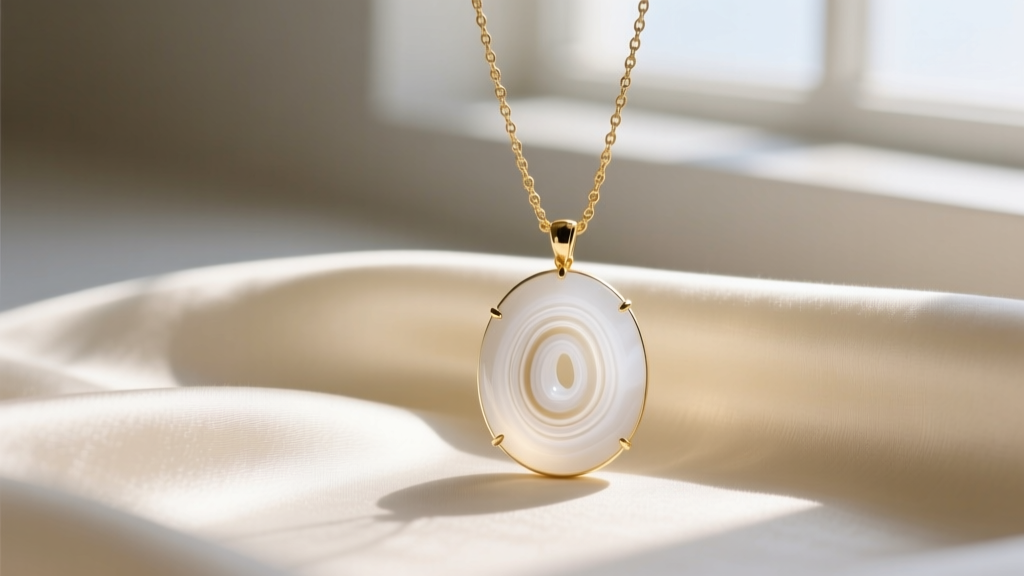
A white agate necklace is a timeless staple in any jewelry collection. Known for its milky translucence, subtle banding, and versatile neutral tone, this gemstone bridges the gap between casual bohemian styles and refined minimalist elegance. However, navigating the market as a beginner can be tricky. From identifying dyed imitations to selecting a chain that won't snap under the stone's weight, there are specific details you need to know before making a purchase.
This comprehensive guide will walk you through the geology, authentication, pricing, and styling of white agate, ensuring you invest in a piece that is both beautiful and built to last.
What Exactly is White Agate?
Agate is a variety of chalcedony, which itself is a microcrystalline (or cryptocrystalline) form of quartz. Unlike macrocrystalline quartz (like amethyst or citrine), the crystals in agate are so microscopic that they cannot be seen with the naked eye. According to Mindat.org, agate forms in the cavities of volcanic rocks, where silica-rich groundwater deposits layer upon layer of microscopic quartz fibers over millions of years.
This layered formation is what gives agate its signature banded appearance. Natural white agate typically presents with a waxy luster, a Mohs hardness of 6.5 to 7, and a specific gravity between 2.58 and 2.64. This density is a crucial factor to remember when selecting your necklace hardware, as agate is surprisingly heavy for its size.
Real vs. Dyed: How to Spot Authentic White Agate
The most common pitfall for beginners buying a white agate necklace is unknowingly purchasing dyed or bleached gray agate. Because pure, bright white agate is relatively rare in nature, commercial suppliers often take lower-quality gray or pale agate and bleach it with acid, or dye it to achieve a uniform, opaque white color.
Here is how you can tell the difference:
- Visual Translucency: Natural white agate is rarely perfectly opaque. Hold it up to a strong light source. You should see a milky, uneven translucency and organic, sometimes chaotic, banding patterns.
- The Spiderweb Effect: Under a 10x jeweler's loupe, dyed agate often reveals microscopic concentrations of dye trapped in natural surface fractures, resembling tiny spiderwebs.
- The Acetone Test: If you already own the piece, dab a cotton swab in pure acetone (nail polish remover) and rub it on an inconspicuous area of the stone. If the cotton turns white or cloudy, the stone has been artificially treated or coated.
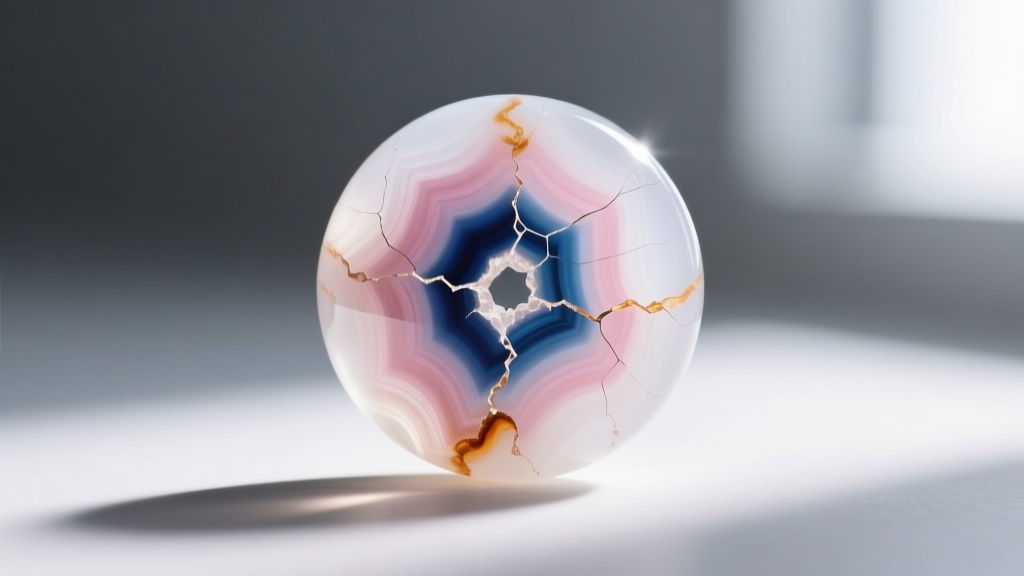
For absolute certainty regarding gemstone treatments and origins, always refer to the educational resources provided by the Gemological Institute of America (GIA), which extensively documents the bleaching and dyeing processes used on porous chalcedony.
Pricing Guide: What Should You Pay?
Pricing for a white agate necklace varies wildly based on the stone's origin, the quality of the lapidary work, and the metal used in the setting. Use this framework to set your budget expectations.
| Tier | Price Range | Characteristics | Best For |
|---|---|---|---|
| Commercial | $15 - $35 | Mass-produced, likely bleached/dyed gray agate. Thin, low-grade chains (often brass or plated). | Trend-driven, temporary fashion pieces. |
| Mid-Range | $45 - $120 | Natural, untreated white agate with visible organic banding. Set in sterling silver or 14k gold-filled hardware. | Everyday wear, thoughtful gifts, capsule wardrobes. |
| Artisan / Designer | $150 - $400+ | Hand-carved agate cameos or custom cabochons. Solid 14k/18k gold settings, often accented with diamonds or sapphires. | Heirloom investments, formal occasions, collectors. |
Chain Pairings and Durability: Avoiding the Pendulum Snap
Because agate is a dense form of quartz, a modest 20mm agate pendant can easily weigh between 8 and 12 grams. When suspended on a necklace, this weight creates a "pendulum effect"—every time you move, the pendant swings, putting immense localized stress on the bottom curve of the chain.
To prevent your white agate necklace from breaking, follow these hardware rules:
- Gauge and Thickness: Avoid delicate 0.8mm cable chains. Opt for a 1.2mm to 1.5mm box chain, rope chain, or wheat chain. These interlocking weaves distribute the pendant's kinetic energy much more effectively.
- Jump Rings: Ensure the jump ring connecting the pendant bail to the chain is soldered (fused shut). An open jump ring will eventually pull apart under the weight of swinging agate.
- Bail Sizing: If you prefer a leather cord over metal, ensure the pendant's bail hole is at least 4mm wide. Standard 2mm metal bails will cause friction and premature wear on thicker leather or suede cords.
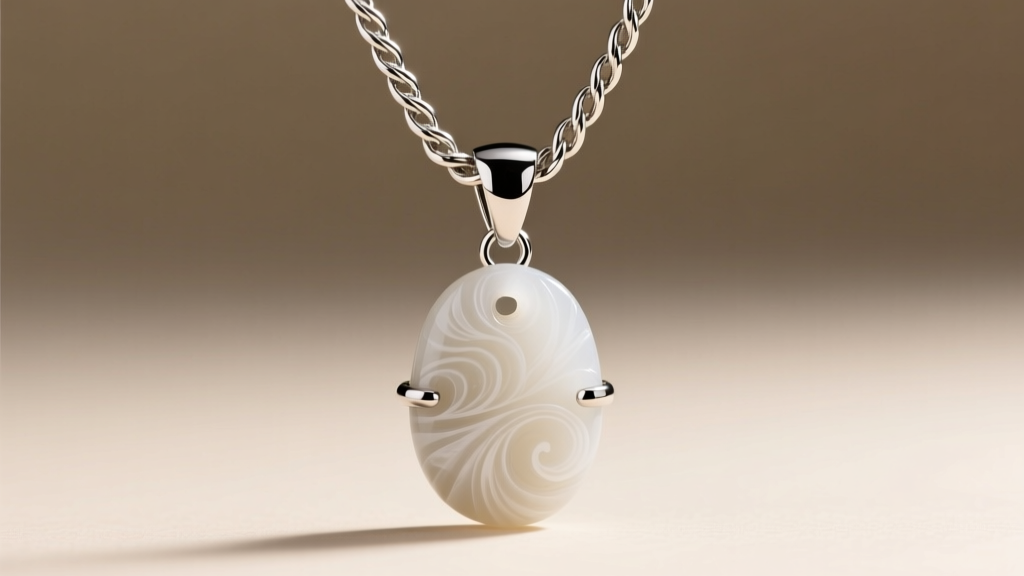
Styling Your White Agate Necklace for Different Necklines
White agate's neutral, creamy hue makes it a chameleon in your wardrobe. However, the length of the chain dictates how the stone interacts with your clothing.
The V-Neck and Wrap Dresses
For V-necks, an 18-inch chain is ideal. It allows the white agate pendant to rest exactly in the negative space of the neckline, drawing the eye downward and elongating the neck. A simple teardrop or marquise-cut agate cabochon works best here.
The Crew Neck and High Collars
Wearing a pendant directly on top of a crew neck t-shirt often looks cluttered. Instead, opt for a 20-inch to 22-inch chain so the agate rests below the collarbone, or pivot to a 14-inch white agate bead choker that sits entirely above the fabric line.
The Boatneck and Off-the-Shoulder
Wide, horizontal necklines demand vertical contrast. A 28-inch to 32-inch lariat or Y-necklace featuring a white agate drop at the terminus provides a striking, elongating silhouette that balances the broad shoulder line.
Care and Maintenance: Preserving the Polish
While agate ranks a respectable 6.5 to 7 on the Mohs scale, it is still susceptible to scratching from harder materials like diamonds, sapphires, or even airborne quartz dust. Furthermore, chalcedony is slightly porous.
- Cleaning: Never use ultrasonic jewelry cleaners. The high-frequency vibrations can cause internal micro-fractures, especially if the agate has been commercially dyed. Instead, use lukewarm water, a drop of mild dish soap, and a soft microfiber cloth.
- Chemical Exposure: Remove your necklace before swimming in chlorinated pools or using household cleaners. Harsh chemicals can strip the stone's natural waxy luster and degrade the metal setting.
- Storage: Store your white agate necklace in a soft velvet pouch, separate from your diamond or topaz jewelry, to prevent surface abrasions. Keep it out of direct, prolonged sunlight, which can cause heat stress or fade dyed stones over time.
By understanding the unique geological properties and structural needs of this beautiful stone, you can confidently select a white agate necklace that will remain a flawless, elegant fixture in your jewelry box for decades to come.


