White Coral Bead Necklace: Material Properties & Authenticity Guide
Discover the material properties of a genuine white coral bead necklace. Learn to identify real coral, compare imitations, and master long-term care.

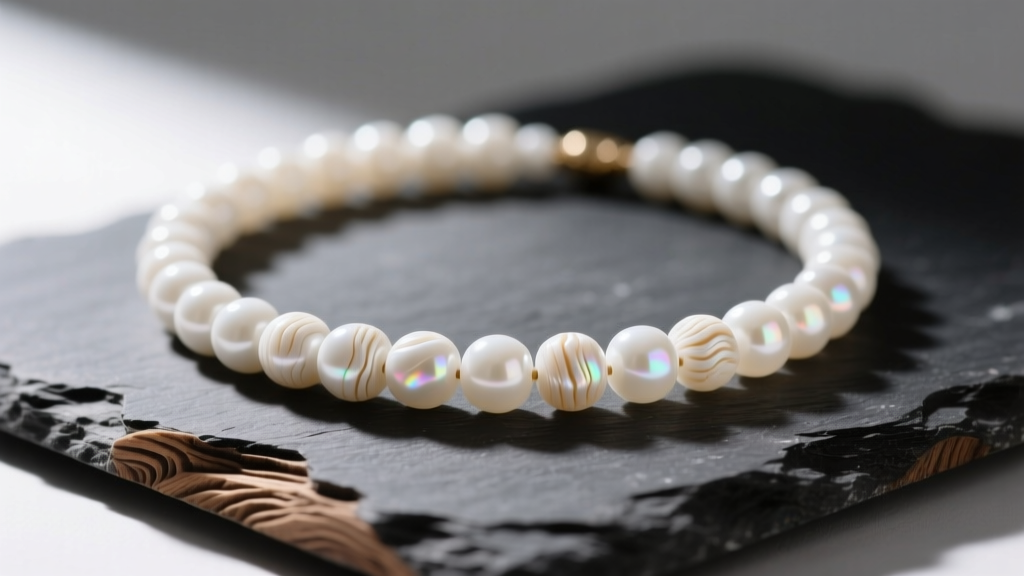
The allure of a white coral bead necklace lies in its organic warmth, creamy matte-to-satin luster, and rich historical significance. Unlike faceted gemstones that rely on light refraction, coral is an organic gemstone formed by living marine polyps. As we navigate the jewelry market in 2026, understanding the exact mineralogical properties, structural vulnerabilities, and ethical sourcing parameters of white coral is essential for both collectors and everyday wearers. This guide provides a deep-dive gemological analysis of white coral, equipping you with the technical knowledge to differentiate genuine specimens from sophisticated imitations and properly maintain their structural integrity over decades.
The Mineralogy and Organic Matrix of White Coral
Genuine precious coral belongs primarily to the genus Corallium. While the Mediterranean Corallium rubrum is famous for its deep reds, pure white coral is typically sourced from Corallium secundum (often referred to as Midway coral) or specific pale variations of Corallium elatius (known in the trade as "Angel Skin" when it exhibits a faint pinkish blush).
From a mineralogical standpoint, white coral is not a single crystal but a complex biogenic composite. It consists primarily of microcrystalline calcium carbonate (CaCO3) in the form of calcite, bound together by an organic protein matrix called conchiolin. This dual composition gives a white coral bead necklace its unique properties:
- Hardness: Ranks between 3.5 and 4.0 on the Mohs scale, making it softer than quartz but harder than amber or pearl.
- Specific Gravity (SG):strong> Typically ranges from 2.60 to 2.70, giving it a satisfying, substantial heft compared to plastic or resin imitations.
- Refractive Index (RI):strong> Approximately 1.48 to 1.65, though this is rarely measured in bead form due to the opaque to semi-translucent nature of the material.
- Porosity: The calcium carbonate matrix is inherently micro-porous, which dictates its strict care requirements and vulnerability to chemical absorption.
Material Comparison: Genuine Coral vs. Common Imitations
The market is saturated with simulants designed to mimic the creamy opacity of white coral. Gemologists and informed buyers must rely on physical property comparisons to separate authentic Corallium from dyed howlite, magnesite, glass, and Troca shell. Below is a technical comparison chart detailing the divergent material properties.
| Material | Mohs Hardness | Specific Gravity | Reaction to Dilute HCl | Thermal Conductivity |
|---|---|---|---|---|
| Genuine White Coral | 3.5 - 4.0 | 2.60 - 2.70 | Effervesces (Bubbles) | Warm to touch |
| Dyed Howlite | 3.5 | 2.53 - 2.59 | Slow Effervescence | Cool to touch |
| Dyed Magnesite | 3.5 - 4.5 | 2.95 - 3.10 | Vigorous Effervescence | Cool to touch |
| Glass Simulant | 5.5 - 6.5 | 2.20 - 4.20 | No Reaction | Cold to touch |
| Troca Shell | 2.5 - 3.0 | 2.70 - 2.80 | Effervesces (Bubbles) | Warm to touch |
For a comprehensive overview of organic gemstone classifications and testing protocols, the Gemological Institute of America (GIA) remains the definitive authority on coral identification and treatment detection.
Gemological Identification Techniques
When evaluating a white coral bead necklace, visual and tactile inspections are your first line of defense against fraud. Because destructive testing (like applying hydrochloric acid) is impossible on finished jewelry, gemologists rely on non-destructive structural analysis.
Magnification and Surface Topography
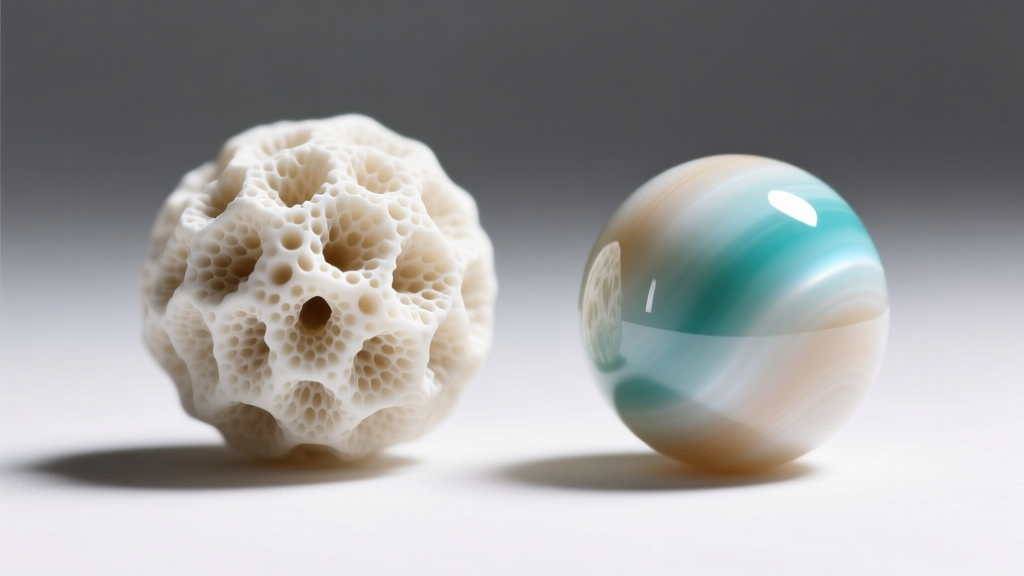
Under a 10x triplet loupe or a gemological microscope, genuine white coral reveals a distinct organic growth structure. Look for subtle, parallel striations or a faint "wood-grain" pattern that follows the curvature of the bead. In contrast, dyed howlite will show a web-like matrix of grey or brown veins that have absorbed the white dye unevenly, while glass simulants may exhibit spherical gas bubbles or swirl marks from the molding process.
The Acetone Swab Test
Many white coral beads on the lower end of the market are actually porous howlite or magnesite that has been bleached and dyed. To test for dye stability, dip a cotton swab in pure acetone (nail polish remover) and rub it gently on an inconspicuous area, such as the bead hole. If the swab picks up any white or yellowish pigment, the bead is dyed. Genuine, untreated white coral will not transfer color.
Thermal Conductivity
Organic gems like coral and pearl have low thermal conductivity compared to minerals and glass. When pressed against the cheek or lips, a genuine white coral bead necklace will feel relatively warm or neutral almost immediately. Glass and quartz-based imitations will draw heat away from the skin, feeling distinctly cold for several seconds.
Structural Vulnerabilities and Failure Modes
Despite its beauty, a white coral bead necklace is highly susceptible to environmental and mechanical degradation if improperly engineered or maintained. Understanding these failure modes is critical for long-term preservation.
Acidic Degradation and Discoloration
Because coral is calcium carbonate, it is highly reactive to acids. Human perspiration has a naturally acidic pH (typically between 4.5 and 7.0). Prolonged exposure to sweat, perfumes, hairsprays, and cosmetic lotions will slowly dissolve the polished surface of the coral beads, resulting in a permanent loss of luster and a chalky, dull appearance. Furthermore, the micro-porosity of the coral can absorb colored liquids, leading to irreversible yellowing or staining.
Stringing Abrasion and Bead Loss
A critical, often overlooked failure mode in coral necklaces is internal bead abrasion. If beads are strung tightly against one another without knots, the friction caused by normal wear generates microscopic coral dust. This dust acts as an abrasive lapping compound, slowly sawing through the silk or nylon thread from the inside out.
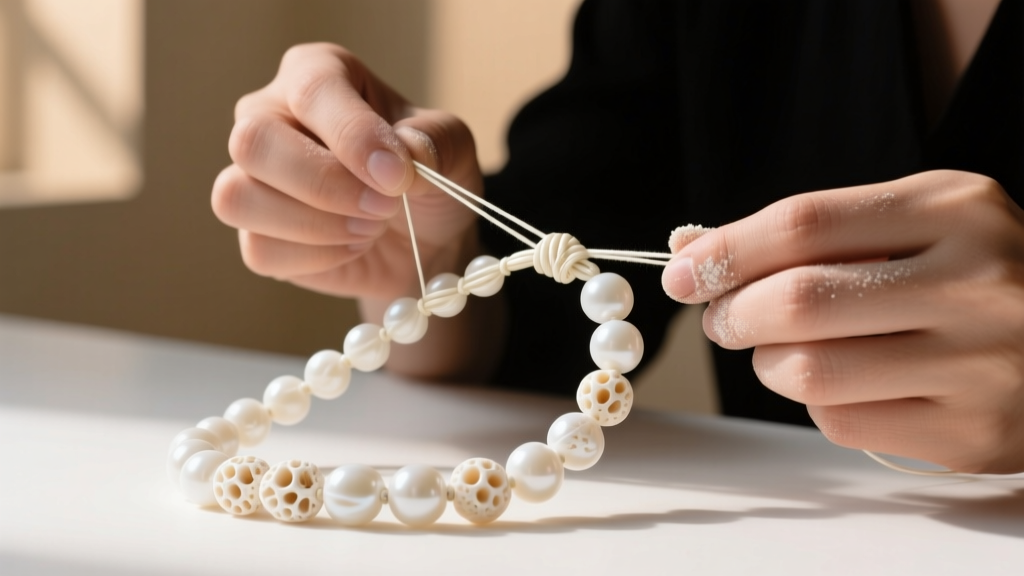
Expert Restringing Protocol: A high-quality white coral bead necklace must be strung on 100% silk thread (Size F or G, depending on the drill hole diameter) with a hand-tied knot between every single bead. This prevents bead-on-bead abrasion, stops the internal sawing effect, and ensures that if the thread snaps, only one bead is lost rather than the entire strand.
Care, Maintenance, and Long-Term Preservation
Proper care of organic jewelry requires a departure from standard gemstone cleaning routines. Never place a white coral bead necklace in an ultrasonic cleaner; the high-frequency cavitation will shatter the micro-structure of the beads and strip their natural polish. Similarly, steam cleaners will force moisture and heat into the porous matrix, causing internal stress fractures.
- Routine Cleaning: After wearing, gently wipe the beads with a soft, dry microfiber cloth to remove skin oils and environmental pollutants.
- Deep Cleaning: If the necklace requires a deeper clean, use a barely damp cloth with distilled water. Avoid tap water, as chlorine and fluoride can react with the calcium carbonate.
- Storage: Store the necklace flat in a fabric-lined jewelry box. Hanging a heavy coral bead necklace for long periods will cause the silk thread to stretch and weaken prematurely. Keep it away from direct sunlight and extreme heat, which can dehydrate the conchiolin matrix and cause the beads to crack.
Ethical Sourcing and CITES Regulations in 2026
The ecological fragility of marine ecosystems has placed precious coral under intense regulatory scrutiny. The Convention on International Trade in Endangered Species (CITES) strictly monitors the harvesting of Corallium species. When purchasing a white coral bead necklace today, provenance is not just a matter of value; it is a legal and ethical necessity.
Reputable jewelers will provide documentation proving that the coral was harvested sustainably, often from deep-water managed beds in the Pacific or Mediterranean, or sourced from pre-ban vintage estate jewelry. The World Jewellery Confederation (CIBJO) maintains strict guidelines on the disclosure of coral treatments and origins, ensuring that consumers are not inadvertently funding illegal dredging operations that destroy vital marine habitats. By demanding transparent supply chains and opting for authenticated, ethically sourced coral, collectors can enjoy the timeless elegance of this organic gem while supporting marine conservation efforts.


