Buying a Gold Necklace With Gold Balls: Expert Guide
Discover what to look for when buying a gold necklace with gold balls. Compare solid vs hollow beads, chain types, karats, and pricing.


The Anatomy of a Gold Ball Necklace
When shopping for a gold necklace with gold balls, buyers are often captivated by the high-polish reflection and geometric perfection of the spheres. However, the aesthetic appeal of these necklaces frequently masks significant structural differences in manufacturing. Whether you are looking at a continuous bead chain, a station necklace with spaced-out spheres, or a single spherical pendant, understanding the metallurgy and engineering behind the beads is critical to making an investment-grade purchase.
The market is currently saturated with two distinct categories of gold spheres: die-struck hollow beads and cast solid beads. Choosing between them will dictate not only the price point but the lifespan, weight, and daily wearability of the piece. As gold prices continue to fluctuate in 2026, jewelers have increasingly relied on hollow manufacturing techniques to keep retail prices accessible, making it more important than ever for consumers to read product descriptions with a critical eye.
The Manufacturing Divide: Solid Cast vs. Hollow Die-Struck
The single most important factor when evaluating a gold ball necklace is the internal structure of the beads. This manufacturing choice impacts everything from tensile strength to dent resistance.
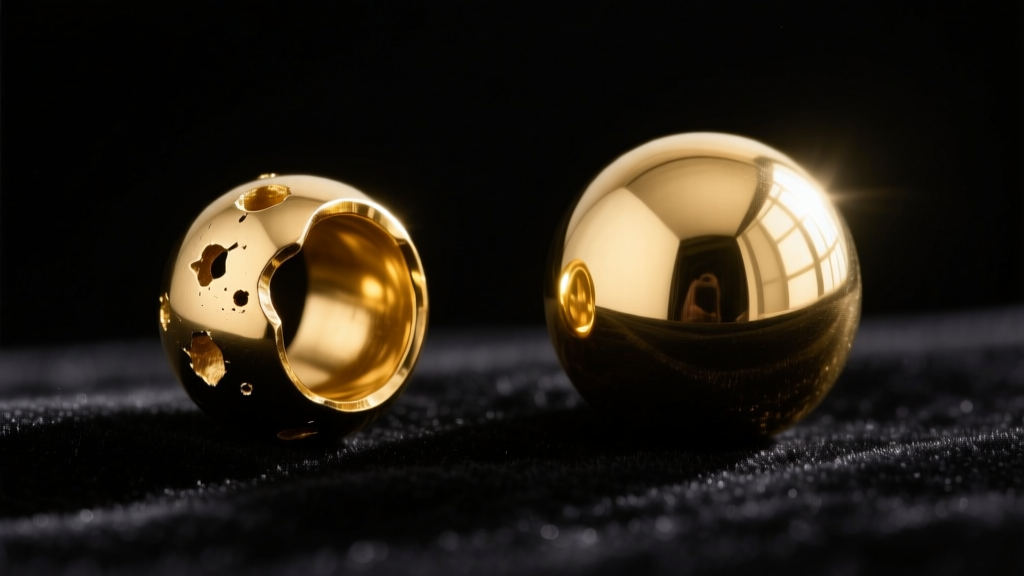
Hollow Die-Struck Beads
Hollow beads are created by stamping two thin sheets of gold into hemispheres and soldering them together.
- Pros: Significantly lighter weight, allowing for larger visual diameters (e.g., 8mm to 12mm) without the exorbitant cost of solid gold mass.
- Cons: Highly susceptible to denting. Dropping a hollow gold bead on a tile floor or sleeping in it can easily crush the thin shell. Furthermore, the solder seam can split if the chain is subjected to sudden tension.
Solid Cast Beads
Solid beads are cast from a single piece of gold alloy, making them incredibly dense and durable.
- Pros: Heirloom-quality durability. They will not dent under normal wear and can be easily polished to remove surface scratches.
- Cons: Heavy and expensive. A solid 14k gold sphere measuring just 8mm can weigh over 3.5 grams, making a full strand prohibitively expensive and physically heavy on the cervical spine.
Sizing Matrix: Millimeter Diameters & Visual Weight
Gold balls are measured by their outer diameter in millimeters (mm). The visual impact of the necklace changes drastically with every 2mm increment. Below is a structural guide to help you select the right scale for your neckline and lifestyle.
| Bead Diameter | Weight Category (Solid 14k) | Ideal Chain Type | Best Use Case |
|---|---|---|---|
| 2mm - 3mm | Ultra-Light (0.05g - 0.15g) | Cable, Fine Box | Layering, minimalist daily wear |
| 4mm - 5mm | Light-Medium (0.35g - 0.70g) | Box, Rope, Wheat | Standalone everyday necklace |
| 6mm - 8mm | Heavy (1.2g - 3.5g) | Thick Rope, Cuban | Statement piece, pendant focal point |
| 10mm+ | Massive (6.0g+) | Heavy Rope, Chain-only | High-impact evening wear, luxury |
Chain Pairings: Structural Integrity Meets Aesthetics
A well-crafted gold necklace with gold balls requires structural harmony between the spherical beads and the chain links. The wrong pairing can lead to premature chain failure or an unbalanced drape.
Box Chains
Box chains feature square, interlocking links that lay perfectly flat against the collarbone. They are the optimal choice for 2mm to 4mm gold balls. The geometric angles of the box links contrast beautifully with the smooth curvature of the spheres. However, box chains over 2.0mm in width become too rigid to drape elegantly.
Rope Chains
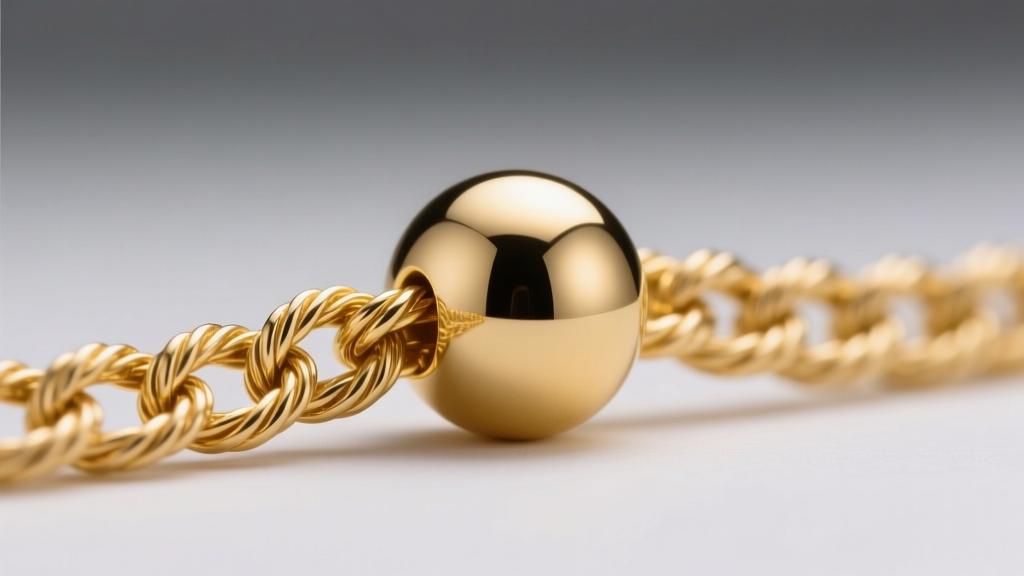
Twisted rope chains offer exceptional tensile strength and a high degree of flexibility. For beads 5mm and larger, a rope chain is mandatory. The twisting motion of the links catches the light similarly to the polished spheres, creating a cohesive, luxurious texture. According to jewelry manufacturing standards, rope chains distribute the pendulum weight of heavy beads more evenly than flat links, reducing stress on the clasp.
Snake Chains (A Warning)
While snake chains look incredibly sleek and modern, they are notorious for kinking when subjected to the localized weight of a heavy gold ball. Once a snake chain kinks, the structural integrity is permanently compromised. Avoid pairing snake chains with any gold bead larger than 4mm.
Karat Purity and Alloy Durability
Pure 24k gold is far too soft to be used in functional jewelry; it would scratch and deform rapidly. Therefore, gold balls are alloyed with metals like copper, silver, and zinc. As noted by the Gemological Institute of America (GIA), the karat weight determines both the color and the hardness of the final piece.
- 10k Gold (41.7% pure): The hardest and most scratch-resistant option. Ideal for hollow beads, as the stronger alloy helps prevent the thin shells from denting. However, it has a paler, less saturated yellow hue.
- 14k Gold (58.3% pure): The industry standard. It offers the perfect equilibrium between rich color and structural durability. Most high-end station necklaces utilize 14k gold for the beads to ensure they withstand daily friction against clothing and skin.
- 18k Gold (75% pure): Prized for its deep, buttery yellow color and hypoallergenic properties. Because it is softer, 18k solid gold balls will develop a patina of micro-scratches over time. This is highly desirable for vintage aesthetics but requires more frequent professional polishing to maintain a mirror finish.
For a comprehensive breakdown of how different alloys affect jewelry longevity, Blue Nile's metal education guide provides excellent visual comparisons of karat colors and wear-resistance.
Clasp Mechanics and Failure Points
The clasp is the most common point of failure on any necklace, but it is especially vulnerable on bead necklaces due to the "pendulum effect." When a heavy gold ball slides back and forth along the chain, it generates kinetic momentum that places sudden, sharp stress on the clasp mechanism.
Spring Ring Clasps: These small, circular clasps rely on a tiny internal spring. They are perfectly adequate for 2mm and 3mm lightweight station necklaces. However, they should never be used for beads 5mm or larger, as the kinetic force can easily bend the delicate wire or snap the internal spring.
Lobster Claw Clasps: The superior choice for medium to heavy gold balls. The solid body and thicker internal spring mechanism can withstand the sudden tugs generated by heavier spherical beads. When inspecting a lobster clasp, ensure the trigger action is smooth and the closure is flush, leaving no gap for the jump ring to slip through.
2026 Pricing Benchmarks
Pricing for a gold necklace with gold balls is primarily dictated by the spot price of gold, the total gram weight, and the manufacturing complexity. In the current market, buyers should expect the following baseline ranges for an 18-inch necklace:
Expert Pricing Tip: If you see an 8mm continuous gold ball necklace priced under $600, it is almost certainly hollow, gold-plated over brass, or filled. True solid 14k gold of that volume would weigh nearly 30 grams, placing its intrinsic melt value alone well over $1,000 before manufacturing markups.
- Delicate Station Necklace (14k, 3mm beads spaced out): $350 – $600
- Continuous Hollow Bead Chain (14k, 5mm beads): $800 – $1,400
- Continuous Solid Bead Chain (14k, 4mm beads): $2,500 – $4,000+
- Single Large Pendant Sphere (18k, 10mm solid on rope chain): $1,800 – $2,800
Final Verdict: What to Look For
When making your final selection, prioritize transparency from the jeweler. Look for explicit mentions of "solid" or "hollow" in the product specifications. If the description only states "14k Gold" without specifying the bead construction, assume it is hollow, especially if the price seems remarkably low for the bead diameter. By matching the correct chain style to the bead size and selecting a karat weight that aligns with your maintenance preferences, you will secure a piece that remains structurally sound and visually stunning for decades.


