White Gold Emerald Necklace: A Technical Buying Guide
An expert technical guide to evaluating white gold emerald necklaces, covering alloy metallurgy, gemological clarity grades, and setting integrity.

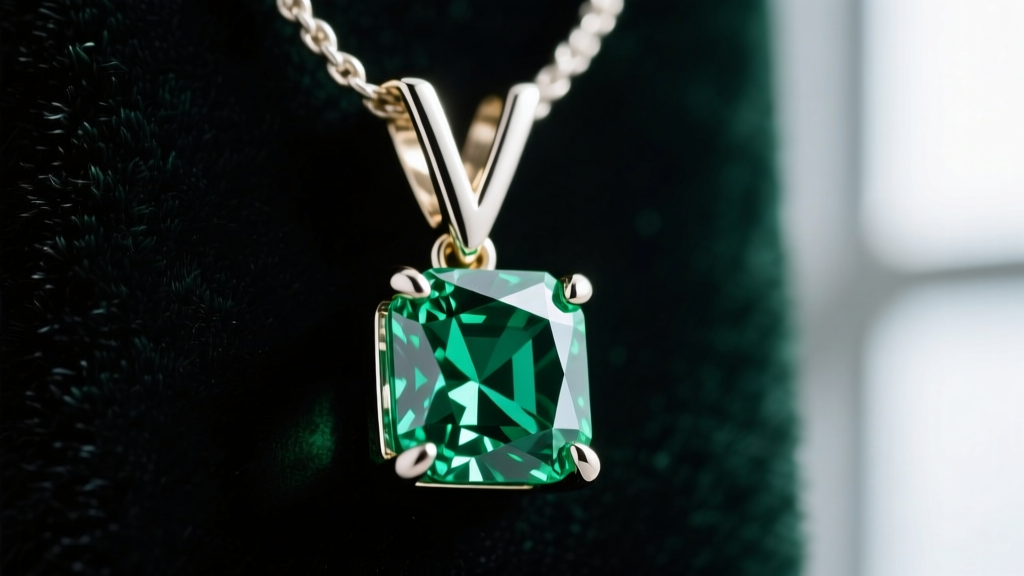
The Metallurgy of White Gold Alloys
When investing in a white gold emerald necklace, understanding the underlying metallurgy is just as critical as evaluating the gemstone itself. Pure gold (24k) is inherently yellow and too malleable for daily wear. To achieve the silvery-white hue and structural rigidity required for fine jewelry, gold is alloyed with other metals. In the context of a pendant setting, the two primary alloying paths are nickel-based and palladium-based white gold.
14k vs. 18k White Gold
An 18k white gold alloy consists of 75% pure gold and 25% alloy metals. It offers a richer base tone and higher intrinsic value but is slightly softer than 14k white gold, which contains 58.5% pure gold. For a heavy emerald pendant, 18k is often preferred for its prestige and color, provided the setting is engineered with adequate structural support. However, if the pendant features intricate micro-pavé diamond accents surrounding the emerald, 14k white gold provides superior prong durability and resistance to metal fatigue over decades of wear.
Rhodium Plating Thickness and Wear
Regardless of the alloy, white gold is electroplated with rhodium to achieve a bright, reflective white finish. Standard commercial plating is typically 0.75 to 1.0 microns thick. For a high-end white gold emerald necklace, you should seek out heavy rhodium plating, which ranges from 1.5 to 2.0 microns. This thicker layer significantly delays the inevitable wear-through that reveals the slightly yellowish underlying alloy, particularly on the back of the pendant basket where it rests against the skin and absorbs acidic perspiration.
Gemological Deep Dive: Evaluating Emeralds
The emerald, a variety of the mineral beryl, is prized for its vivid green hue but presents unique structural challenges. On the Mohs scale of hardness, emeralds rank between 7.5 and 8. However, hardness (resistance to scratching) must not be confused with toughness (resistance to breaking). Due to their highly included nature, emeralds possess poor to fair toughness, making them susceptible to chipping from sharp impacts.

Understanding Jardin and Clarity Enhancements
Unlike diamonds, where clarity is heavily penalized, emeralds are expected to have visible inclusions, poetically referred to as 'jardin' (French for garden). These inclusions are typically liquid, gas, or solid crystals trapped during formation. Because of these natural fissures, nearly all emeralds undergo clarity enhancement. According to the Gemological Institute of America (GIA), the industry standard is cedar oil treatment, which has a refractive index closely matching the emerald, rendering surface-reaching fissures nearly invisible.
GIA Clarity Enhancement Codes
When reviewing the gemological report for your white gold emerald necklace, pay strict attention to the clarity enhancement code:
- None: Exceedingly rare and commands a massive premium. Structurally sound but expensive.
- Minor (F1): The ideal grade for fine jewelry. Indicates slight oiling that improves clarity without compromising the stone's structural integrity.
- Moderate (F2): Acceptable, but the stone requires careful handling and avoidance of heat.
- Significant/Prominent (F3): Avoid for pendant settings. Heavy oiling or epoxy resins (like Opticon) are used to hold heavily fractured stones together. A simple bump against a granite countertop could cause the stone to shatter.
Setting Architecture and Structural Integrity
The physical design of the pendant basket dictates the lifespan of the emerald. The most common cut for emeralds is the rectangular 'emerald cut,' which features four distinct 90-degree corners. These corners are the weakest points of the crystal lattice and are highly prone to chipping.
The Necessity of V-Prongs
Standard round prongs are wholly inadequate for protecting the corners of an emerald cut. A technically sound white gold emerald necklace will utilize V-prongs (or chevron prongs) at all four corners. A V-prong caps the entire corner, distributing mechanical stress away from the fragile 90-degree edge. Furthermore, the metal weight of the pendant basket should be substantial; for a 2-carat to 3-carat emerald, the gold setting should weigh a minimum of 1.8 to 2.5 grams to prevent the basket from bending if the necklace is snagged on clothing.
Bezel Settings as an Alternative
For wearers with active lifestyles, a full or partial bezel setting offers superior protection. A bezel completely encircles the emerald's girdle in a continuous rim of white gold, eliminating the risk of corner impacts. The trade-off is a slight reduction in light return and a more modern, geometric aesthetic compared to the classic prong setting.
Chain Selection: Gauge and Clasp Mechanics
The pendant is only half the equation; the chain must be engineered to support the weight and value of the emerald. A common failure point in fine jewelry is pairing a heavy, valuable pendant with an inadequately gauged chain.
Minimum Gauge Requirements
For a white gold emerald necklace featuring a stone between 1.5 and 3.0 carats (plus the weight of the gold setting), the chain must have a minimum wire gauge of 1.2mm to 1.5mm. Delicate 0.8mm chains are prone to kinking and snapping under the pendulum effect of a swinging pendant. Box chains and cable chains are preferred for their high tensile strength and resistance to tangling.
Clasp Engineering
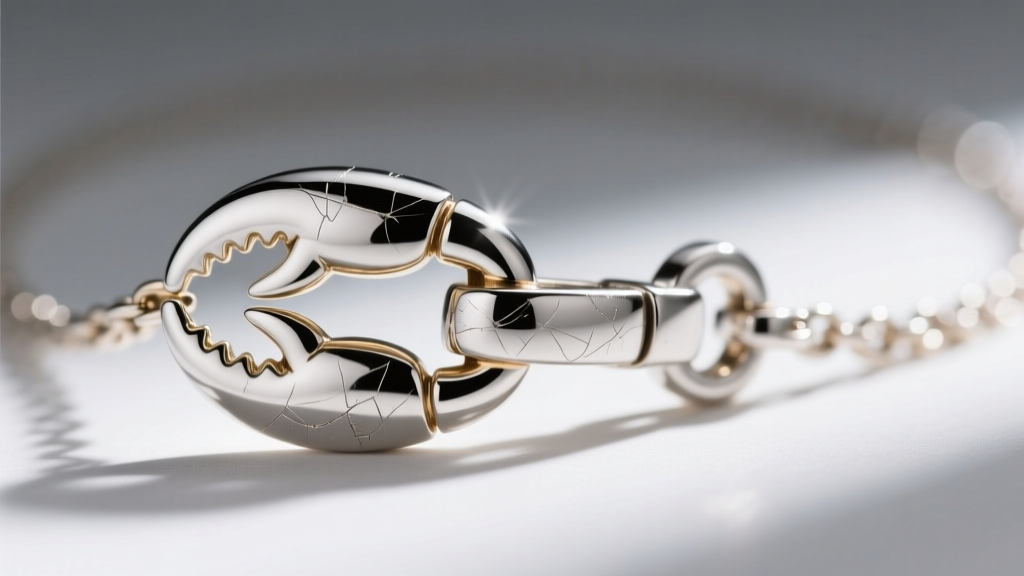
Never rely on a spring-ring clasp for a valuable emerald pendant. Spring rings contain a tiny internal steel spring that can easily fail, corrode, or become stuck. A lobster claw clasp, forged from a solid piece of white gold with a secure internal tension mechanism, is mandatory. For ultimate security, a double-locking lobster clasp or a specialized locking box clasp provides redundant safety against accidental drops.
Pricing Matrix and Value Retention
The valuation of a white gold emerald necklace is highly variable, dictated by the intersection of the gemstone's origin, treatment level, and the gold's purity. Below is a technical pricing matrix based on current market data for high-quality, ethically sourced Colombian and Zambian emeralds set in 18k white gold.
| Carat Weight | Alloy & Setting | GIA Treatment Grade | Estimated Retail Range (USD) |
|---|---|---|---|
| 1.00 - 1.50 ct | 18k White Gold, Prong | Minor (F1) | $4,500 - $8,200 |
| 2.00 - 2.99 ct | 18k White Gold, V-Prong | Minor (F1) | $12,000 - $24,000 |
| 3.00 - 4.99 ct | 18k White Gold, Bezel | Moderate (F2) | $18,000 - $35,000 |
| 5.00+ ct | 18k White Gold, Custom | None / Minor (F1) | $45,000 - $120,000+ |
Care, Maintenance, and Ultrasonic Warnings
Proper maintenance is non-negotiable for preserving the optical properties of an emerald. According to Jewelers of America, ultrasonic cleaners and steam cleaners are strictly prohibited for emeralds. The high-frequency vibrations can shatter the stone along its natural inclusion planes, and the heat from steam will melt or evaporate the cedar oil used for clarity enhancement, leaving the fissures opaque and white.
To clean your white gold emerald necklace, use only lukewarm water, a few drops of pH-neutral dish soap, and an ultra-soft baby hairbrush. Gently agitate the water around the pendant, rinse under a gentle stream of room-temperature water, and pat dry with a microfiber cloth. Periodic re-oiling by a certified lapidary every 5 to 10 years may be necessary to maintain the stone's optimal transparency and luster.


