Will a Stainless Steel Necklace Tarnish? 316L vs 304 Grades
Will a stainless steel necklace tarnish? We compare 316L and 304 grades, exploring corrosion resistance, skin reactions, and long-term care tips.

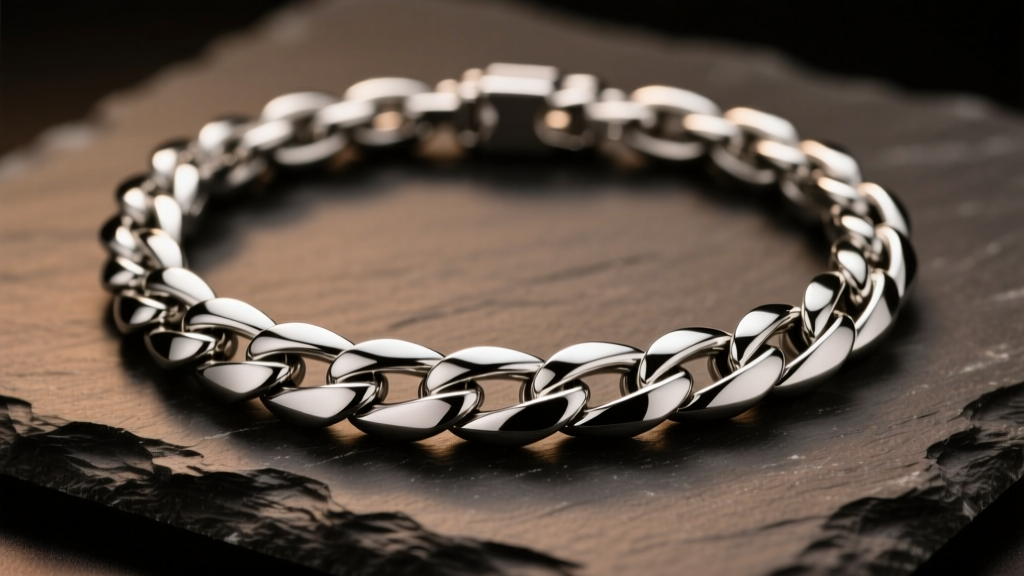
The Short Answer: Does Stainless Steel Tarnish?
When consumers ask, 'will a stainless steel necklace tarnish?', they are usually conflating two distinct chemical processes: tarnishing and corrosion. True tarnish is a specific chemical reaction—most commonly seen in sterling silver—where sulfur in the air reacts with the metal to form a dark layer of silver sulfide. Stainless steel contains no silver, so it cannot 'tarnish' in this traditional sense.
However, stainless steel is not entirely immune to degradation. It can experience corrosion, pitting, or surface oxidation if its protective passive layer is compromised. This passive layer is a microscopically thin film of chromium oxide (Cr2O3), typically just 1 to 3 nanometers thick, that forms naturally when chromium in the alloy reacts with oxygen. If this layer is scratched away or attacked by aggressive chemicals like chlorides, the underlying iron can oxidize, resulting in rust spots or a dull, cloudy appearance that many mistake for tarnish.
Whether your necklace maintains its mirror finish or degrades into a dull, pitted mess depends almost entirely on the specific metallurgical grade of the steel used by the manufacturer.
Decoding the Alloys: 316L vs. 304 Stainless Steel
The jewelry market is flooded with stainless steel pieces, but not all steel is created equal. The two most common grades used in necklaces and pendants are 304 and 316L. Understanding the difference is critical for predicting how the metal will react to sweat, water, and time.
304 Stainless Steel (18/8): Composed of roughly 18% chromium and 8% nickel. It is highly durable and cost-effective, making it a popular choice for fast fashion jewelry. However, it lacks molybdenum, making it susceptible to pitting corrosion when exposed to chlorides (like salt water or heavy sweat).
316L Stainless Steel (Surgical Steel): Contains 16-18% chromium, 10-14% nickel, and crucially, 2-3% molybdenum. The addition of molybdenum drastically increases its Pitting Resistance Equivalent Number (PREN). The 'L' stands for low carbon, which prevents carbide precipitation during welding or high-heat manufacturing, ensuring the metal remains structurally sound and highly resistant to localized corrosion.
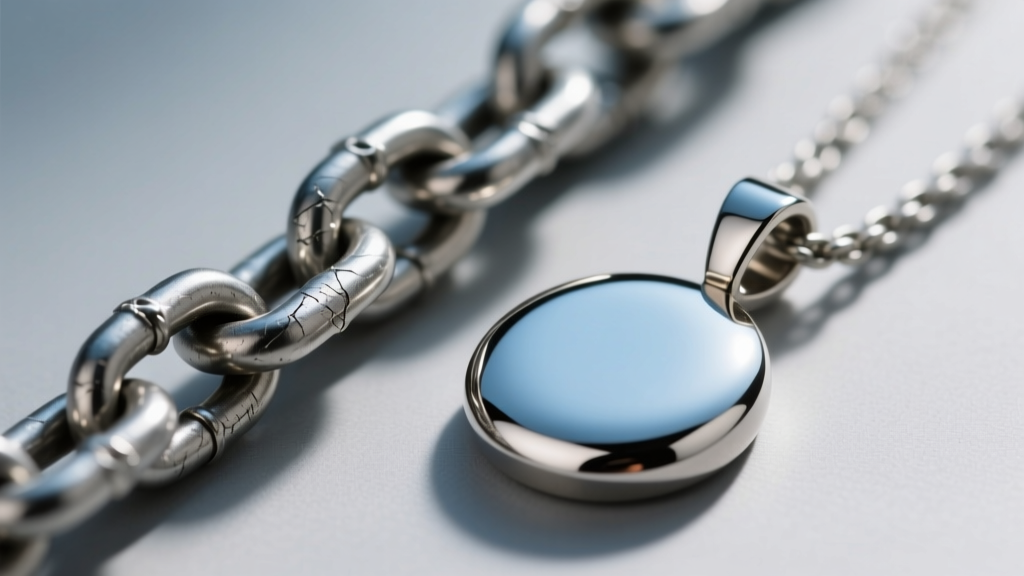
Material Comparison Matrix
| Metal Grade | Chromium | Nickel | Molybdenum | Sweat/Chloride Resistance | Avg. Chain Price |
|---|---|---|---|---|---|
| 304 Stainless | 18-20% | 8-10.5% | 0% | Moderate (Pits in salt water) | $10 - $25 |
| 316L Stainless | 16-18% | 10-14% | 2-3% | Excellent (Highly resistant) | $30 - $85 |
| 925 Sterling Silver | 0% | 0% | 0% | Poor (Tarnishes rapidly) | $40 - $150 |
For a comprehensive breakdown of alloy compositions and their industrial applications, the British Stainless Steel Association provides extensive metallurgical data confirming 316L's superiority in chloride-rich environments.
The Real Culprits: What Actually Degrades Your Necklace
If a stainless steel necklace loses its luster or develops rust spots, environmental factors have breached the chromium oxide layer. Here are the primary agents of degradation:
- Chlorides and Halogens: Swimming pools, hot tubs, and ocean water are rich in chlorides. These ions are small enough to penetrate the passive oxide layer, causing microscopic pitting. Over time, these pits trap debris and moisture, leading to visible rust.
- Galvanic Corrosion: Layering a stainless steel chain with a sterling silver or solid gold pendant in the presence of an electrolyte (like sweat) creates a galvanic cell. The less noble metal will corrode sacrificially to protect the more noble metal.
- Mechanical Abrasion: While steel is hard (Mohs hardness of ~5.5-6.3), constant friction against diamond dust, concrete, or even heavy grit can physically scrape away the passive layer faster than it can naturally reform.
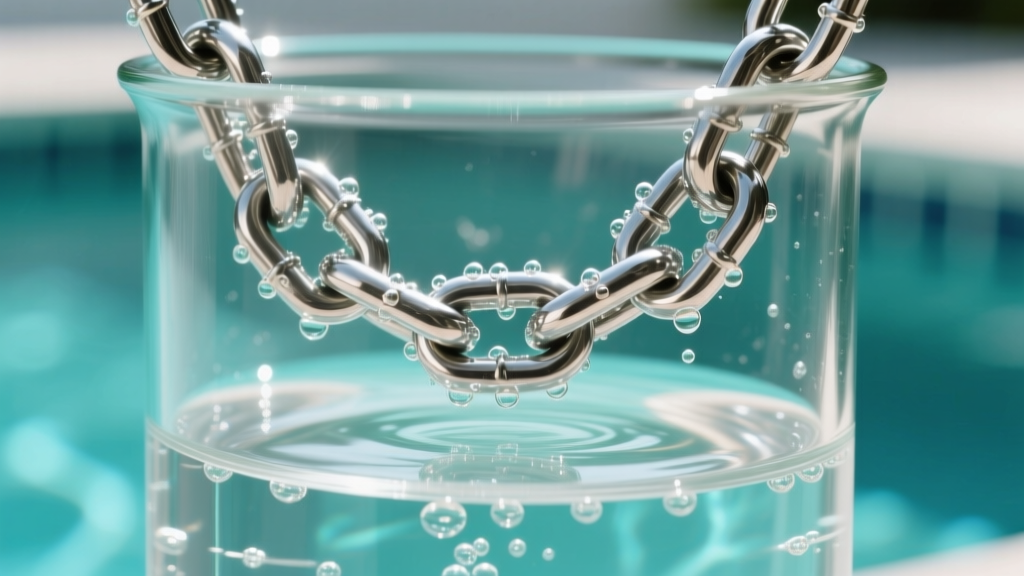
The 'Fake' Stainless Steel and PVD Coating Problem
Many necklaces marketed as 'gold stainless steel' or 'black stainless steel' rely on surface treatments. High-end brands use PVD (Physical Vapor Deposition), often coating the steel in Titanium Nitride (TiN) or Zirconium Nitride (ZrN). PVD bonds at a molecular level and is highly resistant to wear.
However, cheap alternatives use traditional electroplating or even spray-painted lacquers over low-grade 200-series steel (which substitutes manganese for nickel to cut costs). When this cheap plating chips, the underlying low-grade steel is exposed to air and moisture, resulting in rapid, severe rusting that consumers mistakenly blame on 'stainless steel tarnishing.'
Skin Sensitivities and the Nickel Factor
A common concern intertwined with material degradation is skin discoloration and allergic reactions. Stainless steel contains nickel, a known contact allergen. However, in high-quality 316L steel, the nickel is tightly bound within the crystalline matrix of the alloy.
According to the National Center for Biotechnology Information, the rate of nickel release is what triggers dermatitis, not just the presence of the metal. Under the strict EU Nickel Directive (EN 1811:2011), 316L surgical steel typically releases less than 0.5 µg/cm²/week, making it hypoallergenic for the vast majority of wearers. Conversely, if the steel begins to corrode or pit due to poor grade or harsh chemicals, the degradation process releases free nickel ions, which can suddenly trigger allergic reactions and leave a green or black residue on the skin.
Actionable Care & Restoration Protocol
Maintaining the passive layer of your necklace requires minimal but specific effort. Avoid harsh chemical dips designed for silver, as they can strip the chromium oxide layer.
- Routine Cleaning: Mix warm water with a few drops of mild, phosphate-free dish soap. Soak the necklace for 5 minutes.
- Agitation: Use an ultra-soft baby toothbrush to gently agitate dirt from the crevices of rope or Cuban links. Never use stiff bristles or abrasive pastes.
- Drying: Rinse with distilled water (to avoid hard water mineral deposits) and pat completely dry with a microfiber cloth. Air-drying can leave water spots that mimic tarnish.
- Restoring Shine: If the steel has become dull from micro-scratches, use a specialized jeweler's rouge or a non-abrasive metal polish formulated specifically for stainless steel. Apply with a felt polishing wheel or a soft cloth, moving in the direction of the metal's grain.
Buying Guide: How to Verify Authentic 316L
Because 304 and 316L look identical to the naked eye, unscrupulous sellers often pass off cheaper grades as surgical steel. Here is how to protect your investment:
1. The Price Indicator: Authentic 316L requires more expensive raw materials and harder tooling to machine. A heavy, solid 316L Cuban link chain will rarely cost less than $35-$40. If you are buying a thick chain for $12, it is likely 304 steel, hollow-core, or plated brass.
2. The Magnet Test Myth: Many online guides suggest using a magnet to test for real stainless steel. This is fundamentally flawed. While austenitic stainless steels (like 304 and 316) are theoretically non-magnetic, the cold-working process used to draw wire and stamp chain links alters the crystalline structure, introducing martensite. Therefore, a genuine 316L chain will often exhibit a slight magnetic pull. Rely on hallmarks and reputable vendors rather than a magnet.
3. Seek Hallmarks and Guarantees: Look for brands that explicitly state '316L' or 'Surgical Steel' in their material specifications, rather than vague terms like 'premium steel alloy.' The Assay Office notes that while steel is not traditionally hallmarked like precious metals, reputable jewelers will provide exact metallurgical disclosures upon request.
Ultimately, a high-grade 316L stainless steel necklace will not tarnish. By understanding the chemistry of the passive layer and avoiding chloride-heavy environments, your steel jewelry will remain structurally sound and visually brilliant for decades.


