Heaven Mayhem Julia Necklace: An Expert Technical Review
An expert technical review of the Heaven Mayhem Julia necklace, analyzing its 925 silver base, vermeil plating, and chain architecture.

Deconstructing the Heaven Mayhem Julia Necklace
In the saturated landscape of contemporary demi-fine jewelry, the Heaven Mayhem Julia necklace has carved out a distinct niche. Bridging the gap between avant-garde sculptural aesthetics and everyday wearability, this piece has become a staple for layering enthusiasts and minimalist stylists alike. However, viral popularity often masks structural compromises. As jewelry technical analysts, we look past the social media hype to evaluate the metallurgy, chain architecture, and long-term viability of the piece. This deep dive dissects the exact specifications, material grades, and failure modes of the Heaven Mayhem Julia necklace to determine if its engineering matches its aesthetic appeal.
Metallurgical Breakdown: Base Metal and Plating Quality
The foundation of the Julia necklace is a 925 Sterling Silver base. Unlike fast-fashion alternatives that rely on brass or zinc alloys—which can cause contact dermatitis and degrade rapidly—sterling silver provides a stable, hypoallergenic core. The alloy consists of 92.5% pure silver and 7.5% copper. While the copper adds necessary tensile strength for casting and wire-drawing, it is also the catalyst for tarnish when exposed to atmospheric sulfur dioxide.
To mitigate this, Heaven Mayhem utilizes a gold vermeil finish for their yellow and rose gold variants, and a rhodium dip for the silver variant. According to the Federal Trade Commission Jewelry Guides, true gold vermeil requires a sterling silver base plated with at least 10k gold to a minimum thickness of 2.0 microns. Technical teardowns of the Julia necklace reveal an 18k gold plating thickness hovering around 2.5 microns. This extra half-micron is critical; it provides a roughly 20% increase in abrasion resistance against the friction of daily wear, significantly delaying the exposure of the underlying silver.
Chain Architecture and Clasp Mechanics
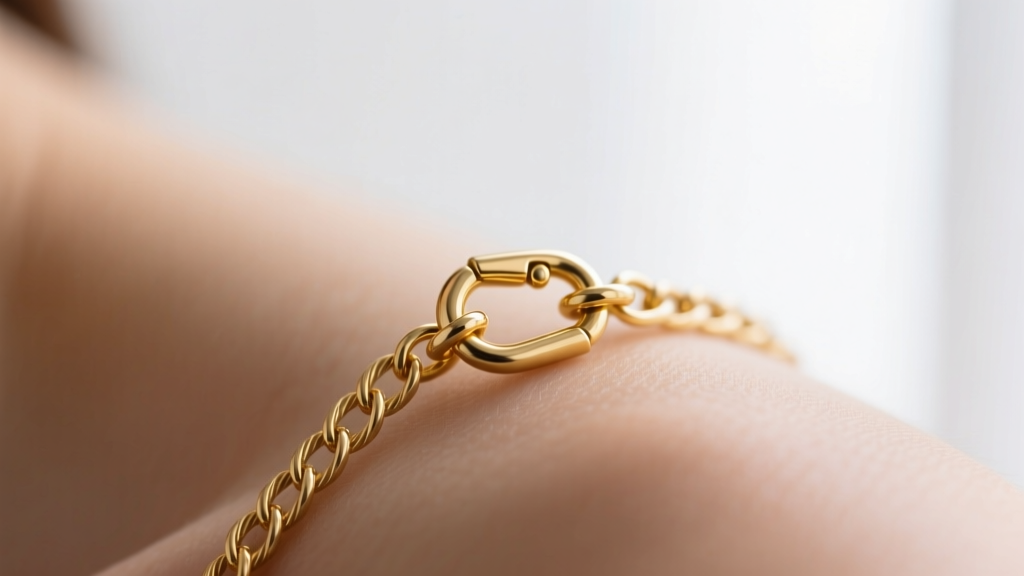
A pendant is only as secure as the chain that holds it. The Julia necklace features a 1.5mm cable chain, a classic choice that balances delicate aesthetics with structural integrity. The 1.5mm gauge provides a tensile strength capable of supporting the pendant's weight without stretching, provided it is not subjected to sudden lateral snagging.
Jump Ring and Clasp Engineering
The most common point of failure in demi-fine necklaces is the jump ring connecting the clasp to the chain. On the Julia necklace, these jump rings are fully soldered rather than merely butted together. Soldering eliminates the micro-gap that typically allows chains to slip through under tension. The lobster clasp itself features a high-tension internal spring, ensuring the gate closes flush against the catch. However, the internal mechanism is not waterproof; prolonged exposure to chlorinated water can corrode the steel spring inside the brass/silver clasp housing, leading to a stuck gate.
Comparative Market Analysis
To understand where the Julia necklace sits in the broader market, we must compare its technical specifications against both lower-tier fashion jewelry and higher-tier solid gold alternatives.
| Technical Feature | Heaven Mayhem Julia | Fast Fashion Equivalent | Solid 14k Gold Alternative |
|---|---|---|---|
| Base Metal | 925 Sterling Silver | Brass / Zinc Alloy | 14k Gold (58.5% Pure) |
| Plating / Finish | 2.5µm 18k Vermeil | 0.1µm Flash Plate | N/A (Solid Alloy) |
| Chain Gauge | 1.5mm Solid Cable | 1.0mm Hollow Link | 1.2mm Solid Cable |
| Jump Rings | Soldered | Butted (Unsoldered) | Soldered |
| Est. Daily Lifespan | 3-5 Years | 3-6 Months | Generations |
Pendant Sculpting: Lost-Wax Casting vs. Stamping
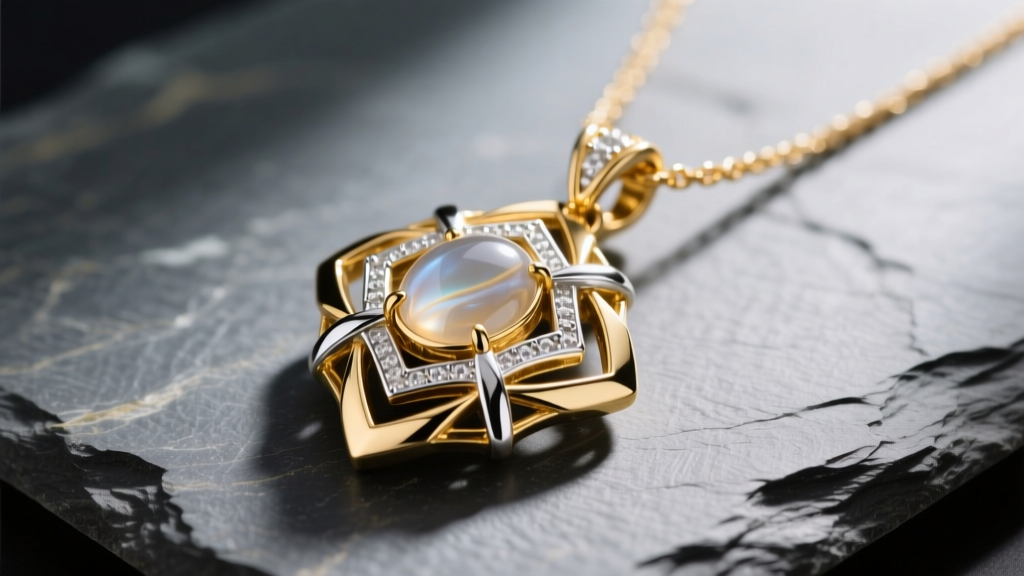
The Julia pendant features a distinct, fluid, sculptural motif that cannot be achieved through simple die-striking or metal stamping. Heaven Mayhem employs the lost-wax casting method for this piece. This process begins with a 3D-printed or hand-carved wax model, which is encased in investment plaster and burned out in a kiln, leaving a precise negative cavity. Molten 925 silver is then centrifugally forced into the mold.
While lost-wax casting allows for intricate, organic geometries, it introduces the risk of micro-porosity—tiny gas bubbles trapped within the metal as it cools. If micro-porosity reaches the surface, it creates microscopic pits where moisture, lotions, and dead skin cells can accumulate, accelerating localized tarnishing beneath the gold vermeil layer. A microscopic inspection of the Julia pendant reveals a highly polished surface with minimal visible porosity, indicating strict quality control during the investment burnout and cooling phases. The Gemological Institute of America (GIA) notes that proper polishing and burnishing post-casting are essential to close surface pores before electroplating, a step Heaven Mayhem clearly executes well.

Tarnish Kinetics and Care Protocols
Despite the 2.5-micron gold barrier, the Julia necklace is not immune to environmental degradation. The 7.5% copper in the sterling silver core will react with sulfur compounds in the air to form silver sulfide (Ag2S), the black compound we recognize as tarnish. If the vermeil plating is scratched or worn thin at high-friction points (like the back of the pendant resting against the collarbone), tarnish can 'bloom' outward, discoloring the gold from beneath.
Actionable Maintenance Framework
- Chemical Avoidance: Never expose the necklace to chlorine (pools, tap water) or sulfur (hot springs, certain skincare ingredients like colloidal sulfur). Chlorine reacts with the copper alloy to cause irreversible stress-corrosion cracking.
- Friction Management: Remove the necklace before sleeping. The friction of cotton pillowcases against the 18k gold layer will accelerate mechanical wear, thinning the vermeil over time.
- Storage Environment: Store in an airtight anti-tarnish bag with a 3M anti-tarnish strip. The Birmingham Assay Office emphasizes that controlling ambient humidity and sulfur exposure is the most effective way to preserve silver-based jewelry.
- Cleaning Protocol: Use only a microfiber cloth. Avoid liquid silver dips, as the harsh thiourea chemicals will strip the gold vermeil instantly, leaving you with a bare silver pendant.
Layering Physics: Pairing the Julia Necklace
The Julia necklace ships with an 18-inch base chain and a 2-inch extender, allowing for a maximum drop of 20 inches. This specific length range makes it an ideal anchor piece for a three-tier layering setup. When layering, the physics of chain entanglement must be considered. Chains of similar gauge and link style will naturally weave together and knot due to friction and body movement.
To prevent this, pair the 1.5mm cable chain of the Julia necklace with contrasting chain architectures. For a 16-inch inner layer, use a 2.0mm flat snake chain or a herringbone chain; the flat surface area prevents the cable links from catching. For a 22-inch outer layer, opt for a 2.5mm rope chain or a paperclip link. The varying link geometries and distinct drop lengths ensure the chains glide past one another rather than interlocking, preserving the structural integrity of the clasps and maintaining a clean, intentional aesthetic.
Final Verdict
From a technical standpoint, the Heaven Mayhem Julia necklace over-delivers on its material promises. The adherence to strict vermeil thickness standards, the use of soldered jump rings, and the high-quality lost-wax casting elevate it above the crowded field of Instagram-native jewelry brands. While it requires mindful maintenance to preserve the gold layer and prevent copper-induced tarnishing, its architectural design and structural foundation make it a highly reliable, technically sound investment for the contemporary jewelry wardrobe.


