How to Evaluate a Handmade Necklace With Beads Before Buying
Discover what to look for when buying a handmade necklace with beads. Learn to evaluate stringing materials, bead quality, and clasp security.

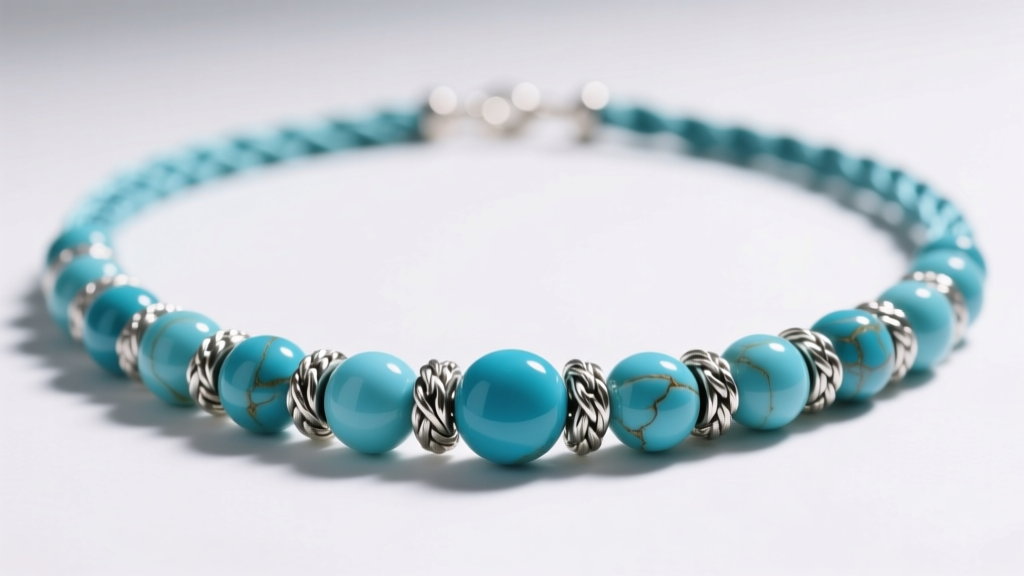
The Anatomy of a High-Quality Handmade Necklace With Beads
The market for artisan jewelry has exploded, but as of 2026, the term "handmade" is frequently co-opted by mass-producers assembling cheap components. When you are investing in a genuine handmade necklace with beads, you are paying for structural integrity, material authenticity, and meticulous craftsmanship. A beautiful strand of lampwork glass or natural jasper is only as good as the engineering holding it together. This buying guide strips away the aesthetic veneer to help you evaluate the hidden mechanics, bead quality, and findings that dictate a piece's longevity.
The Hidden Lifeline: Stringing Materials
The most critical component of any beaded necklace is entirely invisible. The stringing material dictates the drape, the tensile strength, and the lifespan of the jewelry. According to technical specifications from Fire Mountain Gems, different bead weights require entirely different structural approaches.
Stainless Steel Beading Wire
For heavy gemstones like jasper, agate, or large glass beads, multi-strand stainless steel wire coated in nylon is the industry standard. However, not all wires are created equal:
- 7-Strand Wire: Economical but stiff. It kinks easily and lacks the drape required for high-end artisan pieces. Avoid this for heavy stone necklaces.
- 19-Strand Wire: A mid-tier option offering better flexibility, suitable for medium-weight crystal or glass beads.
- 49-Strand Wire (e.g., Beadalon 49): The gold standard for luxury handmade pieces. A 0.018-inch or 0.024-inch gauge 49-strand wire offers a tensile strength of up to 40 pounds while maintaining a silk-like drape. It resists kinking and withstands the sharp edges of gemstone drill holes.
Knotted Silk and Synthetic Cords
For organics like pearls, amber, or coral, knotting between each bead is non-negotiable. This prevents bead-on-bead friction and ensures that if the strand breaks, you only lose one bead rather than the entire necklace. Look for artisans using Griffin No. 6 or No. 8 natural silk or high-performance synthetic alternatives like WildFire, which is thermally fused and waterproof.
Bead Integrity: Drill Holes, Dyes, and Hardness
Evaluating the beads themselves requires looking past the polish. The Gemological Institute of America (GIA) frequently warns about the prevalence of treated and dyed stones in the artisan market. Here is how to inspect bead quality:
Examining the Drill Holes
The drill hole is the stress point of any bead. In mass-produced beads, the drill bit often causes "blowout" or micro-fractures at the exit point, leaving a jagged edge that will eventually saw through the stringing wire. True artisans drill high-quality gemstones from both sides so the holes meet perfectly in the center, preventing spalling. If you see chipped edges around the holes of a supposedly high-end lapis lazuli or turquoise necklace, walk away.
Dye Lots and Color Consistency
Natural gemstones rarely exhibit perfect, uniform color across a 20-inch strand. If a handmade necklace with beads features vibrant, uniform "turquoise" or "lapis" at a surprisingly low price point, you are likely looking at dyed howlite or magnesite. Authentic artisan pieces will feature natural matrix variations and slight color zoning, which should be celebrated, not hidden.
Findings and Clasp Mechanics
Findings—the clasps, jump rings, and crimps—are the hardware of the necklace. Base metal findings will oxidize, turn the skin green, and eventually shatter under pressure. Always verify that the artisan uses solid sterling silver, 14k gold-filled, or surgical-grade titanium findings.
| Clasp Type | Security Level | Best Use Case |
|---|---|---|
| Toggle Clasp | High (if properly weighted) | Heavy, chunky gemstone or large glass bead necklaces. |
| Lobster Claw | Medium-High | Medium-weight strands; requires a sufficiently large jump ring. |
| Magnetic | Low-Medium | Lightweight seed bead or pearl necklaces; avoid for heavy stones. |
| S-Hook / Hook & Eye | Medium | Artisan bohemian styles; requires manual tension to stay secure. |
The Importance of Wire Guardians and Crimp Covers
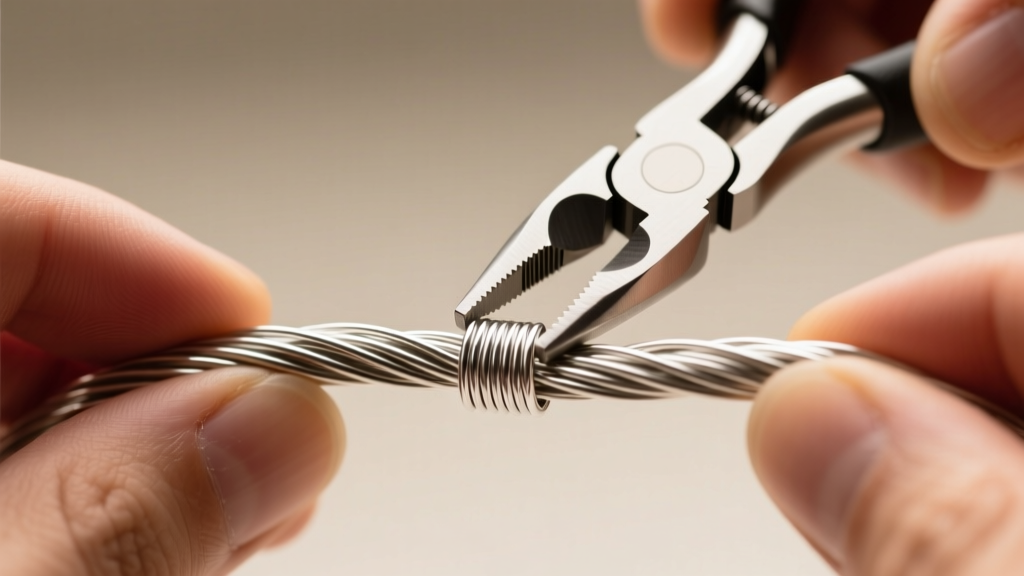
When an artisan uses stainless steel wire, the raw wire should never directly touch the clasp. The friction will eventually snap the metal. High-quality makers use sterling silver wire guardians (bullion) to protect the loop, and they secure the wire using 2x2mm sterling silver crimp tubes crushed with micro-crimping pliers. If you see a flattened, jagged crimp bead pinching the wire, it is a hallmark of amateur construction.
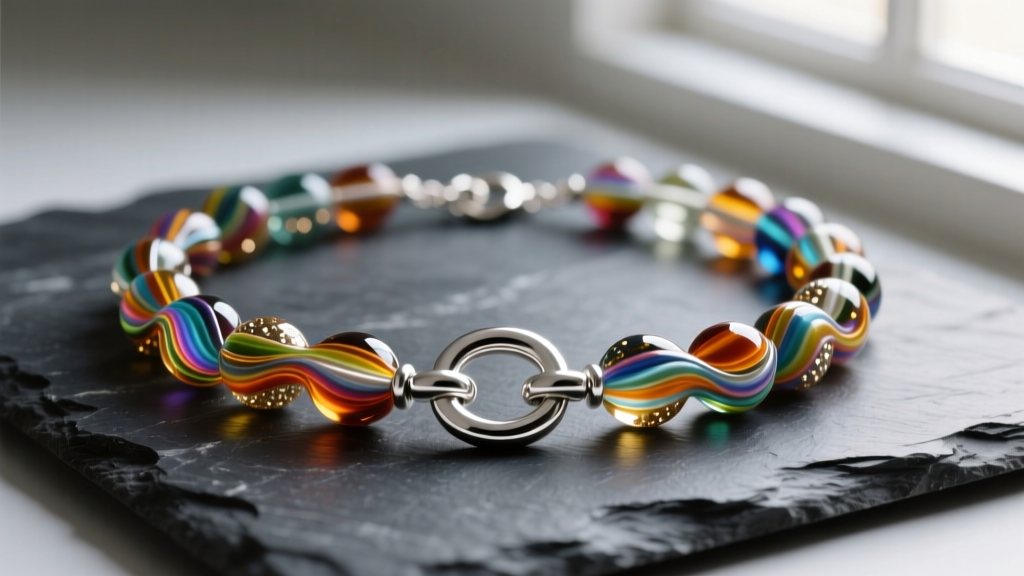
The Pricing Matrix: Artisan vs. Commercial
Understanding the pricing framework of a handmade necklace with beads helps you identify genuine craftsmanship versus dropshipped markup. Below is a general guide to what you should expect to pay based on materials and labor in the current market.
- $25 - $60 (Hobbyist / Assembled): Usually features commercial glass beads, 7-strand wire, and base-metal lobster clasps. Often assembled from pre-made kits.
- $80 - $180 (Skilled Artisan): Features genuine semi-precious stones, 49-strand wire or hand-knotted silk, sterling silver crimps, and wire guardians. The maker sources beads individually and designs custom layouts.
- $250 - $800+ (Master Jeweler / Lapidary): The artisan cuts and polishes their own gemstones or creates custom lampwork glass beads. Findings are often hand-fabricated from precious metals, and the stringing technique is flawless.
"True artisan jewelry isn't just about stringing pretty stones together. It's about engineering a piece that moves with the body, withstands daily tension, and ages gracefully over decades." — Master Jeweler & Lapidary Artist
Red Flags to Avoid When Shopping Online
When buying a handmade necklace with beads from online marketplaces or independent boutiques, scrutinize the photography and descriptions for these common red flags:
- No Macro Photography: If the seller does not provide close-up shots of the clasp, crimps, and drill holes, they are likely hiding poor finishing techniques.
- Vague Material Descriptions: Terms like "Tibetan Silver," "Alloy," or "Natural Stone" without specifying the exact gemstone or metal grade are massive warning signs.
- Uniformity in Organic Beads: If freshwater pearls or natural coral beads look perfectly identical in shape and color without any mention of synthetic origins, they are likely dyed shell or resin.
- Missing Tension Details: A reputable maker will explicitly state the stringing material (e.g., "strung on 49-strand Beadalon with sterling silver crimps") in their product description to justify their pricing and assure the buyer of the structural integrity.
By looking past the initial visual appeal and inspecting the structural anatomy of the piece, you can confidently invest in a handmade necklace with beads that will remain a staple in your wardrobe for years to come.


