Witchcraft Necklace Materials: Metaphysical & Physical Properties
Discover the best metals and stones for a witchcraft necklace. We compare tarnish rates, Mohs hardness, and esoteric properties for ritual wear.

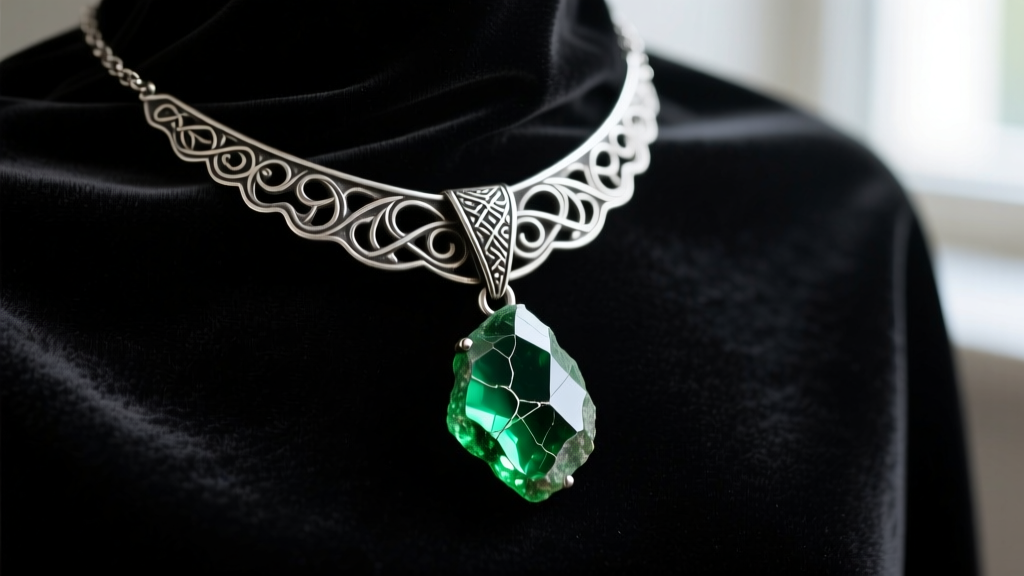
The Intersection of Metaphysics and Metallurgy
When selecting a witchcraft necklace, practitioners must balance esoteric intentions with rigorous material science. A ritual necklace is not merely decorative; it is an active tool subjected to extreme environmental stressors. Exposure to smudge smoke, saltwater, acidic sweat, and essential oils can rapidly degrade poorly chosen metals and fracture fragile gemstones. As the modern craft revival continues to evolve in 2026, discerning witches and occultists are increasingly demanding jewelry that honors both energetic traditions and metallurgical reality.
The failure to understand material properties often results in broken chains, ruined patinas, and skin irritation. To build a resilient and energetically aligned witchcraft necklace, one must evaluate the Mohs hardness, specific gravity, tarnish resistance, and thermal conductivity of every component. This guide provides a deep-dive comparison of the most popular metals and stones used in occult jewelry, separating romanticized lore from verifiable gemological and metallurgical data.
Metal Alloys for Ritual Wear: Silver, Copper, and Titanium
The chain and pendant bail form the structural backbone of any witchcraft necklace. The metal you choose dictates the piece's longevity, especially when worn during high-exertion circle work or exposed to the elements.
Sterling Silver (925) vs. Argentium (935)
Sterling silver has long been associated with lunar energy and psychic protection. However, standard 925 sterling silver contains 7.5% copper, making it highly susceptible to sulfur-induced tarnish. When exposed to the sulfur compounds present in burning sage, palo santo, or incense, 925 silver rapidly forms a black layer of silver sulfide (Ag2S).
For a low-maintenance alternative, The Silver Institute highlights Argentium silver (935 or 960). Argentium replaces a portion of the copper with germanium. This creates a transparent, self-healing germanium oxide layer on the surface that drastically slows tarnishing. While slightly more expensive (typically 15-20% higher per gram than standard sterling), Argentium is vastly superior for practitioners who frequently use smoke cleansing methods.
Copper and the Oxidation Reality
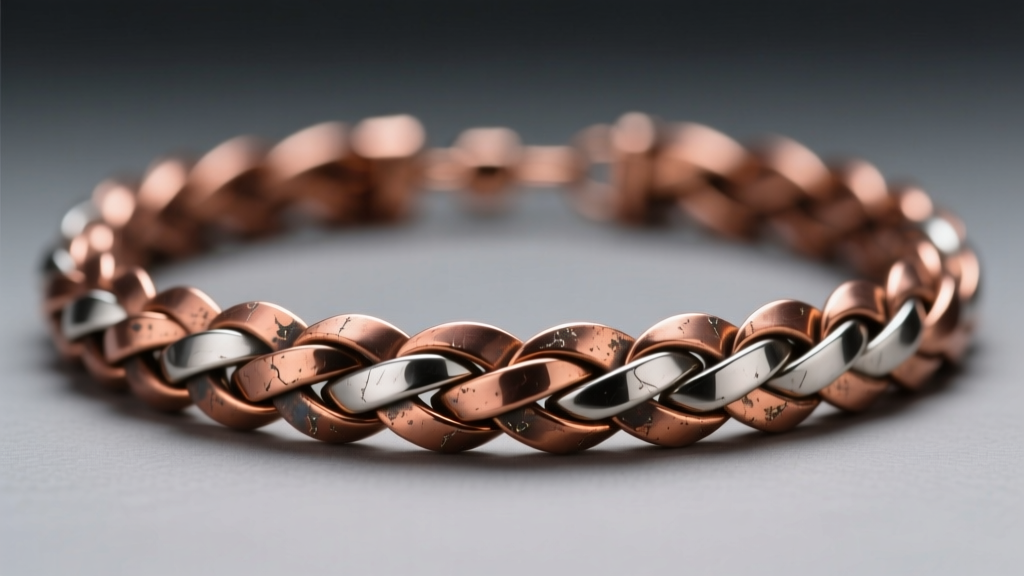
Copper is prized in energy work for its high thermal and electrical conductivity, believed to facilitate the movement of kinetic and spiritual energy. However, pure C101 copper is highly reactive. When copper reacts with the lactic acid and sebum in human sweat (which typically has a pH between 4.0 and 6.5), it forms copper chelates—resulting in the infamous green skin discoloration. This is not a sign of impure metal, but a basic chemical reaction. If you desire the energetic properties of copper without the oxidation, look for pieces sealed with a jeweler-grade nano-ceramic coating, or accept the patina as a living record of your practice.
Titanium (Grade 5) for Extreme Environments
For witches who practice near the ocean or incorporate saltwater into their rituals, Grade 5 Titanium (Ti-6Al-4V) is the ultimate choice. Titanium is entirely inert and immune to chloride-induced pitting, meaning saltwater will not corrode it. While it lacks the traditional occult associations of silver or copper, its sheer durability and hypoallergenic properties make it an ideal, modern anchor for heavy talismans.
Gemological Realities: Jet, Obsidian, and Moldavite
The focal point of a witchcraft necklace is often a stone chosen for its protective or amplifying properties. However, the physical fragility of these stones is frequently overlooked, leading to catastrophic failures during daily wear.
Jet: The Fragility of Fossilized Wood
Authentic Whitby Jet is fossilized Araucariaceae wood, prized for deep banishing and grounding work. According to the GIA Gem Encyclopedia, Jet has a Mohs hardness of just 2.5 to 4.0 and a remarkably low specific gravity of 1.30 to 1.40, making it incredibly lightweight but structurally brittle. Jet is highly susceptible to thermal shock and abrasion. Never cleanse a jet pendant with salt or place it in an ultrasonic cleaner; the salt crystals will micro-scratch the surface, and the vibrations will shatter internal stress fractures. To verify true Jet against black glass imitations, perform a streak test on unglazed porcelain: true Jet leaves a brown streak, while glass leaves none or a harsh black line.
Obsidian: Conchoidal Fractures and Sharp Edges
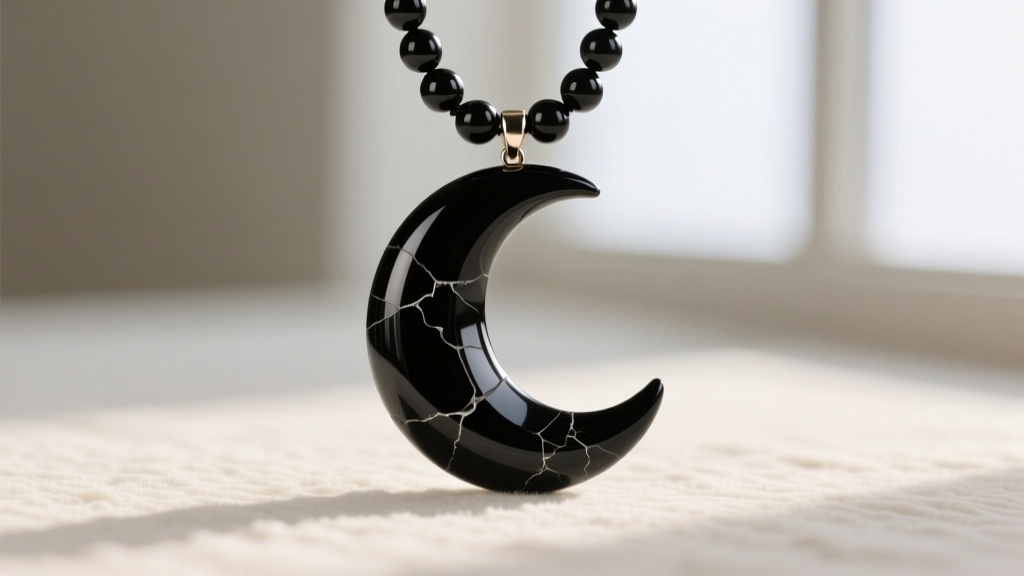
Obsidian is a naturally occurring volcanic glass with a Mohs hardness of 5.0 to 5.5. While harder than Jet, it lacks a crystalline structure, meaning it breaks with a conchoidal fracture—producing razor-sharp edges. If an obsidian pendant is dropped on a hard stone floor, it will not merely chip; it will shatter into dangerous shards. When setting raw or polished obsidian in a witchcraft necklace, ensure the bezel or wire wrap provides substantial shock absorption, keeping the stone elevated above the base plane to prevent impact damage.
Moldavite: The Teardrop Tektite
Moldavite, a green tektite formed by a meteorite impact, is highly sought after for its intense transformative energy. However, Mindat.org notes that Moldavite frequently contains lechatelierite (pure silica glass) inclusions and internal gas bubbles. These bubbles create structural weak points. Faceted Moldavite, particularly the popular Besednice teardrop cuts, is especially prone to snapping at the drill hole if subjected to lateral torque. Always use a flexible silk or synthetic cord rather than a rigid metal chain for drilled Moldavite pendants to distribute tension evenly.
Comparative Data Matrix for Ritual Materials
Use the following matrix to cross-reference the physical durability of common witchcraft necklace materials against their maintenance requirements and esoteric associations.
| Material | Mohs Hardness / Tarnish Rate | Primary Esoteric Use | Critical Maintenance Warning |
|---|---|---|---|
| Argentium Silver | N/A / Very Low | Lunar work, psychic shielding | Avoid harsh chemical polishes; use mild soap. |
| Pure Copper | 2.5-3.0 / High | Energy conduction, healing | Will oxidize and stain skin green in high humidity. |
| Whitby Jet | 2.5-4.0 / N/A | Banishing, deep grounding | Extremely brittle; keep away from heat and salt. |
| Obsidian | 5.0-5.5 / N/A | Scrying, energetic cutting | Prone to shattering; requires protective bezels. |
| Moldavite | 5.5 / N/A | Rapid transformation, third eye | Internal bubbles cause weak points; avoid wire torque. |
Chain Gauge and Hardware Integrity
A witchcraft necklace is only as strong as its weakest jump ring. Many mass-produced occult pendants are heavy, cast-metal pieces weighing between 20 and 40 grams. Suspending this weight from a delicate 0.6mm (20-gauge) chain is a recipe for disaster.
For heavy talismans, the chain wire must be a minimum of 1.2mm (16-gauge). Furthermore, the jump ring connecting the pendant to the chain must be soldered shut or feature a locking mechanism. Standard split rings or butt-joint jump rings will inevitably pull apart under the dynamic load of daily movement. When wrapping raw stones with wire, use half-hard or dead-soft 20-gauge Argentium or copper wire. Dead-soft wire is malleable and excellent for intricate weaving, but it work-hardens as you bend it. If you bend it too many times, the metal will become brittle and snap—a phenomenon known as work-hardening fatigue. Always anneal your wire with a torch if you need to restore its malleability during a complex wrap.
Material-Specific Cleansing Protocols
Physical cleansing and energetic cleansing must be aligned. Submerging a witchcraft necklace in saltwater is a common energetic purification method, but it is physically destructive to porous stones like turquoise, malachite, and jet, as well as to copper and standard silver hardware. Saltwater accelerates galvanic corrosion, especially if the necklace features mixed metals (e.g., a copper bail on a silver chain), which creates a galvanic cell that rapidly eats away the less noble metal.
Expert Insight: If your practice requires saltwater cleansing, restrict this method to solid Titanium, solid Gold (14k or higher), or sealed obsidian. For silver and copper pieces, utilize sound cleansing (like a 432Hz singing bowl) or selenite charging plates to maintain the structural integrity of the metal alloys while achieving your energetic goals.
Ultimately, a well-crafted witchcraft necklace is a synthesis of intention and engineering. By respecting the specific gravity, hardness, and chemical reactivity of your chosen materials, you ensure that your magical tools remain as resilient and enduring as your practice itself.


