How to Choose the Perfect Womens Choker Necklace for Your Neck Shape
Discover how to choose the perfect womens choker necklace. Learn about neck measurements, material grades, and styling tips for every neckline.

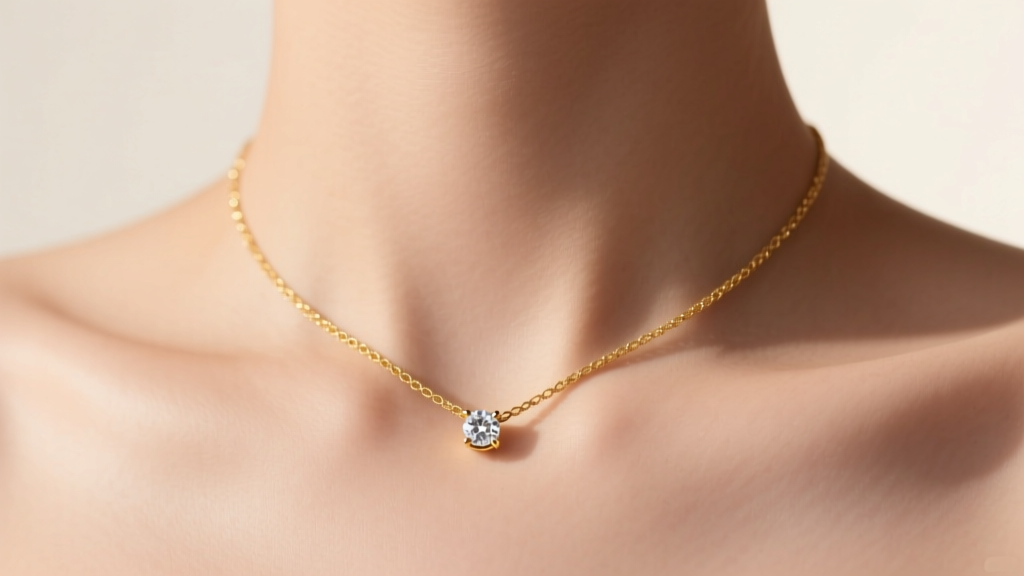
The womens choker necklace has transcended its 1990s grunge and Victorian aristocracy roots to become a permanent fixture in modern jewelry boxes. As we navigate the style landscape of 2026, the choker remains a masterclass in framing the face and accentuating the collarbone. However, because it sits flush against the skin, choosing the right piece requires a deeper understanding of anatomy, metallurgy, and proportion than a standard pendant necklace. This beginner-friendly explainer will guide you through the exact measurements, hypoallergenic material grades, and neckline pairings you need to find your perfect fit.
The Anatomy of a Choker: Lengths and Fit
Unlike longer chains that drape loosely, a choker is designed to hug the neck. Getting the exact circumference right is the difference between an elegant accessory and an uncomfortable restriction. Standard jewelry sizing categorizes neck-length pieces into three distinct tiers:
- The Collar (12 to 13 inches): Sits tightly at the base of the neck, just above the collarbone. Best for slender necks and open-shoulder garments.
- The Standard Choker (14 to 16 inches): The most versatile and common length. It rests comfortably in the hollow of the neck, allowing for slight movement and breathing room.
- The Princess (17 to 19 inches): While technically a short necklace rather than a true choker, this length sits just below the collarbone and is often used as the base layer in a choker-stacking routine.
The Two-Finger Measurement Rule
To find your ideal choker size, use a soft fabric measuring tape. Wrap it around your neck exactly where you want the necklace to sit. For a traditional, snug choker fit, add 0.5 inches to your raw measurement. For a more relaxed, breathable fit—especially recommended if you plan to wear the piece for more than four hours—add a full 2 inches. You should always be able to comfortably slide two fingers between the necklace and your skin.
Material Matters: Hypoallergenic Options for Sensitive Skin
Because a choker rests directly over the carotid pulse points, the area generates more heat and sweat than your wrists or earlobes. This moisture can accelerate metal oxidation and trigger contact dermatitis if you are wearing reactive alloys. The American Academy of Dermatology frequently cites nickel as the primary culprit for jewelry-induced rashes, a metal commonly found in cheap brass or silver-plated bases.
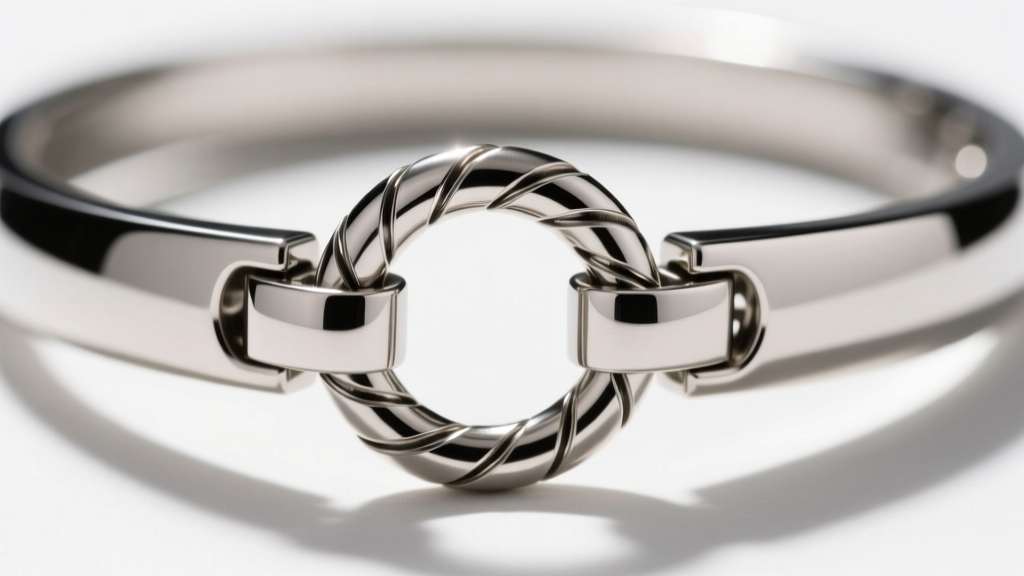
When shopping for a womens choker necklace, prioritize these skin-safe materials:
1. Implant-Grade Titanium (ASTM F136)
If you have severe metal sensitivities, look for chokers crafted from Grade 23 titanium. This is the exact alloy used in medical implants. It is entirely nickel-free, highly resistant to corrosion from sweat, and remarkably lightweight, making it ideal for wide, architectural collar chokers.
2. Niobium
Niobium is an elemental metal that does not react to oxygen or skin acids. It is often anodized to create vibrant colors without the use of surface paints or platings that can chip and irritate the skin over time.
3. Solid 14k or 18k Gold
According to the Gemological Institute of America, 14k and 18k gold offer the best balance of purity and durability. Avoid 'gold-plated' or 'gold-filled' chokers if you plan to wear them daily, as the friction against the neck will eventually wear through the microscopic gold layer, exposing the reactive brass or copper core beneath.
Matching Your Choker to Your Neckline
A choker should complement, not compete with, your outfit's architecture. The wrong pairing can visually truncate your neck or create a cluttered silhouette. Use this decision matrix to pair your choker style with your most worn necklines.
| Neckline Type | Best Choker Style | Why It Works |
|---|---|---|
| Deep V-Neck | Delicate Chain with Drop Pendant | The pendant mimics and elongates the V-shape, drawing the eye downward and preventing a 'stair-step' visual effect. |
| Crew Neck / T-Shirt | Wide Velvet or Enamel Collar | A thick, opaque choker creates a deliberate, high-contrast boundary between the fabric and the skin, acting as a statement piece. |
| Scoop Neck | Layered Thin Chains (14' and 16') | Scoop necks leave a wide canvas of skin. Layering two delicate chains fills the negative space without overwhelming the collarbone. |
| Off-Shoulder / Bardot | Ornate Lace or Pearl Strand | With the shoulders entirely bare, a textured choker adds a necessary focal point to the upper chest and frames the face beautifully. |

Troubleshooting Common Choker Problems
Even high-end jewelry comes with mechanical quirks. Here is how to solve the three most frequent complaints associated with choker necklaces.
The 'Floating' Clasp Dilemma
Because lightweight chains (like cable or box chains) lack the weight to pull the clasp to the back of the neck, the clasp often migrates to the front or side of the collarbone. The Fix: Ask a jeweler to add a tiny, 2mm silicone or metal 'counterweight' bead directly opposite the clasp. Alternatively, swap the standard spring-ring clasp for a slightly heavier magnetic barrel clasp, which naturally anchors to the nape of the neck.
Velvet Fraying and Moisture Damage
Velvet ribbon chokers are incredibly popular but prone to fraying at the cut edges and staining from perspiration. The Fix: Apply a micro-layer of clear, flexible fabric sealant (not standard superglue, which dries brittle) to the interior seams. Always unhook the metal hardware before storing, and keep velvet pieces in a silica-gel-lined box to prevent ambient humidity from crushing the pile.
Skin Discoloration (The Green Ring Effect)
If your choker leaves a green or black smudge on your neck, it is not necessarily an allergy; it is a chemical reaction between copper alloys and your skin's natural acidity. The Fix: Have the interior of the metal band professionally plated with Rhodium. Rhodium is a platinum-group metal that provides an inert, frictionless barrier between the copper alloy and your skin, permanently halting the oxidation transfer.
Final Thoughts on Building Your Collection
Mastering the womens choker necklace is about understanding the intersection of precise measurement and material science. Start your collection with a versatile 15-inch solid gold or titanium chain, master your neckline pairings, and slowly introduce textured materials like velvet or enamel as your confidence grows. By prioritizing hypoallergenic metals and exact fits, your choker will remain a comfortable, elevated staple in your wardrobe for years to come.


