Value Guide: Best Women's Medallion Necklace Picks for 2026
Discover how to evaluate a women's medallion necklace for true value. Compare metals, pricing tiers, and craftsmanship markers in our 2026 budget guide.


The True Cost of a Women's Medallion Necklace: Decoding Price Tiers
When shopping for a statement piece, the sheer variety of pricing can be disorienting. A quick search for a women's medallion necklace yields results ranging from $18 fast-fashion trinkets to $2,500 heirloom-quality investments. As we navigate the 2026 jewelry market, understanding the gap between 'price' and 'value' is critical. A medallion is not just a pendant; its broad surface area (typically 20mm to 35mm in diameter) means it interacts with clothing, skin, and environmental friction far more than a delicate solitaire drop. This physical reality dictates how different materials age, tarnish, and ultimately fail. To make an informed budget assessment, we must break down the market into three distinct pricing tiers and evaluate what your money actually secures in terms of metallurgy and longevity.
Tier 1: Fashion & Flash-Plated ($20 - $80)
In this bracket, you are paying for the design, not the material. These pieces typically feature a brass or zinc alloy base with a 'flash plating' of gold or silver that is less than 0.5 microns thick. While visually appealing on day one, the large surface area of a medallion acts as a friction pad against your chest. Within three to six months of daily wear, the plating will rub off, exposing the base metal. This tier is only recommended for occasional, short-term wear or highly specific costume styling. From a value perspective, the cost-per-wear skyrockets once the piece begins to tarnish and turn your skin green due to galvanic corrosion.
Tier 2: Demi-Fine & Heavy Vermeil ($85 - $250)
This is the sweet spot for the modern budget-conscious collector. Demi-fine jewelry utilizes a sterling silver base (925) coated with a thick layer of gold vermeil. According to Federal Trade Commission (FTC) guidelines, true vermeil must have a gold thickness of at least 2.5 microns. However, for a high-friction item like a medallion, you should actively seek out brands offering 3.0 to 4.0 microns. At this price point, you get the luxurious weight and thermal conductivity of real silver, paired with a gold finish that can withstand 2 to 4 years of regular wear before requiring professional re-plating.
Tier 3: Solid Gold & Heirloom ($350 - $1,500+)
Solid 14k or 18k gold medallions represent a permanent investment. You are paying for the intrinsic melt value of the gold, plus the artisan labor required to cast, stamp, and polish the piece. Unlike plated alternatives, a solid gold women's medallion necklace will never flake, peel, or expose a base metal. Scratches that occur over decades of wear can be easily buffed out by a jeweler. While the upfront cost is steep, the generational lifespan and zero-maintenance durability make this the highest 'true value' tier for everyday wearers.
Material Grades & Failure Modes: The Surface Area Problem
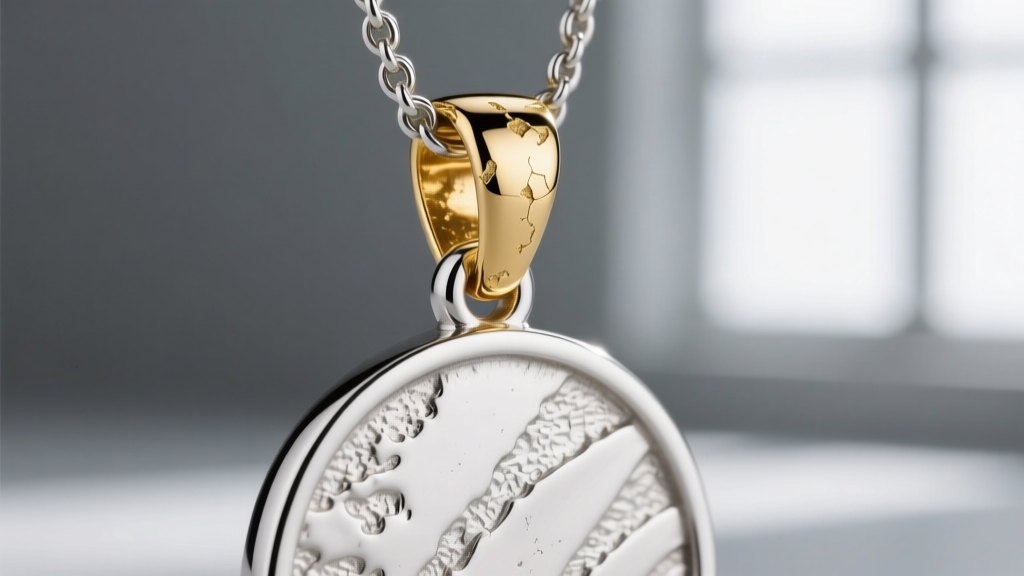
Why do medallions fail faster than other pendants? The answer lies in physics. A standard 25mm round medallion has a surface area of roughly 490 square millimeters on its face alone. When layered under winter sweaters or resting against summer linens, this broad face creates significant drag. This drag transfers stress directly to the bail (the loop connecting the pendant to the chain) and the jump ring. Below is a breakdown of how different material grades handle this specific stress over a 5-year period.
| Material Base | Finish / Plating | Expected Lifespan (Daily Wear) | Primary Failure Mode |
|---|---|---|---|
| Brass / Alloy | Flash Gold (0.1 - 0.5µm) | 3 - 8 Months | Plating rubs off on high-relief engravings; base metal oxidizes rapidly. |
| Sterling Silver | Heavy Vermeil (2.5 - 4.0µm) | 2 - 5 Years | Bail friction wears through to silver; requires re-plating to maintain uniform color. |
| 14k Solid Gold | None (Solid Alloy) | Lifetime / Generational | Jump ring thinning from chain friction; easily repaired by a jeweler via soldering. |
Chain Pairing: Weight Ratios and Tensile Strength
A common and costly mistake buyers make is pairing a heavy, solid-bronze or silver medallion with a delicate, budget-friendly chain. A 30mm solid metal medallion can easily weigh between 12 and 18 grams. If you hang this weight on a 0.9mm cable chain, the tensile stress will eventually warp the links or snap the spring-ring clasp. For optimal value and security, adhere to the 1:8 weight ratio rule: your chain's break strength should comfortably support eight times the weight of the pendant.
For a 15-gram medallion, you need a chain rated for at least 120 grams of tensile pull. Look for 1.8mm to 2.5mm Figaro, curb, or rope chains. Furthermore, inspect the clasp. A standard spring-ring clasp is a weak point for heavy medallions; always upgrade to a lobster clasp with a soldered jump ring on the opposite end to prevent the chain from slipping through the gap.
Craftsmanship Markers: Spotting Quality Beyond the Brand
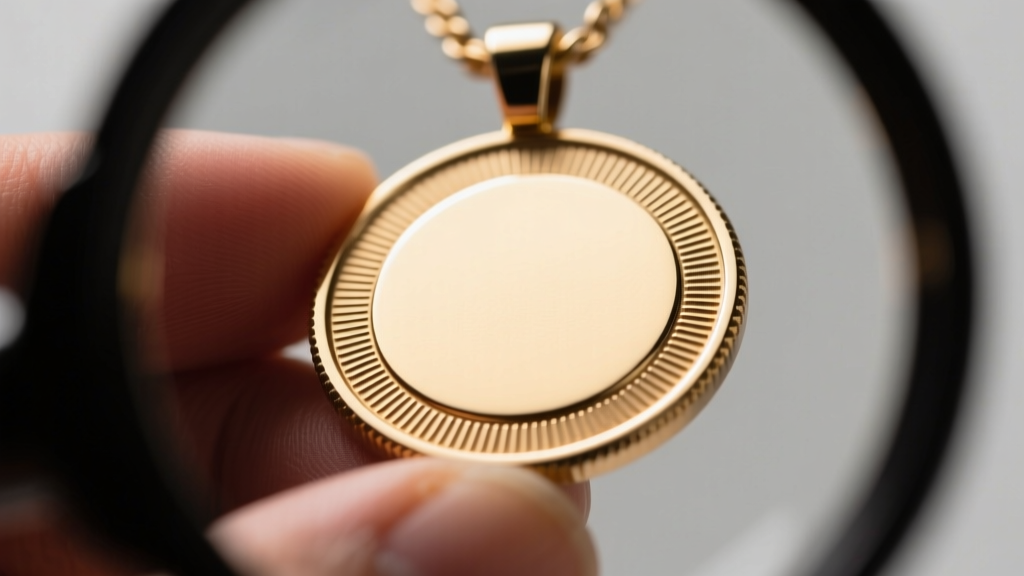
When assessing value, look past the logo and examine the micro-details of the manufacturing process. High-end medallions feature specific craftsmanship markers that justify their price tags:
- Edge Beveling: Run your thumb along the perimeter of the medallion. Budget pieces are stamped and left with sharp, 90-degree edges that will snag on knitwear and scratch your collarbone. Quality pieces feature a hand-filed or machine-milled bevel (a slight rounding of the edge) that ensures comfort and reduces edge-wear on the plating.
- Bail Construction: Avoid 'glued-on' bails. A high-value medallion will have a soldered bail or an integrated cast bail. If you can see a seam line where the bail meets the disc, ensure it is seamlessly soldered, not merely held by jeweler's epoxy, which will degrade when exposed to perfumes and body heat.
- Engraving Depth: For vintage-inspired or zodiac medallions, examine the depth of the relief carving. Deep, undercut reliefs trap dirt and oils, accelerating tarnish in the crevices. Shallow, laser-crisp engravings are easier to clean and maintain over time.
2026 Market Analysis: Where to Find the Best Value
The jewelry landscape in 2026 has shifted heavily toward direct-to-consumer (DTC) artisans and specialized demi-fine houses. According to market analyses by the Gemological Institute of America (GIA), consumers are increasingly prioritizing transparent material sourcing over legacy brand markups. To maximize your budget, bypass traditional mall jewelers where overhead inflates the price of vermeil pieces by up to 300%. Instead, look for specialized online ateliers that disclose exact micron plating thicknesses and silver sourcing. Custom stampers on platforms like Etsy also offer immense value, allowing you to commission a solid 14k gold medallion at the raw material cost plus a modest labor fee, often undercutting major retail brands by 40% while delivering superior, made-to-order craftsmanship.
Final Verdict: Maximizing Your Medallion Investment
Ultimately, the best value for a women's medallion necklace depends entirely on your wear habits. If you treat your jewelry as seasonal rotation, a $90 heavy-vermeil piece with a 2.0mm curb chain offers the perfect balance of visual weight and financial prudence. However, if you intend to wear your medallion daily as a signature staple, bypass the demi-fine tier entirely. Saving for a $450 solid 14k gold piece eliminates the inevitable re-plating costs and guarantees a structurally sound, heirloom-grade accessory that will outlast the fleeting trends of the season.


