Understanding Womens Necklace Sizes for Budget Buyers
Discover how womens necklace sizes impact pricing. Learn our Cost-Per-Inch framework to maximize value, avoid length markups, and budget smartly.

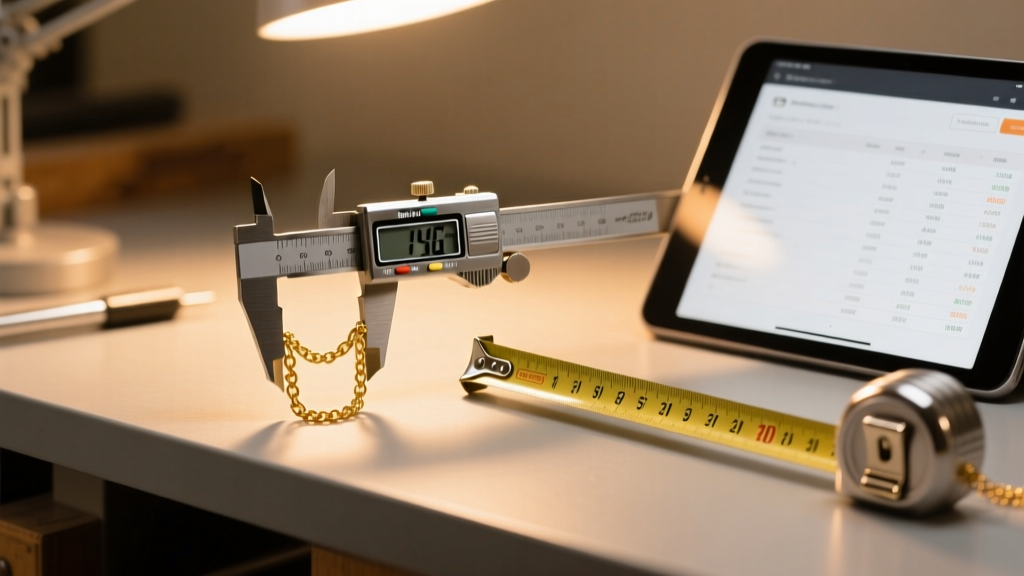
When shopping for fine jewelry, most budget-conscious buyers hyper-focus on metal purity (10k vs. 14k vs. 18k) or gemstone carat weight. However, one of the most significant—and frequently overlooked—drivers of retail pricing is chain length. Understanding how womens necklace sizes dictate material yield, manufacturing complexity, and retail markup is essential for maximizing your jewelry budget. A 24-inch opera chain doesn't just use 33% more metal than an 18-inch princess chain; it also requires heavier clasps, reinforced jump rings, and incurs higher market premiums due to lower production volumes. In this guide, we break down the true cost of necklace lengths and introduce the Cost-Per-Inch (CPI) framework to help you assess real value.
The Baseline: Standard Womens Necklace Sizes and Material Yields
To evaluate value, you must first understand the baseline material requirements for standard chain lengths. The jewelry industry categorizes womens necklace sizes into distinct tiers, each requiring a specific gram weight to maintain structural integrity. A delicate 1mm cable chain might suffice for a 14-inch choker, but that same chain will snap under its own weight and the pendulum effect of a 30-inch rope chain. Therefore, as length increases, manufacturers must proportionally increase the wire gauge and clasp hardware.
| Necklace Size Category | Standard Length | Avg. 14k Gold Weight (1.5mm Cable) | Estimated Base Retail Cost (2026) |
|---|---|---|---|
| Collar / Choker | 14 - 16 Inches | 3.2g - 4.1g | $210 - $280 |
| Princess (Standard) | 18 Inches | 4.5g - 5.2g | $290 - $360 |
| Matinee | 20 - 24 Inches | 5.8g - 7.5g | $410 - $550 |
| Opera | 28 - 30 Inches | 8.2g - 10.5g | $620 - $850+ |
As noted in Blue Nile's comprehensive necklace length guide, the drape and fall of these sizes vary drastically depending on the wearer's anatomy, meaning a 16-inch chain might act as a tight collar on one individual and a standard choker on another. This anatomical variance is why understanding the exact physical dimensions is critical before assessing the price tag.
Cost-Per-Inch (CPI) Analysis: Where the Real Value Lies
The Cost-Per-Inch (CPI) framework is a metric used by jewelry appraisers to isolate the premium charged for manufacturing and branding versus the intrinsic melt value of the metal. To calculate CPI, subtract the estimated scrap metal value from the retail price, then divide by the chain's length. This reveals how much you are paying purely for the size and style.
The 18-Inch Princess Sweet Spot
The 18-inch princess length represents the highest volume of production in the global jewelry market. Because manufacturers produce millions of 18-inch chains annually, the economies of scale drastically reduce the manufacturing premium. When analyzing womens necklace sizes, the 18-inch chain consistently yields the lowest CPI. You are paying closer to the actual spot price of the gold or silver, with minimal markup for specialized tooling or low-volume manufacturing runs. For budget buyers, an 18-inch chain paired with a high-quality pendant offers the best visual impact per dollar spent.
The Choker Tax and Opera Premium
Conversely, sizes at the extreme ends of the spectrum suffer from pricing anomalies. The 14-inch choker often carries a 'Choker Tax.' Despite using the least amount of metal, 14-inch chains require specialized, smaller lobster clasps and tighter jump rings that are more labor-intensive to solder and finish. Furthermore, the current trend of layered chokers has driven up retail demand, allowing jewelers to increase margins.

At the other extreme, the 28-to-30-inch opera length carries a massive premium. According to the Gemological Institute of America (GIA), longer chains require heavier structural components to prevent the clasp from failing under the chain's kinetic weight. A 30-inch 14k gold chain requires a heavy-duty spring ring or a reinforced lobster clasp, which alone can add $40 to $80 to the final retail price. If your budget is strict, avoid opera lengths in solid gold; instead, opt for gold-filled or sterling silver for lengths exceeding 24 inches.
Pendants vs. Chains: How Size Dictates Pendant Budget Allocation
When buying a necklace as a complete set (chain + pendant), the length of the chain should dictate how you allocate your budget. The longer the chain, the smaller the pendant will appear visually against the body. Therefore, budgeting for a 24-inch chain requires a larger, heavier pendant to maintain visual balance, which compounds the cost.
- The 16-18 Inch Rule (70/30 Allocation): For standard princess and choker sizes, the pendant sits high on the chest and draws immediate eye contact. Allocate 70% of your budget to the pendant (focusing on gemstone quality or intricate metalwork) and 30% to a durable but simple 1.2mm to 1.5mm chain.
- The 20-24 Inch Rule (50/50 Allocation): Matinee lengths sit lower, often over clothing. The chain itself becomes a prominent design element. Allocate 50% of your budget to a slightly thicker, more decorative chain (like a 2.0mm box or Figaro chain) and 50% to a larger, heavier pendant that won't get lost in the drape.
- The 28+ Inch Rule (Chain Dominant): For opera lengths, the chain is the primary accessory. Spend 80% of your budget on a high-quality, visually striking chain (such as a rope or wheat chain) and use the remaining 20% for a simple, lightweight slide pendant or tassel.
Strategic Buying: Maximizing Value Across Different Necklines
If you want the versatility of multiple womens necklace sizes without paying for multiple chains, strategic hardware selection is your best tool. The most cost-effective method is purchasing an 18-inch chain equipped with a 2-inch or 4-inch adjustable extender chain.
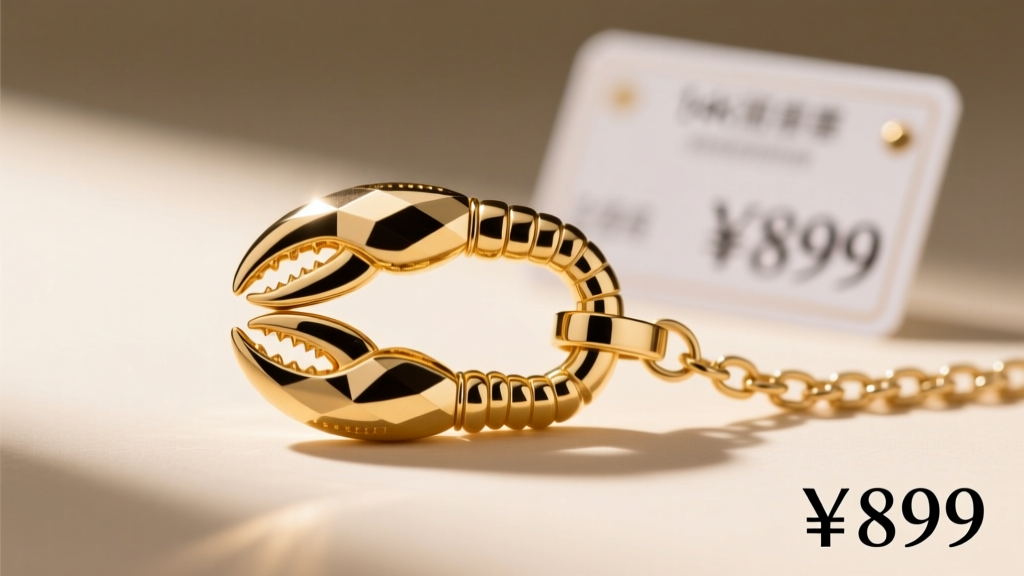
An extender chain adds roughly $15 to $25 to the manufacturing cost but effectively gives you a 16-inch choker, an 18-inch princess, and a 20-inch matinee in a single piece. When shopping, always inspect the extender hardware. Ensure the jump ring connecting the extender to the main chain is fully soldered (closed). Unsoldered jump rings on extender chains are a primary failure point, and losing a pendant because an extender ring snapped is a devastating way to lose the value of your investment.
Another budget hack involves 'slider' or 'slide' pendants. Instead of buying a fixed pendant on a 16-inch chain, buy a 22-inch chain with a pendant that features a silicone-lined slider bail. This allows you to manually adjust the pendant's drop length, effectively changing the visual size of the necklace without altering the chain length. This is highly recommended for buyers who want to wear the same piece with both V-neck blouses and high-collared shirts.
Summary Checklist for Budget-Conscious Shoppers
- Calculate the CPI: Compare the price per inch across similar chain styles to identify inflated manufacturing markups.
- Target the 18-Inch Mark: Stick to the 18-inch princess length for solid gold chains to benefit from mass-production economies of scale.
- Avoid the Choker Tax: If you want a 14-inch look, buy a 16-inch chain and utilize the adjustable extender loop to tighten it, saving on specialized choker hardware costs.
- Downgrade Metal for Opera Lengths: For chains over 24 inches, switch from 14k gold to high-quality gold-filled or sterling silver to avoid exponential price jumps in material weight.
- Check the Clasp Ratio: Ensure the clasp weight is proportional to the chain. A heavy 24-inch chain with a tiny, lightweight spring-ring clasp is a structural liability and a sign of poor value engineering.
Ultimately, assessing the value of womens necklace sizes requires looking past the sticker price and evaluating the engineering, material yield, and versatility of the piece. By applying the CPI framework and understanding how length dictates structural requirements, you can build a high-quality, versatile necklace wardrobe without overpaying for inefficient manufacturing or unnecessary metal weight.


