Wooden Necklace Box: Technical Preservation Guide
Discover the technical specs of a premium wooden necklace box. Learn about wood acidity, anti-tarnish linings, and ideal dimensions for pendant storage.

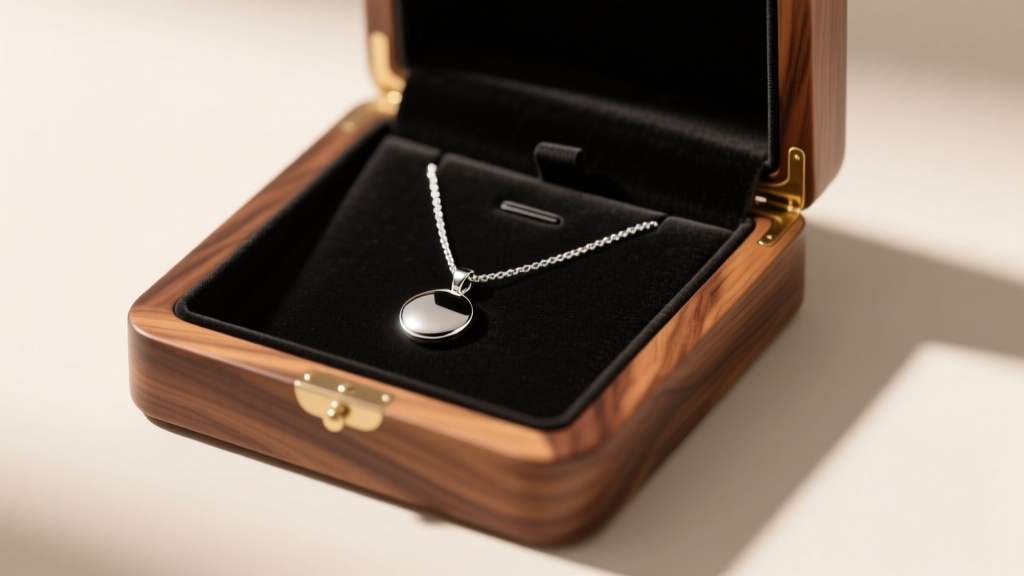
While most consumers select a wooden necklace box based on exterior aesthetics, professional jewelers, archivists, and horologists prioritize the micro-environment it creates. Necklaces—particularly those featuring porous organic gems, reactive alloys like sterling silver, or delicate mechanical lockets—are highly susceptible to atmospheric degradation and mechanical abrasion. This technical guide deconstructs the material science, dimensional engineering, and interior architecture required to transform a standard wooden receptacle into a museum-grade preservation vault.
The Chemistry of Wood Off-Gassing and Metal Tarnish
Wood is a hygroscopic, biologically active material. Even after kiln-drying and finishing, certain timber species continue to emit volatile organic compounds (VOCs), primarily acetic and formic acids. When trapped within the enclosed micro-climate of a necklace box, these acidic vapors accelerate the corrosion of copper alloys (like brass and bronze) and the tarnishing of silver. According to conservation guidelines published by the National Park Service Museum Handbook, direct contact with unsealed oak or fresh pine can cause irreversible pitting on silver and gold-plated chains within a matter of months.
To mitigate this, premium manufacturers utilize kiln-dried hardwoods that have been aged for a minimum of three years to allow VOCs to dissipate, followed by sealing with a water-based polyurethane or acrylic barrier coat. Shellac and oil-based finishes must be strictly avoided, as they remain semi-permeable to acidic gases and can transfer plasticizers to delicate pearl strands.
"The Oddy Test, originally developed by the British Museum, remains the gold standard for evaluating volatile emissions from storage materials. Any wood or adhesive intended for enclosed silver storage must pass a 28-day accelerated corrosion test to ensure no harmful off-gassing occurs."
— Conservation Science Protocols
Wood Species Evaluation Matrix
Not all timber is created equal. Below is a technical breakdown of common woods used in high-end jewelry storage, evaluated on their Janka hardness (durability), dimensional stability, and chemical reactivity.
| Wood Species | Janka Hardness (lbf) | Acidity (pH) | Off-Gassing Risk | Archival Verdict |
|---|---|---|---|---|
| Black Walnut | 1,010 | 6.0 (Mild) | Low (when aged) | Excellent |
| Honduran Mahogany | 800 | 5.8 (Mild) | Very Low | Excellent |
| Teak | 1,070 | 6.5 (Neutral) | Low (contains natural oils) | Good (if sealed) |
| White Oak | 1,360 | 3.5 (High) | High (acetic acid) | Poor / Avoid |
| Bamboo (Grass) | 1,380 | 5.5 (Moderate) | Moderate (adhesives) | Fair |
| MDF / Particleboard | N/A | 4.0 (High) | Extreme (formaldehyde) | Unacceptable |
Interior Architecture: Linings and Tarnish Interception
The interior lining is the final defensive barrier between the wood and your jewelry. Standard velvet or felt linings often contain sulfur compounds or acidic dyes that actively promote the formation of silver sulfide (the black tarnish layer). For a high-performance wooden necklace box, the industry standard is Pacific Silvercloth or a silicone-impregnated anti-tarnish flannel. These materials contain microscopic silver particles or zinc/copper compounds that act as sacrificial anodes, intercepting hydrogen sulfide (H2S) gas before it reaches your jewelry.
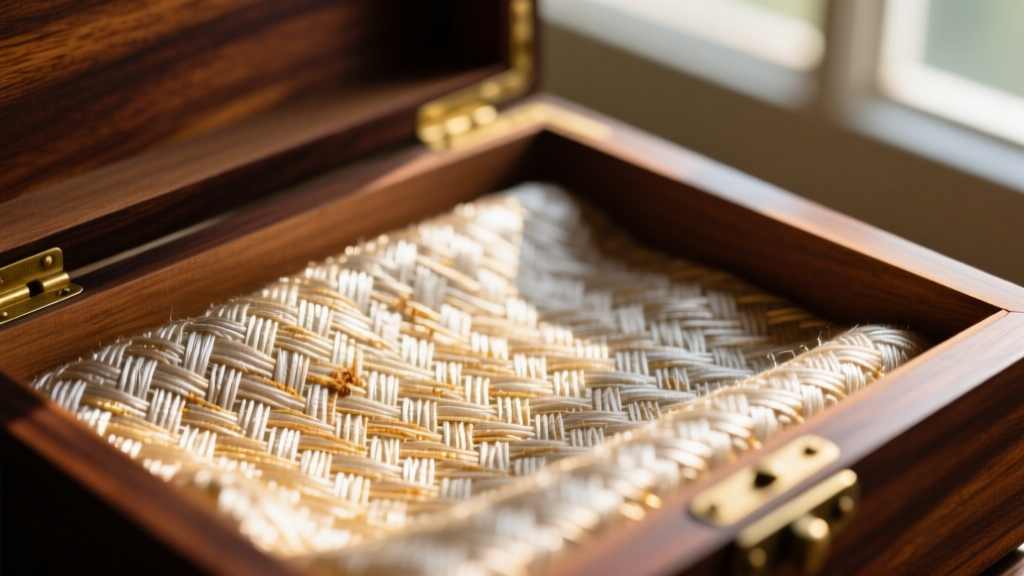
For pearl and coral necklaces, the Gemological Institute of America (GIA) recommends unbleached, acid-free cotton or ultra-suede. These materials prevent moisture entrapment, which can cause the nacre of pearls to craze or the silk threading to rot. Never store organic gems in airtight plastic sleeves inside a wooden box, as they require a minimal exchange of ambient moisture to prevent desiccation and cracking.
Hinge Metallurgy and Seal Integrity
The hardware on a wooden necklace box is often an afterthought, yet it represents a primary point of failure and potential contamination. Standard brass or nickel-plated hinges can oxidize, transferring corrosive salts to the adjacent wood and, eventually, the interior lining. Archival-grade boxes utilize solid stainless steel or anodized aluminum hinges with PTFE (Teflon) washers to ensure smooth operation without the need for petroleum-based lubricants, which emit harmful VOCs.
Furthermore, a true preservation box requires a compression seal—typically a gasket made from inert silicone sponge rubber—along the lid closure. This creates an airtight micro-environment, drastically slowing the ingress of atmospheric sulfur and humidity.
Dimensional Engineering for Pendants and Chains
A critical failure point in mass-market boxes is inadequate depth and poor tensioning. Standard commercial boxes offer an interior depth of 1.25 inches. However, modern statement pendants, mechanical lockets, and chunky gemstone drops frequently require 2.0 to 2.5 inches of vertical clearance to prevent the bail or gemstone table from resting against the base lining, which can cause micro-scratches on polished stones.
Tensioning and Hook Placement
Necklaces stored in a slack state are prone to micro-movements that cause interlocking links to abrade one another. Expertly engineered boxes feature adjustable, spring-loaded tension hooks or a slotted upper lip that allows the user to pull the chain taut.
- Choker (14-16 inches): Requires wide, shallow hooks spaced 10 inches apart to prevent kinking the rigid collar.
- Princess (18 inches): Ideal hook spacing is 14 inches apart, creating a gentle parabolic drape that prevents stress on the jump rings while eliminating slack.
- Opera (28-36 inches): Requires a dual-tiered hook system or a figure-eight wrapping post to prevent the lower loop from pooling and tangling.
- Lariat / Y-Necklace: Needs a specialized central drop-catch to keep the vertical chain from whipping and knotting during transport.
Climate Control and Humidity Management
Wood naturally buffers humidity, but an uncontrolled environment will cause the box's joinery to swell or crack, compromising the airtight seal. The optimal relative humidity (RH) for mixed jewelry storage is 45% to 50%. High-end wooden boxes incorporate concealed desiccant chambers—small, ventilated compartments beneath the lining tray where replaceable silica gel cassettes can be inserted.
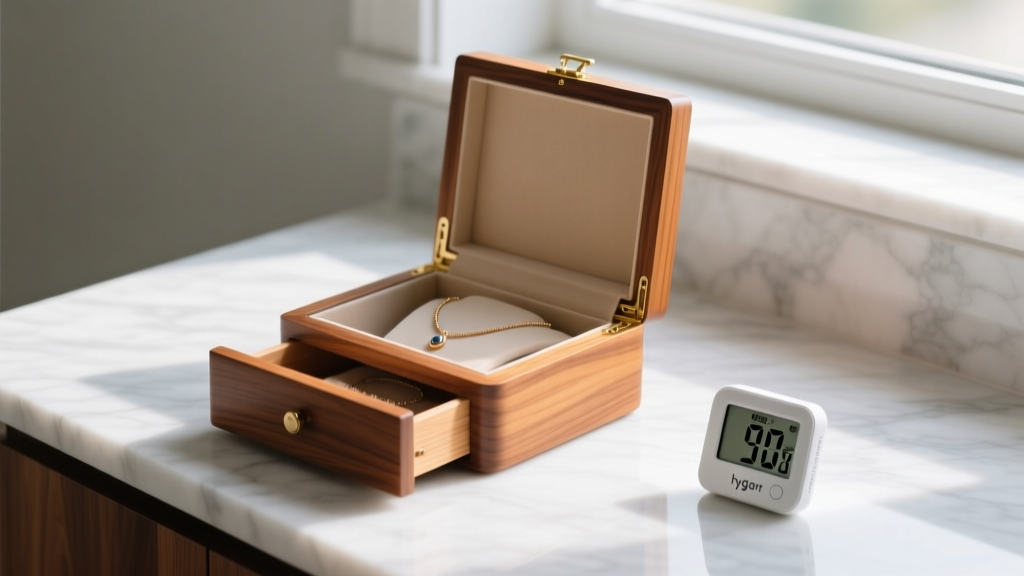
This passive climate control prevents the localized RH from exceeding 60%, a threshold where silver tarnish rates increase exponentially and organic adhesives in costume jewelry begin to fail. Avoid boxes lined with raw cedar; while cedar repels moths, its natural aromatic oils can degrade the surface luster of pearls and porous opals over time.
Maintenance and Reconditioning Protocols
Even the finest preservation box requires maintenance. Every 12 to 18 months, the interior lining should be gently vacuumed with a HEPA-filter attachment to remove microscopic dust and skin cells that attract moisture. If using a sacrificial anti-tarnish cloth, note that it will eventually become saturated (usually indicated by a dark grey or black discoloration) and must be replaced. Never wash Pacific Silvercloth, as this strips the active tarnish-absorbing compounds.
The exterior wood should be dusted with a microfiber cloth. Avoid commercial furniture polishes containing silicone or ammonia, which can degrade the acrylic barrier coats and seep into the interior seams, compromising the chemical stability of your jewelry storage environment.


