The Ultimate Zuni Squash Blossom Necklace Gift Guide
Discover how to choose, authenticate, and gift a genuine Zuni squash blossom necklace. Explore pricing, turquoise grades, and styling tips.

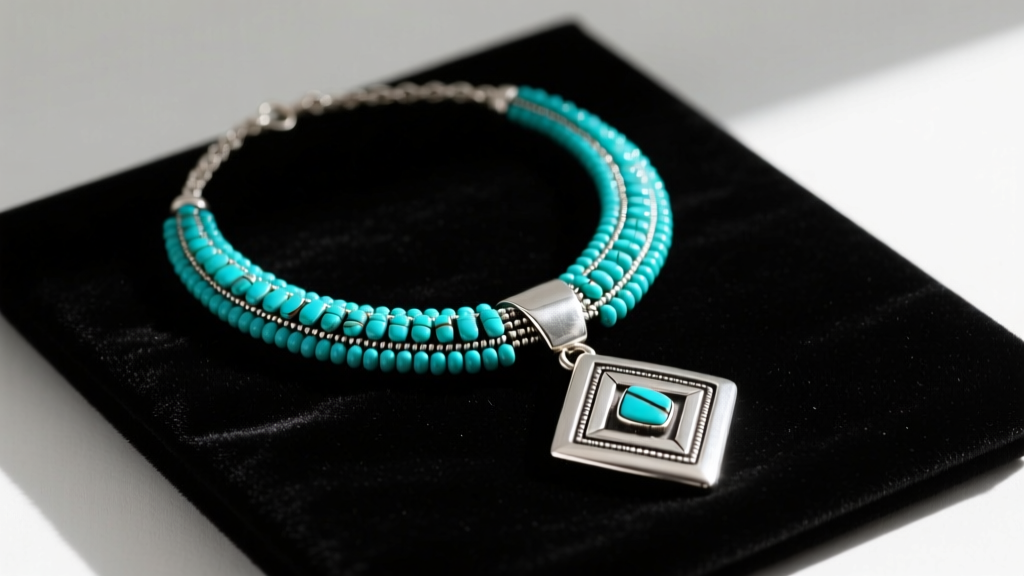
The Legacy and Allure of the Zuni Squash Blossom
Few pieces of jewelry carry the historical weight, artisanal mastery, and visual impact of the Native American squash blossom necklace. While the design originated with the Navajo in the late 19th century, it was the Zuni silversmiths who elevated the form, introducing breathtaking lapidary techniques that transformed heavy silver beads into intricate, stone-set masterpieces. As we move through 2026, the appreciation for authentic, indigenous wearable art has surged, making a Zuni squash blossom necklace one of the most profound and highly sought-after gifts for collectors, fashion connoisseurs, and lovers of Southwestern heritage.
Gifting a squash blossom is not merely about presenting a beautiful accessory; it is an investment in a cultural legacy. However, navigating the market requires a discerning eye. From understanding the critical differences between Zuni needlepoint and petit point to verifying silver purity and turquoise origins, this comprehensive guide will ensure your gift is both authentic and deeply meaningful.
Why a Zuni Squash Blossom is the Ultimate Milestone Gift
Unlike mass-produced luxury jewelry, a handcrafted Zuni squash blossom necklace is a singular work of art. The creation of a single, fully set necklace can take a master silversmith and lapidary artist hundreds of hours. This inherent rarity makes it the perfect anchor for major life milestones. Below is a framework for matching the style and weight of the necklace to the specific gifting occasion.
| Occasion | Recommended Style | Weight & Scale | Estimated Price Range |
|---|---|---|---|
| High School / College Graduation | Single-needlepoint, lighter silver | Lightweight (80-120g) | $1,200 - $2,500 |
| 30th or 40th Birthday | Classic petit point, medium Naja | Medium (130-180g) | $2,500 - $5,000 |
| Major Anniversary / Retirement | Heavy multi-cluster, large Naja | Heavy (200g+) | $5,000 - $15,000+ |
| Heritage / Museum Collector | Vintage coin silver (pre-1960s) | Variable / Substantial | $8,000 - $30,000+ |
Decoding the Anatomy: What to Look For
To buy with confidence, you must understand the three distinct components that make up the necklace. Misconceptions abound, particularly regarding the central pendant and the 'blossom' beads themselves.
The Naja Pendant
The crescent-shaped centerpiece is called the Naja. Its origins trace back to Moorish Spain, where it was used as a talisman on horse bridles to ward off the evil eye. Spanish conquistadors brought the motif to the Americas, and it was eventually adopted and adapted by Native artisans. In Zuni pieces, the Naja is often heavily embellished with cluster work or features a single, large turquoise cabochon set in the center.
The 'Squash Blossom' Beads
Historically, these fluted, pomegranate-like silver beads were actually inspired by the pomegranate motifs found on Spanish and Mexican clothing and saddlery. Early Native artisans, unfamiliar with pomegranates, associated the shape with the locally vital squash blossom, and the name permanently stuck. In Zuni necklaces, these beads are rarely left as plain silver; they are typically wrapped in delicate turquoise inlay or cluster work.
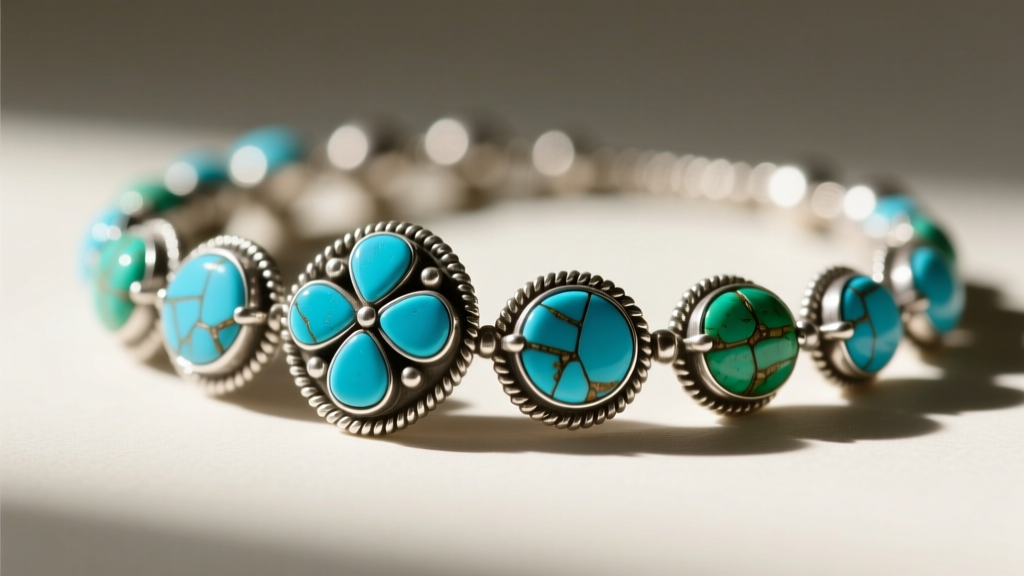
Zuni Mastery: Needlepoint vs. Petit Point
This is the most critical E-E-A-T distinction for buyers. While Navajo squash blossoms often feature large, smooth turquoise cabochons or sandcast silver, Zuni artists are world-renowned for two highly specific, painstaking lapidary styles:
- Needlepoint: Features long, narrow, needle-like slivers of turquoise, each individually cut, shaped, and set in tiny silver bezels. A single necklace may contain over 100 perfectly matched needlepoint stones.
- Petit Point: Utilizes minuscule, meticulously shaped stones—usually teardrops, ovals, or tiny squares. The precision required to cut and set stones as small as 2mm without breaking them is a hallmark of Zuni mastery.
Materials and Authentication: Protecting Your Investment
The market is unfortunately flooded with imported imitations and machine-stamped replicas. When gifting a piece of this magnitude, authentication is non-negotiable. The Indian Arts and Crafts Board strictly enforces the Indian Arts and Crafts Act of 1990, which makes it illegal to offer or sell any art or craft product in a manner that falsely suggests it is Indian-produced. Always buy from reputable galleries that provide a written certificate of authenticity detailing the artist's name and tribal affiliation.
Silver Grades: Sterling vs. Coin Silver
Modern Zuni pieces are almost exclusively crafted from .925 sterling silver. However, if you are sourcing a vintage piece (pre-1960s) for a serious collector, you may encounter coin silver. Artisans would melt down US silver coins, resulting in an alloy of roughly .900 purity. Coin silver is slightly softer, requiring the smith to forge thicker, heavier gauges, giving vintage pieces a distinct, rustic weight and a softer, warmer luster compared to bright modern sterling.
Turquoise Grading and Origins
The value of a Zuni squash blossom is heavily tied to the turquoise used. Look for documentation regarding the mine of origin:
- Sleeping Beauty: Known for its pure, robin's-egg blue color with little to no matrix. Because the mine closed in 2012, genuine, high-grade Sleeping Beauty commands a massive premium.
- Kingman: Prized for its deep blue hues and striking black or brown spiderweb matrix. High-grade Kingman is a favorite among contemporary Zuni lapidaries.
- Lone Mountain: Produces some of the hardest, most brilliant blue-to-green turquoise in the world, highly resistant to color change over time.
According to the Smithsonian National Museum of the American Indian, the transmission of silversmithing techniques among the Zuni, Navajo, and Hopi tribes represents one of the most dynamic periods of indigenous artistic innovation in North American history. When you purchase a Zuni piece, you are acquiring a chapter of that living history.

Styling the Squash Blossom for the Modern Wardrobe
A common hesitation when gifting a squash blossom necklace is the assumption that it can only be worn with traditional Southwestern or bohemian attire. In 2026, high fashion has fully embraced the juxtaposition of indigenous heritage jewelry with minimalist, contemporary silhouettes.
For a striking, modern look, the heavy oxidized silver and vibrant turquoise of a Zuni piece serve as the ultimate statement anchor against a crisp, oversized white linen button-down or a sleek, monochromatic black turtleneck. Because the necklace itself is visually complex and heavy, advise the recipient to avoid competing accessories; let the Naja and the intricate beadwork command the neckline entirely. For lighter, contemporary Zuni needlepoint sets, layering over a simple silk camisole or a tailored blazer bridges the gap between boardroom elegance and artistic expression.
Where to Source Authentic Zuni Masterpieces
To ensure your gift is genuine and ethically sourced, bypass generic tourist shops and online marketplaces where provenance is murky. Instead, direct your attention to established, specialized sources:
- Direct from Pueblo Cooperatives: Purchasing directly from Zuni Pueblo arts cooperatives ensures 100% of the profits support the artisan and their community.
- Established Southwestern Galleries: Reputable galleries in Santa Fe, Scottsdale, and Taos (such as Shiprock Santa Fe or Kiva Fine Jewelry) employ experts who verify hallmarks and stone treatments.
- Specialized Auction Houses: For vintage, museum-quality coin silver pieces, auction houses like Cowan's or John Moran frequently host verified Native American jewelry auctions.
Conclusion: A Gift That Transcends Generations
A Zuni squash blossom necklace is far more than an item of adornment; it is a wearable archive of lapidary genius and cultural resilience. By understanding the nuances of needlepoint versus petit point, the significance of the Naja, and the vital importance of ethical sourcing, you are equipped to select a piece that will not only take the recipient's breath away today but will serve as a cherished family heirloom for generations to come. When you drape a genuine Zuni masterpiece around the neck of a loved one, you are gifting them a piece of the American Southwest's enduring soul.


