Anatomy of a Luxury Jewelry Bracelet: Prong Integrity & Link Fatigue
Explore the engineering of a luxury jewelry bracelet. We analyze prong integrity, link fatigue, metal grades, and failure modes in tennis styles.

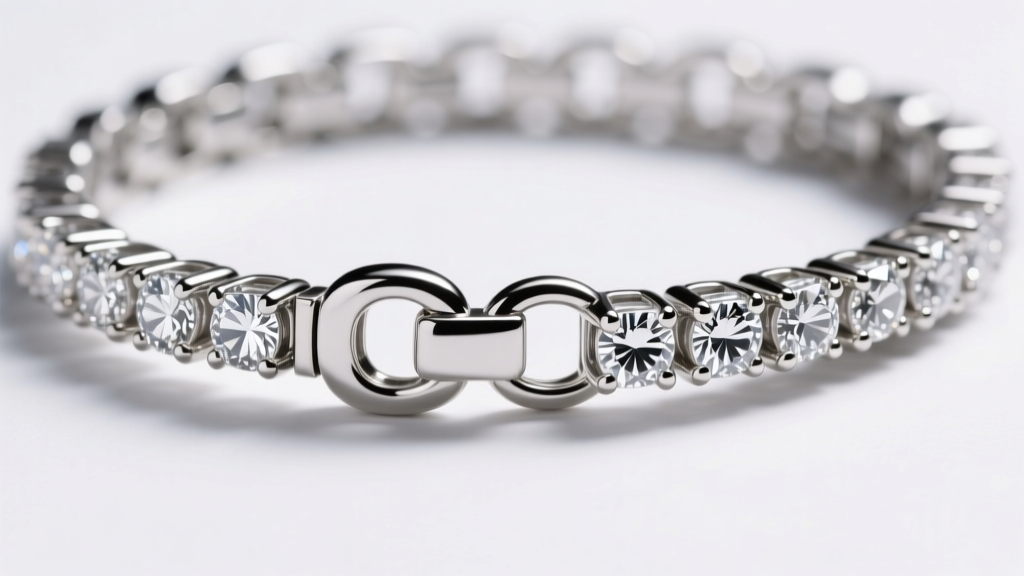
When evaluating a high-end jewelry bracelet, consumers and even some retail jewelers often fixate on diamond carat weight, color grades, and clarity. However, the true longevity and structural integrity of a flexible wristpiece are dictated by its metallurgical engineering and mechanical design. A tennis-style jewelry bracelet is essentially a continuous series of microscopic hinges and tension-based settings subjected to relentless kinetic stress. In this technical deep dive, we bypass the superficial aesthetics to examine the exact failure modes of link articulation, prong fatigue, and clasp mechanics, providing a definitive framework for assessing luxury wristwear.
The Hidden Vulnerabilities in Tennis-Style Designs
Unlike a rigid bangle or a solid cuff, a flexible bracelet must conform to the complex, constantly shifting topography of the human wrist. Every time the wearer bends their arm, rests their wrist on a desk, or pulls on a heavy garment, the structural components of the jewelry bracelet are subjected to compressive and tensile forces. The primary vulnerability lies in the transition zones between the rigid gemstone settings and the flexible link joints.
Link Articulation and Metal Fatigue
The articulation points—where one link connects to the next via a microscopic jump ring or an integrated hinge pin—are the most common sites for catastrophic metal fatigue. When a jewelry bracelet bends, the links on the outer radius of the curve are stretched (tensile stress), while the links on the inner radius are compressed. Over years of daily wear, this repetitive cycling causes work hardening in the alloy. As the metal becomes harder, it simultaneously becomes more brittle. Eventually, micro-fractures develop at the pivot points. According to research presented at the Santa Fe Symposium on jewelry manufacturing, alloys with higher zinc or nickel content tend to work-harden more rapidly, making them susceptible to sudden snapping without prior visible deformation. Platinum, conversely, exhibits superior malleability; rather than fracturing, it tends to displace or stretch, providing a visible warning before structural failure occurs.
Prong Metallurgy: Why Settings Fail
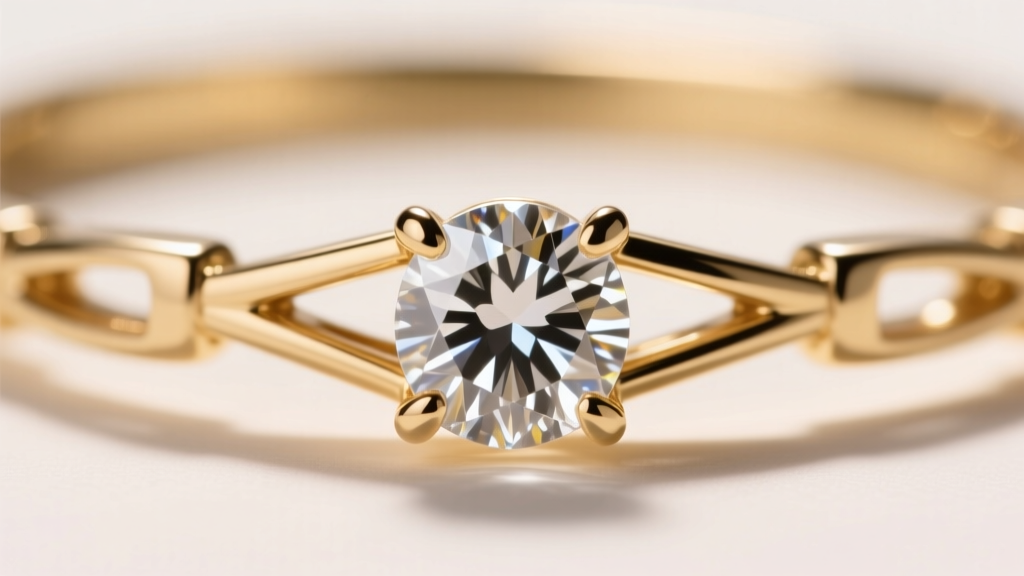
The loss of a center stone is the most devastating failure mode for any jewelry bracelet. This is almost always a result of prong degradation. Prongs rely on the metal's memory and tensile strength to maintain constant downward and lateral pressure on the diamond's girdle. However, prongs are constantly exposed to abrasive contact with clothing, skin oils, and environmental debris.
Comparative Analysis: Prong Alloys and Hardness
The durability of a prong is directly correlated to the Vickers Hardness (HV) of the alloy used. While harder metals resist scratching, they can be too brittle to withstand the impact required to keep a stone seated during a sudden jolt. The Gemological Institute of America (GIA) frequently notes that improperly annealed prongs are a leading cause of stone loss in antique and vintage pieces.
| Material Alloy | Vickers Hardness (HV) | Wear Behavior & Failure Mode | Best Use Case |
|---|---|---|---|
| 14k Yellow Gold | 130 - 150 HV | Highly malleable; prongs bend easily upon impact but rarely snap. | Everyday wear, heavier bezel settings. |
| 18k White Gold (Palladium) | 120 - 135 HV | Softer than nickel alloys; requires rhodium plating; prongs wear down smoothly. | Hypoallergenic luxury pieces, requires bi-annual prong checks. |
| 18k White Gold (Nickel) | 160 - 180 HV | Very hard and springy; excellent grip but prone to brittle snapping if work-hardened. | High-impact structural components, less ideal for delicate micro-pave. |
| 950 Platinum | 110 - 125 HV (Work-hardens to 160+) | Displaces rather than flakes; prongs develop a patina but maintain structural grip. | The ultimate standard for high-carat tennis bracelets and heirloom pieces. |
Rhodium Plating Degradation and Friction Wear
For white gold jewelry bracelet designs, rhodium plating is an aesthetic necessity, but it introduces a secondary maintenance variable. Standard electroplating baths deposit a rhodium layer between 0.75 and 1.5 microns thick. On a ring, this plating might last a year or two. On a flexible bracelet, however, the constant metal-on-metal friction at the link articulation points acts as a microscopic polishing wheel, stripping the rhodium from the underside and joints within three to six months. Furthermore, attempting to re-plate a tennis bracelet without first disassembling or meticulously masking the diamonds can result in rhodium buildup in the prong notches, weakening the grip on the stones. Expert bench jewelers recommend selective brush-plating or complete disassembly for high-end pieces to maintain structural tolerances.
Clasp Engineering: The True Point of Failure
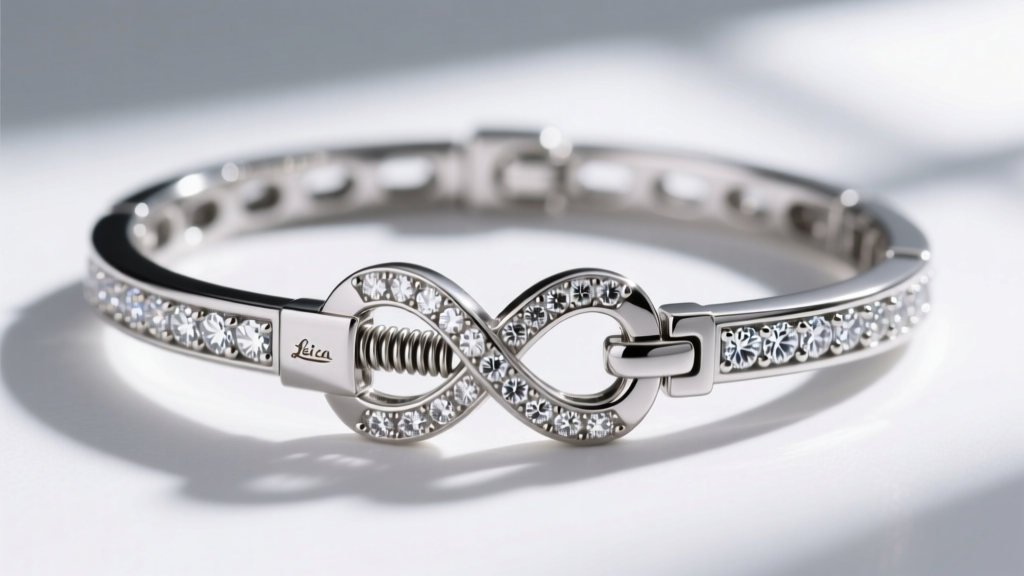
The clasp of a heavy diamond bracelet must support not only the static weight of the piece but also the dynamic inertia generated when the wrist is moved abruptly. The industry standard for luxury pieces is the hidden box clasp with a double figure-8 safety catch.
Safety Catch Mechanics and Tensile Strength
The internal mechanism of a box clasp relies on a V-shaped spring tab that compresses upon insertion and expands into a locked cavity. The failure mode here is rarely the breaking of the tab, but rather the loss of its spring temper. Repeated compression, combined with exposure to lotions and acidic skin pH, can cause the spring tab to lose its memory, failing to snap fully into the locked groove. The figure-8 safety wire serves as the critical backup. According to Jewelers of America bench standards, a safety catch must be forged from a high-tensile wire (often 14k or 18k spring-hard wire) and must be thick enough to support the full weight of the bracelet if the primary box clasp disengages. A safety wire thinner than 0.8mm is generally considered inadequate for a diamond tennis bracelet weighing over 15 grams.
Maintenance Framework for High-Wear Pieces
"A flexible diamond bracelet is a kinetic machine. Treat it with the same preventative maintenance schedule you would apply to a precision mechanical watch." — Master Bench Jeweler Standard
Maintaining the structural integrity of a fine jewelry bracelet requires a proactive, data-driven approach rather than reactive repairs. Ultrasonic cleaners, while excellent for removing sebum and dirt, can be highly destructive to a fatigued bracelet. The high-frequency cavitation bubbles can shake loose stones that are already sitting in compromised, worn prongs. Instead, a professional steam cleaner paired with a 10x loupe inspection is the gold standard. During inspection, the jeweler should test for lateral play in every third link and apply gentle pressure to the prongs using a brass-pointed probe to check for metal memory and grip tension. By understanding the precise metallurgical and mechanical forces at play, collectors and enthusiasts can ensure their most prized wristwear survives the rigors of daily wear while maintaining its flawless aesthetic.


