Engineering the Perfect Jewelry Bracelet Holder: A Technical Guide
Discover the material science and structural engineering behind the perfect jewelry bracelet holder to prevent tarnish and link stress.

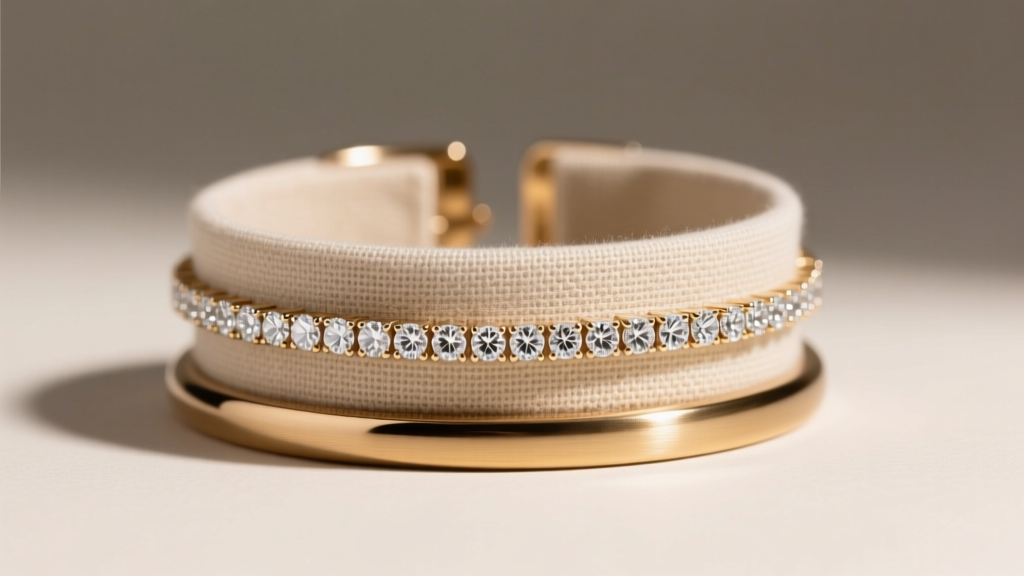
For serious collectors and horologists, the storage of high-end wristwear is not merely an organizational task; it is an exercise in material preservation. While much attention is paid to the metallurgy and gemological grading of bracelets and bangles, the jewelry bracelet holder is frequently treated as an aesthetic afterthought. This oversight leads to accelerated tarnishing, micro-abrasions, and catastrophic clasp fatigue. In this technical deep dive, we examine the material science, structural engineering, and environmental mechanics required to design or select the optimal jewelry bracelet holder for long-term archival storage and daily display.
The Chemistry of Storage: Archival Linings vs. Standard Textiles
The most common point of failure in commercial display stands is the textile lining. Standard velvet and felt are frequently dyed using sulfur-based compounds and treated with acidic mordants. When sterling silver, copper alloys, or low-karat gold rests against these materials in the presence of ambient humidity, a galvanic reaction occurs, accelerating the formation of silver sulfide (tarnish). According to the conservation guidelines published by the Victoria and Albert Museum, sulfur-bearing textiles are one of the primary catalysts for rapid silver degradation in display environments.
An expert-grade jewelry bracelet holder must utilize archival-safe materials. The gold standards include:
- Pacific Silvercloth: A specialized cotton flannel embedded with microscopic silver particles that intercept and absorb hydrogen sulfide gases before they reach the stored jewelry.
- Unbleached, Acid-Free Cotton Linen: Provides a neutral pH surface that prevents chemical off-gassing.
- Archival-Grade Silicone: Used primarily for bangle forms, platinum-cured silicone (Shore A durometer of 30-40) offers a non-reactive, high-friction surface that prevents heavy bangles from sliding without introducing chemical contaminants.
Structural Engineering: Mitigating Clasp and Link Stress
The physical geometry of a jewelry bracelet holder dictates the gravitational load distribution across the piece. Standard T-bar holders, while visually elegant, are mechanically hostile to heavy chain links and gemstone tennis bracelets. When a 60-gram Cuban link bracelet is draped over a narrow 3mm T-bar, the entire shear force is concentrated on the single link resting at the apex, while the clasp mechanism is subjected to continuous tensile stress.
To prevent permanent link deformation and spring-ring fatigue, the suspension mechanism must be matched to the bracelet's specific weight and articulation profile.
Dimensional and Suspension Matrix
| Bracelet Type | Avg. Weight | Optimal Holder Geometry | Material Requirement |
|---|---|---|---|
| Diamond Tennis Bracelet | 15g - 40g | T-Bar with 1.5" minimum base width | Archival Linen / Microfiber |
| Solid Hinged Bangle | 50g - 150g | 2.75" to 3.0" Cylinder Form | Platinum-Cured Silicone |
| Heavy Chain Link | 80g - 200g+ | 15° Sloped Contoured Ramp | Suede / Archival Felt |
| Delicate Charm Bracelet | 10g - 25g | Multi-pronged Suspension Tree | Acid-Free Cotton |
For heavy chain links, a sloped ramp design allows the bracelet to rest in its natural curvature, distributing the gravitational load evenly across dozens of links rather than concentrating it on the clasp. The Gemological Institute of America (GIA) consistently advises against hanging heavy jewelry by a single point to prevent prong loosening and metal fatigue.
Dimensional Tolerances for Bangle Storage
Unlike flexible chain bracelets, rigid bangles require precise cylindrical forms to maintain their structural integrity and prevent warping, particularly for older, antique pieces or those crafted from softer, high-karat gold (22k or 24k). A standard wrist circumference ranges from 6.0 to 8.0 inches, translating to an inner diameter of roughly 2.25 to 2.75 inches.
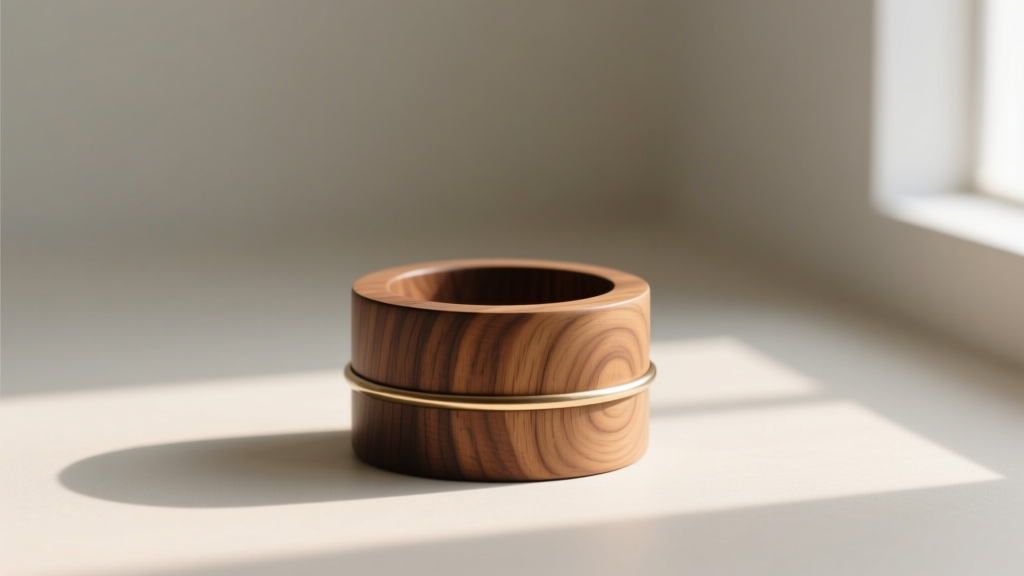
An optimally engineered bangle holder features a cylinder diameter of exactly 2.85 inches. This specific tolerance ensures that the bangle rests securely without being stretched, while allowing enough clearance for air circulation. Solid wood cores (such as kiln-dried walnut or maple) are preferred over plastic or MDF, as natural wood inherently buffers minor humidity fluctuations. However, the wood must be sealed with a water-based, non-off-gassing polyurethane to prevent natural wood acids from reacting with the metal.
Center of Gravity and Kinetic Tipping
A frequently overlooked aspect of jewelry bracelet holder design is the base-to-height ratio. Displaying a heavy silver cuff on a tall, slender stand creates a high center of gravity. The kinetic energy from a bumped table or a closing drawer can easily transfer into the stand, causing it to tip and sending the bracelet onto a hard surface. This results in severe kinetic damage, including chipped gemstones, bent prongs, or cracked enamel.
To ensure absolute stability, the base of the holder must adhere to a strict 3:1 mass ratio relative to the maximum intended load of the bracelet. If the holder is designed to display a 150-gram solid gold cuff, the base must weigh at least 450 grams. Forged brass, lead-filled steel bases, or solid marble provide the necessary low-center-of-gravity ballast to absorb ambient kinetic vibrations.
Environmental Controls and Micro-Climate Integration
For archival storage rather than daily display, the jewelry bracelet holder must act as a micro-climate buffer. The Smithsonian Museum Conservation Institute emphasizes that relative humidity (RH) fluctuations are highly detrimental to organic inlays (such as pearl, coral, or tortoiseshell) often found in vintage bangles. High RH causes organic materials to swell, while low RH causes them to crack and pull away from their metal settings.
Advanced enclosed bracelet holders integrate passive environmental controls:
- Silica Gel Cassettes: Recessed compartments in the base of the holder that house conditioned silica gel, maintaining a strict 45% RH environment.
- Activated Carbon Filters: Integrated into the ventilation ports of enclosed acrylic or glass cloches to scrub volatile organic compounds (VOCs) and airborne sulfur from the immediate atmosphere.
- UV-Blocking Acrylic: For enclosed display holders, utilizing acrylic that filters 99% of ultraviolet light prevents the fading of dyed gemstones and the degradation of silk-threaded pearl bracelets.
Conclusion: Precision Over Aesthetics
Selecting or commissioning the right jewelry bracelet holder requires looking past superficial aesthetics and evaluating the stand through the lens of material science and mechanical engineering. By prioritizing archival-safe textiles, calculating precise load-bearing geometries, and integrating environmental buffering, collectors can ensure that their wristwear remains in pristine, museum-grade condition for generations. The holder is not just a stage for the jewelry; it is the first line of defense against the relentless forces of chemistry and gravity.


