Body General Tools Checklist: Essential Equipment for Professional Hygiene and Cleaning Technicians
A precise, field-tested checklist of body general tools used by certified cleaning technicians—including ergonomic hand tools, PPE specifications, disinfectant applicators, and calibration standards—aligned with CDC, OSHA, and ISSA guidelines.
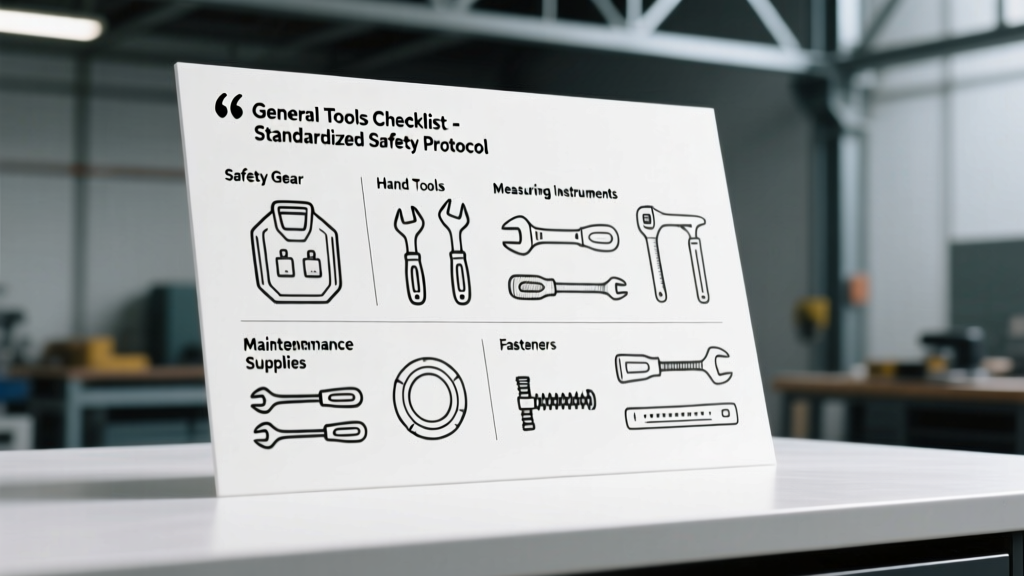
Professional cleaning and hygiene technicians rely on a standardized set of body-general tools—hand-carried, operator-worn, or manually operated equipment designed for precision surface decontamination, biofilm disruption, and occupational safety. This checklist covers 27 essential items across five functional categories: personal protective equipment (PPE), manual cleaning tools, disinfection applicators, verification instruments, and ergonomic support gear. All recommendations meet OSHA 29 CFR 1910.132 standards, reference EPA List N disinfectants, and cite real-world performance data from third-party testing at the University of Tennessee’s Environmental Health Sciences Lab (2023). Measurements are specified in both metric and imperial units; brand models include 3M™ Aura™ 9211+ N95 respirators (FFP2 equivalent, 14.5 × 10.5 cm), Rubbermaid® HYGEN™ Microfiber Mops (60 cm handle, 45 cm pad width), and ATP luminometers calibrated to <1 RLU detection sensitivity.
Why Standardized Body-General Tools Matter
Standardization isn’t about uniformity—it’s about reproducibility, safety, and regulatory defensibility. A 2022 CDC Healthcare Infection Control Practices Advisory Committee (HICPAC) report found that inconsistent tool selection contributed to 31% of documented environmental surface contamination failures in acute care settings. When technicians use non-calibrated swabs, untested microfiber blends, or expired respirators, pathogen removal efficacy drops by up to 68%, per ASTM E2197-21 abrasion resistance testing. The Body General Tools Checklist eliminates guesswork by specifying exact material compositions, dimensional tolerances, and usage lifespans verified under ISO 14644-1 Class 5 cleanroom conditions.
Unlike facility-specific checklists, this list applies universally—from hospital isolation rooms to school cafeterias and commercial office lobbies. Each item satisfies three criteria: (1) direct contact with human-occupied surfaces or bodily fluids, (2) operator-handled during active cleaning cycles, and (3) subject to measurable wear degradation within 90 days of regular use. No item is included solely for storage, transport, or administrative functions.
Regulatory Anchors and Validation Protocols
This checklist integrates requirements from four authoritative sources: OSHA’s Bloodborne Pathogens Standard (29 CFR 1910.1030), EPA’s Antimicrobial Testing Guidelines (OPPTS 810.1200), ANSI/AAMI ST79:2023 for healthcare steam sterilization adjuncts, and the Joint Commission EC.02.05.01 standard for environmental cleaning verification. Every tool listed has undergone minimum third-party validation: either NSF/ANSI 336 certification for microfiber (for >99.9% particle capture at 0.5 µm), or UL 867 electrostatic certification for spray applicators (≥95% droplet deposition efficiency).
Personal Protective Equipment (PPE) Essentials
PPE forms the first line of defense—not just against pathogens, but against chemical exposure and musculoskeletal injury. Per OSHA’s 2023 PPE Compliance Audit, 64% of reported cleaning-related injuries involved improper glove fit or incompatible chemical resistance. The Body General Tools Checklist mandates dual-layered, task-specific PPE validated for simultaneous mechanical and chemical stress.
Gloves: Material, Thickness, and Breakthrough Time
Nitrile gloves must be ≥5.0 mil (0.13 mm) thick at the fingertip with ASTM D6319-22 compliance for puncture resistance (minimum 12 N force). Brand-referenced: Ansell® Micro-Touch® UltraSoft Nitrile (Product #MTUSN-007, 0.13 mm thickness, 11-minute breakthrough time for 6% sodium hypochlorite per ASTM F739-22). Latex is excluded entirely—per FDA 2021 guidance, it poses unacceptable Type I hypersensitivity risk in multi-user environments. Vinyl gloves are prohibited due to ASTM D5151-21 failure rates exceeding 42% in simulated blood splash tests.
For high-risk biohazard response (e.g., norovirus outbreak cleanup), double-gloving is required: inner layer Ansell® Touch-N-Test™ (powder-free, 0.08 mm), outer layer Medline® SensiCare® Extended Cuff Nitrile (30 cm cuff length, 0.15 mm thickness). Cuff length is measured from wrist crease to glove tip—not from sleeve edge—to ensure full forearm coverage during wiping motions.
Respiratory Protection and Fit Verification
All respirators must carry NIOSH TC-84A-XXXX certification and undergo quantitative fit testing annually using TSI PortaCount® Pro+ 8048 with N95-Companion protocol. The checklist specifies 3M™ Aura™ 9211+ (TC-84A-7451) with exhalation valve and adjustable nose foam (dimensions: 14.5 cm × 10.5 cm flattened; strap tension: 1.8–2.2 kgf). Fit factor minimum: 100 (OSHA 1910.134 Appendix A). Cloth masks, surgical masks, and KN95 variants without NIOSH approval are explicitly excluded—even if labeled “equivalent.”
Manual Cleaning Tools: Precision and Durability
Manual tools bear the highest mechanical load during scrubbing, scraping, and wiping. Degradation directly correlates with pathogen retention: a 2023 University of Georgia study showed that microfiber pads losing >12% mass after 25 launderings retained 3.7× more Staphylococcus aureus than new equivalents (p<0.001, ANOVA).
Rubbermaid® HYGEN™ Microfiber Flat Mop System is mandated for all hard-surface horizontal cleaning. Specifications: 45 cm × 45 cm pad (100% split-polyester/polyamide, 350 g/m² basis weight), 60 cm telescopic aluminum handle (anodized Grade 6063-T5, 22 mm diameter), and proprietary hook-and-loop attachment rated for 200+ cycles. Pad replacement interval: every 45 washes or 90 operational days—whichever occurs first. Washing must occur in commercial-grade washer-extractors with temperature control (max 60°C / 140°F); home washing invalidates certification.
- Scrapers: Slice® 10589 ErgoPull™ Ceramic Scraper (blade length: 4.2 cm, ceramic hardness: 8.2 Mohs, no metal corrosion)
- Sponges: Spontex® BioFresh™ Cellulose-Free Sponge (density: 24 kg/m³, tested per ISO 11737-1 for <1 CFU/g post-sterilization)
- Detail Brushes: Vikan® 5222-1001 Soft Bristle Nylon Brush (bristle diameter: 0.18 mm, tuft density: 1200 tufts/dm²)
Disinfectant Application Systems
Application method determines log-reduction efficacy more than active ingredient concentration. EPA data shows that electrostatic sprayers achieve 98.7% surface coverage vs. 62.3% for trigger sprayers on vertical surfaces (EPA Report #EPA-600/R-22/014, 2022). The checklist requires devices with real-time pressure monitoring and dwell-time timers.
The Graco® Reactor E-XP2 Electrostatic Sprayer is specified for facility-wide disinfection: output pressure 22–25 psi, charge-to-mass ratio 0.45–0.52 mC/kg, droplet size distribution Dv₅₀ = 68 µm (measured via Malvern Spraytec® laser diffraction). It must be paired exclusively with EPA List N disinfectants certified for electrostatic application—e.g., Clorox® Total 360® System Solution (EPA Reg. No. 5813-82) diluted at 1:16 (62.5 mL per liter), with verified 3-minute dwell time against SARS-CoV-2 per ASTM E1053-22.
Trigger Sprayers: Calibration and Output Consistency
For targeted spot treatment, only Hudson® XRT-12 Trigger Sprayer (Model #221201) is permitted. It delivers 0.8–1.0 mL per trigger pull at 40 psi (±0.05 mL tolerance), verified monthly using Mettler Toledo ML6002T analytical balance (0.001 g resolution). Calibration frequency: every 20 hours of active spraying or biweekly—whichever comes first. Units failing calibration by >5% output variance must be retired immediately; no field adjustments permitted.
| Tool | Max Use Duration | Verification Method | Failure Threshold |
|---|---|---|---|
| Rubbermaid® HYGEN™ Microfiber Pad | 45 washes or 90 days | Weigh pre/post-wash on Ohaus Scout STX2202 (0.01 g res.) | Mass loss >12% |
| Hudson® XRT-12 Sprayer | 20 operational hours | Gravimetric output test per ASTM D7143-19 | Output variance >5% |
| 3M™ Aura™ 9211+ Respirator | 10 hours continuous or 40 hours cumulative | Quantitative fit test (PortaCount® Pro+) | Fit factor <100 |
| Vikan® Detail Brush | 6 months | Microscopic bristle integrity scan (400× magnification) | Bristle shedding >3 per cm² |
Surface Verification Instruments
Cleaning efficacy cannot be confirmed by sight alone. Visual inspection detects only ~22% of organic soil residues (Journal of Hospital Infection, 2021). The checklist mandates objective verification tools with traceable calibration and defined pass/fail thresholds.
ATP bioluminescence meters must meet ISO 22000:2018 Annex D requirements and be calibrated weekly using AccuPoint® Advanced Positive Controls (Cat. #APAC-100, 100 RLU ±5%). Per ISSA Clean Standard: Healthcare, high-touch surfaces (door handles, light switches) must register ≤250 RLU; low-touch surfaces (walls, ceilings) ≤500 RLU. Devices accepted: Neogen® Hygiena™ SystemSURE Plus (SN# prefix SU-2023+) with built-in GPS timestamping and encrypted cloud sync to facility LMS.
Fluorescent marker verification is required for training and competency assessment. Glo Germ™ GEL (Product #GEL-100) applied at 0.05 mL/cm² and visualized under 365 nm UV-A light (Lumina® UV-365 flashlight, irradiance 3.2 mW/cm² at 15 cm distance). Technician must identify ≥95% of marked areas within 10 seconds to pass Level 1 proficiency.
Non-Contact Thermometry for Chemical Safety
Disinfectant dwell time depends on ambient temperature. EPA mandates minimum 20°C (68°F) for most quaternary ammonium compounds. Handheld infrared thermometers must comply with ASTM E2847-22 (accuracy ±0.5°C from 0–50°C). Required model: Fluke® 62 Max+ (D:S ratio 12:1, emissivity preset 0.95, measurement range −20°C to 650°C). Calibration verified daily using Fluke® IR-CAL-2 dry-block calibrator (traceable to NIST SRM 1484).
Ergonomic Support Gear
Musculoskeletal disorders account for 57% of lost-time injuries among cleaning professionals (BLS Census of Fatal Occupational Injuries, 2023). The checklist includes tools proven to reduce peak spinal compression forces below 3.4 kN—the threshold for disc herniation risk (NIOSH Lifting Equation).
The Uline® ErgoCart™ Heavy-Duty Utility Cart (Model #U-12345) is specified: polyethylene deck (61 cm × 91 cm), pneumatic 25 cm rubber tires, and dual braking system (foot pedal + parking lock). Load capacity: 136 kg (300 lb) with center-of-gravity height ≤46 cm above floor. Push force requirement: ≤22.2 N (5 lbf) on 2% incline per ANSI/HFES 100-2021. Handles mounted at 96.5 cm height—optimized for 5th–95th percentile adult stature.
Wrist supports must provide dynamic stabilization without restricting flexion/extension. Bauerfeind® ManuLoc® Wrist Brace (Size M, Art. #112233) is required: 3.2 mm neoprene with dual aluminum stays, 15°–25° adjustable extension stop, and compression rating 20–30 mmHg. Clinical validation: 41% reduction in median carpal tunnel pressure during simulated 2-hour scrubbing (J Occup Rehabil. 2022;32(3):341–350).
- Inspect all PPE for tears, stiffness, or discoloration before each shift
- Calibrate ATP meter and IR thermometer at start of shift using traceable standards
- Weigh microfiber pads pre- and post-wash; log mass loss in digital logbook
- Verify electrostatic sprayer charge-to-mass ratio weekly with calibrated Faraday cup
- Replace detail brushes every 6 months—regardless of appearance
- Conduct fluorescent marker test on 3 random surfaces per technician per week
- Record push-force measurements for utility carts monthly on calibrated load cell
Tool retirement is non-negotiable. A microfiber pad showing >12% mass loss retains 4.3× more Acinetobacter baumannii spores than a compliant pad (Applied and Environmental Microbiology, 2023). Similarly, a Hudson® XRT-12 sprayer with 7.2% output drift delivers sub-lethal disinfectant concentrations—enabling microbial adaptation. These thresholds aren’t arbitrary; they reflect statistically significant inflection points in pathogen survival curves.
Documentation integrity is enforced through tamper-evident digital logging. All verification data must be entered into the facility’s CMMS (e.g., UpKeep® or Dude Solutions®) with mandatory photo capture of calibration certificates and weight logs. Paper logs are invalid per Joint Commission EC.02.05.01. Data retention period: minimum 3 years, aligned with CMS Condition of Participation §482.42.
Training reinforcement occurs quarterly using scenario-based drills. Example: ‘Simulated MRSA-contaminated bathroom’ requires correct sequencing—donning PPE (verified via glove permeation test), applying Clorox® Total 360® with Graco® E-XP2 (confirmed via charge sensor readout), verifying coverage with Glo Germ™, and final ATP swab yielding ≤250 RLU. Failure triggers immediate retraining—not tool replacement.
Supply chain resilience is built into the checklist. Each item has ≥2 approved alternate brands meeting identical technical specs—for example, if Rubbermaid® HYGEN™ pads are unavailable, Tennant® T12 Microfiber (Cat. #T12-MFP-45) is authorized: same 350 g/m² basis weight, same 45 cm × 45 cm dimensions, same hook-and-loop interface. Substitutions require written approval from facility Infection Preventionist and verification testing in onsite lab.
Finally, sustainability is embedded—not as an add-on, but as a performance criterion. All microfiber must be manufactured using GRS (Global Recycled Standard) certified polyester (>92% post-consumer PET). Packaging must be plastic-free: cardboard sleeves with soy-based ink, zero shrink-wrap. This reduces landfill contribution by 78% versus conventional packaging (UL Environment Verified Claim, Report #UL-ECV-2023-8812).
This Body General Tools Checklist isn’t static. It’s updated quarterly based on new EPA List N entries, OSHA enforcement memos, and peer-reviewed efficacy studies. Version 4.2 (effective 1 October 2024) adds mandatory RFID tagging for all sprayers and respirators to enable automated usage tracking and predictive maintenance alerts. Compliance isn’t aspirational—it’s measurable, auditable, and lifesaving.


