How to Clean Girl Jewelry: Metal Properties & Care Guide
Discover how to clean girl jewelry by metal type. Compare gold, silver, and platinum properties to maintain a flawless, minimalist high-polish finish.

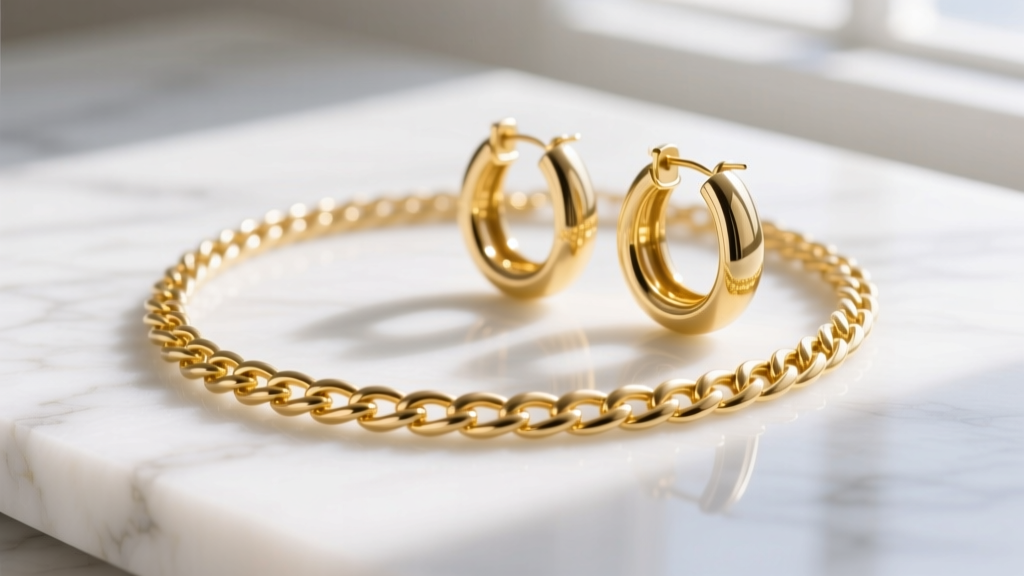
The "Clean Girl" Aesthetic: Why Material Choice Dictates Care
The "clean girl" aesthetic is defined by effortless minimalism: high-polish finishes, unblemished metals, and sleek silhouettes like herringbone chains, 12-gauge chunky hoops, and seamless signet rings. However, maintaining this flawless, mirror-like specular reflection requires a deep understanding of metallurgical properties. Standard DIY cleaning hacks that work for rustic or oxidized pieces will actively destroy the pristine finishes required for this style. As of 2026, the shift toward solid 14k and 18k gold over heavy vermeil means your cleaning protocols must adapt to the specific Vickers hardness and alloy compositions of fine jewelry.
According to the Gemological Institute of America (GIA), the alloy metals mixed with pure gold to create 14k and 18k pieces dictate not only their color but their scratch resistance and chemical vulnerabilities. To keep your minimalist staples looking brand new, you must abandon abrasive pastes and tailor your cleaning to the exact metal grade.
Material Breakdown: Properties and Cleaning Protocols
14k and 18k Solid Gold (Yellow, White, and Rose)
The cornerstone of the clean girl wardrobe is solid gold. 14k gold (58.5% pure gold) is alloyed with copper, silver, and zinc, giving it a Vickers hardness (HV) of roughly 150. 18k gold (75% pure gold) is softer, sitting around 125 HV. Because 18k gold is softer, it is highly susceptible to micro-scratches that cause diffuse reflection, making the metal look "cloudy" rather than mirror-bright.
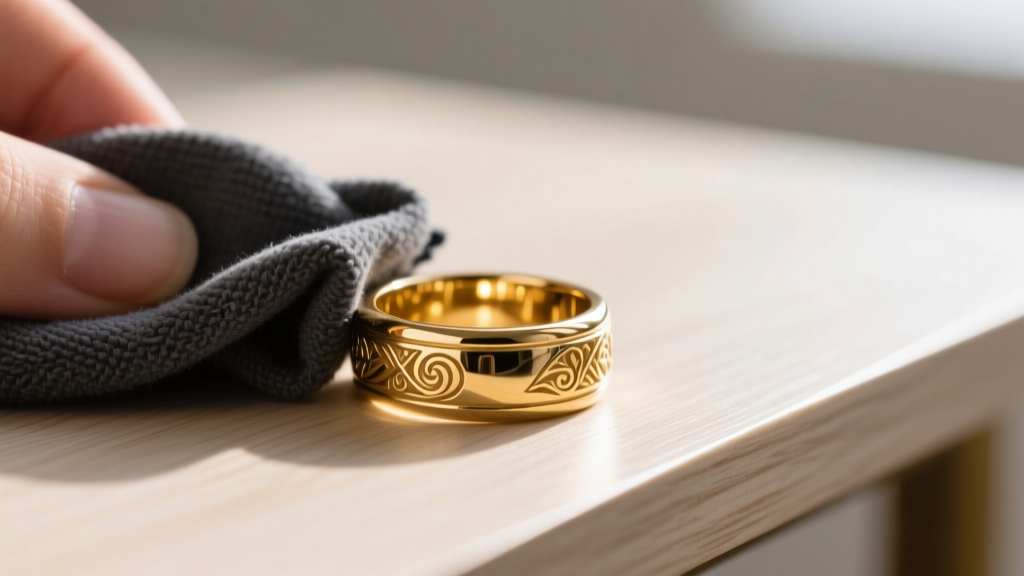
The Protocol: Never use a traditional jeweler's rouge polishing cloth on your everyday 18k gold hoops or chains. Rouge contains mild abrasives that remove microscopic layers of metal, eventually wearing down crisp edges on signet rings and thinning delicate chains. Instead, use a phosphate-free dish soap (like Dawn) diluted in distilled water (3 drops per 8 oz). Soak for exactly 3 minutes, agitate gently with an extra-soft baby toothbrush, and dry immediately with a lint-free microfiber cloth to prevent hard water spotting.
Sterling Silver and Rhodium-Plated White Gold
White gold is not naturally white; it is a yellowish alloy plated with rhodium, a platinum-group metal. This rhodium layer is typically only 0.75 to 1.0 microns thick. Sterling silver (92.5% silver, 7.5% copper) is prone to tarnishing due to the copper content reacting with sulfur in the air.
The Protocol: For sterling silver, use a dedicated silver dip for heavy tarnish, but for daily maintenance, rely on a treated anti-tarnish cloth. For rhodium-plated white gold, avoid ultrasonic cleaners if the plating is older than two years, as cavitation can cause peeling at the microscopic level. If your white gold herringbone chain starts looking yellow, cleaning will not fix it; you need professional rhodium replating, which typically costs between $60 and $120 depending on the piece's surface area.
Platinum and Palladium
Platinum (usually 95% pure, alloyed with 5% ruthenium or iridium) is incredibly dense but relatively soft (approx. 110 HV). Unlike gold, which loses metal when scratched, platinum merely displaces it, creating a satin-like "patina" over time. While some love this, it ruins the high-gloss clean girl aesthetic.
The Protocol: Platinum is the only metal in this guide that is 100% safe for prolonged ultrasonic cleaning and high-pressure steam. To restore the mirror finish, professional polishing is required, which will burnish the displaced metal back into a smooth surface.
The Danger Zone: DIY Hacks That Destroy Minimalist Finishes
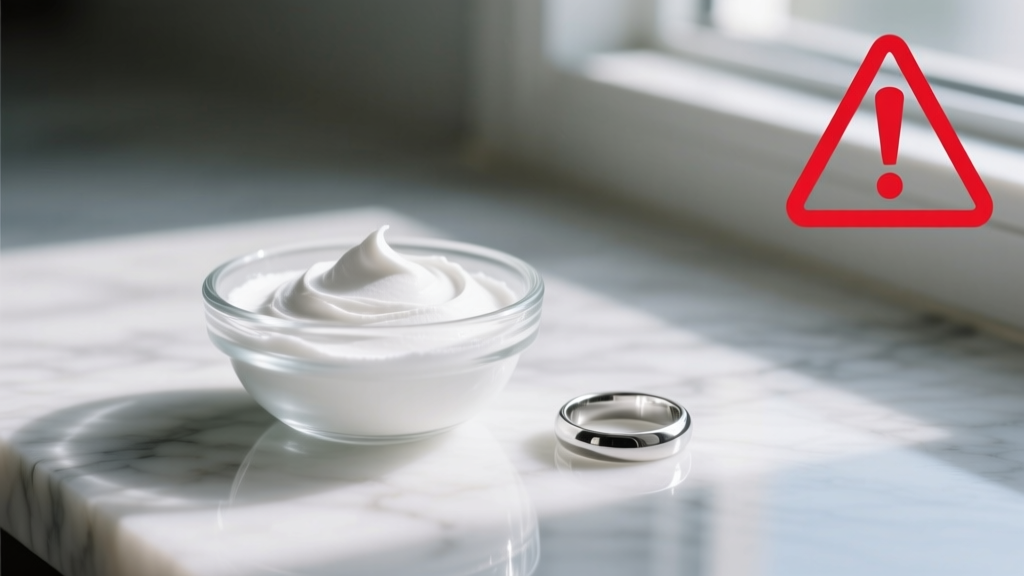
Social media is saturated with DIY jewelry cleaning hacks that are actively detrimental to high-polish minimalist jewelry. Below is a breakdown of why these methods fail based on material science.
| DIY Method | Material Impact | Failure Mode |
|---|---|---|
| Baking Soda Paste | All Metals | Baking soda has a Mohs hardness of 2.5. It acts as a lapping compound, creating thousands of micro-scratches that permanently dull high-polish finishes and strip rhodium plating. |
| Toothpaste | Gold & Silver | Contains hydrated silica (Mohs 7). It will aggressively scour 18k gold and leave deep, irreversible swirl marks on flat surfaces like signet rings. |
| Lemon Juice / Vinegar | Sterling Silver | The high acidity can cause localized pitting in the copper alloy of sterling silver, leading to a porous, uneven surface texture. |
| Boiling Water | Plated Jewelry | Thermal shock can cause the base metal and the plating layer to expand at different rates, resulting in micro-cracking and flaking. |
Herringbone and Snake Chains: A Structural Warning
The herringbone chain is a quintessential clean girl staple, prized for its liquid-like drape and flush, interlocking links. However, its structural geometry makes it highly vulnerable during cleaning. Because the links lay completely flat, capillary action easily traps body oils, lotions, and soap residue between the micro-gaps.
According to Jewelers of America, flat-link chains should never be placed in an ultrasonic cleaner. The high-frequency vibrations can loosen the precise tension holding the flush links together, leading to irreversible kinking. To clean a herringbone chain, lay it perfectly flat on a microfiber towel, apply your mild soapy solution with a soft brush in the direction of the links (never in circles), and rinse by pouring distilled water over it rather than submerging and agitating it.
Professional vs. At-Home Maintenance Schedules
To maintain the pristine, reflective quality of minimalist jewelry, implement this tiered maintenance schedule:
- Daily (At-Home): Wipe down 14k/18k gold and platinum pieces with a dry, clean microfiber cloth before bed to remove sebum and skincare acids.
- Bi-Weekly (At-Home): Soak solid gold and platinum pieces in the distilled water and phosphate-free soap solution for 3 minutes. Skip this for oxidized or rhodium-plated pieces.
- Annually (Professional): Take your solid gold and platinum staples to a bench jeweler for a light polish and ultrasonic deep clean. Have your white gold pieces inspected for rhodium wear and replated if the yellow alloy is visible at the high-friction contact points.
"The secret to the clean girl aesthetic isn't just the design of the jewelry; it's the optical clarity of the metal. A mirror finish requires treating your gold and platinum not as indestructible accessories, but as precision optical surfaces."
By respecting the specific hardness, alloy composition, and structural vulnerabilities of your metals, you can ensure your minimalist collection retains its brilliant, flawless edge for decades.


