Magnasonic Jewelry Cleaner: Material Safety & Property Guide
Discover which metals and gemstones survive a Magnasonic jewelry cleaner. Expert material property analysis and ultrasonic safety guide.

The Physics of Cavitation vs. Jewelry Materials
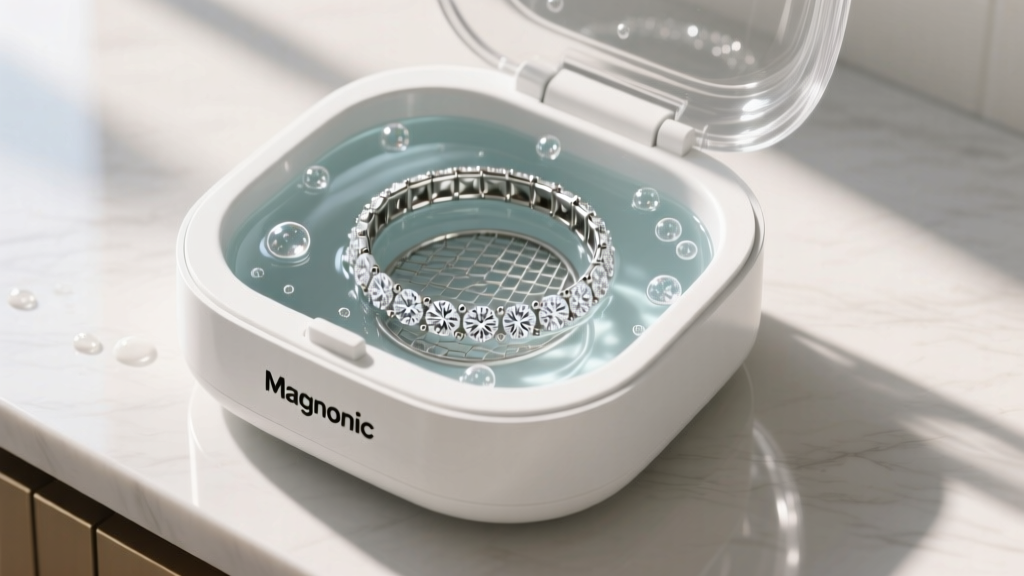
The Magnasonic Professional Ultrasonic Jewelry Cleaner operates at a frequency of 42 kHz, generating high-frequency sound waves that travel through a liquid medium. This process, known as acoustic cavitation, creates millions of microscopic vacuum bubbles. When these bubbles collapse against a surface, they produce localized micro-jets of liquid traveling at hundreds of meters per second, accompanied by momentary spikes in temperature and pressure. While this mechanical scrubbing action is miraculous for removing sebum, cosmetic residue, and environmental grime from hard surfaces, it can be catastrophic for materials with high porosity, low fracture toughness, or internal inclusions.
Understanding whether your specific jewelry piece can withstand the Magnasonic's 42 kHz frequency requires a deep dive into material science. We must evaluate not just the Mohs hardness scale, but also crystallographic cleavage planes, porosity coefficients, and the chemical stability of common gemstone treatments.
Metallurgical Stability: Gold, Platinum, and Silver Alloys
When evaluating precious metals for ultrasonic cleaning, structural integrity is rarely the issue; rather, surface treatments and alloy compositions dictate safety.
Platinum and Palladium
Platinum (typically 950 grade, alloyed with ruthenium or cobalt) and Palladium (950 grade) possess exceptional density and lack the crystalline cleavage planes found in gemstones. These metals are entirely impervious to 42 kHz cavitation. You can safely run platinum settings through multiple 5-minute Magnasonic cycles without risking structural fatigue or surface degradation.
Gold Alloys and Rhodium Plating
14k and 18k gold alloys (mixed with copper, silver, or zinc) are structurally safe for ultrasonic cleaning. However, white gold presents a unique variable. White gold is almost always plated with rhodium to achieve a bright, silvery-white appearance. If the rhodium plating is thin or poorly adhered to the underlying nickel or palladium alloy, the intense micro-jetting of the Magnasonic can accelerate the peeling or flaking of the rhodium layer, exposing the yellowish-white base metal beneath.
Sterling Silver (925) and Tarnish
Sterling silver is highly susceptible to tarnish (silver sulfide formation). While the ultrasonic waves will not damage the silver itself, using tap water in your Magnasonic tank can introduce chlorine and dissolved minerals that actually accelerate oxidation. For sterling silver, always use distilled water mixed with a mild, phosphate-free surfactant.
Gemological Risks: Fracture Toughness and Porosity
The most common jewelry disasters involving ultrasonic cleaners occur when users assume that a high Mohs hardness rating equates to ultrasonic safety. Hardness measures scratch resistance, not fracture toughness (resistance to breaking).
The Emerald Hazard: Clarity Enhancements
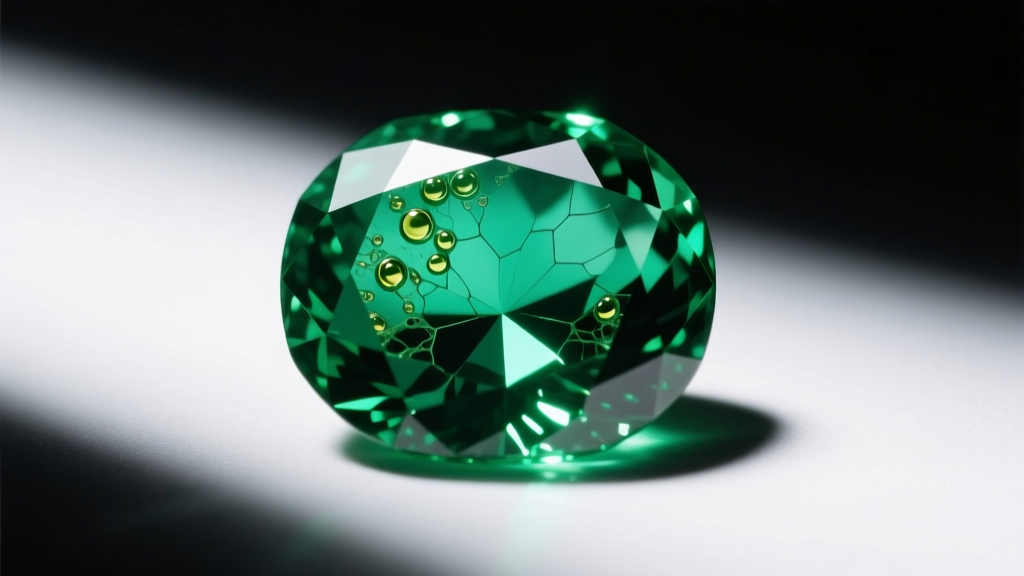
Emeralds (a variety of beryl, Mohs 7.5-8) are notoriously heavily included, featuring internal fractures known as the 'jardin'. To improve transparency, the gemological industry routinely treats emeralds with cedar oil, epoxy resins, or Opticon. According to the Gemological Institute of America (GIA), exposing these fracture-filled stones to ultrasonic waves and heated solutions will boil or strip away the filler. This leaves the emerald looking cloudy, heavily fractured, and significantly devalued. Never place an emerald in a Magnasonic cleaner.
Opals and Pearls: Water Content and Nacre
Opals are non-crystalline silica gels containing anywhere from 3% to 21% water. The localized heat and pressure spikes from cavitation can cause this water to rapidly expand, leading to 'crazing'—a network of micro-fractures that destroys the stone's play-of-color. Similarly, pearls are organic structures composed of aragonite platelets bound by conchiolin. The Magnasonic's vibrations will literally shake the delicate nacre layers apart, causing peeling and permanent dullness.
Diamonds: Cleavage Planes and Inclusions
Diamonds are the hardest natural material (Mohs 10), but they possess perfect octahedral cleavage. A flawless (FL) or internally flawless (IF) diamond will easily survive a Magnasonic bath. However, diamonds with lower clarity grades (I1, I2, I3) that contain large, surface-reaching feathers or internal tension cracks can cleave or shatter under ultrasonic stress.
Material Safety & Cycle Time Matrix
Use the following data matrix to determine the safety profile and optimal cycle parameters for the Magnasonic Professional Ultrasonic Jewelry Cleaner. Always default to the shortest effective cycle.
| Material / Gemstone | Mohs Hardness | Porosity / Fracture Risk | Magnasonic Safety | Max Cycle Time |
|---|---|---|---|---|
| Platinum (950) | 4.5 | None | Excellent | 5 Minutes |
| Diamond (VS+ Clarity) | 10 | Low | Excellent | 3 Minutes |
| Cubic Zirconia | 8.5 | None | Excellent | 3 Minutes |
| 18k Yellow Gold | 2.5-3 | None | Good | 3 Minutes |
| Sterling Silver (925) | 2.5-3 | Low (Tarnish Risk) | Good (Distilled H2O) | 2 Minutes |
| Ruby / Sapphire | 9 | Low (If untreated) | Good | 3 Minutes |
| White Gold (Rhodium) | 2.5-3 | Moderate (Plating loss) | Fair | 1 Minute |
| Emerald (Oiled) | 7.5-8 | Extreme | Dangerous | 0 Minutes |
| Opal / Pearl / Coral | 2.5-6.5 | Extreme | Dangerous | 0 Minutes |
Fluid Chemistry: Optimizing the Cleaning Solution
The Magnasonic tank is constructed from SUS304 stainless steel, which is highly resistant to corrosion, but the liquid you choose dictates the chemical interaction with your jewelry.
The Deionized Water Standard
Tap water contains dissolved calcium, magnesium, and chlorine. When subjected to 42 kHz cavitation, these minerals can precipitate onto the jewelry surface, leaving a stubborn white film, particularly in the intricate pavilion facets of diamonds. Always use distilled or deionized water as your base solvent.
Surfactants vs. Ammonia
To break the surface tension of the water and allow cavitation bubbles to form more efficiently, a surfactant is required. A single drop of mild, neutral-pH dish soap (like Dawn) is ideal for gold and platinum. While ammonia-based cleaners are popular for diamonds, they must be used with extreme caution. As noted in GIA's gem care guidelines, harsh chemicals can degrade the alloy metals in lower-karat gold and damage porous gemstones if accidentally mixed in a multi-stone piece.
Troubleshooting Common Ultrasonic Failures
Even when cleaning safe materials, users occasionally encounter suboptimal results. Here is how to troubleshoot the physics and chemistry of your Magnasonic cleaner:
- Cloudy Diamonds After Cleaning: If a diamond appears cloudy post-clean, the ultrasonic waves have likely emulsified heavy cosmetic oils but failed to flush them away. Remove the basket, rinse the piece under warm running water, and run one final 1-minute cycle with fresh distilled water and a drop of ammonia (if the setting is platinum or high-karat gold).
- Loose Stones Post-Cleaning: Ultrasonic cleaners do not loosen stones; they reveal stones that were already loose. The high-frequency vibration will dislodge a diamond resting in a worn prong channel. Always inspect your prongs with a 10x jeweler's loupe before introducing the piece to the tank.
- White Gold Turning Yellow: If your white gold emerges with a yellowish tint, the rhodium plating has been compromised. This is a mechanical failure of the plating adhesion, exacerbated by the micro-jetting action. The piece will require professional re-rhodium plating.
Final Expert Verdict
The Magnasonic Professional Ultrasonic Jewelry Cleaner is a highly effective tool for maintaining the brilliance of hard, non-porous materials like platinum, high-clarity diamonds, and cubic zirconia. However, it is not a universal solution. By respecting the gemological properties of fracture toughness and the metallurgical realities of surface plating, you can safely integrate 42 kHz cavitation into your jewelry care regimen without risking irreversible damage to your most prized possessions.