How to Remove Tarnish From Cheap Jewelry Without Stripping Plating
Learn exactly how to remove tarnish from cheap jewelry using metallurgist-approved methods that clean base metals without stripping fragile plating.
The Metallurgy of Fashion Jewelry: Why It Tarnishes
To understand how to remove tarnish from cheap jewelry, you must first understand its metallurgical composition. Fashion or "costume" jewelry is rarely made of solid precious metals. Instead, it relies on base metal cores—most commonly brass (a copper-zinc alloy), copper, or Zamak (a zinc alloy containing aluminum, magnesium, and copper). These base metals are highly reactive to oxygen, sulfur, and moisture in the environment.
To make these reactive metals look like gold or silver, manufacturers apply a microscopic layer of precious metal. This is known as "flash plating." While standard gold vermeil requires a minimum of 2.5 microns of gold over sterling silver, flash plating on commercial fashion jewelry is typically between 0.1 and 0.3 microns thick. To protect this ultra-thin layer, many manufacturers apply an e-coating (electrophoretic lacquer), a clear polymer resin that acts as a physical barrier against oxidation.
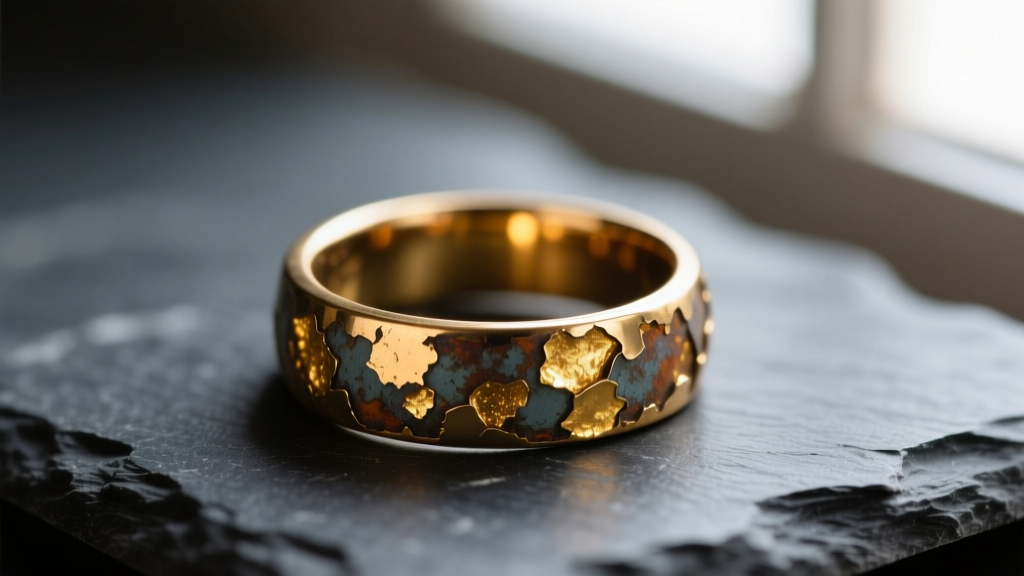
Tarnish occurs when this e-coating micro-fractures from daily wear, friction, or exposure to acidic skin pH (typically between 4.5 and 5.5). Once the barrier is compromised, environmental sulfur and oxygen reach the base metal or the thin plating layer, initiating the corrosion process. According to the Gemological Institute of America (GIA), understanding the difference between solid alloys and plated base metals is the first step in preventing irreversible chemical damage during cleaning.
Flash Plating vs. E-Coating: Identifying Your Piece
Before applying any cleaning solution, determine the surface treatment of your jewelry. If the piece has a high-gloss, almost glass-like finish that feels like smooth plastic, it is likely e-coated. If it has a matte or brushed metallic finish and leaves a dark smudge on your skin when wet, it is likely bare flash-plated metal or oxidizing base metal. Treating an e-coated piece with chemical metal polishes will cloud the resin, while treating a bare flash-plated piece with harsh acids will strip the 0.1-micron gold layer entirely, exposing the brass underneath.
The Chemistry of Tarnish: Oxidation vs. Sulfurization
Tarnish is not dirt; it is a chemical compound formed on the surface of the metal. When cleaning, you are attempting to either mechanically remove or chemically reduce this compound without dissolving the underlying metal.
- Copper Sulfide (CuS): Forms on silver-plated or copper-based pieces exposed to atmospheric sulfur. It appears as a yellow, brown, or black film.
- Zinc Oxide (ZnO) & Zinc Carbonate: Forms on Zamak or brass alloys. It appears as a chalky, dull white or pale green crust, often accumulating in the crevices of cast jewelry.
- Copper Chloride (Verdigris): A bright green, powdery corrosion that occurs when copper alloys react with chlorides (like sweat or salt water). This is actively destructive and pits the metal.
Destructive Methods You Must Avoid
The internet is flooded with DIY jewelry cleaning hacks that are catastrophically damaging to cheap, plated jewelry. As a domain expert, I strongly advise against the following methods:
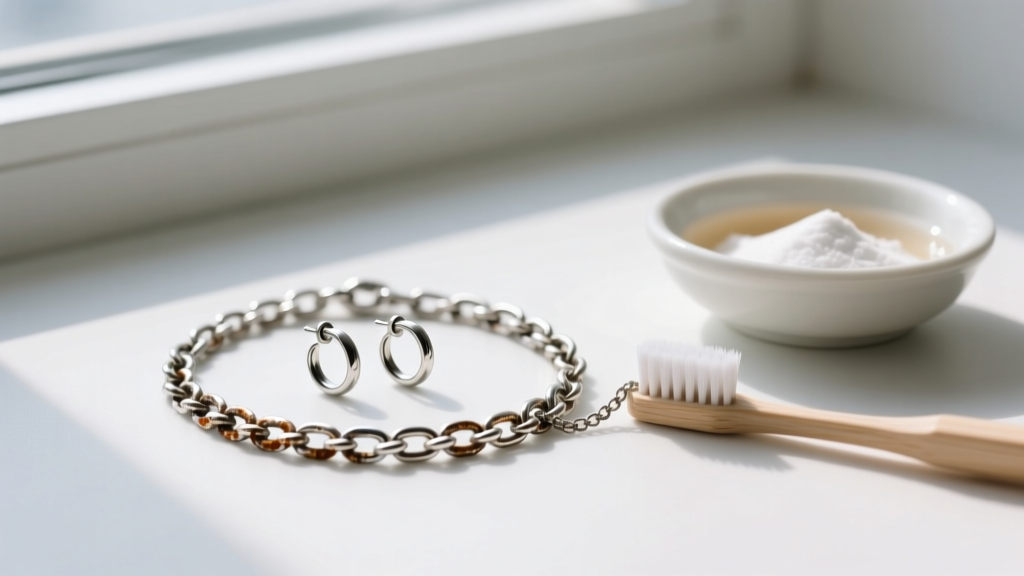
- The Aluminum Foil & Baking Soda Bath: This creates a galvanic electrochemical cell. While it effectively reduces silver sulfide on solid sterling silver, the alkaline environment and electrical current will instantly strip 0.1-micron flash plating off a brass core, leaving you with a dull, pinkish ring.
- Toothpaste and Baking Soda Pastes: Toothpaste contains hydrated silica, which ranks at a 7 on the Mohs hardness scale. Gold and silver rank between 2.5 and 3. Scrubbing plated jewelry with toothpaste acts like sandpaper, permanently scratching the e-coating and scouring away the microscopic plating.
- Ammonia-Based Cleaners: Ammonia is a complexing agent for copper and zinc. It will literally dissolve the base metal core if it penetrates a micro-crack in the plating, causing the jewelry to become brittle and snap.
Step-by-Step Tarnish Removal Protocols
Depending on the material and the severity of the tarnish, use one of the following metallurgist-approved protocols. The Smithsonian Museum Conservation Institute emphasizes using the mildest mechanical or chemical intervention necessary to preserve historical and delicate metals.
Protocol 1: The Surfactant Lift (For E-Coated & Lightly Tarnished Pieces)
This method removes surface oils, salts, and early-stage oxidation without damaging polymer e-coatings.
- Mix 1 cup of distilled water (tap water contains chlorine and dissolved minerals that accelerate corrosion) warmed to 95°F (35°C) with 3 drops of pH-neutral dish soap (like Dawn Free & Clear).
- Submerge the jewelry for exactly 3 minutes. Do not exceed this, as prolonged water exposure can seep into stone settings and degrade the epoxy adhesives used in costume jewelry.
- Agitate gently with an extra-soft baby toothbrush (bristle diameter < 0.1mm).
- Rinse in a bowl of clean distilled water, then immediately dry with a microfiber cloth. Do not air dry, as water spots will etch into the e-coating.
Protocol 2: Micro-Abrasive Polishing (For Flash-Plated Pieces)
If the gold or silver flash plating has oxidized but the base metal is not exposed, you need a non-scratching chemical polish.
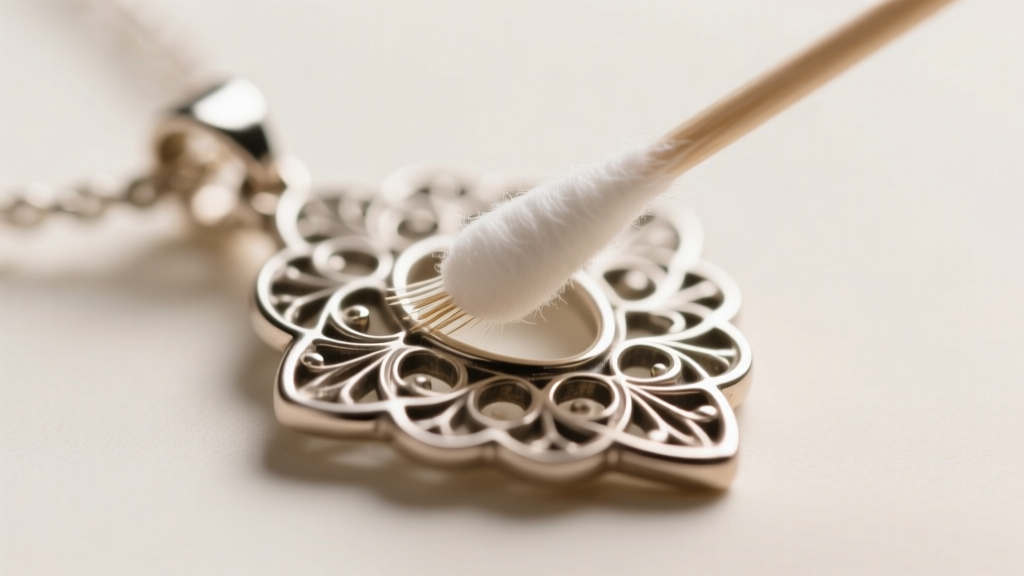
- Apply a pea-sized amount of a non-abrasive, non-ammoniated metal polish (such as Simichrome or Hagerty 100) to a cotton swab, not a cloth. Cloths can catch on prongs and bend soft zinc-alloy settings.
- Gently roll the swab over the tarnished areas. You will see black or brown residue on the cotton—this is the lifted metal sulfide.
- Use a clean, dry swab to buff the area to a high shine. The mild chemical reducers in these polishes reverse oxidation without requiring the mechanical friction that strips plating.
Protocol 3: Mild Acid Chelation (For Bare Brass/Copper with Verdigris)
Only use this on un-plated brass or copper pieces suffering from green verdigris (copper chloride).
- Create a paste using fresh lemon juice (citric acid, pH ~2) and a pinch of fine table salt (sodium chloride acts as a mild chelating catalyst).
- Apply strictly to the affected green areas using a wooden toothpick. Avoid getting this on any glued-in rhinestones, as the acid will dissolve the foil backing on acrylic stones.
- Let it sit for 60 seconds. The acid dissolves the copper carbonate.
- Neutralize the acid immediately by wiping the piece with a cotton pad soaked in a baking soda and water solution (pH ~9), then rinse with distilled water and dry thoroughly.
Base Metal & Tarnish Matrix
Use this reference table to quickly diagnose your jewelry's tarnish and select the correct chemical intervention.
| Base Metal Core | Tarnish Appearance | Safe Cleaning Agent | Destructive Agent to Avoid |
|---|---|---|---|
| Zinc Alloy (Zamak) | Chalky white/grey crust in crevices | pH-neutral surfactant, soft brush | Acids, Ultrasonic cleaners (causes pitting) |
| Brass (Copper/Zinc) | Dark brown/black oxidation | Simichrome polish, lemon/salt (if bare) | Ammonia, Baking soda/foil baths |
| Copper | Bright green powdery verdigris | Citric acid spot treatment, neutralization | Bleach, prolonged water submersion |
| Silver-Plated Brass | Yellow to black silver sulfide | Hagerty 100, microfiber buffing | Toothpaste, Ultrasonic vibration |
Preventative Storage: Halting the Oxidation Clock
Removing tarnish from cheap jewelry is a reactive measure; preventing it is a proactive science. The primary culprits of fashion jewelry degradation are atmospheric sulfur, humidity, and PVC off-gassing.
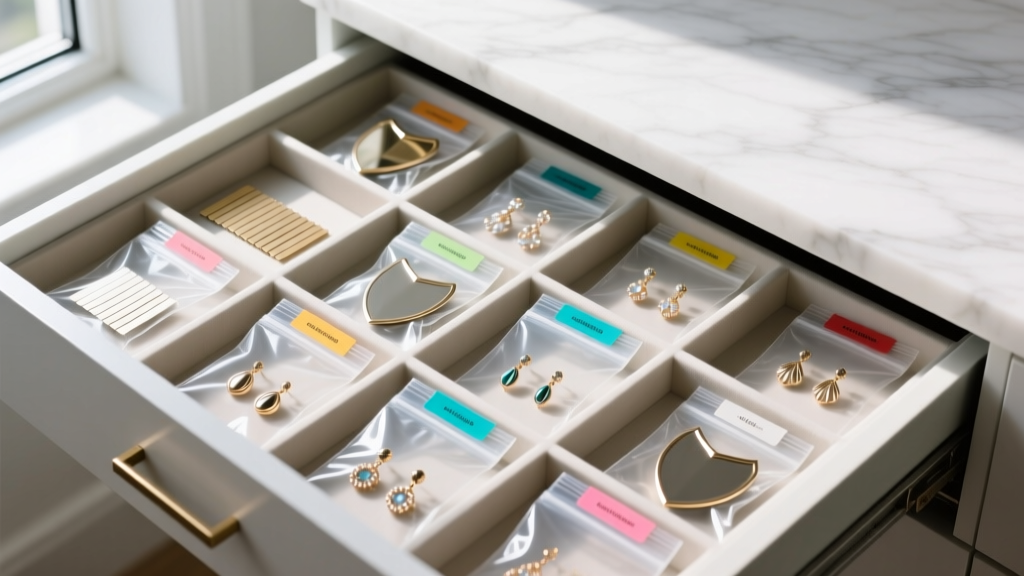
Never store cheap jewelry in cardboard boxes or PVC plastic bags. Cardboard contains sulfur compounds from the paper bleaching process, and PVC (polyvinyl chloride) releases hydrogen chloride gas over time, which rapidly accelerates the formation of verdigris on copper and brass cores. Instead, store each piece individually in polyethylene (PE) zip-lock bags. Polyethylene is chemically inert and provides an excellent moisture barrier.
For ultimate protection, place a 3M Anti-Tarnish Strip inside your storage container. These strips contain copper-based reactive particles that act as a sacrificial anode, absorbing atmospheric sulfur and hydrogen sulfide before they can reach your jewelry. A single 2-inch strip effectively protects a 1-cubic-foot enclosed space for up to 6 months, ensuring your flash-plated pieces remain pristine and ready to wear without the need for constant chemical intervention.


