How to Remove Tarnish From Jewelry: An Expert's Metallurgical Guide
Learn how to remove tarnish from jewelry using electrochemical reduction. Expert guide on silver alloys, gemstone safety, and abrasive risks.

The Electrochemistry of Silver Tarnish
When collectors and everyday wearers ask how to remove tarnish from jewelry, they are usually confronting a specific chemical compound: silver sulfide (Ag2S). Tarnish is not merely surface dirt or oxidation; it is a corrosive layer that forms when elemental silver reacts with hydrogen sulfide (H2S) gases present in the atmosphere, sweat, and certain foods. For sterling silver—an alloy comprising 92.5% silver and 7.5% copper—the copper content also oxidizes, forming copper sulfide (Cu2S) and copper oxide (CuO), which manifest as deep purple or black hues.
Traditional abrasive polishing pastes physically strip away this tarnish layer. However, from a metallurgical standpoint, this is highly destructive. Every time you use a micro-abrasive paste, you are removing microscopic layers of the underlying elemental silver. Over a decade of routine abrasive polishing, a delicate 925 sterling chain can lose up to 5% of its total mass, compromising its structural integrity and erasing intricate milgrain or filigree details.
The Aluminum Foil Electrochemical Reduction Method
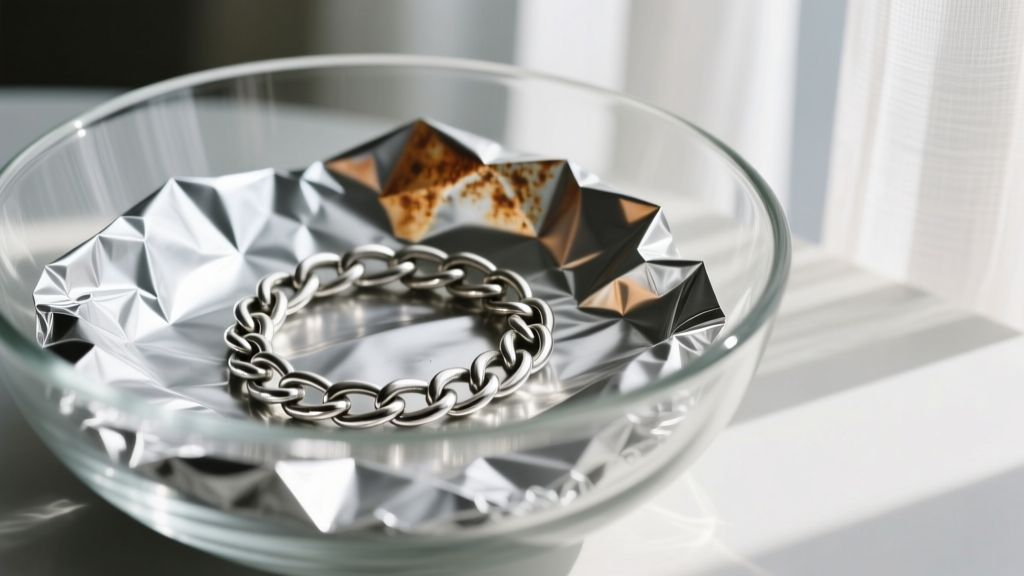
To preserve the original mass and mint-condition surfaces of your jewelry, experts utilize electrochemical reduction. This method reverses the tarnishing process at the ionic level, converting silver sulfide back into elemental silver without removing a single micron of the host metal.
This process relies on the galvanic series of metals. Aluminum is significantly more electropositive (anodic) than silver. When submerged in an alkaline electrolyte solution, the aluminum sacrifices itself, oxidizing and forcing the sulfur atoms to detach from the silver and bond with the aluminum instead.
Technical Protocol for Electrochemical Descaling
- Electrolyte Solution: Combine 1 liter of boiling distilled water with 50 grams of sodium bicarbonate (baking soda). Avoid tap water, as dissolved chlorides can cause micro-pitting.
- Reaction Vessel: Line a glass or high-density polyethylene (HDPE) bowl with heavy-duty aluminum foil. Ensure the shiny or matte side faces up; the surface area, not the reflectivity, dictates the reaction rate.
- Catalyst (Optional): Add 15 grams of sodium chloride (table salt) to increase the electrical conductivity of the solution, accelerating the ion transfer.
- Immersion: Submerge the jewelry so it physically touches the aluminum foil. This completes the galvanic cell. You will immediately smell sulfur (a faint rotten egg odor) as the Ag2S breaks down.
- Duration: Leave for 3 to 5 minutes. Prolonged exposure in highly alkaline solutions can cause surface etching on lower-grade alloys.
Alloy Variations: Sterling 925 vs. Argentium vs. Coin Silver
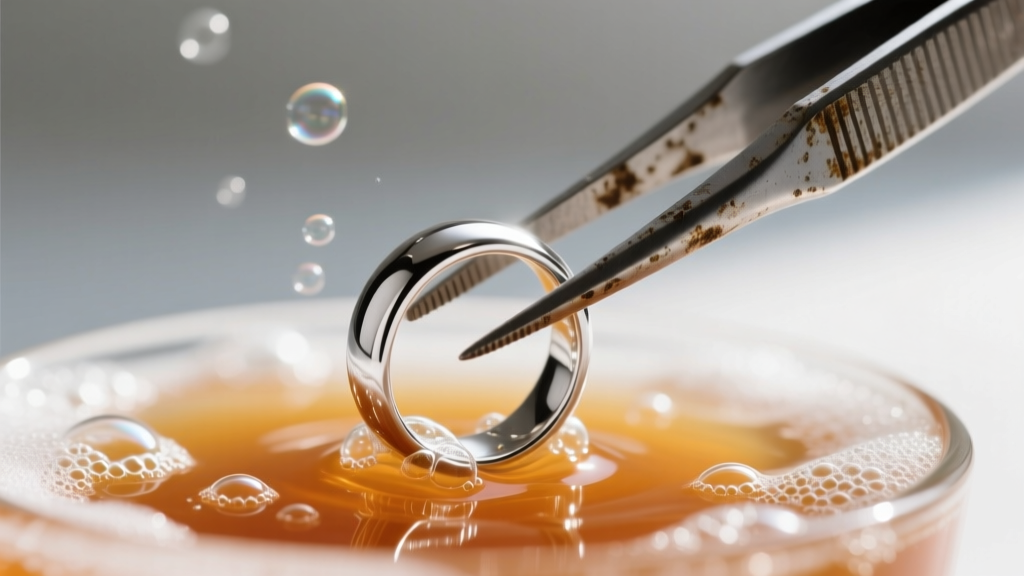
Understanding how to remove tarnish from jewelry requires identifying the specific alloy you are treating. The copper content and the presence of proprietary deoxidizers drastically alter both the tarnish rate and the appropriate cleaning methodology.
| Alloy Designation | Composition | Tarnish Susceptibility | Recommended Cleaning Protocol |
|---|---|---|---|
| Sterling 925 | 92.5% Ag, 7.5% Cu | High (Copper sulfides form rapidly) | Aluminum electrochemical bath; mild dish soap for grease. |
| Argentium 935 | 93.5% Ag, Cu, Germanium | Extremely Low (Germanium oxide layer protects surface) | Warm water and mild surfactant only. Never use electrochemical baths. |
| Coin Silver 900 | 90.0% Ag, 10.0% Cu | Very High (Excess copper accelerates dark oxidation) | Electrochemical bath with extended 5-7 minute immersion time. |
| Fine Silver 999 | 99.9% Ag | Negligible (Lacks copper to form dark sulfides) | Ultrasonic cleaning with mild ammonia-free detergent. |
Gemstone and Plating Vulnerabilities During Descaling
While the electrochemical bath is miraculous for bare silver, it poses catastrophic risks to certain gemstones and plated jewelry. The combination of boiling water, high alkalinity, and galvanic currents can cause irreversible structural damage.
Porous and Hydrated Gemstones
Opals contain between 3% and 21% water within their silica structure. Submerging an opal in boiling water causes rapid thermal expansion and moisture loss, leading to "crazing"—a network of permanent internal fractures. Similarly, turquoise (Mohs 5-6) and lapis lazuli are highly porous. The alkaline baking soda solution will penetrate the stone's matrix, leaving permanent white, chalky residues that cannot be polished out. For jewelry featuring these stones, the electrochemical bath is strictly prohibited; use a localized, dry polishing cloth instead.
Rhodium Plating and Gold Vermeil
Many modern silver pieces are plated with rhodium to prevent tarnish. If the rhodium layer (typically 0.75 to 1.0 microns thick) has micro-fissures, the alkaline bath can seep underneath, causing micro-blistering and peeling. Furthermore, gold vermeil—defined by the FTC as a minimum of 2.5 microns of gold over sterling silver—can suffer from galvanic corrosion if the aluminum foil touches the gold layer, creating a destructive salt bridge in the electrolyte solution.
Advanced Preventative Storage and Anti-Tarnish Tech
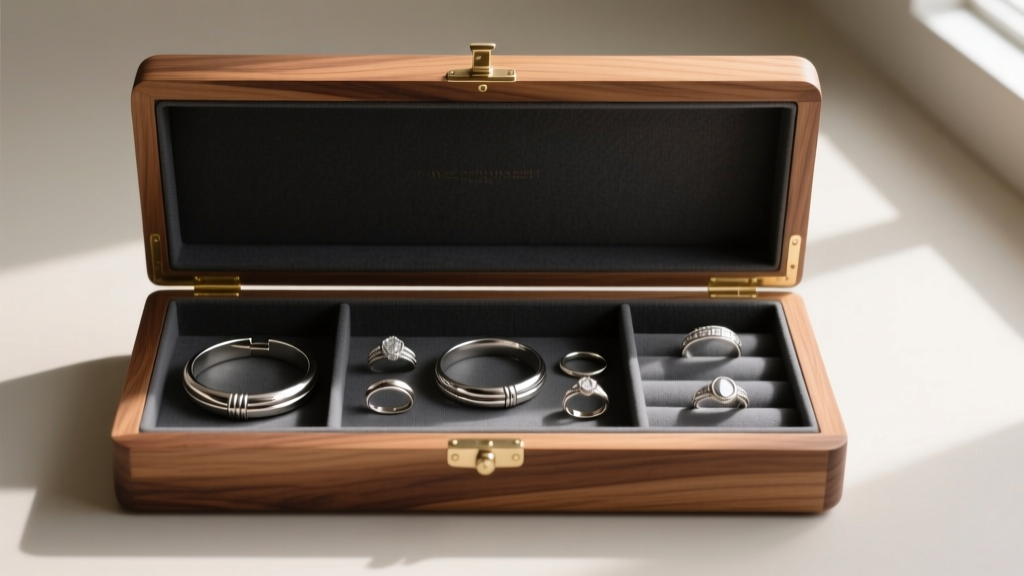
Knowing how to remove tarnish from jewelry is secondary to preventing its formation. Modern archival storage relies on sacrificial chemistry and environmental controls to halt the oxidation process before it begins.
- Pacific Silvercloth: This specialized flannel is embedded with microscopic silver particles. These particles act as sacrificial targets, reacting with ambient H2S gases before they can reach your jewelry. It is highly recommended for long-term vault storage.
- 3M Anti-Tarnish Strips: These utilize copper-based sacrificial metals that absorb sulfur compounds from the surrounding air within a sealed polyethylene bag. They must be replaced every 6 to 12 months, depending on the ambient pollution levels.
- Silica Gel and Activated Charcoal: Maintaining a relative humidity (RH) below 40% drastically slows the electrochemical reactions required for tarnish formation. Food-grade silica gel packets combined with activated charcoal sachets provide excellent moisture and volatile organic compound (VOC) absorption inside cedar or mahogany jewelry boxes.
For authoritative guidelines on preserving historical and modern silver artifacts, refer to the conservation protocols outlined by the Gemological Institute of America (GIA) and the material science briefs provided by the Smithsonian Museum Conservation Institute. By respecting the metallurgy of your jewelry, you ensure its brilliance and structural integrity endure for generations.


