How to Clean Tarnished Costume Jewelry: 2026 Buyer Guide
Discover how to clean tarnished costume jewelry safely. Our 2026 buying guide covers the best kits, solutions, and tools to restore plated pieces.

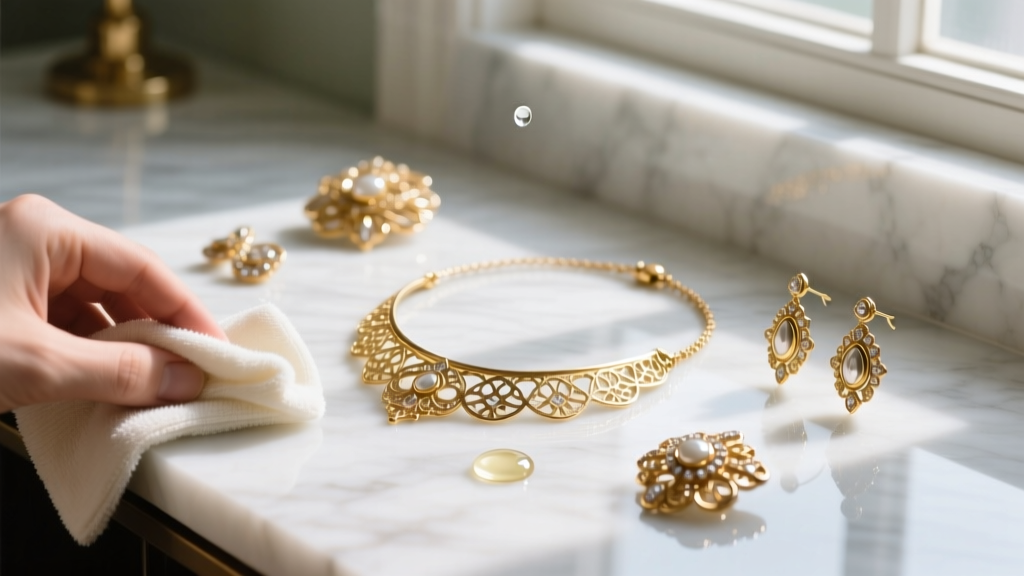
When learning how to clean tarnished costume jewelry, the first step is abandoning the methods you use for solid gold or sterling silver. Costume jewelry—typically crafted from base metals like zinc alloy, brass, or copper and finished with a microscopic layer of gold, silver, or rhodium—requires an entirely different chemical approach. Using the wrong commercial cleaner won't just fail to remove tarnish; it will permanently strip the flash plating, dissolve the adhesives holding rhinestones in place, and ruin the delicate foil-backing of vintage gems.
This 2026 buying guide cuts through the marketing fluff of generic jewelry dips. We break down the exact chemistry of costume jewelry tarnish, what ingredients to actively avoid, and the specific tools, solutions, and kits you should buy to safely restore your favorite plated pieces.
The Chemistry of Costume Jewelry Tarnish (Why Standard Cleaners Fail)
To buy the right cleaning kit, you must understand what you are actually cleaning. Most modern and vintage costume jewelry features flash plating—a metallic coating ranging from just 0.1 to 0.5 microns thick. Even higher-end "heavy electroplated" pieces rarely exceed 2.5 microns. Tarnish on these pieces usually presents in two ways:
- Surface Sulfide Tarnish: The silver or rhodium top-layer reacts with sulfur in the air and human sebum, creating a dark silver sulfide film.
- Base Metal Bleed (Oxidation): The plating develops micro-pores or wears thin, allowing moisture to reach the copper or zinc base. The resulting copper oxide or zinc carbonate pushes through the plating, creating stubborn green or black spots.
Standard silver dips rely on thiourea, a chemical that aggressively strips sulfide tarnish but also dissolves thin gold and rhodium flash plating. Similarly, the popular DIY "baking soda and aluminum foil" method creates an ion-exchange reaction that is far too abrasive and galvanically active for plated base metals, often resulting in a dull, pitted finish. According to the Gemological Institute of America (GIA), porous gemstones and plated metals require strictly pH-neutral, non-abrasive care to maintain their structural and visual integrity.
The 2026 Buying Checklist: What to Look For on the Label
Before adding a jewelry cleaning solution to your cart, turn the bottle around and scrutinize the ingredient list. Here is your non-negotiable buying checklist for costume jewelry care:
1. pH-Neutral Formulation (6.5 to 7.5)
Acidic cleaners (like lemon juice or vinegar-based DIYs) will eat through zinc and copper bases if they seep through micro-cracks in the plating. Alkaline cleaners (like baking soda pastes) will scratch soft plating. You must buy a surfactant-based wash that is strictly pH-neutral.
2. Ammonia-Free and Alcohol-Free
Ammonia is a common degreaser in commercial jewelry dips, but it is highly corrosive to copper alloys. Alcohol (isopropyl or ethanol) is equally destructive to costume jewelry; it dries out and dissolves the cyanoacrylate and shellac adhesives used to set glass rhinestones, causing stones to fall out mid-wear.
3. No Ultrasonic Compatibility Claims
If a kit includes an ultrasonic machine, avoid it for costume jewelry. The high-frequency cavitation bubbles generated by ultrasonic cleaners will shatter glued-in settings and peel away lifting plating in seconds.
The Best Cleaning Tools & Kits to Buy (By Category)
Building a safe cleaning arsenal for costume jewelry doesn't require expensive machinery. Focus on high-quality, gentle manual tools. Here are the specific categories and price ranges to target in 2026.
pH-Neutral Surfactant Baths ($8 - $18)
Look for liquid washes specifically labeled for "delicate," "porous," or "costume" jewelry. These rely on mild, non-ionic surfactants that lift sebum and surface dirt without chemical oxidation-reduction reactions. Brands like Connoisseurs Delicate Cleaner or specialized museum-grade conservation washes are excellent choices. What to avoid: Any product that promises "instant tarnish removal" via dipping, as these contain harsh thiourea or cyanide derivatives.
Treated Microfiber Polishing Cloths ($5 - $12)
For light surface sulfide tarnish, a chemically treated polishing cloth is your safest bet. Products like the Sunshine Polishing Cloth are impregnated with micro-abrasives and anti-tarnish agents. Expert Warning: These cloths remove a microscopic layer of metal with every wipe. On a 0.5-micron flash-plated ring, aggressive rubbing will expose the base metal. Buy these for light, gentle buffing only, and never use them on matte or brushed finishes.
Soft-Bristle Detailing Brushes ($3 - $8)
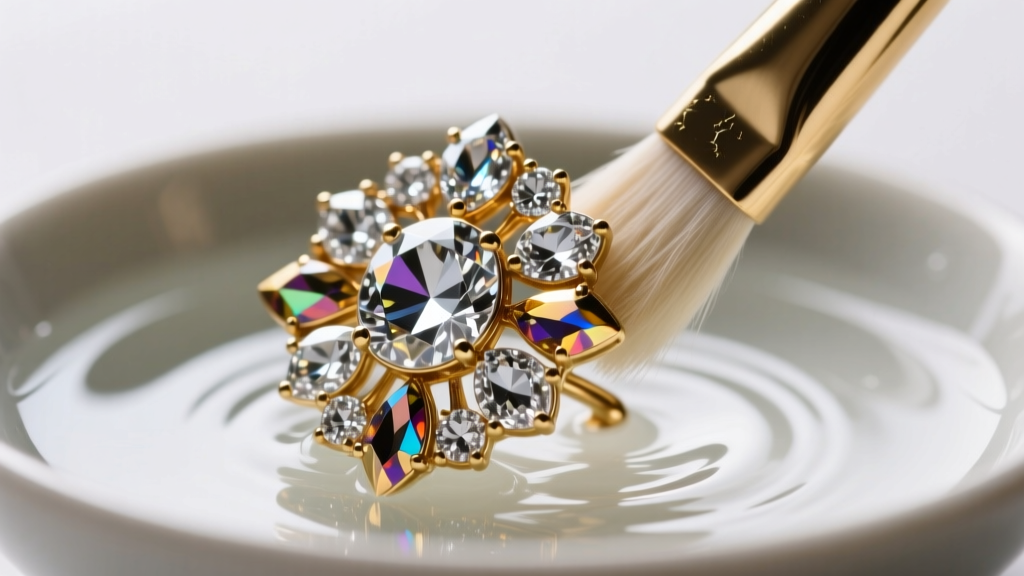
To clean the intricate filigree and pavé settings common in costume jewelry, you need a brush with bristles softer than the Mohs hardness of gold (2.5-3). What to buy: Extra-soft infant toothbrushes or specialized nylon detailing brushes with 0.1mm bristles. What to avoid: Boar-bristle brushes, brass wire brushes, or standard "medium" toothbrushes, which will leave permanent micro-scratches on rhodium and gold plating.
Comparison Table: Safe vs. Destructive Cleaning Agents
| Cleaning Agent / Method | Safety for Costume Jewelry | Chemical / Physical Failure Mode |
|---|---|---|
| Baking Soda + Aluminum Foil | Destructive | Ion exchange reaction strips flash plating and pits zinc bases. |
| Ammonia-Based Silver Dips | Destructive | Corrodes copper/brass base metals and dissolves rhinestone glue. |
| Ultrasonic Cleaners | Destructive | Cavitation vibrations shatter glued settings and foil-backed stones. |
| Toothpaste (Whitening) | Destructive | Contains hydrated silica (Mohs 7), severely scratching soft plating. |
| pH-Neutral Surfactant Wash | Safe | Gently lifts sebum and environmental dust without chemical stripping. |
| Treated Polishing Cloth | Safe (with caution) | Removes light sulfide tarnish; overuse will wear through thin plating. |
Step-by-Step: Using Your New Kit Safely
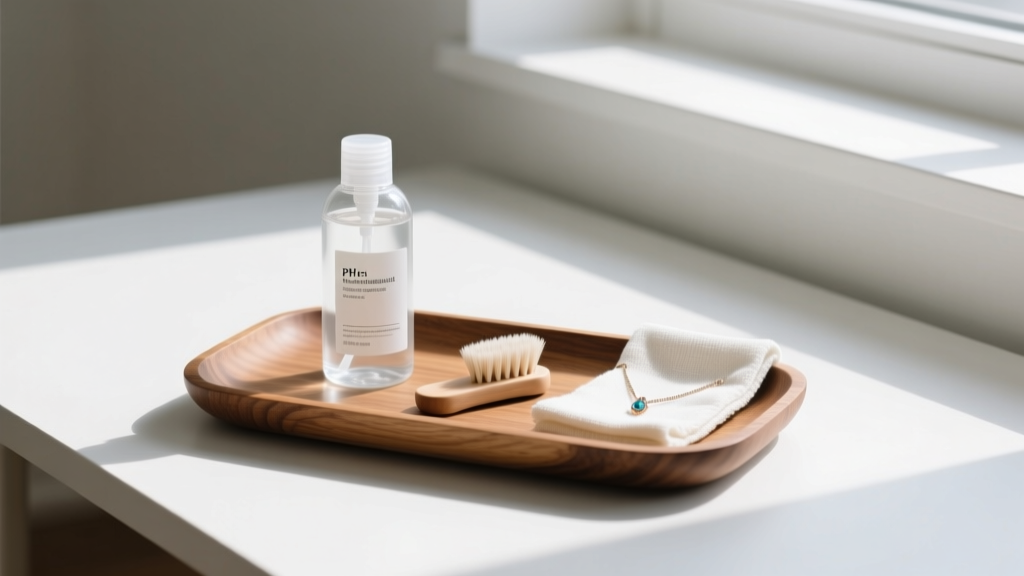
Once you have purchased the correct pH-neutral wash and soft nylon brush, follow this precise methodology recommended by Jewelers of America to clean your pieces without causing water damage to glued settings.
- The Dry Dust: Before introducing any moisture, use a dry, untreated microfiber cloth to wipe away surface dust and oils. This prevents scratching during the wet wash.
- The 30-Second Dip: Mix a few drops of your pH-neutral surfactant into lukewarm (never hot) distilled water. Dip the jewelry for no more than 30 seconds. Prolonged soaking allows water to seep behind foil-backed rhinestones, ruining their mirror effect and turning them black.
- Gentle Agitation: Using your extra-soft nylon brush, gently sweep the bristles over the settings and filigree. Do not scrub; let the surfactant do the lifting.
- The Distilled Rinse: Quickly rinse under a slow stream of distilled water. Tap water contains chlorine and minerals that can leave permanent water spots on base metals if the plating is compromised.
- Immediate Pat Dry: Never air-dry costume jewelry. Immediately pat it completely dry with a lint-free microfiber cloth, and use a hair dryer on the "cool" setting to blow moisture out of tight crevices.
Expert Troubleshooting: When Plating is Gone
Pro Tip: If your "tarnish" appears as a pinkish or brassy hue that won't wipe away with a treated cloth, you aren't dealing with surface tarnish. The plating has worn off entirely (rub-through), exposing the copper or brass base metal beneath.
No cleaner in the world can restore worn plating. If a beloved piece has suffered rub-through, you have two options. For a cheap, temporary fix, clean the piece thoroughly and apply a thin coat of a jewelry-specific sealant like ProtectaClear ($15-$20) to prevent the raw base metal from oxidizing further and turning your skin green. For a permanent restoration, take the piece to a professional electroplater. Re-plating a standard costume ring or pendant in 2.5 microns of 18k gold or rhodium typically costs between $40 and $80 in 2026, a worthwhile investment for high-quality vintage or designer costume pieces.


