Mild Soap for Cleaning Jewelry: Budget Value vs Commercial Cleaners
Discover if mild soap for cleaning jewelry outperforms expensive commercial brands. We compare costs, chemical safety, and value for fine gems.

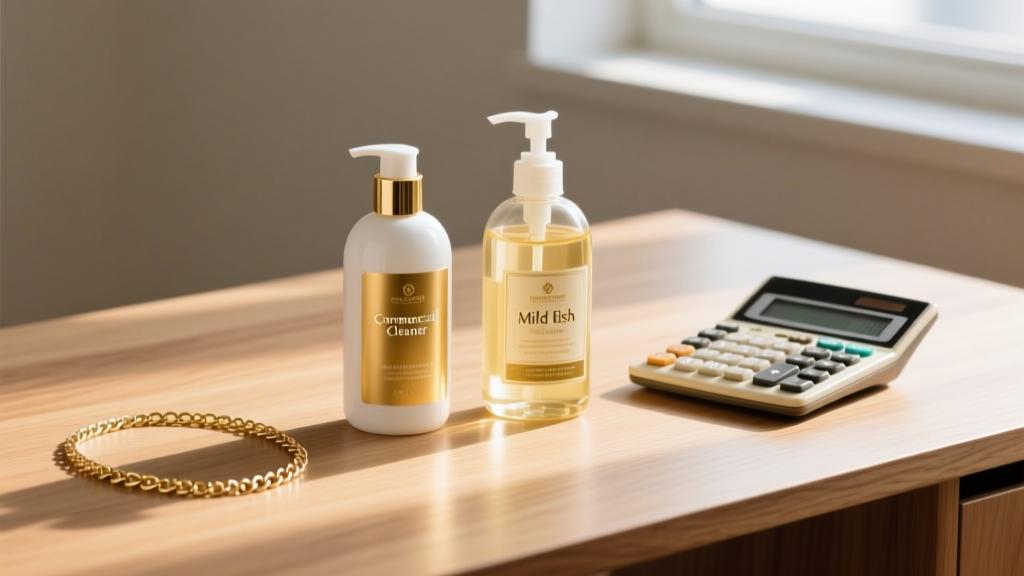
Walk into any boutique or browse online marketplaces, and you will find dozens of specialized, heavily marketed jewelry cleaning solutions. Priced anywhere from $8 to $25 a bottle, these commercial liquids promise professional-grade sparkle. But as inflation impacts household budgets, savvy collectors and everyday wearers are asking a critical question: is using mild soap for cleaning jewelry actually a better financial and chemical choice? In this comprehensive budget and value assessment, we break down the true cost-per-clean, the chemical realities of commercial surfactants versus household dish soaps, and the hidden failure modes that could cost you thousands in gemstone damage.
The Chemistry of Surfactants: Ammonia vs. Mild Soap
To understand the value proposition, we must first look at the chemistry. Most commercial "precious metal" cleaners rely on ammonia or thiourea. Ammonia is highly alkaline (pH 11-12) and exceptional at cutting through the heavy sebum and cosmetic oils that dull diamonds. However, this high alkalinity is a liability. According to the Gemological Institute of America (GIA), prolonged exposure to high-pH solutions can degrade the polish on softer metals and damage porous gemstones.
Conversely, a high-quality mild dish soap utilizes non-ionic or gentle anionic surfactants (like Alkyl Polyglucosides) with a near-neutral pH of 7 to 9. These surfactants work by reducing the surface tension of water, allowing it to penetrate the microscopic gaps between a diamond's pavilion and its prongs, lifting away oils without chemical etching. In 2026, modern eco-friendly dish soaps have advanced significantly, offering degreasing power that rivals ammonia but without the corrosive risks, making them a vastly superior value for multi-material jewelry collections.
Cost-Benefit Analysis: Price Per Ounce Breakdown
When assessing budget value, the upfront cost of a bottle is misleading. Commercial jewelry cleaners are typically sold in small 8 oz bottles, while premium mild soaps are sold in bulk. Let us look at the actual cost-per-ounce and cost-per-clean.
| Product Type & Brand Example | Average Retail Price | Volume | Cost Per Ounce | Dilution Ratio | Effective Cost Per Ounce |
|---|---|---|---|---|---|
| Connoisseurs Precious Cleaner | $8.50 | 8 oz | $1.06 | None (Ready to use) | $1.06 / oz |
| Hagerty Jewel Clean | $9.99 | 18 oz | $0.55 | None (Ready to use) | $0.55 / oz |
| Dawn Free & Clear (Mild Soap) | $4.50 | 18 oz | $0.25 | 10:1 (Water to Soap) | $0.025 / oz |
| Dr. Bronner's Sal Suds | $16.99 | 32 oz | $0.53 | 20:1 (Water to Soap) | $0.026 / oz |
Data based on average 2026 retail pricing. Dilution ratios reflect standard gemological cleaning protocols.
As the table illustrates, when you factor in the necessary dilution of mild soap for cleaning jewelry, the effective cost drops to roughly two cents per ounce of cleaning solution. A single 18 oz bottle of Dawn Free & Clear, properly diluted, yields nearly 180 ounces of active cleaning solution—enough to clean a daily-wear engagement ring every single day for over three years.
Material-Specific Value: When Soap Wins and When It Fails
Value is not just about saving money; it is about protecting your assets. Using the wrong cleaner can result in catastrophic financial loss. Here is how mild soap performs across different material grades.
The Sweet Spot: Diamonds, Sapphires, and Platinum
For hard stones (Mohs 8.5 and above) set in platinum or 14k/18k gold, mild soap is the undisputed champion of value. Platinum is highly resistant to chemical corrosion, and diamonds are essentially grease magnets. The gentle surfactants in mild soap encapsulate the grease molecules, allowing them to be rinsed away. Using a $15 commercial ammonia cleaner on a platinum diamond ring offers zero additional sparkle compared to a $0.10 bowl of diluted mild soap, making the commercial product a poor financial investment.
The Danger Zone: Emeralds, Opals, and Pearls
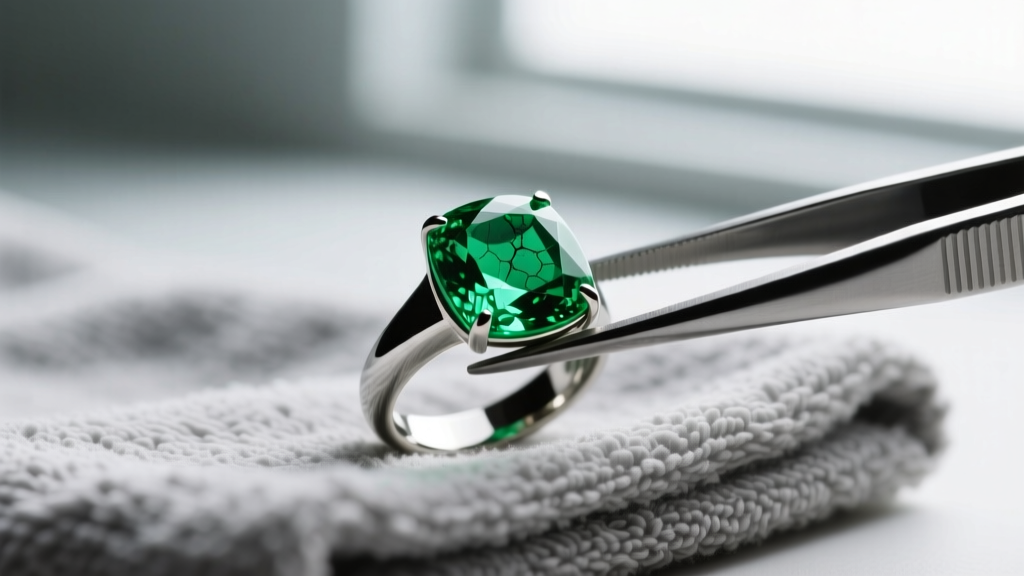
This is where the budget assessment shifts from saving money to preventing disaster. Almost all commercial emeralds are treated with cedar oil or synthetic resins to mask natural fissures. Ammonia-based commercial cleaners will strip this oil out in minutes, leaving the stone looking cloudy, fractured, and significantly devalued. Opals and pearls are equally sensitive; their organic or hydrated structures can be permanently etched by harsh alkaline solutions. The Jewelers of America explicitly warns against using ultrasonic or harsh chemical cleaners on porous gems. A mild, pH-neutral soap used with a quick, gentle hand-wash is the only safe budget option here.
The Hidden Costs of "Value" Cleaning (Failure Modes)
When evaluating budget jewelry care, we must account for failure modes. The most common mistake consumers make when using mild soap is failing to rinse it properly, or using the wrong physical tool.
"The greatest risk in DIY jewelry cleaning isn't the soap itself; it's the mechanical action and the water quality. Scrubbing a soft gold bezel with a medium-bristle toothbrush will cause micro-scratches that trap more dirt over time, while hard tap water leaves calcium deposits that mimic the very dullness you were trying to remove."
— Senior Bench Jeweler & Gemologist
If you use tap water high in dissolved minerals, you will trade oil buildup for hard water spots. The true "budget" protocol requires a final rinse with distilled water (which costs about $1.50 a gallon and lasts for hundreds of rinses) to ensure a spot-free finish without the need for aggressive, potentially damaging polishing cloths.
The Ultimate Budget Protocol: Maximizing Your Mild Soap
To extract the maximum value and safety from mild soap for cleaning jewelry, follow this exact, professional-grade protocol:
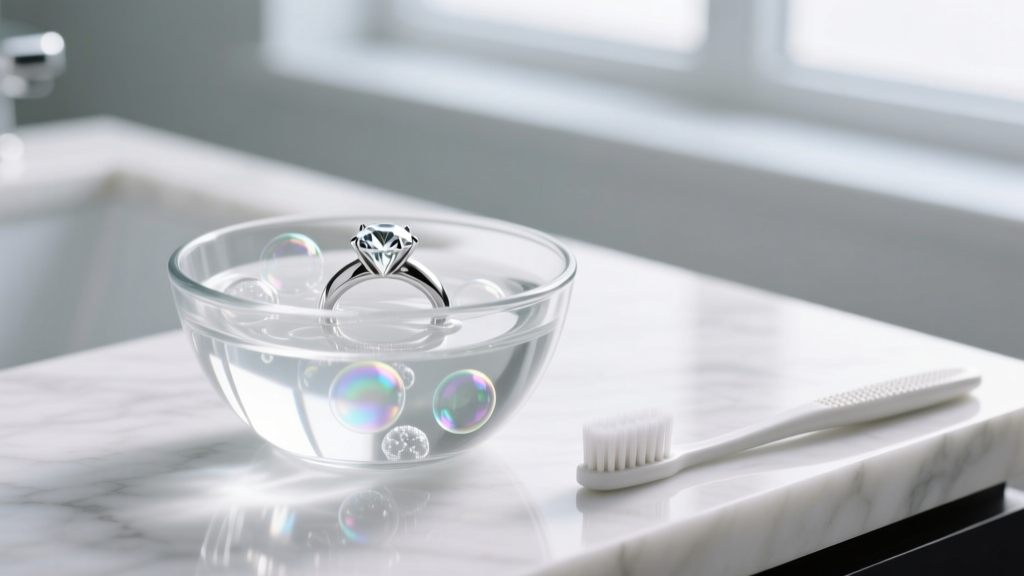
- The Mix: Combine 1 cup of warm (not hot) distilled water with exactly 3-4 drops of mild, lotion-free dish soap in a glass bowl. Avoid metal bowls to prevent galvanic reactions with certain alloys.
- The Soak: Let the jewelry sit for 10 to 15 minutes. This allows the surfactants to break the molecular bond between the metal and cosmetic oils.
- The Agitation: Use an ultra-soft baby toothbrush (such as a Curapox CS Smart) or a specialized 0.1mm soft brass brush for hard metals. Gently sweep the back of the gemstone (the pavilion) where light enters and exits.
- The Rinse: Rinse thoroughly under a gentle stream of lukewarm distilled water. Ensure the drain is securely plugged.
- The Dry: Pat dry with a lint-free microfiber cloth. Avoid paper towels, as the wood pulp fibers can inflict micro-scratches on high-polish gold and platinum.
Final Verdict: The ROI of Mild Soap
When subjected to a rigorous budget and value assessment, commercial jewelry cleaners struggle to justify their premium price tags for everyday maintenance. While they may have a place in heavy-duty, occasional tarnish removal for sterling silver (if formulated with thiourea), they are largely redundant for standard diamond, gold, and platinum cleaning. By utilizing a high-quality mild soap for cleaning jewelry, you reduce your cost-per-clean by over 95%, eliminate the risk of alkaline damage to sensitive gemstones, and achieve the exact same optical clarity demanded by professional gemologists. True value in jewelry care is not found in expensive branding, but in chemical precision and gentle execution.