How to Remove Tarnish Jewelry Based on Metal Properties
Learn how to safely remove tarnish jewelry based on specific metal properties. Compare silver, copper, and brass cleaning methods to avoid damage.

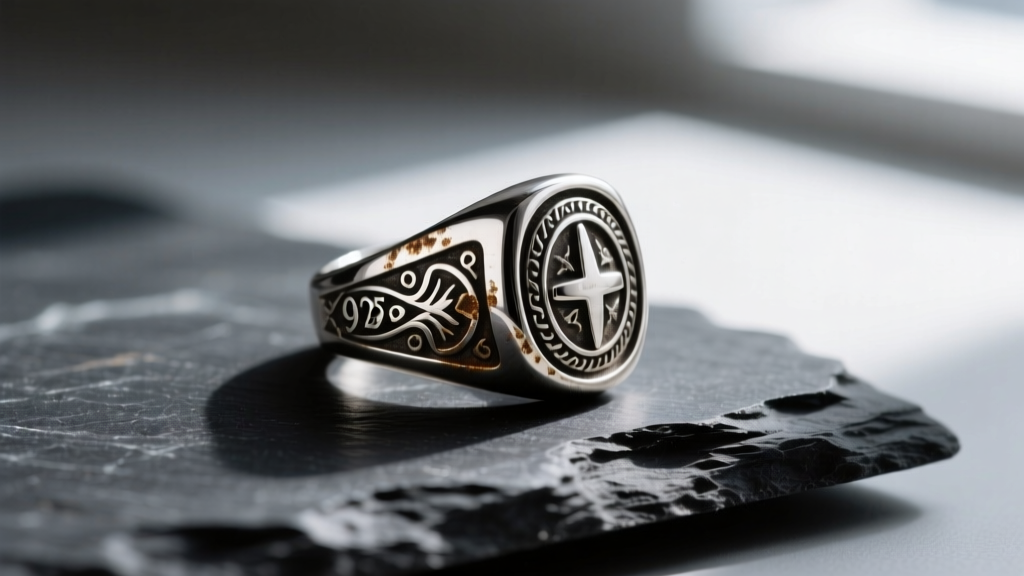
The Chemistry of Tarnish: Why Metals React
To effectively remove tarnish jewelry pieces without causing micro-abrasions or chemical stripping, you must first understand that tarnish is not surface dirt. It is a chemical corrosion layer resulting from environmental reactions. When you attempt to clean oxidized metals, you are essentially performing amateur chemistry. Misidentifying the base metal or its alloy composition can lead to irreversible damage, such as stripping rhodium plating, inducing dezincification in brass, or permanently clouding porous gemstones.
According to the Gemological Institute of America (GIA), the approach to metal care must be dictated by the specific elemental makeup of the alloy. Silver tarnish, for instance, is primarily silver sulfide ($Ag_2S$), which forms when elemental silver reacts with trace amounts of hydrogen sulfide ($H_2S$) in the atmosphere. Copper, on the other hand, reacts with oxygen and moisture to form copper oxide ($CuO$), eventually progressing to copper carbonate (verdigris) in humid environments. Because these chemical bonds differ vastly in their stability and solubility, a universal cleaning method is a metallurgical impossibility.
Metallurgical Breakdown: How Different Alloys Tarnish
Before applying any solvent, abrasive, or electrochemical bath, you must identify the exact grade of the metal. Pure metals behave differently than their alloyed counterparts, which are used in jewelry to increase tensile strength and durability.
Sterling Silver (925) vs. Argentium Silver
Standard Sterling Silver is an alloy comprising 92.5% silver and 7.5% copper. While the silver sulfide layer causes the black tarnish, it is the copper content that accelerates the oxidation process and makes the metal susceptible to rapid environmental degradation. Conversely, Argentium Silver (typically 93.5% or 96% silver) replaces a portion of the copper with germanium. This germanium forms a transparent, self-healing germanium dioxide ($GeO_2$) barrier on the surface, making Argentium highly resistant to silver sulfide formation. If you own Argentium, aggressive chemical dips designed to remove tarnish jewelry made of standard sterling will unnecessarily strip this protective germanium layer.
Copper and Brass (Jeweler's Bronze)
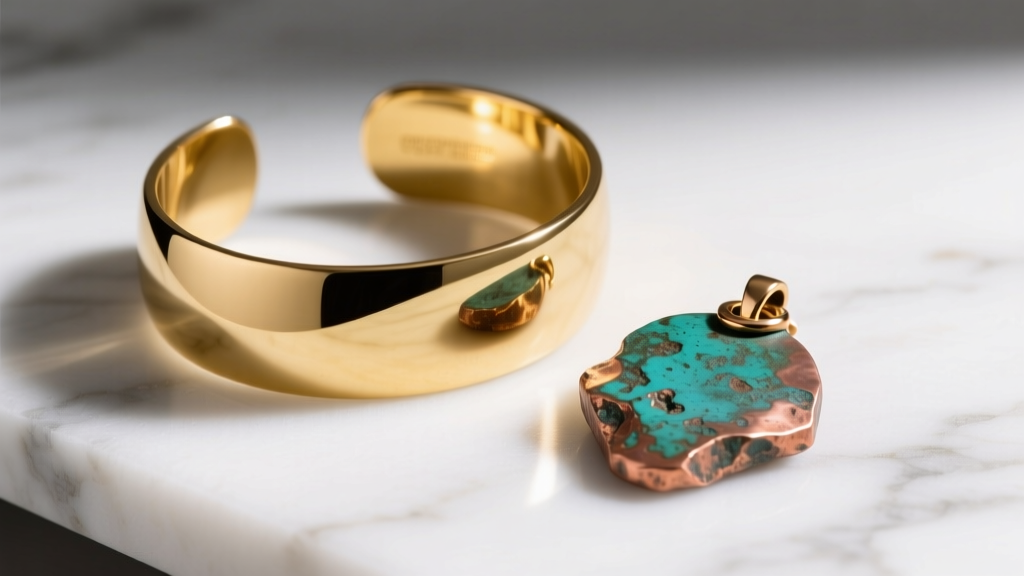
Brass is an alloy of copper and zinc. When brass tarnishes, it often develops a dark, mottled patina. A critical failure mode in brass cleaning is dezincification. If you expose brass to harsh alkaline solutions or ammonia-based commercial dips, the ammonia selectively dissolves the zinc, leaving behind a structurally compromised, porous copper sponge that appears as a permanent pinkish, rough patch. Copper jewelry, while lacking zinc, is prone to deep oxidation that requires mild acid chelation rather than abrasive polishing.
Low-Karat Gold Alloys (10k and 14k)
Pure 24k gold is a noble metal and does not tarnish. However, 14k gold contains only 58.5% gold, with the remaining 41.5% consisting of copper, silver, and zinc. It is these base metals that oxidize, creating a dull film on the surface. Because gold alloys are relatively soft (Mohs hardness of 2.5 to 3), abrasive methods used to remove tarnish jewelry made of harder metals will instantly inflict micro-scratches on gold, destroying its mirror finish.
Material-Specific Protocols to Remove Tarnish Jewelry
The following framework categorizes safe removal techniques based on metallurgical properties. Always test a small, inconspicuous area first, especially if the piece features gemstone settings or intentional oxidized detailing (antiquing).
| Metal Grade | Primary Tarnish Compound | Safe Removal Method | Chemical Mechanism |
|---|---|---|---|
| Sterling Silver (925) | Silver Sulfide ($Ag_2S$) | Electrochemical Reduction | Galvanic transfer to aluminum |
| Copper / Brass | Copper Oxide ($CuO$) | Mild Acid Chelation | Citric/Acetic acid dissolution |
| 14k Yellow Gold | Alloy Oxidation (Cu/Ag) | Surfactant Wash | Micelle encapsulation |
| Argentium Silver | Minimal (Germanium Oxide) | Microfiber Wipe | Mechanical dust removal |
Electrochemical Reduction for Sterling Silver
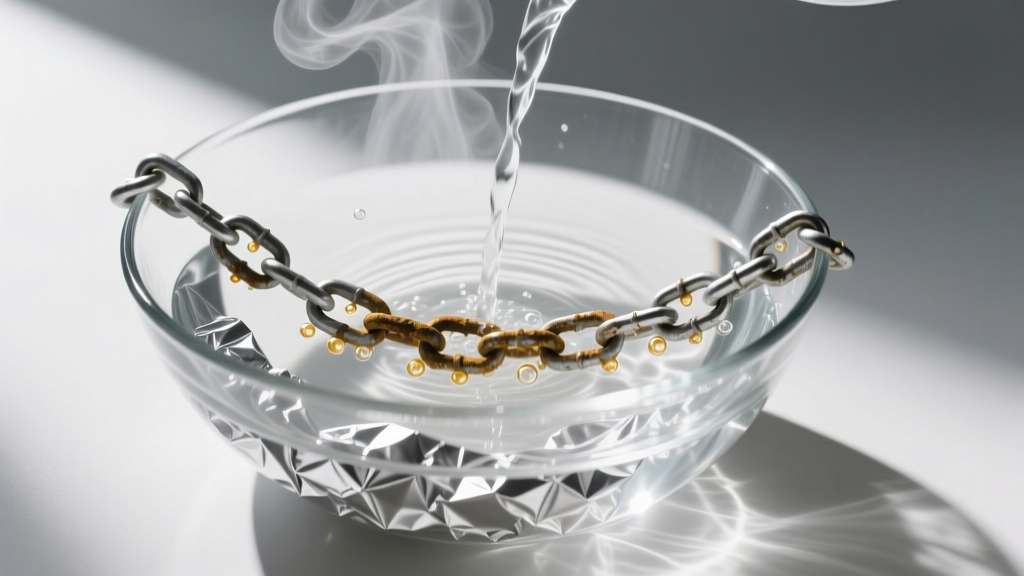
The safest and most scientifically sound way to remove tarnish jewelry made of sterling silver—without removing any base metal—is through electrochemical reduction. This requires an aluminum pan or a glass bowl lined with aluminum foil, boiling water, and sodium bicarbonate (baking soda). When the tarnished silver touches the aluminum in the presence of the hot electrolyte solution, a galvanic cell is created. The aluminum acts as the anode and oxidizes, while the silver sulfide acts as the cathode and is reduced back into elemental silver. The sulfur transfers to the aluminum foil, which turns black. This process preserves the microscopic surface topology of the silver, unlike polishes that abrade the metal away.
Mild Acid Chelation for Copper and Brass
For copper and brass, electrochemical reduction is ineffective. Instead, mild acid chelation is required. A solution of equal parts white vinegar (acetic acid) and water, or a paste of lemon juice (citric acid) and salt, gently dissolves the copper oxide layer. The acid breaks the ionic bonds of the oxide, while the salt acts as a mild, soluble catalyst. After soaking for no more than 5 to 10 minutes, the piece must be thoroughly neutralized with a baking soda wash and rinsed with distilled water to halt the acidic reaction. Failure to neutralize will result in rapid, aggressive re-oxidation.
What NOT to Do: Destructive Cleaning Methods
The internet is saturated with destructive 'hacks' that ignore material science. When you need to remove tarnish jewelry safely, avoid the following common mistakes:
- Toothpaste and Baking Soda Pastes: Toothpaste contains hydrated silica, which has a Mohs hardness of roughly 7. Silver and gold sit at 2.5 to 3. Scrubbing precious metals with silica is akin to sanding wood with gravel; it removes the tarnish by gouging out the underlying metal, leaving a permanently cloudy, matte finish.
- Ammonia-Based Commercial Dips: While effective on pure silver, ammonia will cause catastrophic dezincification in brass and bronze alloys. Furthermore, ammonia is highly toxic to porous gemstones like pearls, opals, and turquoise, which will absorb the chemical and crack or discolor from the inside out.
- Ultrasonic Cleaners on Oxidized Finishes: If your jewelry features intentional 'antiquing' (blackened crevices designed to highlight texture), the high-frequency cavitation bubbles of an ultrasonic cleaner, combined with chemical surfactants, will blast the intentional patina right out of the settings.
Preventative Metallurgy: Anti-Tarnish Storage
The most effective way to manage tarnish is to prevent the chemical reaction from occurring in the first place. The Silver Institute recommends storing silver in environments that actively scavenge atmospheric hydrogen sulfide. Standard plastic zip bags are insufficient, as they can trap moisture and sulfur-emitting compounds found in certain synthetic rubbers and adhesives.
Instead, utilize Pacific Silvercloth or specialized anti-tarnish storage tabs. These tabs contain zinc carbonate, which acts as a sacrificial scavenger, reacting with $H_2S$ gas before it can reach your silver. For long-term archival storage of high-karat gold and copper pieces, use silica gel desiccant packets to drop the relative humidity inside the storage container below 40%, effectively halting the moisture-dependent oxidation pathways of copper alloys. By respecting the unique chemical properties of your jewelry's metallurgy, you ensure its structural integrity and luster endure for generations.


