Does Dorado Jewelry Tarnish? A Step-by-Step Cleaning Guide
Discover if Dorado jewelry tarnishes and learn expert step-by-step cleaning methods to maintain your PVD gold stainless steel pieces flawlessly.

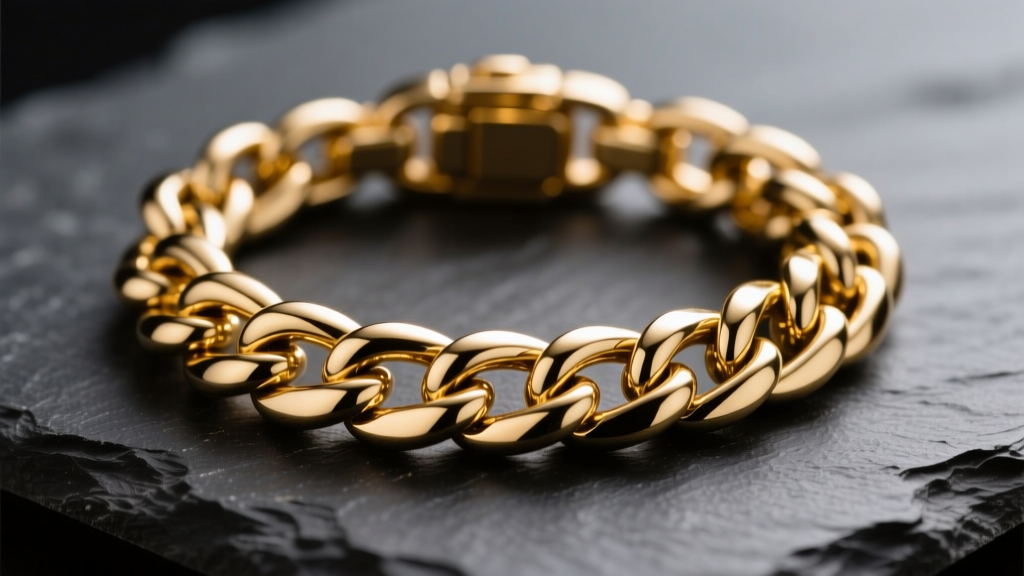
When investing in waterproof, everyday pieces, a common question we receive from collectors and daily wearers alike is: does dorado jewelry tarnish? The appeal of modern fashion jewelry lies in its promise of low maintenance and high durability, particularly when brands utilize advanced metallurgical techniques to mimic the look of solid 18k gold. However, the reality of how these pieces interact with your skin, environment, and cleaning routines dictates their true lifespan. In this comprehensive guide, we will break down the exact science behind Dorado-style finishes, answer the tarnishing question definitively, and provide a meticulous, step-by-step cleaning protocol to keep your pieces looking brand new.
The Short Answer: Does Dorado Jewelry Tarnish?
To answer the question directly: genuine 316L stainless steel jewelry with a high-quality PVD (Physical Vapor Deposition) gold coating—the standard for premium Dorado-style pieces—does not tarnish in the traditional sense. Traditional tarnish is a chemical reaction (oxidation) that occurs when metals like copper, brass, or silver react with sulfur and moisture in the air, resulting in a dark, dull, or greenish film. Because the base metal here is surgical-grade stainless steel, it lacks the copper content required to turn your skin green or develop a dark oxidized crust.
However, while the metal itself will not tarnish, the finish can degrade, dull, or accumulate a film of dead skin cells, lotions, and hard water minerals that mimics the appearance of tarnish. If the microscopic top layer of the gold coating is subjected to harsh abrasives or highly acidic environments, the underlying steel can become exposed. While the steel won't turn black, it will lose its golden luster, resulting in a dull, silvery-grey patch that many consumers mistakenly identify as tarnishing. Therefore, proper care is less about preventing chemical oxidation and more about preserving the physical integrity of the PVD coating.
The Metallurgy: PVD Coating vs. Traditional Plating
To understand how to clean your jewelry, you must first understand how it is manufactured. Traditional gold electroplating involves submerging a base metal into a chemical bath and using an electrical current to bond a microscopic layer of gold (usually between 0.05 and 0.1 microns thick). This layer is relatively soft, porous, and highly susceptible to wearing away from friction and sweat.
In contrast, premium Dorado-style jewelry utilizes Physical Vapor Deposition (PVD). According to materials science literature on PVD processes, this method takes place in a vacuum chamber where gold (often combined with titanium nitride for structural hardness) is vaporized at extreme temperatures and bombarded onto the 316L stainless steel base. The result is a coating that is up to 10 times thicker than electroplating and bonds at a molecular level. This creates a surface that is exceptionally hard, highly scratch-resistant, and completely impervious to water. Because the coating is non-porous, it does not trap moisture, which is the primary catalyst for traditional jewelry tarnish.
Step-by-Step Guide: How to Clean Dorado Gold Jewelry
Even though PVD-coated stainless steel is often marketed as 'waterproof' and 'tarnish-free,' it is not 'grime-proof.' Daily wear exposes your jewelry to sebum, dead skin, soap scum, and environmental dust. To maintain the mirror-like reflectivity of the gold finish, follow this exact cleaning protocol every two to three weeks.
Step 1: The Warm Soap Soak
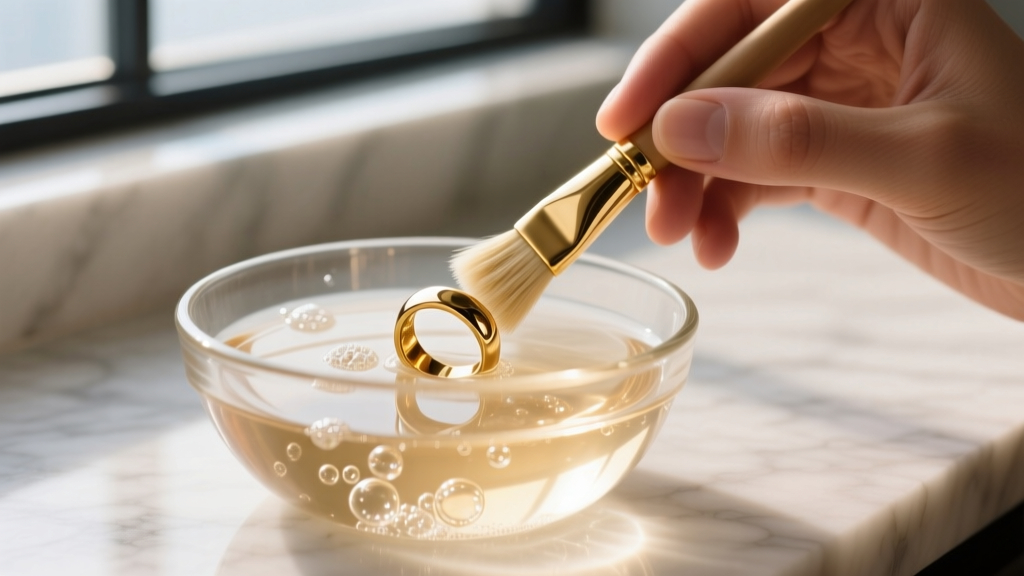
Begin by preparing a cleaning solution. Do not use hot water, as extreme temperature shifts can theoretically cause micro-expansions in the metal base. Instead, use lukewarm distilled water (around 85°F or 29°C). Distilled water is critical because tap water contains dissolved calcium and magnesium that will leave hard water spots on the gold finish. Add three drops of a pH-neutral, lotion-free dish soap (such as original Dawn). Submerge your jewelry and let it soak for exactly three to five minutes. This loosens the lipid bonds of body oils without attacking the PVD layer.
Step 2: Gentle Agitation
Remove the piece from the soak and use an extra-soft baby toothbrush (bristle diameter of 0.1mm or less). Standard adult toothbrushes, even those labeled 'soft,' are too rigid and can create micro-scratches on the high-polish finish over time. Gently brush the crevices, particularly the interior of rings, the clasps of chains, and the settings of any cubic zirconia stones. Use light, circular motions, allowing the soap to do the chemical heavy lifting rather than relying on physical pressure.
Step 3: The Distilled Rinse and Microfiber Dry
Rinse the jewelry thoroughly under a gentle stream of distilled water to remove all soap residue. Never let your jewelry air dry. Air drying allows water to evaporate unevenly, leaving behind mineral deposits that dull the shine. Instead, immediately pat the piece dry using a clean, lint-free microfiber cloth (preferably one with a GSM of 200 or higher). For chains, gently pull the cloth through the links to ensure no moisture is trapped near the clasp mechanisms.
Environmental Threats: What Degrades PVD Finishes?
While the Gemological Institute of America (GIA) notes that proper care extends the life of all jewelry finishes, PVD coatings have specific chemical vulnerabilities. Understanding what to avoid is just as important as knowing how to clean.
| Environmental Factor | Chemical Composition | Impact on PVD / 316L Base | Prevention Strategy |
|---|---|---|---|
| Swimming Pools | Chlorine / Bromine | Can cause pitting in the stainless steel base over prolonged exposure, undermining the PVD coat. | Remove before swimming; rinse immediately if exposed. |
| Hot Tubs / Saunas | High Heat + Sulfur | Sulfur compounds can react with trace alloys; heat accelerates chemical degradation. | Never wear jewelry in hot tubs or steam rooms. |
| Skincare Products | Alpha Hydroxy Acids (AHAs) | Highly acidic exfoliants can slowly etch the surface of the gold coating. | Apply lotions and serums 10 minutes before putting on jewelry. |
| Household Cleaners | Bleach / Ammonia | Causes immediate, irreversible discoloration and stripping of the PVD layer. | Always wear nitrile gloves when cleaning with harsh chemicals. |
Restoring Luster: Troubleshooting Dullness
If your Dorado jewelry has lost its shine despite regular washing, the issue is likely surface contamination rather than actual tarnish. A common mistake consumers make is reaching for traditional silver polishing cloths. These cloths are impregnated with mild abrasive compounds (like jeweler's rouge) designed to strip away oxidized silver. If you use an abrasive polishing cloth on PVD gold, you will literally polish the gold coating right off the stainless steel base.
Instead, use a dedicated, non-abrasive microfiber jewelry buffing cloth. If the piece has stubborn buildup in intricate details that a baby toothbrush cannot reach, you can use a wooden cuticle stick or a soft bamboo skewer wrapped in a thin layer of cotton to gently dislodge the debris. For pieces that have suffered actual physical wear (where the silver-colored steel is showing through the gold), no amount of cleaning will restore the color. At this stage, the piece must be sent to a professional jeweler who specializes in PVD re-coating, a service that typically costs between $40 and $80 depending on the complexity of the item.
Expert Storage Protocols for Maximum Longevity
How you store your jewelry when it is not on your body plays a massive role in preserving the PVD finish. While the steel won't tarnish in the air, the gold coating can be scratched by other pieces. The Australian Stainless Steel Development Association (ASSDA) emphasizes that while stainless steel is hard, it can still be marred by friction against materials of equal or greater hardness, such as diamonds, sapphires, or even other steel chains.
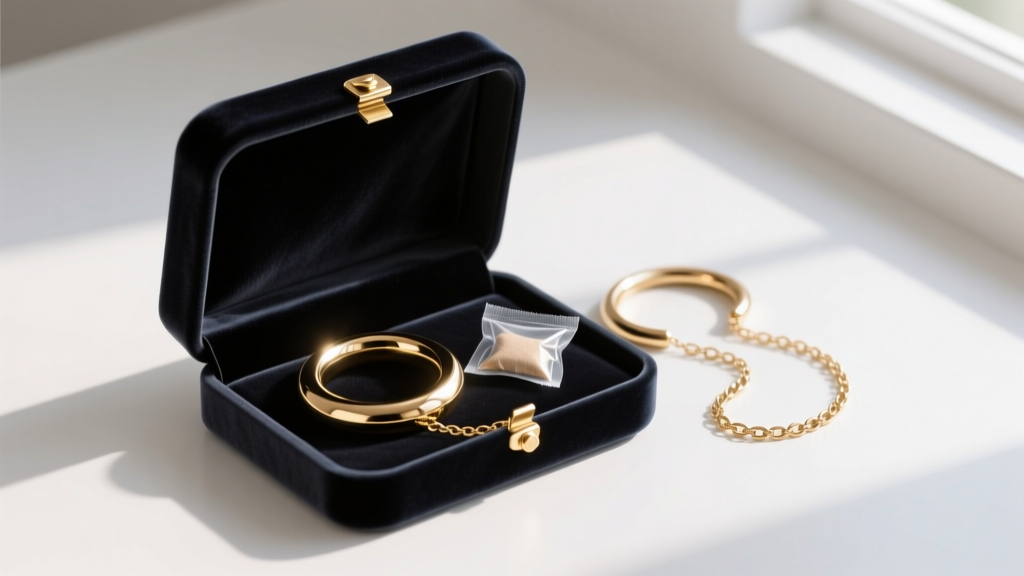
Always store your Dorado pieces individually. Use soft, anti-tarnish flannel pouches or a jewelry box with separate, fabric-lined compartments. Furthermore, include a small silica gel desiccant packet in your jewelry drawer or storage box. While moisture won't rust 316L steel, controlling the ambient humidity prevents the growth of microscopic mold or mildew on organic debris (like trapped skin cells) that might be hiding in the chain links. By combining meticulous cleaning with intelligent storage, your PVD-coated jewelry will maintain its brilliant, tarnish-free luster for years of daily wear.


