Jewelry That Doesn't Tarnish: 2026 Occasion Gift Guide
Discover the best jewelry that doesn't tarnish for every occasion. Our 2026 gift guide covers platinum, titanium, and solid gold care tips.

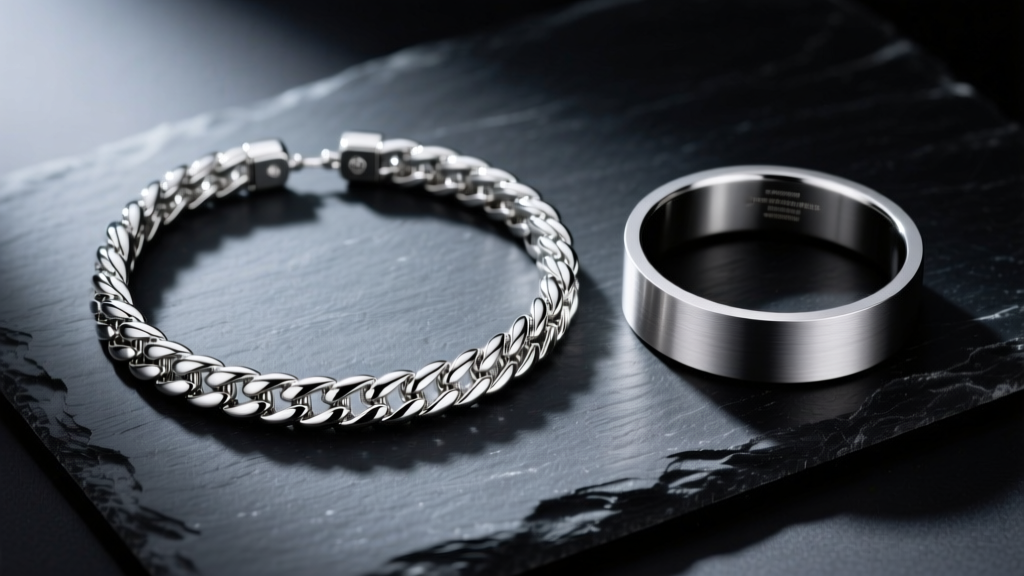
Few things ruin the joy of a thoughtful gift faster than watching a beautiful piece of jewelry turn dull, green, or black within weeks of wearing it. When selecting a meaningful gift for an anniversary, graduation, or milestone birthday, the recipient's lifestyle and the metal's chemical stability are just as important as the aesthetic design. If your primary goal is to present a low-maintenance, enduring piece, you must specifically seek out jewelry that doesn't tarnish. However, 'tarnish-free' does not mean 'cleaning-free.' Even the most stable noble metals and passive alloys require specific care protocols to maintain their optical brilliance and structural integrity over decades of daily wear.
The Metallurgy of Low-Maintenance Gifting
To make an informed purchasing decision, it is crucial to understand the chemical mechanics of tarnish. Tarnish is a surface-level chemical reaction—typically oxidation or sulfidation—that occurs when reactive metals are exposed to moisture, oxygen, sulfur compounds in the air, or the natural acidity of human skin. Sterling silver, for instance, reacts with hydrogen sulfide to form silver sulfide (Ag2S), resulting in a dark, matte film. Similarly, copper alloys (common in brass and lower-karat rose gold) react with oxygen and moisture to form copper oxide, which presents as a green or brown patina.
Therefore, the best jewelry that doesn't tarnish is forged from either noble metals (which are inherently resistant to oxidation and corrosion) or passive metals (which form an invisible, self-healing microscopic oxide layer that shields the underlying alloy). Understanding this distinction is the foundation of expert-level jewelry gifting and long-term care.
Occasion-Based Gift Guide: Metals That Endure
Everyday Wear & Anniversaries: 950 Platinum
For weddings, major anniversaries, or 'just because' milestones, platinum remains the undisputed king of enduring luxury. According to the Gemological Institute of America (GIA), platinum used in fine jewelry is typically 95% pure (stamped 950 Pt), alloyed with 5% ruthenium or iridium for tensile strength. Because it is a noble metal, platinum is completely immune to tarnish and oxidation. It will never turn yellow, green, or black.
The Catch: While platinum does not tarnish, it is susceptible to a phenomenon known as 'patina.' Over time, daily wear displaces the metal on a microscopic level, creating tiny scratches that give the surface a matte, satin-like finish. Some collectors love this soft luster, but if the recipient prefers a high-polish mirror finish, the piece will require professional buffing every 12 to 18 months. For at-home care, a simple soak in warm water with a mild, phosphate-free dish soap and a gentle brushing with a baby-hair toothbrush is all that is needed to remove skin oils and environmental grime.
Active Lifestyles & Graduations: Grade 23 Titanium & 316L Steel
If you are gifting jewelry to an athlete, a healthcare worker, or a recent graduate entering a hands-on trade, titanium and surgical stainless steel are unparalleled choices. These metals rely on passivation. As noted by Corrosionpedia, passivation is the process where a metal forms a microscopic, inert oxide layer (titanium dioxide or chromium oxide) upon exposure to oxygen, effectively sealing the metal away from corrosive elements.
- Grade 23 Titanium (Ti-6Al-4V ELI): The gold standard for body jewelry and active-wear rings. It is entirely hypoallergenic, impervious to chlorine and saltwater, and will never tarnish. It is also incredibly lightweight.
- 316L Stainless Steel: Often marketed as 'surgical steel,' this alloy contains molybdenum, which drastically increases its resistance to pitting and crevice corrosion. It is an excellent, budget-friendly option for heavy chains, signet rings, and watch cases.
Milestone Birthdays: Solid 18k Gold (Avoiding the Plated Trap)
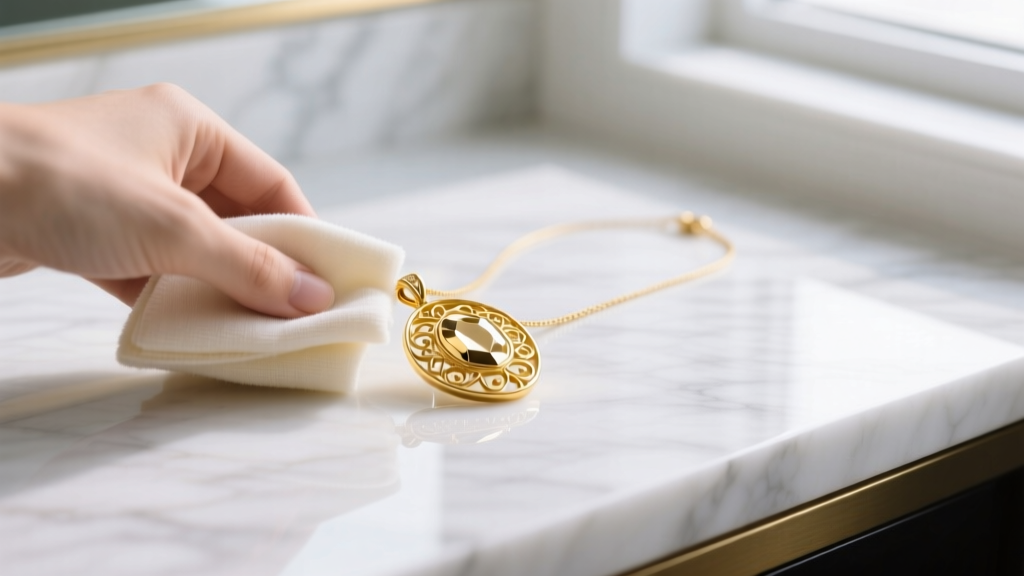
Solid gold is a classic gift, but not all karats are created equal when it comes to tarnish resistance. Pure 24k gold is a noble metal and will never tarnish, but it is far too soft for daily-wear jewelry. Therefore, gold is alloyed. 18k gold (75% pure gold) maintains exceptional tarnish resistance while offering enough structural integrity for rings and pendants. 14k gold (58.3% pure gold) contains a higher percentage of copper, silver, and zinc; while highly durable, the copper content can occasionally cause surface oxidation over decades of exposure to harsh chemicals or highly acidic skin.
The Gifting Warning: Never confuse solid gold with 'gold vermeil' or 'gold-filled' jewelry if your goal is a tarnish-free gift. Gold vermeil consists of a thick layer of gold plated over a sterling silver base. Once the gold layer wears thin from friction, the underlying silver will rapidly tarnish when exposed to sulfur and moisture, requiring aggressive polishing that can damage the piece.
The 2026 Tarnish-Free Care & Cleaning Matrix
Even though the metals below will not chemically tarnish, they will accumulate sebum, dead skin cells, lotions, and environmental dust, which can make them appear dull. Use this matrix to determine the safest cleaning methodology for your specific gift.
| Metal / Alloy | Typical Stamp | Tarnish Immunity | Ultrasonic Safe? | Best At-Home Cleaning Method |
|---|---|---|---|---|
| Platinum | 950 Pt | Absolute (Noble) | Yes (if no fracture-filled gems) | Mild surfactant soak + soft brush |
| Grade 23 Titanium | ASTM F136 | Absolute (Passive) | Yes | Isopropyl alcohol wipe or ultrasonic |
| 316L Stainless Steel | 316L / Surgical | Absolute (Passive) | Yes | Warm soapy water + microfiber polish |
| Solid 18k Gold | 750 / 18k | Extremely High (Noble) | Yes (with caution) | Ammonia-free jewelry dip + lint-free cloth |
Expert Cleaning Protocols for Noble & Passive Metals
When caring for jewelry that doesn't tarnish, the goal is not to strip away oxidation (as you would with silver), but rather to safely dissolve organic bio-films without scratching the metal or damaging any set gemstones. Here are the professional-grade protocols we recommend for maintaining these specific metals:
The Standard Surfactant Soak (For Platinum & Solid Gold)
Fill a glass beaker or ceramic bowl with 250ml of distilled water (tap water contains trace minerals that can leave hard water spots). Add exactly three drops of a mild, phosphate-free dish detergent (such as Dawn). Heat the water to approximately 100°F (38°C)—warm to the touch, but not hot. Let the jewelry soak for 15 to 20 minutes to emulsify skin oils. Gently agitate the piece with a baby-hair toothbrush, paying special attention to the pavilion (underside) of any gemstones where light-blocking grime accumulates. Rinse with distilled water and dry immediately with a clean, lint-free microfiber cloth.
Ultrasonic Cleaning (For Titanium & Stainless Steel)
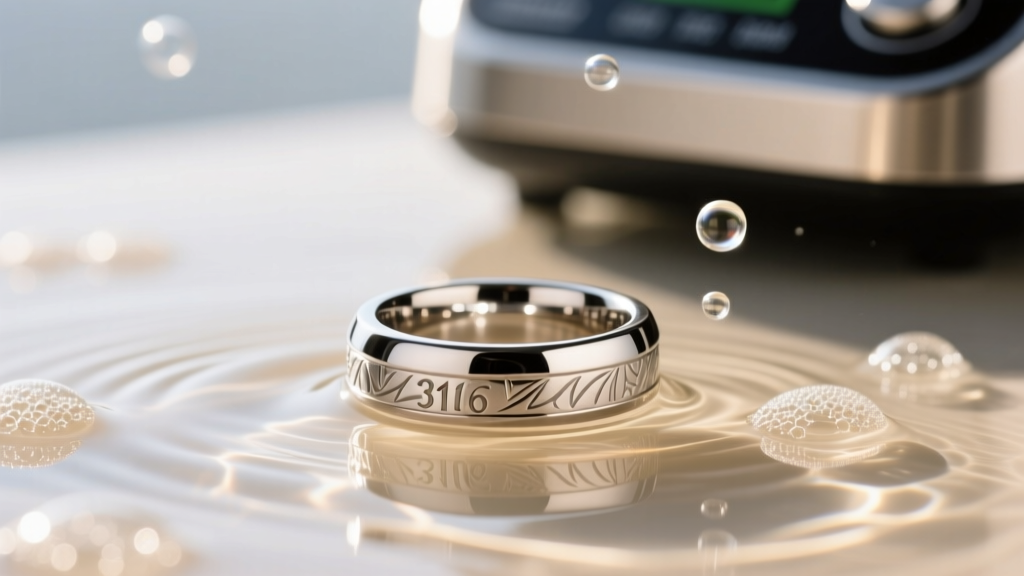
Because Grade 23 Titanium and 316L Stainless Steel are incredibly hard and lack brittle surface platings, they are ideal candidates for ultrasonic cleaning. Use a tabletop ultrasonic cleaner operating at a frequency of 40kHz to 45kHz. Fill the tank with a 50/50 mix of distilled water and isopropyl alcohol. Run a single 3-minute cycle. The cavitation bubbles will safely blast microscopic debris out of textured finishes, brushed surfaces, and chain links that a brush cannot reach. Note: Never use ultrasonic cleaners on porous gemstones like pearls, opals, or emeralds, regardless of the metal setting.
Final Thoughts on Gifting Care-Free Jewelry
Selecting jewelry that doesn't tarnish is an act of consideration. It tells the recipient that you value their time and want them to enjoy their gift without the anxiety of constant maintenance or the disappointment of a degraded finish. By matching the metallurgical properties of 950 platinum, Grade 23 titanium, 316L steel, or solid 18k gold to the recipient's specific lifestyle and occasion, you ensure that the piece remains as brilliant in 2036 as it is on the day it is unboxed. Remember to include a small care card with your gift, outlining the simple cleaning protocols above, to guarantee the jewelry retains its optical fire for a lifetime.


