What Can I Use For Jewelry Cleaner? Safe DIY Solutions
Wondering what can I use for jewelry cleaner? Discover safe, effective DIY household solutions for gold, silver, platinum, and delicate gemstones.

When your favorite diamond ring loses its sparkle or your sterling silver necklace develops a dark, oxidized film, the immediate impulse is to grab whatever is under the kitchen sink. But if you have ever asked yourself, "what can I use for jewelry cleaner?" you already know that the wrong household product can cause irreversible damage. Commercial jewelry cleaners are effective, but they are not always necessary, nor are they safe for every gemstone and metal alloy.
As a general rule, the safest and most effective DIY jewelry cleaners rely on mild surfactants, gentle electrochemical reactions, and proper mechanical agitation. In this comprehensive guide, we will break down exactly what you can use to clean your jewelry at home, the chemistry behind why these methods work, and the common household items that will permanently ruin your precious metals and gems.
The Golden Rule: Match the Cleaner to the Material
Jewelry is not a monolith. A cleaning solution that will make a platinum and diamond engagement ring shine brilliantly could completely dissolve the surface of a turquoise cabochon. Before mixing any DIY cleaner, you must identify both the metal and the gemstone.
- Durable Metals & Stones: Platinum, 14k/18k gold, diamonds, sapphires, and rubies (Mohs hardness 9-10) can withstand mild liquid soaks and soft brushing.
- Reactive Metals: Sterling silver (92.5% silver, 7.5% copper) oxidizes and requires specific reduction methods to remove tarnish without stripping the silver.
- Porous & Treated Gems: Pearls, opals, emeralds, turquoise, and malachite are highly sensitive to chemicals, heat, and dehydration. They require surface-level cleaning only.
What Can I Use For Jewelry Cleaner? 3 Safe DIY Recipes
Recipe 1: The Mild Dish Soap Soak (Gold, Platinum, Diamonds)
The most universally safe DIY cleaner for durable jewelry is a simple mixture of phosphate-free dish soap and warm water. Phosphates, found in some heavy-duty detergents, can leave a dull, cloudy film on high-refractive-index stones like diamonds and moissanite.
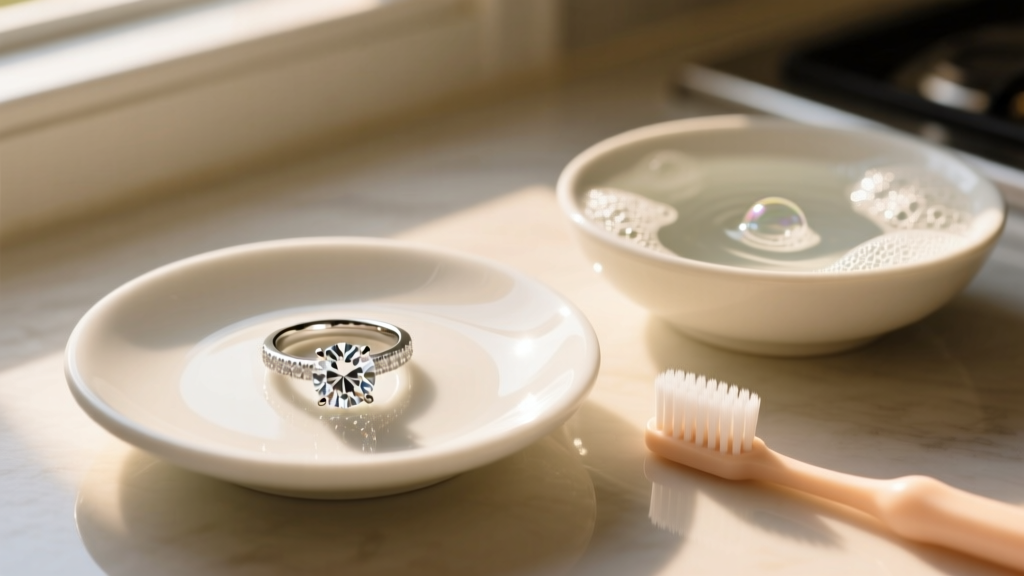
- Mix: Combine 1 cup of distilled warm water (not hot) with 3 drops of a mild, phosphate-free dish soap (like original blue Dawn). We use distilled water because tap water contains calcium and magnesium, which leave hard water spots on metal.
- Soak: Submerge the jewelry for 15 to 20 minutes. This allows the surfactants to break down the sebum, lotions, and dead skin cells trapped behind the gemstone's pavilion.
- Agitate: Use an ultra-soft baby toothbrush. Standard "soft" adult toothbrushes often have bristles thick enough to cause micro-scratches on high-polish 18k gold. Gently brush the back of the stone and the prong settings.
- Rinse & Dry: Rinse under distilled water and pat dry with a lint-free microfiber cloth. Never air-dry, as this guarantees water spots.
Recipe 2: The Electrochemical Silver Bath (Sterling Silver)
Silver tarnish is silver sulfide. Polishing it with a cloth physically removes a microscopic layer of silver. Instead, use an electrochemical reduction bath that transfers the sulfur from the silver to aluminum.
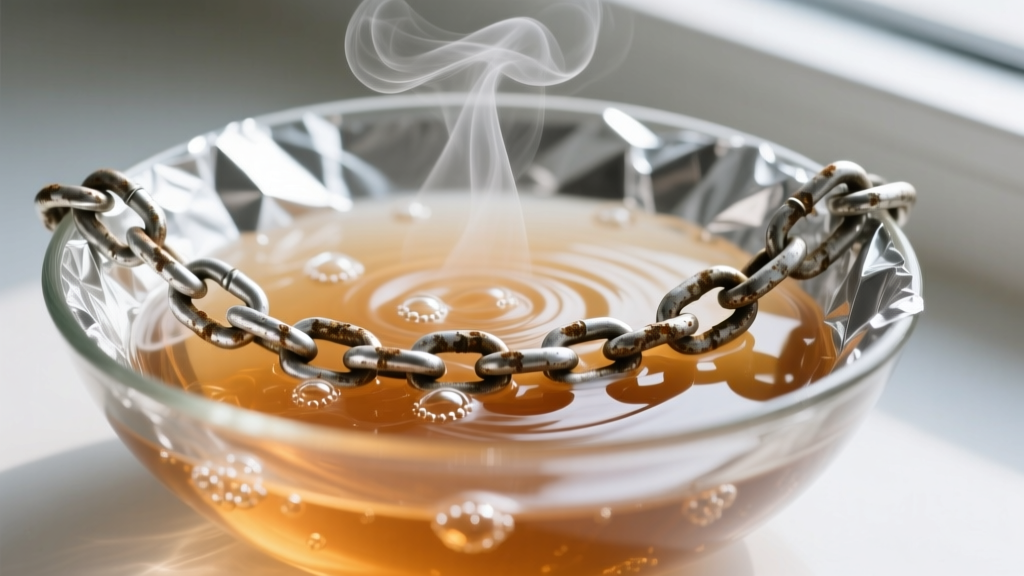
- Line a glass bowl with aluminum foil, shiny side up.
- Place your tarnished sterling silver jewelry on the foil (it must touch the foil).
- Sprinkle 1 tablespoon of baking soda (sodium bicarbonate) and 1 tablespoon of kosher salt (an electrolyte) over the jewelry.
- Pour boiling water into the bowl until the jewelry is submerged. You will see bubbling and may smell a faint rotten egg scent (hydrogen sulfide gas releasing).
- After 3 to 5 minutes, remove the silver with wooden tongs, rinse in distilled water, and buff with a microfiber cloth.
Recipe 3: The Damp Microfiber Wipe (Pearls, Opals, Emeralds)
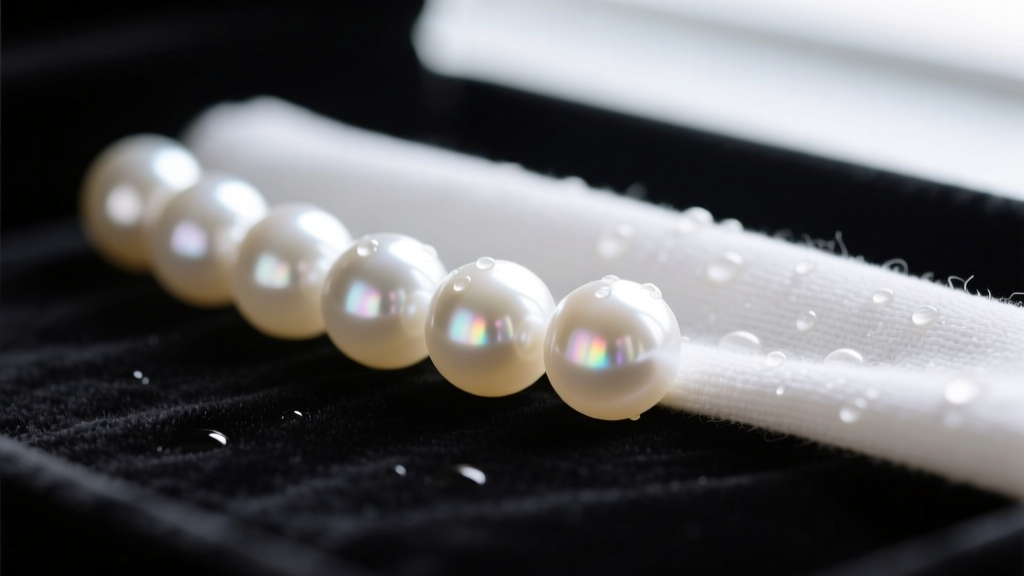
Porous gems and oil-treated stones (like most commercial emeralds) should never be soaked. Submerging an emerald can strip the cedar oil used to mask internal fractures, turning a clear stone cloudy and white. Opals contain up to 20% water; soaking them can cause "crazing" (a network of fine cracks). Simply wipe these stones gently with a damp, lint-free microfiber cloth after every wear to remove acidic skin oils.
The "Never Use" List: Household Items That Destroy Jewelry
The internet is full of dangerous DIY jewelry cleaning hacks. According to the Gemological Institute of America (GIA), many common household cleaners cause severe chemical and physical damage to precious metals and gems.
| Household Item | Target Material | Damage Mechanism & Failure Mode |
|---|---|---|
| Toothpaste | Gold, Silver, Acrylic | Contains hydrated silica (Mohs 7). Gold is Mohs 2.5-3. Toothpaste acts as sandpaper, leaving deep, dull micro-scratches on high-polish metals. |
| Chlorine Bleach | 14k & 18k Gold | Chlorine reacts with the copper and silver alloys in gold, causing stress corrosion cracking. This makes prongs brittle and leads to lost diamonds. |
| Rubbing Alcohol | Opals, Emeralds | Rapidly dehydrates opals (causing crazing) and dissolves the fracture-filling oils in emeralds, ruining their clarity. |
| Vinegar / Lemon Juice | Pearls, Coral, Malachite | Acetic and citric acids chemically etch and dissolve calcium carbonate and copper-based gemstones, permanently destroying the surface luster. |
Step-by-Step: Cleaning a Diamond Solitaire Ring at Home
Diamonds are oleophilic, meaning they attract and hold onto grease. This is why your diamond looks cloudy after a few days of wear; it is coated in a thin layer of skin oils and hand lotion. Here is the professional method for restoring its fire and brilliance:
- Prep the Station: Place a rubber mat or a folded towel in the bottom of your sink. Never clean jewelry directly over an open drain.
- The Soak: Use the distilled water and phosphate-free dish soap recipe mentioned above. Let the ring soak for 20 minutes to soften the lipid buildup.
- The Brush: Take your baby toothbrush and gently brush the pavilion (the bottom cone of the diamond) and the gallery (the metal basket holding the stone). This is where 90% of the dirt accumulates.
- The Rinse: Rinse thoroughly under a gentle stream of warm distilled water.
- The Dry: Use a clean, untreated microfiber cloth. Avoid paper towels, as the wood pulp fibers can snag on microscopic burrs in the metal setting.
When to Skip DIY and See a Professional
While knowing what to use for a jewelry cleaner at home is highly valuable, DIY methods have strict limitations. The American Gem Society (AGS) recommends professional servicing in the following scenarios:
- White Gold Re-plating: White gold is naturally yellowish and is plated with rhodium. DIY cleaners cannot restore this plating; it requires professional electroplating.
- Deep Scratches on Metal: Removing deep scratches requires mechanical polishing with a buffing wheel and jeweler's rouge. Note that polishing removes a microscopic layer of metal, so it should only be done 1-2 times in the jewelry's lifetime.
- Loose Stones: If your diamond rattles or a prong is lifted, do not soak or brush the ring. The agitation can dislodge the stone entirely. Take it to a jeweler for ultrasonic cleaning and prong re-tipping.
Final Thoughts on Home Jewelry Care
When asking what you can use for a jewelry cleaner, the answer always comes back to chemistry and material science. By sticking to mild surfactants for durable stones, electrochemical baths for silver, and dry wiping for porous gems, you can maintain your jewelry's brilliance safely. Avoid the temptation of abrasive internet hacks, and your pieces will remain pristine for generations.


