Jewelry Cleaner Homemade: Ingredient & Tool Buying Guide
Discover what to buy for the perfect jewelry cleaner homemade mix. Compare surfactants, solvents, and tools to safely clean gold, silver, and gems.

Building the ultimate jewelry cleaner homemade requires more than just mixing random dish soap and tap water. As we move through 2026, the rising cost of commercial ultrasonic solutions and specialized soaking baths has pushed many collectors and everyday wearers toward DIY alternatives. However, a homemade formulation is only as effective—and safe—as its raw ingredients. Using the wrong surfactant can strip the rhodium plating from white gold, while hard tap water can leave microscopic calcium deposits that dull the brilliance of pavé diamonds.
This buying guide cuts through the noise of generic internet recipes. We will explore exactly what to look for when purchasing base chemicals, solvents, and agitation tools to engineer a professional-grade jewelry cleaner homemade enthusiasts can rely on for everything from porous organics to high-karat gold.
The Chemistry of DIY: Why Ingredient Grade Matters
Commercial jewelry cleaners are essentially highly refined, pH-balanced surfactant blends suspended in deionized water. When you decide to formulate a jewelry cleaner homemade, you are acting as a cosmetic chemist. The goal is to lower the surface tension of water so it can penetrate the microscopic crevices beneath a gemstone's girdle, emulsify sebum and lotion, and rinse away without leaving a film.
To achieve this, you must avoid ingredients containing added moisturizers, citrus degreasers (which are highly acidic and can etch carbonates), or opaque dyes. According to the Gemological Institute of America (GIA), the most common cause of long-term gemstone damage at home is the use of harsh, unbuffered household chemicals that degrade the polish of softer stones or weaken the structural integrity of porous settings.
Sourcing Surfactants: The Degreasing Core
The surfactant is the active cleaning agent in your mixture. You generally have two routes when shopping for your base: synthetic dish detergents or natural castile soaps.
Synthetic Detergents: What to Buy
If you are cleaning diamonds, sapphires, or rubies (corundum), you need a powerful degreaser. Look for original blue dish soap (such as Dawn Ultra). The key ingredient to look for on the label is Sodium Lauryl Sulfate (SLS) or Sodium Laureth Sulfate (SLES). These are anionic surfactants that excel at breaking down the oily film that accumulates on the pavilion (bottom) of diamonds, which is the primary cause of a 'cloudy' appearance.
Buyer Warning: Strictly avoid "Hand Renewal" or "Moisturizing" variants. These contain glycerin and aloe extracts that will leave a stubborn, light-scattering film on your gemstones, completely defeating the purpose of the clean.
Liquid Castile Soap: The Gentle Alternative
For cleaning gold chains, silver bangles, and semi-precious stones like amethyst or topaz, a pure liquid castile soap (like Dr. Bronner’s Unscented Baby Mild) is superior. Castile soap is saponified using potassium hydroxide and vegetable oils. It has a naturally higher pH (around 9.0 to 10.0), which is excellent for lifting dead skin cells and sebum without the aggressive stripping action of SLS. When shopping, ensure the ingredient list is free from essential oils like tea tree or peppermint, which can leave microscopic resinous residues in prong settings.
The Liquid Carrier: Understanding Water Hardness and TDS
The most frequently ruined element in a jewelry cleaner homemade recipe is the water itself. Tap water contains dissolved minerals—primarily calcium and magnesium. The concentration of these minerals is measured in Total Dissolved Solids (TDS), expressed in parts per million (ppm). Average municipal tap water ranges from 150 to 300 ppm.
When you soak a silver ring in tap water and let it air dry, the water evaporates, but the minerals remain. This results in microscopic hard water spots that look like a white haze, particularly devastating on high-polish silver and dark gemstones like onyx or tanzanite.
What to Buy: Distilled or Deionized Water
When shopping for your liquid carrier, bypass the spring water and purified drinking water aisles. You must purchase steam-distilled water, which has a TDS of less than 5 ppm. Deionized (DI) water is also acceptable and is often used in commercial ultrasonic machines. Distilled water ensures that when your cleaning solution evaporates or is rinsed, it leaves absolutely zero mineral trace behind, resulting in a streak-free shine.
Solvents for Rapid Evaporation and Spot Prevention
If you are building a spray-and-wipe jewelry cleaner homemade solution, water alone will dry too slowly, increasing the risk of water spotting before you can buff the piece. You need a volatile solvent to accelerate evaporation.
Isopropyl Alcohol (IPA) is the industry standard. However, the concentration you buy matters immensely:
- 70% IPA: Contains 30% water. This defeats the purpose of a quick-dry spray and can promote tarnishing on sterling silver if left in crevices.
- 91% IPA: The sweet spot for DIY jewelry sprays. It provides enough water content to safely mix with your surfactant without separating, but evaporates rapidly enough to pull moisture out of tight prong settings.
- 99% IPA: Evaporates almost instantly upon contact. While great for cleaning electronic contacts, it can leave streaks on gold if the surfactant isn't fully dissolved before application.
Always buy 91% Isopropyl Alcohol in a sealed, opaque container to prevent UV degradation and evaporation before use.
Agitation Hardware: Selecting the Right Bristle Diameter
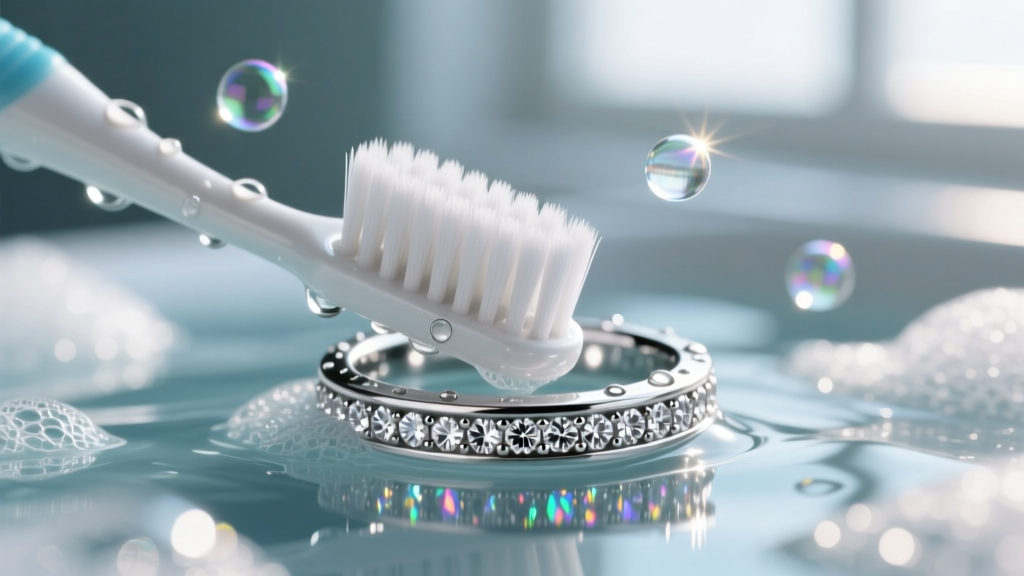
Chemical action only does half the work; mechanical agitation removes the emulsified debris. The tool you buy to agitate your jewelry cleaner homemade mix can be the difference between a pristine setting and a scratched shank.
Gold is a remarkably soft metal. Pure 24k gold has a Vickers hardness (HV) of roughly 25-30, while 14k gold alloys sit around 120-140 HV. Standard "soft" adult toothbrushes have nylon bristles with a diameter of approximately 0.20mm. Under magnification, these bristles can leave micro-scratches on high-polish gold and platinum surfaces.
The Buyer's Checklist for Brushes:
- Bristle Diameter: Look for "Ultra-Soft" or "Baby" toothbrushes, which feature bristles measuring 0.10mm to 0.12mm in diameter. These are stiff enough to dislodge lotion from beneath a diamond's culet but too fine to mar precious metals.
- Material: Only buy nylon bristles. Natural boar-hair brushes can harbor bacteria and retain moisture, which is detrimental to jewelry hygiene.
- Handle Length: Opt for brushes with extended handles to keep your body heat and finger oils away from the cleaning bath.
Formulation Matrix: Matching Ingredients to Materials
Not all ingredients are safe for all materials. The Silver Institute notes that improper chemical exposure is a leading cause of accelerated tarnishing and patina degradation in sterling silver. Use the matrix below to guide your purchasing decisions based on the specific jewelry you intend to clean.
| Jewelry Material | Recommended Surfactant | Liquid Carrier | Solvent / Additive | Agitation Tool |
|---|---|---|---|---|
| Diamonds & Platinum | SLS Dish Soap (Original) | Distilled Water | 91% IPA (for spray) | 0.10mm Nylon Brush |
| 14k/18k Gold (No Gems) | Unscented Castile Soap | Distilled Water | None (Soak & Rinse) | Microfiber Polishing Cloth |
| Sterling Silver | Castile Soap (Low pH buffer) | Distilled Water | None (Avoid IPA) | 100% Cotton Swabs |
| Pearls & Opals (Organic) | Specialized Wool Wash (Lanolin) | Lukewarm Distilled Water | NEVER use Alcohol | Damp Lint-Free Cloth Only |
"Organic gemstones like pearls, coral, and amber are highly sensitive to both acids and alkalines. Even a mild homemade dish soap solution can degrade the nacre of a pearl over time. For these materials, mechanical wiping with a damp, pure cloth is always the safest protocol." — Guidelines adapted from GIA Gem Care protocols.
Final Thoughts on Sourcing Your Kit
Creating a highly effective jewelry cleaner homemade is an exercise in precision. By investing a few dollars in steam-distilled water, a high-purity 91% isopropyl alcohol, an unadulterated surfactant, and a true 0.10mm ultra-soft brush, you can assemble a cleaning kit that outperforms $30 commercial solutions. Store your mixed solutions in amber glass spray bottles to protect the chemical bonds of your surfactants from UV degradation, and mix only in small, 4-ounce batches to ensure maximum freshness and efficacy for your fine jewelry collection.


