What Is Jewelry Cleaner Made Of? A Chemical Deep Dive
Discover exactly what jewelry cleaner is made of. We break down the chemical formulas, surfactants, and solvents used to safely clean precious metals.

The Core Chemistry: Surfactants and Solvents
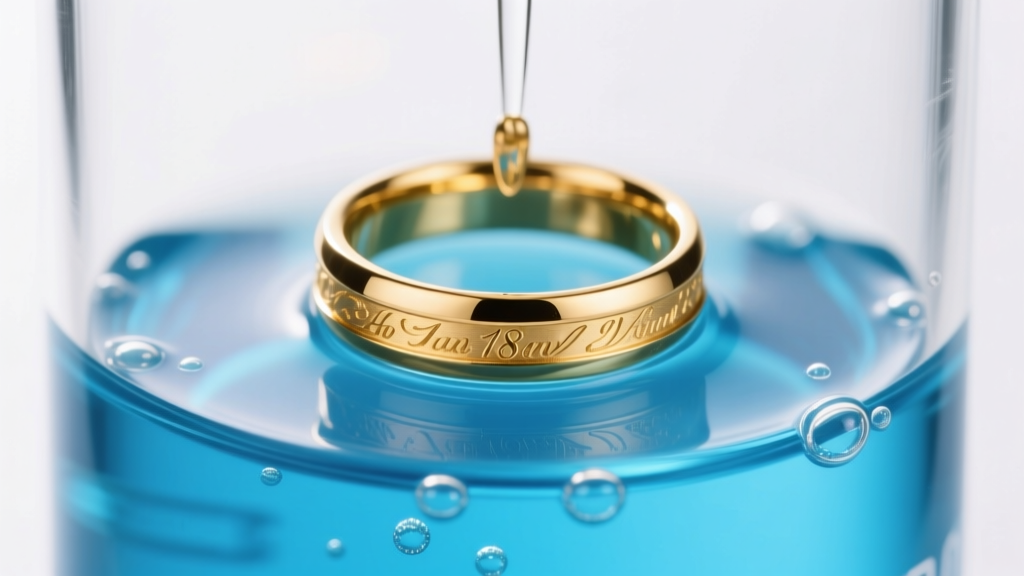
When consumers ask, 'what is jewelry cleaner made of', the most fundamental answer lies in surface-active agents, commonly known as surfactants. Commercial jewelry cleaning solutions rely heavily on the thermodynamic principles of micelle formation to lift sebum, lotions, and environmental grime from high-polish metals and gemstone pavilions. The most prevalent surfactant in professional-grade formulations is Sodium Laureth Sulfate (SLES). Unlike its harsher cousin, Sodium Lauryl Sulfate (SLS), SLES is ethoxylated, making it significantly milder and less likely to leave a microscopic film on high-refractive-index stones like diamonds and moissanite.
Surfactant molecules possess a dual nature: a hydrophilic (water-loving) head and a hydrophobic (water-fearing) tail. When a diamond ring is submerged in a jewelry cleaner, the hydrophobic tails attach themselves to the oily residues trapped beneath the girdle and pavilion facets. As the solution is agitated—either manually or via ultrasonic cavitation—these molecules encapsulate the oil into microscopic spheres called micelles. The hydrophilic heads face outward, allowing the trapped grime to remain suspended in the aqueous solution rather than redepositing onto the metal. According to the EPA's Safer Choice program, modern bio-based surfactants are increasingly replacing petroleum-derived alternatives in 2026 formulations, offering identical degreasing power with a lower environmental toxicity profile.
Chelating Agents: The Hard Water Heroes
Water quality dictates the efficacy of any cleaning solution. If you have ever air-dried a sterling silver chain only to find it covered in microscopic white spots, you have witnessed hard water mineral deposition. To combat this, chemical jewelry cleaners incorporate chelating agents, most notably Tetrasodium EDTA (Ethylenediaminetetraacetic acid). EDTA acts as a molecular claw, binding to free-floating calcium and magnesium ions in tap water before they can precipitate onto the jewelry's surface.
This chemical sequestration is particularly critical for white gold and platinum. These metals rely on pristine, uninterrupted surface reflections to maximize brilliance. Even a nanometer-thick layer of limescale will scatter light, dulling the metal's appearance. By integrating 1% to 2% EDTA by volume, commercial cleaners ensure that the rinse phase leaves the metal completely bare and optically clear. Furthermore, chelators prevent the oxidation catalysts found in hard water from accelerating the tarnishing process in copper-heavy alloys like rose gold and standard sterling silver (92.5% silver, 7.5% copper).
The Ammonia Debate: Efficacy vs. Gemstone Safety
No discussion of jewelry cleaner ingredients is complete without addressing ammonium hydroxide. Ammonia is a highly alkaline solvent that excels at breaking down complex lipid chains and proteins. For diamond jewelry, an ammonia-based cleaner (typically operating at a pH between 10.0 and 11.5) is exceptionally effective. Diamonds are naturally oleophilic (oil-attracting) and hydrophobic (water-repelling). Ammonia cuts through the stubborn skin oils that accumulate on the pavilion facets, restoring the stone's critical angle of light return and maximizing its scintillation.
When Ammonia Destroys: A Failure Mode Analysis
While ammonia is a miracle worker for diamonds, it is a catastrophic failure point for porous and treated gemstones. The Gemological Institute of America (GIA) explicitly warns against using alkaline cleaners on organic gems and porous silicates. Here is the chemical breakdown of why ammonia destroys specific stones:
- Pearls and Coral: Composed primarily of calcium carbonate and conchiolin (an organic protein). Ammonia's high pH actively dissolves the calcium carbonate matrix, stripping the nacre and leaving the pearl permanently dull and pitted. For proper maintenance, refer to the GIA's specific pearl care guidelines.
- Emeralds: Over 90% of commercial emeralds are fracture-filled with cedar oil or synthetic resins to mask natural fissures. Ammonia acts as a powerful degreaser that emulsifies and extracts these oils, instantly revealing the internal fractures and turning a vibrant green stone into a cloudy, fractured mess.
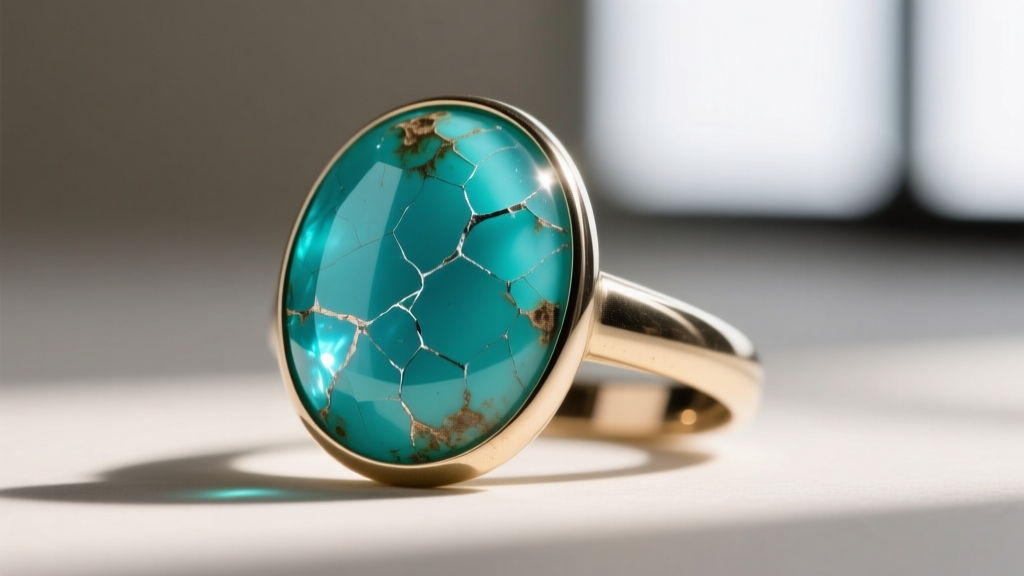
- Turquoise and Opals: These stones contain structural water and are highly porous. Ammonia solutions penetrate the micro-pores, altering the stone's internal chemistry and causing irreversible color shifts, blotching, and structural crazing (micro-cracking).
Commercial vs. DIY: Chemical Composition Comparison
Understanding the exact chemical makeup allows jewelers and consumers to select the precise tool for the job. Below is a technical comparison of the three most common jewelry cleaning formulations used in the industry today.
| Formulation Type | Primary Active Ingredient | pH Level | Safe Metals | Unsafe Gemstones | Avg Cost/Oz |
|---|---|---|---|---|---|
| Commercial Ultrasonic Solution | SLES, Tetrasodium EDTA, Non-ionic surfactants | 8.5 - 9.5 | Gold, Platinum, Palladium, Silver | Pearls, Opals, Emeralds, Turquoise | $1.50 - $3.00 |
| Mild Dish Soap (DIY) | Sodium Lauryl Sulfate (SLS), Sodium Chloride | 7.0 - 8.0 | All precious metals | None (safest for porous gems) | $0.15 - $0.30 |
| Ammonia-Based Dip | Ammonium Hydroxide, Isopropyl Alcohol | 10.0 - 11.5 | Gold, Platinum | Pearls, Emeralds, Opals, Turquoise, Lapis | $0.80 - $1.20 |
pH Levels and Metal Oxidation Rates
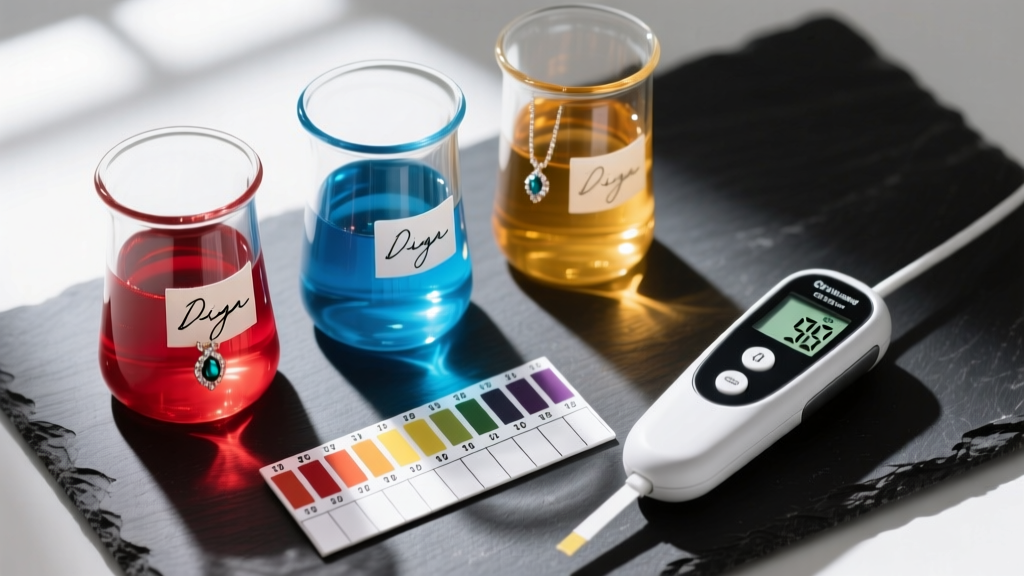
The pH scale is the invisible arbiter of jewelry safety. Most commercial liquid jewelry cleaners are formulated to be mildly alkaline (pH 8.0 to 9.5). This specific range is chosen because it is highly effective at saponifying fats (turning oils into water-soluble soap) without triggering rapid oxidation in reactive alloys.
Conversely, acidic cleaners (pH below 6.0) are rarely used for general jewelry maintenance, though they have niche applications. For example, highly diluted citric acid or sulfuric acid pickling solutions are used by bench jewelers to remove fire scale (cupric oxide) from sterling silver after soldering. However, if an acidic solution is used on finished jewelry and not properly neutralized with a baking soda bath, the residual acid will continue to eat away at the copper content in the alloy. This leads to a phenomenon known as 'depletion gilding,' where the surface copper is leached out, leaving a microscopically porous, weak, and discolored surface layer that is highly susceptible to physical abrasion.
Expert Formulation Framework for 2026
As the jewelry industry moves through 2026, the formulation of jewelry cleaners is shifting toward enzymatic and bio-surfactant technologies. Traditional solvents like butoxyethanol, once prized for their rapid evaporation and grease-cutting abilities, are being phased out due to volatile organic compound (VOC) regulations and respiratory concerns for bench jewelers who use them daily.
Modern expert frameworks prioritize 'cold-water efficacy.' By utilizing lipase and protease enzymes—similar to those found in high-end laundry detergents—new-age jewelry cleaners can break down complex protein-based grime (like sweat and dead skin cells) at room temperature. This eliminates the need for heating ultrasonic tanks to 140°F (60°C), which can inadvertently cause thermal shock to included diamonds or fracture-filled rubies. When evaluating what jewelry cleaner is made of, always look for enzyme-based, pH-neutral, and EDTA-fortified formulas to ensure the longevity of both your precious metals and your most delicate gemstones.


