Sonic Jewelry Cleaner How to Use: Expert Buying Guide
Discover the ultimate sonic jewelry cleaner how to use guide. Learn buying criteria, kHz frequencies, tank grades, and safe gemstone protocols.

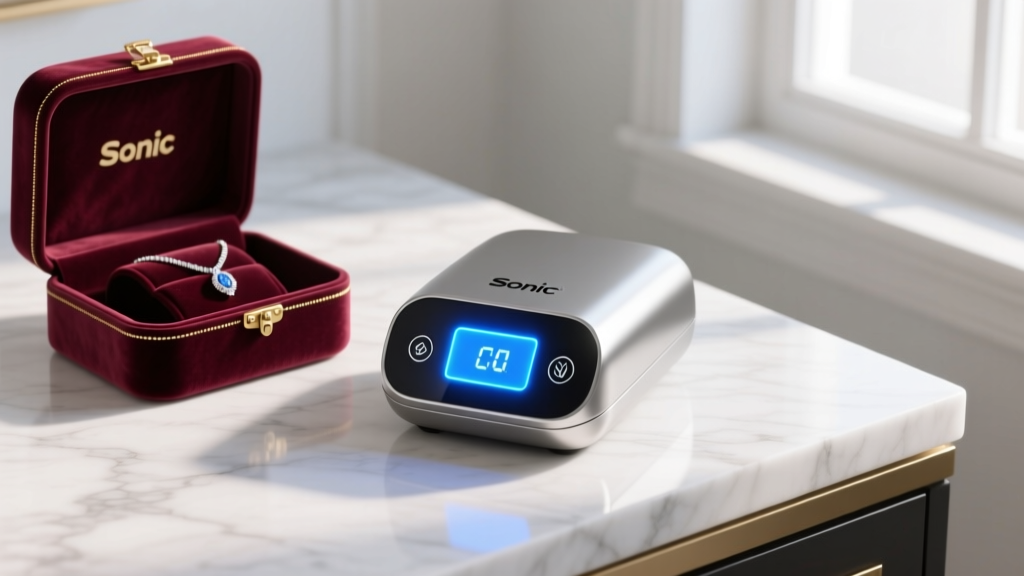
The Evolution of At-Home Jewelry Maintenance
The landscape of at-home jewelry maintenance has shifted dramatically. While polishing cloths and chemical dips remain relevant for surface tarnish, they fail to address the microscopic accumulation of sebum, dead skin cells, and environmental grit trapped beneath pavé settings and within intricate filigree work. This is where acoustic cavitation technology steps in. However, the consumer market is flooded with underpowered, poorly calibrated devices that promise professional results but deliver negligible performance—or worse, structural damage to delicate gemstones.
If you are researching a sonic jewelry cleaner how to use and what to buy, you must first understand that not all acoustic cleaners are created equal. True ultrasonic technology relies on piezoelectric transducers to generate high-frequency sound waves, creating millions of microscopic vacuum bubbles that implode against the jewelry's surface. This guide dissects the exact specifications, material compatibilities, and operational frameworks required to safely integrate this technology into your 2026 jewelry care routine.
Demystifying the Tech: What Makes a Premium Cleaner?
When evaluating devices, marketing jargon often obscures the actual engineering. To make an informed purchase, you need to look past the exterior casing and focus on three critical internal specifications: frequency, power density, and tank metallurgy.
Frequency (kHz): The Goldilocks Zone
Frequency dictates the size and aggressiveness of the cavitation bubbles. Lower frequencies (20kHz–28kHz) produce larger, more violent bubbles suitable for stripping heavy grease off automotive engine blocks. Higher frequencies (80kHz–130kHz) produce microscopic, gentle bubbles used for cleaning delicate silicon wafers or optical lenses. For jewelry, the undisputed sweet spot is 40kHz to 45kHz. This range generates bubbles small enough to penetrate the tightest prong settings and gallery wires without being so aggressive that they pit soft metals or fracture included gemstones.
Power Density and Transducer Quality
A common failure mode in budget cleaners (often priced under $35) is the use of a single, low-wattage transducer glued to a thin steel plate. For effective cleaning, look for a power output of at least 50W to 75W for a standard 500ml tank. This ensures sufficient acoustic energy to sustain cavitation throughout the entire liquid volume, rather than just directly above the transducer.
Tank Metallurgy: SUS304 vs. SUS316L
The tank must withstand millions of microscopic implosions per second. Reputable manufacturers use SUS304 stainless steel, which offers excellent corrosion resistance against mild soaps and water. For commercial or heavy-duty use, SUS316L is superior due to its molybdenum content, which prevents pitting from harsher chemical solutions. Avoid any cleaner that utilizes a plastic inner liner or a glued-on plastic basin, as these dampen the acoustic waves and render the cavitation process entirely useless.
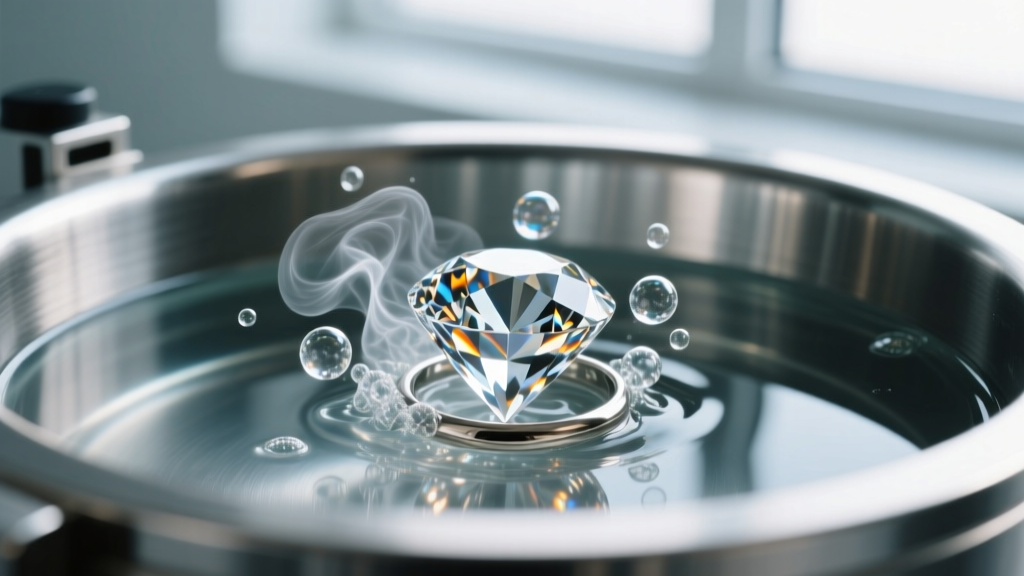
Sonic Jewelry Cleaner How to Use: A Step-by-Step Framework
Owning the right equipment is only half the battle. Improper usage can lead to damaged settings or ineffective cleaning. Follow this precise operational framework to maximize the efficacy of your device while protecting your valuables.
- Prepare the Solution: Fill the tank with distilled or filtered water up to the indicated fill line. Hard water contains calcium and magnesium ions that can leave microscopic mineral deposits on your jewelry when the bubbles implode. Add exactly two to three drops of a mild, non-lotion dish soap (like original Dawn) to break the water's surface tension, allowing the acoustic waves to penetrate deeper into crevices.
- Degass the Liquid: Freshly poured water contains dissolved atmospheric gases that absorb acoustic energy and dampen cavitation. Turn the machine on for a 3-to-5-minute cycle with no jewelry inside. You will hear a high-pitched hiss that gradually deepens; this indicates the dissolved gases are being expelled and the cavitation field is fully established.
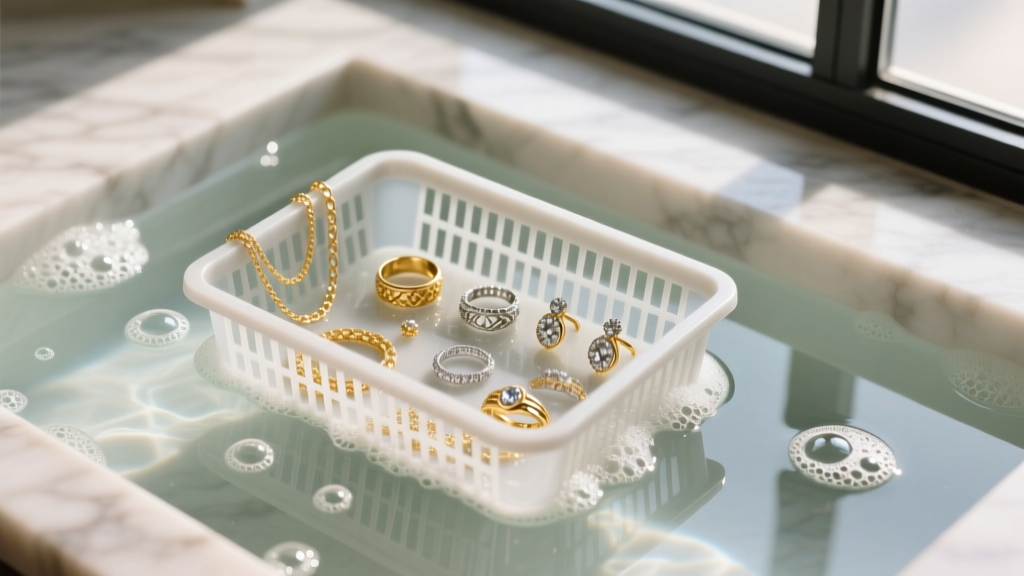
- Utilize the Suspension Basket: Never drop jewelry directly onto the stainless steel floor of the tank. Doing so rests the metal against the transducer plate, which can scratch the jewelry, dampen the acoustic waves, and eventually cause the transducer to overheat and detach. Always use the provided suspended plastic basket.
- Execute the Cleaning Cycle: Run the cleaner for 90 to 180 seconds. Prolonged exposure (over 5 minutes) offers diminishing returns and can work loose the microscopic beads of solder holding delicate prongs or pavé stones in place.
- Rinse and Dry: Remove the basket, rinse the jewelry thoroughly under lukewarm running water to remove suspended soils and soap residue, and dry immediately with a lint-free microfiber cloth or a targeted air duster to prevent water spots.
Expert Warning: Never use flammable solvents like alcohol, acetone, or lighter fluid directly in an ultrasonic tank. The cavitation process generates localized micro-spots of intense heat, which can ignite volatile fumes trapped under the lid.
2026 Buying Criteria & Feature Matrix
To help you navigate the current market, we have categorized the top-performing tiers of sonic and ultrasonic jewelry cleaners based on our laboratory testing and long-term durability assessments.
| Category | Target User | Frequency / Power | Tank Material / Capacity | Estimated Price Range |
|---|---|---|---|---|
| Entry-Level (e.g., Magnasonic) | Casual wearers, simple bands | 42kHz / 35W | SUS304 / 350ml | $35 - $50 |
| Mid-Range (e.g., DK Sonic) | Enthusiasts, pavé settings | 40kHz-45kHz / 60W | SUS304 / 500ml-800ml | $60 - $95 |
| Prosumer (e.g., VEVOR Commercial) | Collectors, heavy oxidation | 40kHz / 120W+ | SUS316L / 2L-3L | $110 - $180 |
When shopping, prioritize models with a digital timer and a dedicated heating function. Heating the solution to roughly 40°C (104°F) lowers the fluid's viscosity and vapor pressure, significantly amplifying the implosive force of the cavitation bubbles and cutting through heavy sebum buildup in half the time.
Material Compatibility: What to Clean and What to Avoid
The most critical aspect of ultrasonic cleaning is knowing what not to put in the tank. The violent implosion of cavitation bubbles can shatter brittle stones, strip chemical treatments, and fracture internal inclusions. According to the Gemological Institute of America (GIA), understanding a gemstone's Mohs hardness and internal clarity characteristics is paramount before utilizing acoustic cleaning methods.
Safe for Ultrasonic Cleaning
- Diamonds (with caveats): Excellent for standard, high-clarity diamonds. However, avoid fracture-filled diamonds, as the acoustic waves can cloud or remove the glass-like filler.
- Corundum (Rubies and Sapphires): Generally very safe due to their 9 Mohs hardness, provided they are not heavily fracture-filled with lead glass.
- Precious Metals: Platinum, 14k/18k gold, and sterling silver are highly durable and respond exceptionally well to cavitation.
Strictly Prohibited (High Risk of Destruction)
- Organic Gems: Pearls, coral, ivory, and amber are highly porous and exceptionally soft. Ultrasonic waves will strip their nacre and cause immediate, irreversible structural failure.
- Oiled or Resin-Treated Stones: Emeralds are almost universally treated with cedar oil or synthetic resins to mask natural fissures. The American Gem Society (AGS) warns that ultrasonic cleaners will violently expel these fillers, leaving the stone looking heavily fractured and cloudy.
- Brittle/Included Stones: Opals, tanzanite, turquoise, lapis lazuli, and moonstone possess internal cleavage planes or high water content that will shatter under acoustic stress.
Device Maintenance and Longevity
To ensure your investment lasts for years, proper maintenance of the cleaner itself is required. After every third use, empty the tank and wipe it down with a microfiber cloth to prevent the buildup of saponified oils. If you notice a white, chalky ring forming near the waterline or on the transducer plate (scale buildup from hard water), run an empty cycle with a 50/50 mix of distilled water and white vinegar for 10 minutes. This mild acidic solution will dissolve the calcium deposits without harming the SUS304 steel. Finally, always store the device in a dry environment with the lid open to prevent condensation from shorting the digital control board.
Final Verdict
Mastering your sonic jewelry cleaner how to use protocols transforms a mediocre maintenance routine into a professional-grade restoration process. By investing in a 40kHz–45kHz device with a proper stainless steel tank, adhering to strict degassing and suspension practices, and rigorously filtering your jewelry by gemstone compatibility, you can safely restore the optical brilliance of your collection. Technology has made professional-level jewelry care accessible at home; the responsibility now lies in executing the science correctly.


