Using White Vinegar to Clean Jewelry: Material Safety Guide
Discover the chemical effects of using white vinegar to clean jewelry. Learn which metals and gemstones are safe and which will be permanently damaged.

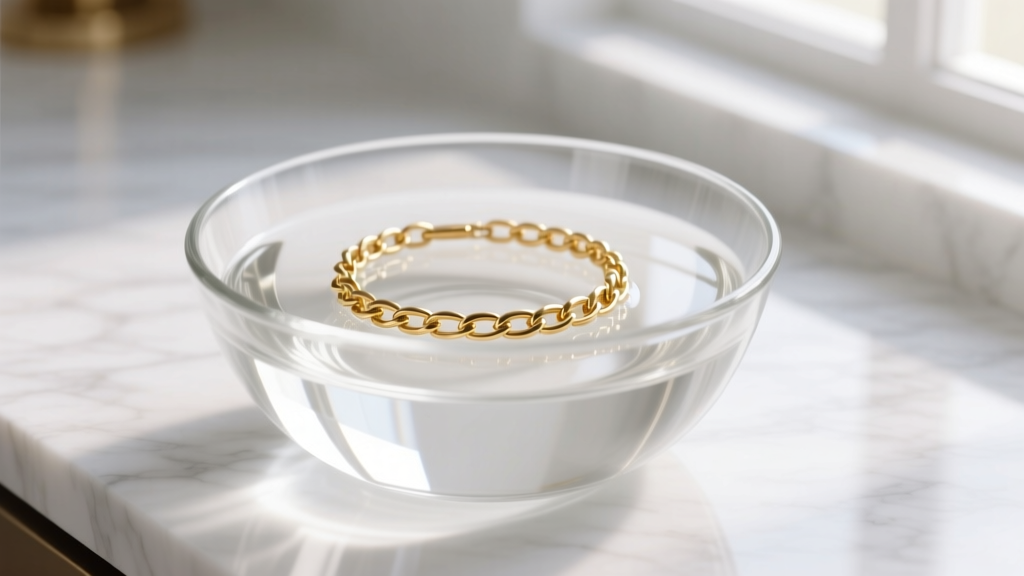
When searching for affordable, at-home jewelry maintenance, many enthusiasts turn to pantry staples. However, using white vinegar to clean jewelry is a highly polarizing topic among gemologists and metallurgists. While its mild acidity can dissolve hard water spots and mineral buildup on certain noble metals, it poses a catastrophic risk to porous gemstones and alloyed base metals. Understanding the chemical properties of your jewelry is the only way to determine if this DIY method will restore your pieces or ruin them.
The Chemistry of Acetic Acid and Metal Reactions
White vinegar is an aqueous solution consisting of roughly 5% to 8% acetic acid ($CH_3COOH$) by volume, giving it a pH between 2.4 and 2.6. In the context of material science, this makes it a weak organic acid. While it lacks the aggressive corrosive power of hydrochloric or sulfuric acid, acetic acid is highly reactive with specific chemical compounds commonly found in jewelry.
When acetic acid interacts with base metals like copper, zinc, or nickel—often used as alloying agents in karat gold and sterling silver—it can cause selective leaching. This process, known as dezincification or dealloying, strips the weaker metals from the surface matrix, leaving behind a microscopic, sponge-like layer of pure gold or silver that is incredibly fragile and prone to flaking.
Safe Materials: What White Vinegar Actually Cleans
Only a select group of materials possess the chemical inertness required to withstand an acetic acid bath without structural degradation.
Noble Metals: Pure Gold and Platinum
Gold (24k) and Platinum (950 grade) are noble metals, meaning they are highly resistant to corrosion and oxidation from weak acids. If your 24k gold chain or solid platinum setting has accumulated calcium deposits from hard tap water, a brief soak in undiluted white vinegar will safely chelate the minerals without etching the metal. However, as noted by the Gemological Institute of America (GIA), lower karatages (10k, 14k, and even 18k) contain significant amounts of copper and silver. These alloyed pieces should only be exposed to highly diluted vinegar solutions for no more than three minutes to prevent surface pitting.
Furthermore, white gold is typically plated with rhodium to achieve its bright, silvery appearance. Acetic acid can degrade the microscopic pores in the rhodium plating over time, accelerating the yellowing effect as the underlying gold alloy shows through.
Hard, Non-Porous Gemstones
Diamonds (Mohs 10), rubies, and sapphires (Mohs 9) are exceptionally stable. Their tight crystalline lattices do not allow acid molecules to penetrate. If these stones are set in platinum or high-karat gold, a vinegar soak can help break down the sebum and lotion buildup trapped beneath the pavilion (the bottom facet of the gem).
The Danger Zone: Materials Destroyed by Vinegar
The risks of using white vinegar far outweigh the benefits when dealing with organic gems, porous stones, and intentionally treated metals.
Organic Gems: Pearls, Coral, and Amber
Pearls are primarily composed of calcium carbonate ($CaCO_3$) and conchiolin (an organic protein). When calcium carbonate meets acetic acid, an immediate and irreversible chemical reaction occurs, producing calcium acetate, water, and carbon dioxide gas. According to GIA pearl care guidelines, even a few drops of vinegar will permanently dissolve a pearl's nacre, destroying its luster and structural integrity within seconds. The same applies to coral and amber.
Porous and Hydrated Stones: Turquoise, Opal, and Lapis Lazuli
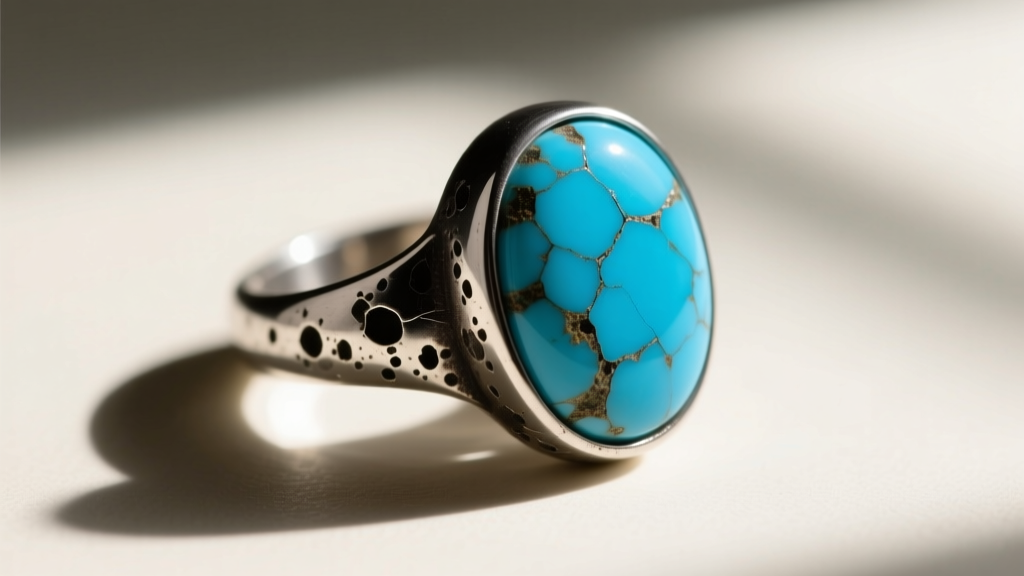
Turquoise is a hydrous phosphate of copper and aluminum. It is highly porous and chemically sensitive to acids, which will bleach the stone and alter its copper-driven blue/green coloration. Opals contain up to 20% water within their silica spheres; acidic solutions can disrupt this hydration, leading to crazing (a network of fine cracks). Lapis lazuli contains calcite, which reacts violently with acids just like pearls.
Oxidized and Antiqued Silver
Many artisan silver pieces feature intentional oxidation (blackened recesses created using liver of sulfur) to provide contrast and highlight intricate engraving. Acetic acid, especially when combined with salt or mechanical agitation, will strip this patina, leaving the piece looking flat and overly bright. Standard sterling silver tarnish is silver sulfide ($Ag_2S$), a compound that acetic acid cannot break down efficiently on its own. The popular 'vinegar and baking soda' methods rely on creating a weak electrolytic cell, but they often leave the silver with a dull, matte finish compared to professional chemical reducers.
Material Compatibility Chart
| Material | Chemical Composition | Reaction to Acetic Acid | Safety Rating |
|---|---|---|---|
| 24k Gold / Platinum | Au / Pt | None (Inert) | Safe (Short Soak) |
| 14k / 18k Gold | Au + Cu/Ag/Zn | Mild leaching of base metals | Caution (Dilute Only) |
| Sterling Silver (925) | Ag + Cu | Ineffective on tarnish; may pit copper | Not Recommended |
| Pearls / Coral | Calcium Carbonate | Dissolves nacre; releases CO2 | Highly Destructive |
| Turquoise / Opal | Hydrous Phosphates / Silica | Strips color; causes crazing | Highly Destructive |
| Diamonds / Sapphires | Carbon / Aluminum Oxide | None (Inert) | Safe (Check Setting) |
Step-by-Step: The Safe Vinegar Soaking Protocol
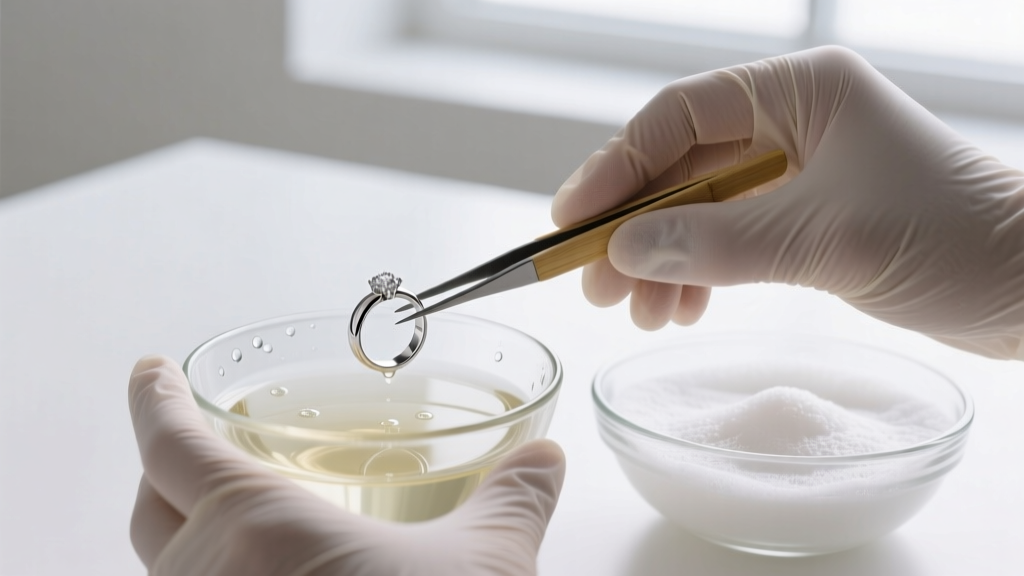
If you have confirmed your jewelry consists entirely of safe materials (e.g., a solitaire diamond set in solid platinum), follow this strict protocol to remove hard water spots and mineral buildup without risking collateral damage.
- Dilution: Mix one part distilled white vinegar with two parts distilled water. Tap water introduces new minerals, defeating the purpose of the soak.
- Time Limit: Submerge the jewelry for a maximum of 5 to 7 minutes. Do not leave it unattended or soak it overnight.
- Agitation: Use a soft-bristled baby toothbrush to gently dislodge debris from beneath the gemstone's girdle.
- Neutralization: This is the most critical step. Transfer the piece immediately to a bowl of warm water mixed with a teaspoon of baking soda (sodium bicarbonate). This alkaline bath halts the acidic etching process.
- Drying: Rinse with clean distilled water and dry thoroughly with a lint-free microfiber cloth. Ensure no moisture is trapped in the prongs or clasp mechanisms.
Never use vinegar on jewelry with fracture-filled diamonds or emeralds treated with cedar oil. The acid can dissolve the resin or strip the oil, leaving the stones cloudy and heavily included.
When to Skip the DIY: Professional Alternatives
Given the narrow margin of safety for using white vinegar to clean jewelry, most pieces are better served by specialized, pH-balanced commercial cleaners or professional services.
- For Sterling Silver: Use a dedicated silver dip or polishing cloth infused with micro-abrasives and anti-tarnish agents (e.g., Hagerty or Connoisseurs). These remove silver sulfide without relying on harsh acids.
- For Porous Gemstones: Wipe turquoise, opals, and pearls with a barely damp, untreated microfiber cloth. For deeper cleaning, a mild drop of phosphate-free dish soap in lukewarm water is the gemological standard.
- Ultrasonic Cleaners: While excellent for diamonds and platinum, ultrasonic waves can shatter emeralds, opals, and tanzanite. Always cross-reference your gemstone's Mohs hardness and cleavage planes before utilizing high-frequency vibrations.
Ultimately, while the internet is flooded with DIY hacks, the chemical reality of acetic acid demands respect. By understanding the metallurgical and gemological properties of your collection, you can preserve your investments and avoid irreversible acidic damage.


