Top Jewelry Making Schools Online: 2026 Buyer's Guide
Compare the top jewelry making schools online in 2026. Our buyer's guide covers curriculum, tool kits, critique formats, and pricing tiers.


The landscape of jewelry education has undergone a massive transformation. Gone are the days when learning to fabricate, cast, or set stones required relocating to a physical campus or settling for low-resolution, poorly lit YouTube tutorials. As of 2026, the best jewelry making schools online utilize multi-camera 4K macro setups, real-time thermal imaging for soldering, and direct digital critique platforms. Whether you are looking to master the physics of prong setting, design complex articulations in CAD, or simply build a robust wire-wrapping hobby, choosing the right virtual institution is critical.
This buyer’s guide cuts through the marketing fluff to evaluate what actually matters: curriculum depth, tool kit quality, feedback mechanisms, and true return on investment. Here is exactly what to look for when investing in your virtual bench education.
The Shift to High-Definition Virtual Bench Training
The primary historical barrier to online jewelry education was the inability to see microscopic details. Soldering a bezel cup, for instance, requires observing the exact moment the solder flashes and flows via capillary action. In 2026, premier online schools have solved this by integrating overhead and lateral macro-lenses directly into their studio setups.
When evaluating a school, scrutinize their video production quality. If the instructor’s hands constantly block the camera angle during critical soldering or stone-setting demonstrations, look elsewhere. Top-tier programs now use picture-in-picture formats, showing both a wide shot of the torch hand positioning and a 10x macro zoom on the metal joint. This level of visual clarity is non-negotiable for intermediate and advanced fabrication courses.
Decoding the Curriculum Tracks
Not all jewelry making is created equal. Before enrolling, you must align the school’s specialty with your end goals. Most reputable institutions segment their programs into three distinct tracks:
1. Traditional Metalsmithing & Fabrication
This is the bedrock of jewelry making. A rigorous fabrication curriculum will take you beyond basic loop-in-loop chains and into structural soldering, annealing, and metallurgy. Look for courses that explicitly teach the "Hard, Medium, Easy" solder progression, proper flux application (such as Stay-Silv or borax cones), and fire scale management on sterling silver (.925) and karat golds.
2. CAD and 3D Printing
If your goal is scalable production or complex, impossible-by-hand geometries, CAD is mandatory. The industry standard remains MatrixGold and Rhino 3D. A quality online CAD school won't just teach you the software interface; they will teach you design-for-manufacturability (DFM). This includes understanding sprue thickness for casting, tolerance gaps for moving parts, and how to prep a digital file for a resin 3D printer to minimize support scarring.
3. Wire Wrapping & Beading
Often dismissed by traditional metalsmiths, advanced wire weaving requires a deep understanding of metal hardness and gauge physics. A strong curriculum here will teach you how to manipulate 20-gauge dead-soft wire for structural frames while utilizing 28-gauge half-hard wire for intricate binding, ensuring your pieces don't warp under the tension of daily wear.
Evaluating Tool Kits: What’s Actually in the Box?
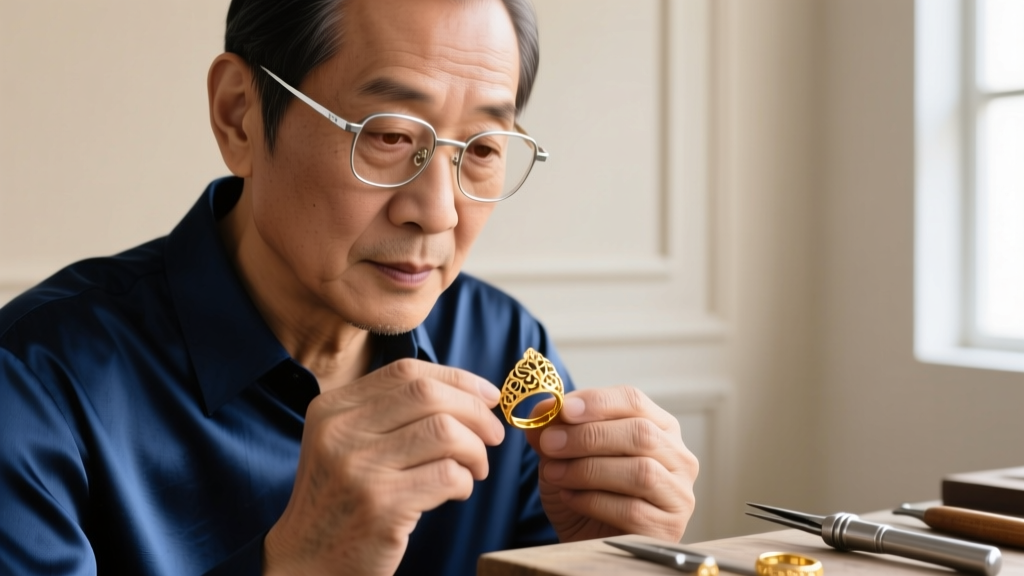
Many online schools bundle "starter kits" into their tuition to create a turnkey experience. However, these kits can be a trap. Some programs inflate their pricing by including cheap, carbon-steel pliers with serrated jaws that will instantly mar soft metals, or low-torque rotary tools that stall under pressure.
When reviewing a school's materials list, look for specific brand inclusions. A high-quality kit should feature Swiss-pattern files (like Vallorbe), a reliable flexible shaft machine (such as a Foredom SR or LX series), and proper soldering surfaces (Hinds charcoal blocks or high-density Magnesia boards). If the school does not provide a kit, they should at least provide a heavily vetted, itemized sourcing list with links to reputable suppliers like Rio Grande or OttoFrei.
| Tier | Typical Cost | Included Equipment | Best For |
|---|---|---|---|
| Basic Hobbyist | $150 - $300 | Butane torch, basic carbon-steel pliers, bead reamer, cheap soldering pick. | Wire wrapping, basic beading, simple soldering. |
| Intermediate Fabricator | $600 - $1,200 | Foredom flex shaft, Smith Little Torch, Swiss-pattern files, jeweler's saw frame, bench pin. | Traditional metalsmithing, bezel setting, chain making. |
| Professional Studio | $2,500+ | PepeTools rolling mill, GRS benchmate system, microscope for setting, casting equipment. | Career-track jewelers, advanced stone setting, production. |
The Feedback Loop: Critique Formats
Watching a video is passive; making jewelry is active. The single most important factor in an online school's success rate is its critique methodology. When you are learning to flush-set a 2mm round brilliant diamond, a 0.1mm error in your bearing cut will result in a chipped stone or a loose setting. You need expert eyes on your work.
There are two main critique formats in 2026:
- Asynchronous Video Submissions: You film your bench work and upload it alongside macro-photos of your finished piece. Instructors reply with red-lined digital markups and audio notes. This is highly flexible but lacks immediate correction.
- Live Zoom Bench Sessions: You set up a webcam over your bench and work in real-time with an instructor. This is invaluable for troubleshooting issues like metal galling, drill bit wandering, or solder balling. Premium schools offer at least one live bench hour per module.

Top Platforms to Consider in 2026
Based on curriculum depth, instructor pedigree, and student outcomes, here is how the major players stack up this year.
New Approach School for Jewelers
Founded by master jeweler Blaine Lewis, New Approach remains the gold standard for serious online fabrication and stone-setting education. Their courses are notoriously rigorous, focusing heavily on the physics of metal and precise tool control. While their tool kits are an additional investment, the live critique sessions and unparalleled macro-videography make it the closest thing to a traditional bench apprenticeship available online. Expect to pay between $800 and $2,500 per comprehensive module.
Halstead Business & Education
While primarily known as a massive wholesale supplier, Halstead offers an exceptional suite of educational resources and targeted online workshops. They are particularly strong for those looking to bridge the gap between DIY hobbyist and commercial jewelry brand. Their curriculum often integrates business fundamentals—like pricing strategies, metal market fluctuation tracking, and wholesale line sheet creation—alongside practical fabrication tutorials. It is highly recommended for the entrepreneurial maker.
The Gemological Institute of America (GIA)
If your interest lies in the stones rather than the metal, the GIA offers premier online diplomas in Gemology and Jewelry Design. While they do not teach you how to hold a torch, their online design courses teach the structural rules of jewelry drafting, rendering, and gemstone durability. Understanding the Mohs hardness scale and cleavage planes is mandatory before you ever attempt to set a fragile stone like an opal or emerald, making GIA's theoretical courses a perfect companion to a physical fabrication class.
Subscription Platforms (Skillshare / Domestika)
For under $30 a month, these platforms offer hundreds of jewelry classes. They are fantastic for inspiration, basic wire-wrapping, and polymer clay techniques. However, they completely lack the feedback loop. You are essentially paying for high-quality entertainment and basic instruction. Use these to supplement your education, but do not rely on them for professional-grade metalsmithing training.
Final Verdict: Matching the School to Your Goals
The "best" jewelry making school online is entirely dependent on your endgame. If you want to build a custom bridal business focused on hand-forged engagement rings, invest heavily in a live-critique fabrication course like New Approach. If you want to launch a scalable, trend-driven fashion jewelry line, prioritize a CAD and 3D printing curriculum paired with business modules from Halstead.
Ultimately, demand transparency before you enroll. Ask the admissions team about their camera setups, their exact tool kit manifest, and their policy on re-submitting failed assignments. In 2026, the technology exists to teach anyone, anywhere, how to master the jeweler's bench—you just have to choose the program that refuses to compromise on the details.