Sourcing Budget Components for Jewelry Making: 2026 Value Guide
Discover how to source high-quality, budget-friendly components for jewelry making in 2026. Compare bulk pricing, metal grades, and supplier value.

The True Cost of Cheap: Why Material Grade Matters
As we navigate the economic landscape of 2026, the rising costs of raw materials and international shipping have forced DIY jewelers to scrutinize every line item in their supply chain. When sourcing components for jewelry making, the temptation to opt for the absolute lowest price point is strong, especially for beginners building their first inventory. However, a budget-focused approach that ignores material science inevitably leads to higher long-term costs, damaged brand reputation, and frustrated customers.
The most common budget trap in the DIY jewelry space is the reliance on zinc-alloy findings, frequently marketed under deceptive names like "Tibetan Silver," "antique bronze," or "Tibetan copper." These cast components are incredibly cheap—often costing less than $0.05 per piece in bulk. The failure mode, however, is rapid and severe. Zinc alloys are brittle, meaning the loops on cheap charms or the clasps on inexpensive pendants will snap under minimal tensile stress. Furthermore, these alloys are almost always plated. Within three to six months of wear, the friction from skin contact and exposure to sebum will wear through the microscopic plating layer, revealing the dull, grayish base metal beneath and frequently causing contact dermatitis due to hidden nickel content.
True value in jewelry making is not about finding the cheapest item; it is about maximizing the lifespan and aesthetic integrity of the piece per dollar spent. Upgrading from zinc alloy to solid brass or pure copper might increase your per-unit finding cost by 30% to 50%, but it extends the wearable life of the jewelry from a few months to several years, drastically reducing replacement requests and boosting customer trust.
Base Metals vs. Precious Alloys: A 2026 Price-to-Value Matrix
To make informed purchasing decisions, you must understand the current market positioning of various metals. The table below outlines the approximate 2026 retail costs for 20-gauge wire and standard findings, alongside their physical properties and best use cases for budget-conscious makers.
| Material | Approx. Cost (20g Wire / ft) | Tarnish & Oxidation Rate | Durability & Workability | Value Verdict |
|---|---|---|---|---|
| Solid Brass | $0.85 | Moderate (develops patina) | High durability, work-hardens quickly | Excellent for structural wire wrapping and vintage aesthetics. |
| Pure Copper | $0.65 | High (oxidizes dark rapidly) | Very soft, highly malleable | Best for practice, tight weaves, and intentional patina work. |
| Niobium | $1.30 | Zero (anodized surface) | Soft but springy, hard to cut | Unbeatable for hypoallergenic ear wires on a strict budget. |
| 14k Gold-Filled | $19.50 | Very Low | Similar to brass, excellent finish | High upfront cost, but yields premium retail pricing and high margins. |
| Argentium Silver | $24.00 | Extremely Low (fuses well) | Softer than sterling, fuses without solder | Worth the premium for high-end, low-maintenance silver pieces. |
Sourcing Findings: Clasps, Jump Rings, and Ear Wires
Findings are the unsung heroes of jewelry design. They bear the mechanical load of the piece and interact directly with the wearer's skin. Skimping on findings is where most budget DIY projects fail structurally.
The Jump Ring Failure Mode
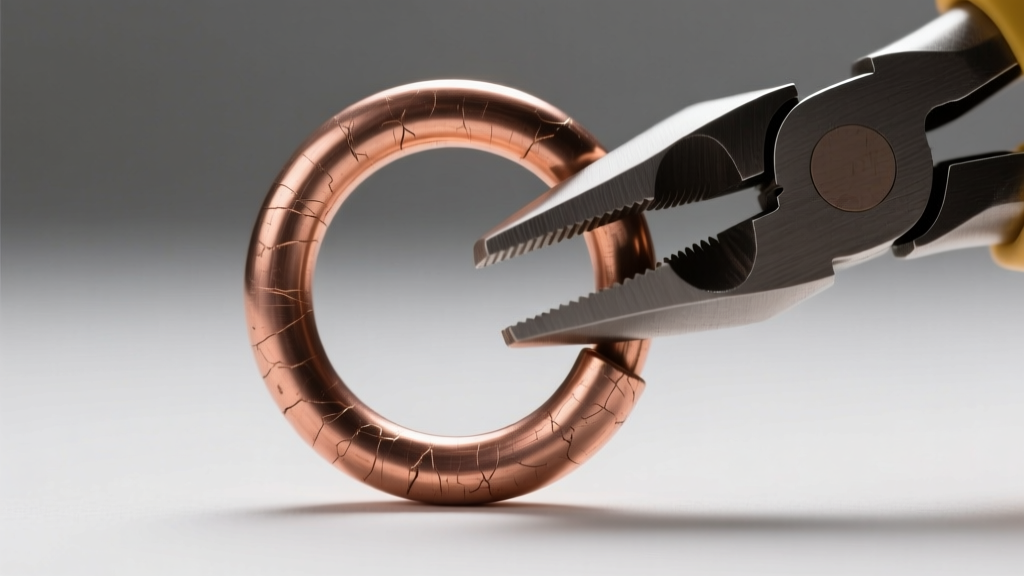
When buying jump rings in bulk, you will encounter two primary manufacturing methods: machine-cut and saw-cut. Machine-cut rings are sheared from a coil, leaving a sharp, pinched edge at the closure point. When you try to close a machine-cut ring, the pinched edges overlap rather than meeting flush, creating a weak point that easily pulls apart and a rough edge that catches on delicate fabrics or hair. Saw-cut rings, on the other hand, are sliced with a micro-saw, removing a tiny kerf of metal and leaving perfectly flat, parallel ends. When closed, a saw-cut ring forms a seamless, structurally sound circle. The price difference is typically around $2.00 to $4.00 per 100 rings. For the sake of structural integrity and professional finishing, saw-cut rings are a non-negotiable investment.
For ear wires, the budget-conscious maker must navigate the minefield of metal allergies. Surgical steel is often marketed as hypoallergenic, but it contains nickel and can cause reactions in highly sensitive individuals. Niobium is the ultimate budget hack for ear wires. It is a highly reactive metal that is anodized using electricity to create vibrant, permanent colors without using dyes or plating. At roughly $0.45 to $0.60 per pair in bulk, niobium ear wires offer true hypoallergenic properties at a fraction of the cost of solid gold or platinum, allowing you to market your pieces as safe for sensitive ears without destroying your profit margins.
Where to Buy: Wholesale vs. Retail Supplier Breakdown
Knowing where to allocate your budget is just as important as knowing what to buy. The supplier landscape in 2026 is highly segmented, and shopping at the wrong tier will eat into your margins.
- Rio Grande: The gold standard for precious metals, high-quality tools, and specialized equipment. While their base metal findings might carry a slight premium, their quality control is impeccable. Use Rio Grande when you need guaranteed metal purity, precision saw-cut jump rings, and professional-grade pliers that won't mar your wire.
- Fire Mountain Gems: Ideal for high-volume, low-cost base metals, glass beads, and basic stringing materials. Their tiered pricing model heavily rewards bulk buying. This is your go-to source for stocking up on brass wire, copper components, and basic clasps where slight variances in manufacturing are acceptable.
- Halstead Bead: A premier wholesale supplier specifically geared toward small jewelry businesses. They offer excellent pricing on 14k gold-filled and sterling silver components, but they enforce minimum order quantities (usually around $100). This is where you graduate once your designs are finalized and you are ready to produce inventory for sale.
- Direct Overseas Marketplaces (AliExpress/Temu): While tempting for ultra-cheap components, these platforms require extreme vigilance. If you source here, stick strictly to non-skin-contact items like decorative pendants or brass spacer beads. Never buy ear wires, clasps, or chains from unverified overseas sellers, as the risk of lead contamination and rapid plating failure is exceptionally high.
Strategic Buying: Building Your Initial Inventory Under $150
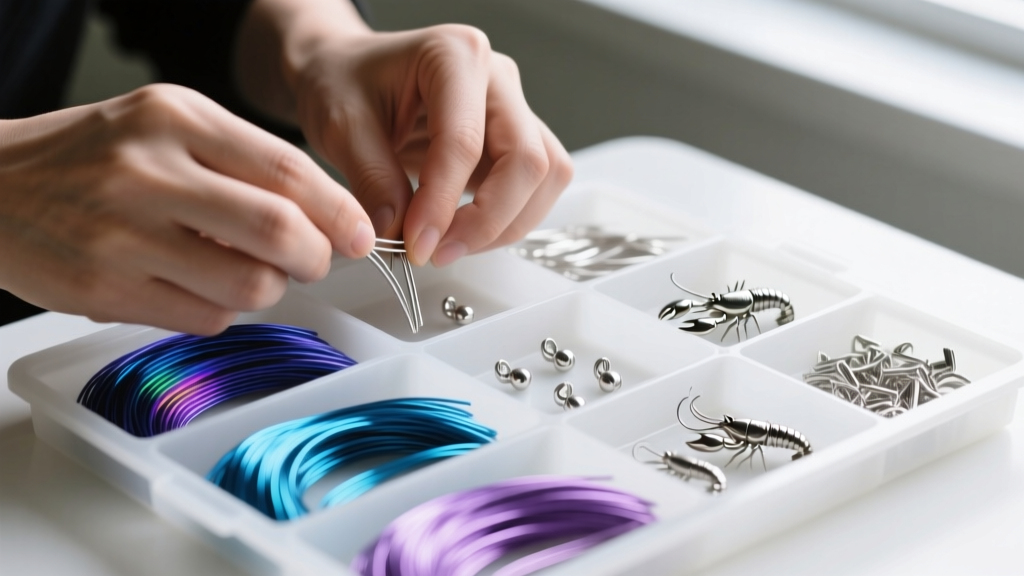
If you are launching a new collection or starting your DIY journey in 2026, you do not need to buy everything at once. A strategic, highly curated initial inventory allows you to produce professional, durable pieces while keeping your overhead minimal. Here is a precise $150 allocation framework designed to maximize versatility and value:
- 14k Gold-Filled Wire ($45): Purchase 5 feet of 20-gauge (dead soft) for structural links and clasps, and 5 feet of 24-gauge for weaving and wrapping. This allows you to create premium-looking pieces with high perceived value.
- Solid Brass & Copper Wire ($30): Buy 20 feet of 20-gauge brass for heavy-duty chainmaille or structural frames, and 20 feet of 22-gauge pure copper for practice, prototyping, and oxidized accent weaves.
- Premium Findings ($40): Invest in a bulk pack of 100 saw-cut brass jump rings (mixed sizes: 4mm, 5mm, 6mm) and 50 pairs of anodized niobium ear wires. This ensures every piece that touches the skin or bears weight is structurally sound and hypoallergenic.
- Essential Tooling ($35): Allocate the remainder to a single, high-quality pair of flat-nose pliers and a pair of flush cutters from a trusted brand like Tronex or Wubbers. Cheap tools with rough jaws will gouge your gold-filled wire, instantly ruining the value of your premium materials.
Final Verdict on Maximizing Your DIY Budget
Sourcing components for jewelry making on a budget is an exercise in strategic compromise. You must never compromise on the metallurgical integrity of items that bear weight or touch the skin. By accepting a slightly higher upfront cost for saw-cut rings, solid base metals, and niobium ear wires, you insulate your brand from the reputational damage of tarnished, broken jewelry. Leverage tiered wholesale suppliers as your business scales, and always view your material costs through the lens of long-term customer satisfaction rather than short-term savings.