Master Jewelry Making and Beading: Wire Gauge & Tensile Strength
Master advanced jewelry making and beading with our expert guide on wire gauges, tensile strength, bead hole sizing, and crimping mechanics.

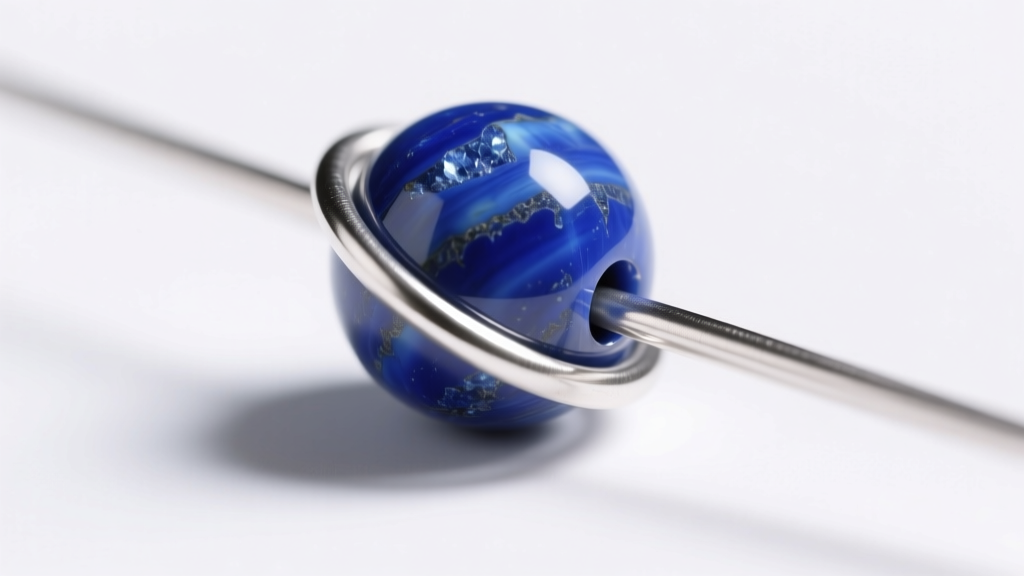
The Physics of Micro-Structural Engineering
When approaching advanced jewelry making and beading, artisans must transition from thinking of wire as mere string to understanding it as a micro-structural beam. The intersection of wire wrapping and heavy gemstone beading is governed by metallurgy and physics. A necklace holding 80 carats of polished turquoise is not just an aesthetic arrangement; it is a load-bearing suspension system. In 2026, with the rise of heavier, raw-cut gemstone beads and architectural jewelry designs, understanding the exact tensile strength, yield point, and shear fatigue limits of your materials is no longer optional—it is the baseline for professional craftsmanship.
The American Wire Gauge (AWG) system is the standard for measuring wire thickness in North America. Counterintuitively, as the gauge number increases, the wire diameter decreases. According to the standard AWG specifications, a 24-gauge wire measures 0.511mm in diameter, while a 20-gauge wire measures 0.812mm. This non-linear progression means that dropping from 22-gauge to 20-gauge yields a massive 26% increase in cross-sectional area, drastically altering the wire's load-bearing capacity and its behavior when manipulated through bead channels.
Wire Hardness and Temper: The Metallurgical Reality
Wire is sold in specific tempers, which dictate its malleability and resistance to deformation. The three primary tempers used in jewelry making and beading are dead soft, half-hard, and full-hard (spring). These tempers are achieved through annealing (heating and slow cooling) and work hardening (drawing the wire through successively smaller dies).
- Dead Soft: Fully annealed. The crystalline structure is relaxed, making it highly malleable. Ideal for intricate wire weaving and sculpting, but lacks the structural memory to hold heavy bead arrays without deforming.
- Half-Hard: Partially work-hardened. It offers the perfect compromise between malleability and structural rigidity. It will hold a wrapped loop under moderate tension but will snap if repeatedly bent back and forth.
- Full-Hard: Heavily work-hardened. It is extremely stiff and brittle. Used almost exclusively for making clasps, ear wires, and structural jump rings where maximum spring-back and shape retention are required.
As noted by the technical experts at Ganoksin, manipulating dead soft wire causes "work hardening." Every time you bend, twist, or pull the wire with nylon-jaw pliers, you introduce dislocations into the metal's crystal lattice. If you overwork a 22-gauge sterling silver wire while wrapping a briolette, it will transition from dead soft to full-hard, eventually reaching its fracture point and snapping cleanly. Recognizing the tactile feedback of work hardening is a critical skill for preventing mid-project breakage.
Tensile Strength and Application Matrix
| AWG Gauge | Diameter (mm) | Tensile Strength (Half-Hard Sterling) | Primary Beading Application |
|---|---|---|---|
| 26-Gauge | 0.405mm | ~45,000 PSI | Wire weaving, pearl knotting alternatives, micro-macrame cores |
| 24-Gauge | 0.511mm | ~55,000 PSI | Standard wrapped briolettes, small-hole gemstone linking |
| 22-Gauge | 0.644mm | ~65,000 PSI | Ear wires, standard jump rings, medium-weight bead stringing |
| 20-Gauge | 0.812mm | ~75,000 PSI | Heavy clasps, structural bead frames, thick jump rings |
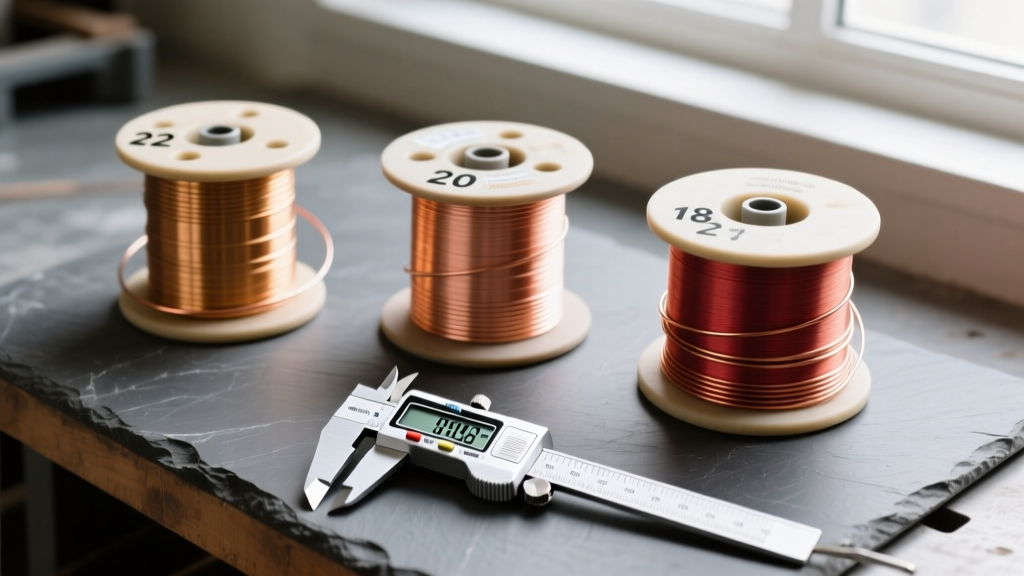
Navigating Bead Hole Diameters and Tolerances
A frequent point of failure in jewelry making and beading occurs when the artisan mismatches the wire gauge to the bead hole diameter. Commercial gemstone beads are mass-drilled, often resulting in inconsistent hole sizes and sharp internal burrs. A standard 8mm round lapis lazuli bead might advertise a 1.0mm hole, but the actual usable diameter at the narrowest point may be only 0.7mm due to drilling deviation.
Attempting to force a 20-gauge (0.812mm) wire through a 0.7mm hole will result in severe abrasion. The sharp silica or quartz edges inside the bead hole will act like a saw, scoring the wire and creating a stress concentrator. Under the dynamic load of a necklace swinging against the chest, this microscopic score will propagate into a catastrophic shear failure. Expert beaders always use a diamond-coated bead reamer to smooth internal channels and verify clearance using digital calipers before committing to a wire gauge. If a design requires heavy structural wire but the bead holes are narrow, the professional solution is to use a stepped wire wrap or a hollow-core metal bead liner to protect a thinner, high-tensile core wire.
The Mechanics of Crimping: Avoiding Shear Failures
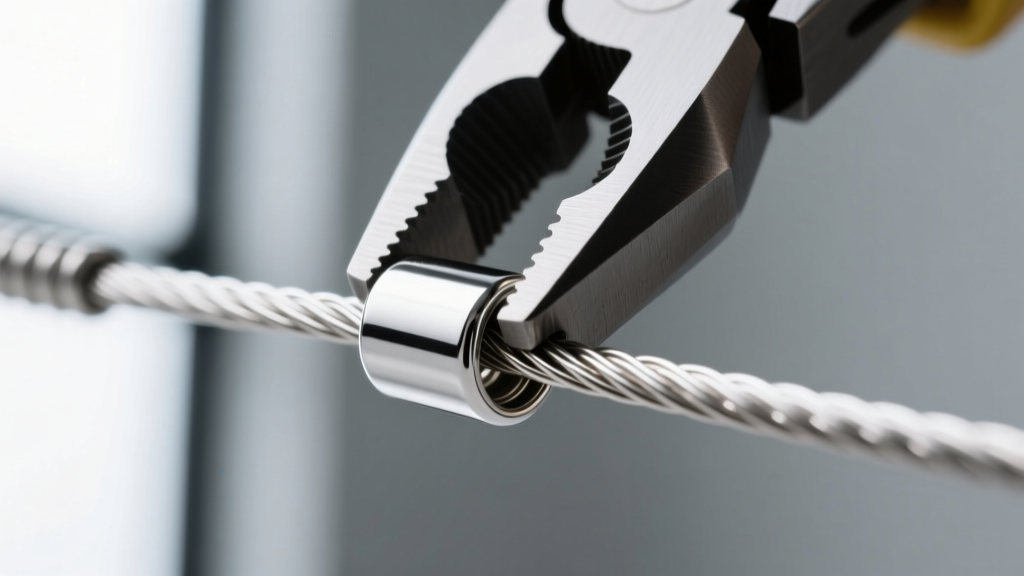
When transitioning from solid wire to flexible beading wire (such as 49-strand stainless steel micro-wire), the crimp becomes the most critical structural node in the entire piece. The mechanics of a successful crimp rely on controlled metallurgical deformation.
"A crimp should never cut the wire; it must fold around it, creating a high-friction mechanical lock without compromising the wire's outer strands."
Using a base-metal crimp tube on a heavy pendant necklace is a common amateur mistake. Base metals often lack the ductility of sterling silver or 14k gold-filled tubes. When compressed with micro-crimping pliers, brittle base metals can fracture or develop micro-fissures, eventually shearing the stainless steel beading wire underneath. According to the Fire Mountain Gems technical library, using a sterling silver crimp tube over a 49-strand Soft Flex wire allows the softer silver to deform smoothly into the crevices of the steel strands, creating a secure, non-abrasive grip that withstands years of dynamic tension.
Expert Troubleshooting: Common Structural Failures
Even with perfect materials, structural failures can occur if the geometry of the jewelry is flawed. Here are three specific failure modes and their technical solutions:
1. Flex Fatigue at the Clasp Interface
The Problem: The beading wire snaps exactly at the point where it enters the crimp tube or jump ring. This is caused by flex fatigue—the wire is repeatedly bent at a sharp 90-degree angle every time the wearer moves.
The Solution: Introduce a wire protector (French wire or a sterling silver bullion coil) or use a specialized articulated clasp system that allows the wire to maintain a gentle, sweeping curve rather than a hard pivot point.
2. Galvanic Corrosion in Mixed Metals
The Problem: When beading with moisture-absorbing materials like untreated turquoise or pearls, sweat can act as an electrolyte. If you use a copper core wire with sterling silver crimps, galvanic corrosion will rapidly degrade the less noble metal (copper), leading to sudden breakage.
The Solution: Maintain metallurgical consistency. Use Argentium sterling silver (which contains germanium for high tarnish and corrosion resistance) for both the wire and the crimps, or coat copper cores in a micro-thin layer of jewelry-grade epoxy resin before stringing.
3. Bead Abrasion on Soft Cores
The Problem: Glass or quartz beads slowly saw through silk thread or soft copper wire over time due to the microscopic sharpness of the drilled holes.
The Solution: Always interleave soft, high-durometer silicone micro-spacers between abrasive stone beads, or upgrade to a 49-strand nylon-coated stainless steel beading wire which possesses a high-tensile steel core protected by an abrasion-resistant nylon jacket.
Conclusion
Mastering the technical aspects of jewelry making and beading elevates your work from fragile crafts to heirloom-quality engineering. By respecting the AWG standards, understanding the crystalline behavior of wire tempers, and executing flawless mechanical crimps, you ensure that your designs are as structurally sound as they are visually stunning. As material options continue to expand in 2026, the artisans who thrive will be those who treat their workbench not just as an art studio, but as a laboratory of micro-mechanics.


