Sunstone Permanent Jewelry: 2026 Cost & Value Guide
Analyze the true cost and ROI of sunstone permanent jewelry in 2026. Compare Oregon vs. Indian stones, welding overhead, and retail pricing.

The Shift Toward Premium Gemstone Permanent Jewelry
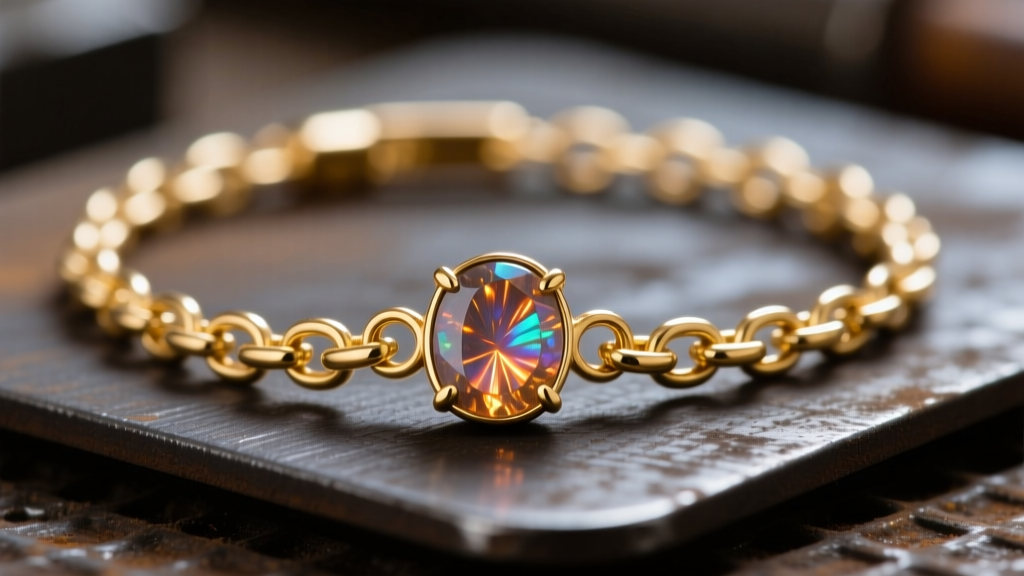
As the permanent jewelry market matures in 2026, makers and studio owners are moving beyond basic gold-filled chains to offer high-margin, gemstone-accented pieces. Among the most lucrative and visually striking options is sunstone permanent jewelry. Known for its captivating aventurescence (schiller) and warm, peach-to-copper color palette, sunstone perfectly aligns with current earthy, minimalist aesthetic trends. However, integrating genuine sunstone into permanent welded jewelry requires a nuanced understanding of gemological grading, material sourcing, and the specific thermal limitations of pulse arc welding.
This guide provides a comprehensive budget and value assessment for DIY makers and boutique owners looking to add sunstone to their permanent jewelry menu. We will break down the true cost of goods sold (COGS), equipment overhead, and retail pricing strategies to help you maximize your return on investment while avoiding costly material failures.
Gemological Value: Oregon vs. Indian vs. African Sunstone
Not all sunstone is created equal, and misidentifying your material can destroy your profit margins and damage your brand's reputation. According to the Gemological Institute of America (GIA), the term 'sunstone' applies to feldspar group minerals that exhibit aventurescence, but the chemical makeup and market value vary wildly by origin.
1. Oregon Sunstone (The Premium Tier)
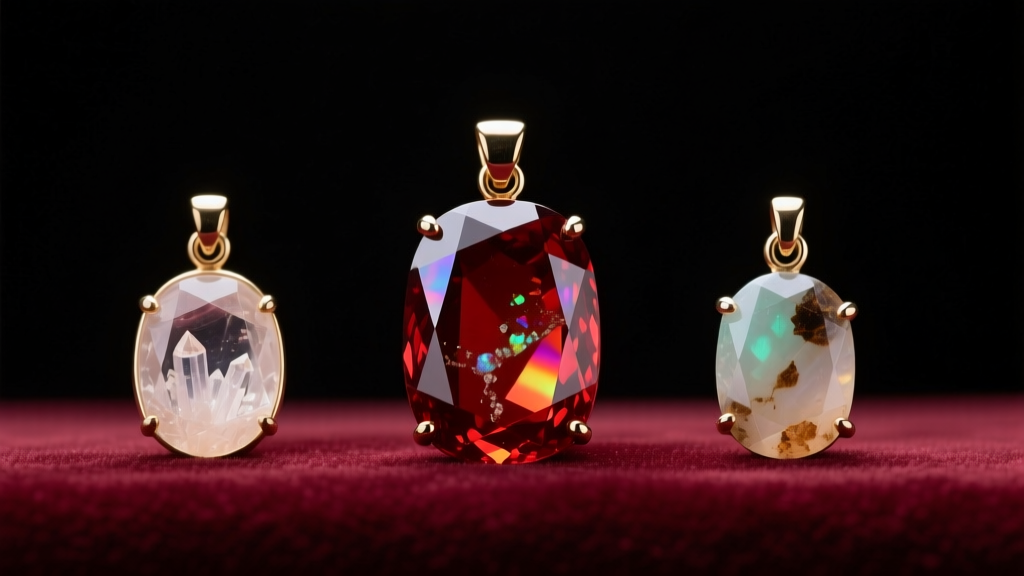
Oregon sunstone is a labradorite feldspar containing microscopic copper platelets. It is the only sunstone that naturally occurs in transparent gem-quality crystals with copper inclusions. High-quality Oregon sunstone with deep red or green schiller commands premium wholesale prices, often ranging from $40 to $150+ per pre-drilled charm or faceted link. This is your luxury tier, best paired with solid 14k or 18k gold chains.
2. Indian Sunstone (The Mid-Tier Workhorse)
Indian sunstone is an oligoclase feldspar with hematite or goethite inclusions. It typically displays a more opaque, peachy-orange base with golden glitter. Wholesale costs are highly favorable, usually between $8 and $25 per charm. It offers excellent profit margins for entry-level permanent jewelry clients who want a natural gemstone without the Oregon price tag.
3. African 'Sunstone' (The Budget Alternative)
Often sold in bulk on bead markets, African sunstone is frequently a different variety of feldspar or even quartz with mica inclusions. While visually similar to the untrained eye, it lacks the durability and prestige of true Oregon or Indian varieties. Wholesale costs hover around $3 to $10. Use this only for budget-friendly pop-up events or practice welding.
Material Comparison & Wholesale Pricing Matrix
| Origin | Mineral Family | Mohs Hardness | Wholesale Charm Cost | Ideal Chain Pairing |
|---|---|---|---|---|
| Oregon (USA) | Labradorite (Copper) | 6 - 6.5 | $45 - $150+ | Solid 14k/18k Gold |
| India | Oligoclase (Hematite) | 6 - 6.5 | $8 - $25 | 14k Gold-Filled / Solid |
| Africa | Feldspar/Quartz (Mica) | 6 - 7 | $3 - $10 | Gold-Filled / Sterling |
Hardware, Chains, and the Gold-Filled Welding Problem
When calculating the budget for sunstone permanent jewelry, the chain and jump ring hardware represent your baseline COGS. A major pitfall for new DIY makers is attempting to arc-weld gold-filled jump rings. While you can use 14k gold-filled chain for the body of the bracelet to keep costs down, you cannot reliably weld gold-filled wire. The pulse arc welder will vaporize the thin outer layer of karat gold and melt the brass core, resulting in a brittle, dark, and weak weld that will inevitably snap.
For the weld point, you must use solid 14k or 18k gold jump rings (typically 20-gauge or 18-gauge, 3mm to 4mm outer diameter). Sourcing these from reputable suppliers like Rio Grande Jewelry Supply ensures precise tolerances. A solid 14k gold jump ring costs roughly $0.40 to $0.80 each, while a foot of high-quality 14k gold-filled chain costs around $4.50 to $7.00 wholesale. If you are using premium Oregon sunstone, clients will expect a solid gold chain, which pushes the chain COGS to $15–$30 per bracelet depending on the link style (e.g., cable vs. paperclip).
Welding Overhead and Thermal Shock Risks
Integrating gemstones into permanent jewelry introduces a critical variable: thermal shock. Sunstone ranks at 6 to 6.5 on the Mohs scale and possesses perfect cleavage in one direction. This means that if the micro-weld spark or excessive heat transfers to the stone, it can instantly fracture or shatter along its cleavage plane.
Equipment Costs and Protective Measures
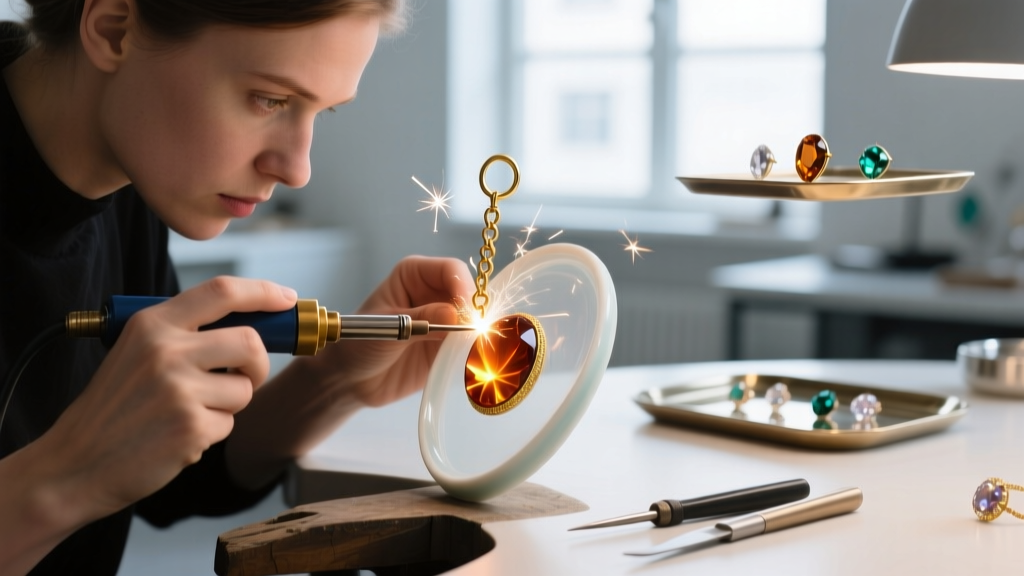
To safely weld sunstone permanent jewelry, you need more than just a basic welder. You must invest in heat shielding. A ceramic welding block or a custom tungsten deflector shield is mandatory to block the arc flash from striking the gemstone.
- Pulse Arc Welder (e.g., Orion Pulse 150i): $1,200 - $1,800 (Initial capital expenditure)
- Argon Gas Tank & Regulator: $150 initial setup; $45 - $75 per refill (Argon is essential to prevent oxidation on the gold weld and reduce heat spread).
- Ceramic/Tungsten Heat Shields: $25 - $60
- Fluorescent Welding Loupe: $150 - $250 (Crucial for aligning 20g jump rings without looking away from the stone).
When setting your welder, use the lowest effective energy setting (usually between 15 and 25 joules for 20g solid gold) to minimize the heat-affected zone (HAZ). Always position the stone at least 10mm away from the weld point, and use a wet cotton swab or a specialized thermal paste on the chain link to draw heat away from the sunstone charm.
True Cost Analysis: DIY Maker vs. Studio Walk-In
Understanding the financial breakdown allows you to price your sunstone permanent jewelry competitively while maintaining a healthy margin. Below is a comparative cost analysis for a standard 7-inch bracelet featuring an Indian Sunstone charm.
| Cost Factor | DIY / Home Maker (Low Overhead) | Professional Studio (High Overhead) |
|---|---|---|
| Chain (14k GF Paperclip) | $6.00 | $8.50 (Premium branded) |
| Indian Sunstone Charm | $12.00 | $18.00 (Curated selection) |
| Solid 14k Jump Rings (x2) | $1.20 | $1.60 |
| Argon Gas & Electrode Wear | $0.50 | $1.50 |
| Labor & Welding Time | $0.00 (Owner operator) | $25.00 (Technician wage) |
| Total COGS | $19.70 | $54.60 |
| Retail Price (2026 Avg) | $85.00 - $110.00 | $145.00 - $185.00 |
| Gross Profit Margin | ~77% | ~62% |
As the data illustrates, sunstone permanent jewelry offers exceptional ROI. The perceived value of a natural, schiller-bearing gemstone allows makers to charge a 30% to 50% premium over standard plain-chain permanent bracelets, while the actual material cost increase is marginal (especially when using Indian or African stones).
Durability, Failure Modes, and Client Education
The greatest risk to your business's value proposition is jewelry failure. Sunstone is not a sapphire (Mohs 9) or a diamond (Mohs 10). At 6-6.5, it is susceptible to scratching from everyday materials like quartz dust, and its perfect cleavage makes it vulnerable to hard impacts.
When selling sunstone permanent jewelry, you must educate your client on proper care to prevent returns and reputational damage. Provide a care card detailing the following failure modes:
- Snagging: Sunstone charms set in prong or bezel links can catch on heavy knits or pet claws, potentially bending the gold link and stressing the stone's drill hole.
- Chemical Exposure: While feldspar is relatively stable, prolonged exposure to harsh chemicals (like chlorine in hot tubs or heavy household cleaners) can dull the polish and degrade the gold-filled chain links over time.
- Impact Fracturing: Hitting the wrist against a steering wheel or gym equipment can cause the stone to cleave or chip. Recommend that clients remove the piece (if a clasp is added) or wear it on the non-dominant wrist during heavy lifting.
Final Verdict: Maximizing Your ROI
Incorporating sunstone into your permanent jewelry lineup is a highly strategic move for 2026. By carefully sourcing Indian sunstone for high-volume, mid-tier price points, and reserving rare copper-schiller Oregon sunstone for VIP clients seeking solid gold luxury pieces, you can create a tiered pricing structure that maximizes your budget. Invest in proper heat shielding, master your low-joule welding techniques, and leverage the natural beauty of the stone to command premium pricing in an increasingly competitive market.