Advanced Sea Beads Jewelry: Drilling & Wire Wrapping Techniques
Master the technical challenges of sea beads jewelry. Learn precision drilling, wire gauge selection, and sealing for marine-sourced materials.

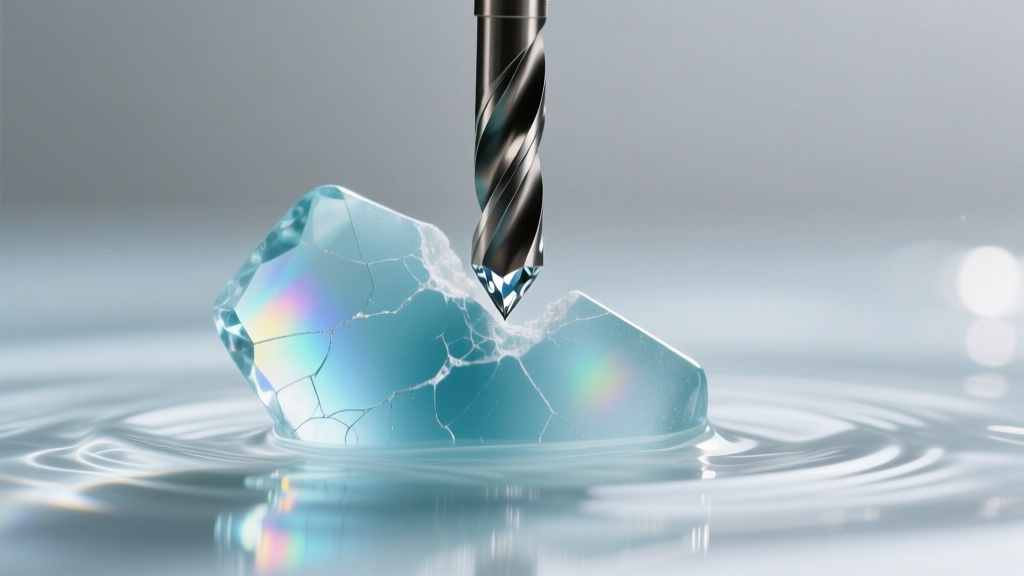
Creating authentic sea beads jewelry requires far more than a simple stringing technique. Marine-sourced materials—ranging from sea-tumbled glass and sponge coral to mother of pearl and abalone shell—present unique lapidary and metallurgical challenges. Unlike uniform, factory-made glass or synthetic beads, sea-harvested materials possess variable densities, hidden micro-fractures, and distinct porosity levels. In this expert deep dive, we will explore the precise technical protocols required to drill, wrap, and seal these delicate materials without compromising their structural integrity.
The Material Science of Marine-Sourced Beads
Before applying any mechanical force, a jeweler must understand the mineralogical composition of their materials. According to the Gemological Institute of America (GIA), the Mohs hardness and cleavage planes of marine materials dictate your entire fabrication approach.
- Sea Glass (Amorphous Silica): Mohs 5.5–6.5. While relatively hard, sea glass lacks a crystalline structure, meaning it is prone to conchoidal (shell-like) fracturing. The frosted exterior is essentially a network of microscopic abrasions that can easily propagate into deep cracks under thermal or mechanical stress.
- Sponge Coral (Calcium Carbonate): Mohs 3.0–3.5. Highly porous and structurally inconsistent. The network of natural voids makes it incredibly susceptible to crushing under the pressure of tight wire wraps or the lateral torque of a drill bit.
- Abalone & Mother of Pearl (Nacreous Aragonite): Mohs 2.5–3.0. Composed of microscopic hexagonal platelets of aragonite layered with biopolymers. This nacreous structure is highly prone to delamination (peeling) if drilled from the wrong angle or subjected to excessive heat.
Precision Drilling Protocols for Fragile Sea Beads
Drilling is the highest-risk phase of crafting sea beads jewelry. The primary enemy is thermal shock, which occurs when friction heat expands the material faster than its tensile strength can accommodate, resulting in catastrophic blowout.
Tooling and RPM Parameters
Never use standard steel or carbide twist bits on marine materials. You must use 1.0mm to 1.5mm diamond-coated lapidary twist bits (120-grit to 220-grit). For a flex shaft or high-speed rotary tool, maintain a strict RPM range between 5,000 and 8,000 RPM. Higher speeds generate excessive heat, while lower speeds cause the diamond grit to snag and chip the bead hole edge.
The Submersion Cooling Technique
Dry drilling sea glass or shell is a guaranteed path to failure. You must utilize a continuous cooling bath. Place the bead in a shallow glass dish filled with 1/2 inch of water. Submerge the bead completely. The water serves three critical functions: it dissipates heat, lubricates the diamond grit to prevent glazing, and suspends the abrasive silica dust, preventing it from scoring the interior of the hole. Apply pressure in 2-second pulses, lifting the bit slightly between pulses to allow water to flow into the bore channel.
Wire Wrapping Mechanics: Gauge & Alloy Selection
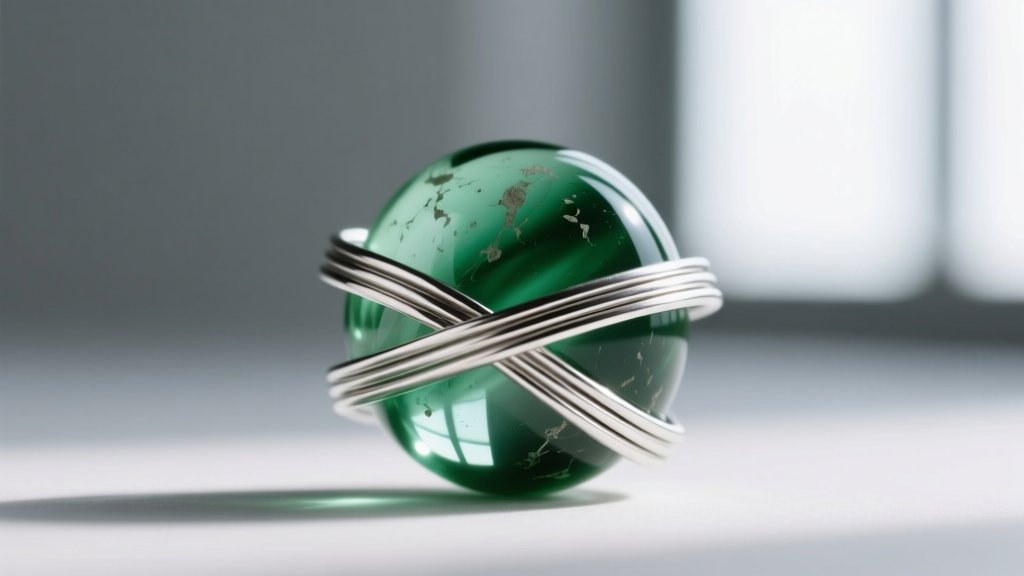
When designing sea beads jewelry, the wire you choose must balance tensile strength with the fragility of the bead hole. A heavy-gauge wire forced through a delicate shell bead will act as a wedge, splitting the material from the inside out. Furthermore, marine-inspired pieces are often exposed to high-humidity environments, making alloy selection critical for tarnish resistance.
As detailed in the metallurgical guides provided by Rio Grande, understanding wire temper (dead-soft, half-hard, full-hard) is just as important as the gauge. Half-hard wire offers the structural memory needed to hold a wrap, while dead-soft wire conforms easily without transferring lateral stress to the bead.
| Bead Material | Recommended Wire Gauge | Optimal Alloy & Temper | Technical Rationale |
|---|---|---|---|
| Sea Glass (Large) | 20 AWG | Argentium Silver, Half-Hard | Provides structural support for heavy beads; Argentium's germanium content resists sulfur tarnish. |
| Sea Glass (Small) | 22 AWG | Sterling Silver, Dead-Soft | Dead-soft temper prevents stress fractures at the drill hole during tight looping. |
| Sponge Coral | 24 AWG or 26 AWG | Gold-Filled, Dead-Soft | Thinner gauge prevents wedging inside the porous, irregular drill channel. |
| Abalone / Shell | 24 AWG | Niobium or Titanium, Dead-Soft | Hypoallergenic, non-reactive metals prevent chemical degradation of the calcium carbonate nacre. |
Avoiding Stress Fractures During Wrapping
When creating a bail or a harness wrap, never pull the wire taut directly against the edge of a shell or coral bead hole. Always use a micro-bezel technique: apply a microscopic layer of jeweler's epoxy or UV resin around the rim of the drill hole before passing the wire through. This creates a synthetic buffer zone that distributes the compressive force of the wire across a wider surface area, effectively eliminating point-load fractures.
Sealing and Patina Preservation
Marine materials are highly reactive to environmental pollutants, skin acids, and cosmetic chemicals. Sponge coral, being essentially a calcium carbonate matrix, will dissolve slowly when exposed to the lactic acid in human sweat. To preserve the integrity of your sea beads jewelry, a secondary sealing protocol is mandatory.
Avoid polyurethane or cyanoacrylate (super glue) sealants, which yellow under UV exposure and create a thick, plasticized film that ruins the natural tactile feel of sea glass. Instead, utilize a micro-crystalline wax (such as Renaissance Wax). Originally developed by the British Museum for artifact preservation, this wax is pH-neutral, non-yellowing, and creates a hard, moisture-impermeable barrier. Apply a micro-thin layer with a lint-free swab, allow it to flash-off for 15 minutes, and buff gently with a horsehair brush. This seals the porosity of coral and shell without altering the optical refraction of the sea glass.
Troubleshooting Common Failure Modes
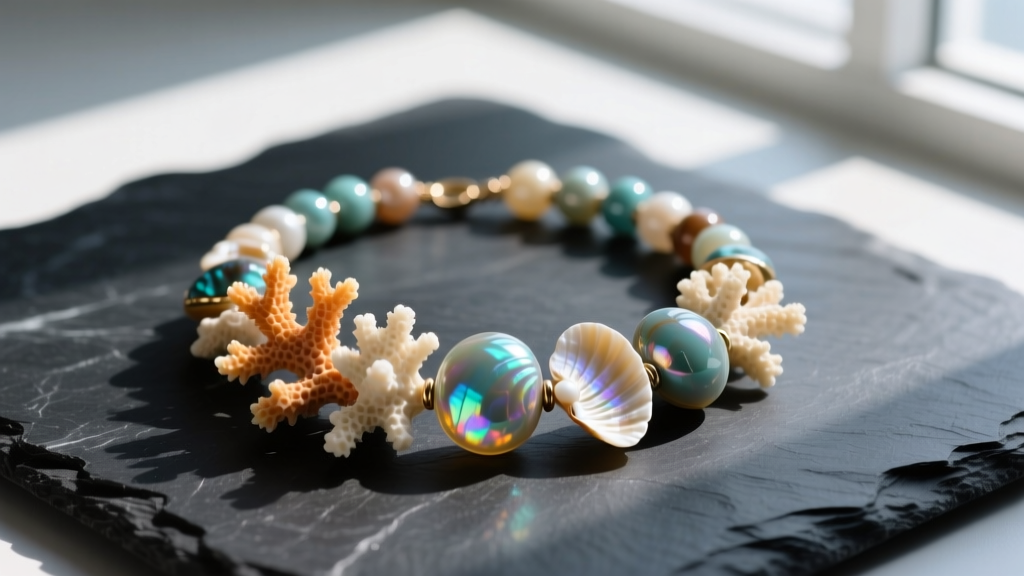
Even with precise technique, marine-sourced beads present unique failure modes. Use this diagnostic framework to troubleshoot your fabrication issues:
- Failure Mode: Delamination at the Drill Exit.
Cause: Drilling entirely through the bead in one direction causes the bit to tear out the back layer of nacre or glass.
Solution: Implement bi-directional drilling. Drill 60% of the way through from the top, then flip the bead and drill from the bottom until the channels meet. - Failure Mode: Wire Slippage on Sea Glass.
Cause: Sea glass is incredibly smooth, and traditional wire wraps lack friction to hold the bead in a harness.
Solution: Introduce a microscopic texture to the wire. Use a fine-cut jeweler's file to score the inside of the wire where it makes contact with the glass, or use a dab of clear, flexible silicone adhesive at the primary contact points. - Failure Mode: Clouding of Sea Glass Post-Sealing.
Cause: Using a liquid sealant that penetrates the micro-abrasions of the frosted surface, altering its refractive index and making it look wet or transparent.
Solution: Never apply liquid sealants to the exterior of frosted sea glass. Rely solely on mechanical wire harnesses for the glass itself, and reserve wax sealants strictly for porous materials like coral and shell.
Crafting high-end sea beads jewelry is an exercise in material empathy. By respecting the geological origins and physical limitations of marine-sourced beads, and by applying rigorous lapidary and metallurgical standards, you elevate your work from simple beach souvenirs to enduring, museum-quality wearable art.


