Permanent Jewelry and MRI Safety: A DIY Gifting Guide
Learn how to safely gift permanent jewelry to loved ones who may need MRI scans. Discover MRI-safe metals, DIY breakaway designs, and gifting tips.

The Rise of Medical-Conscious Gifting
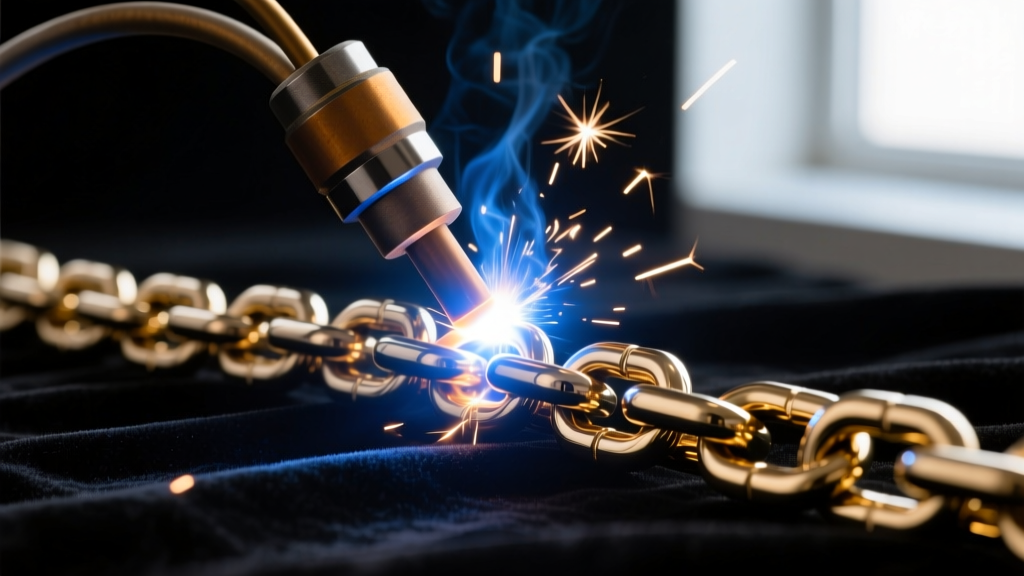
Gifting permanent jewelry has become one of the most meaningful ways to celebrate milestones, friendships, and anniversaries. The act of welding a continuous chain around a loved one’s wrist symbolizes an unbreakable bond. However, as DIY jewelers and professional welders alike expand their services, a critical safety question frequently arises: what happens when the recipient needs a medical scan? Navigating the intersection of permanent jewelry and MRI safety is no longer optional for conscientious creators. According to the U.S. Food and Drug Administration (FDA), the powerful magnetic fields and radiofrequency (RF) pulses used in Magnetic Resonance Imaging can turn incompatible metals into dangerous projectiles or cause severe localized burns.
If you are designing permanent jewelry as a gift for athletes, aging parents, or individuals with chronic health conditions, you must factor medical compatibility into your material sourcing and structural design. This guide provides actionable, expert-level frameworks for selecting MRI-safe metals, engineering hidden breakaway points, and matching the right jewelry to the right occasion.
The Physics: Why Permanent Jewelry and MRI Scans Clash
To design safe permanent jewelry, you must understand the environment of an MRI suite. Modern clinical scanners typically operate at 1.5 Tesla or 3.0 Tesla. These machines generate three distinct forces that interact with metals:
- Static Magnetic Field: Causes ferromagnetic metals (like iron, cobalt, and nickel) to experience a violent translational pull toward the magnet's bore.
- Gradient Magnetic Field: Rapidly switches on and off, which can induce electrical currents in conductive metal loops (like a welded bracelet), potentially causing nerve stimulation.
- Radiofrequency (RF) Field: Excites hydrogen protons in the body. Long conductive chains can act as antennas, concentrating RF energy and causing severe thermal burns at the skin-contact point.
Because a traditional permanent bracelet forms a closed conductive loop, the risk of RF-induced heating is significantly higher than with a standard necklace that rests away from the skin or features a breakable clasp. This is why material selection and loop interruption are paramount.
Material Matrix: Choosing MRI-Safe Metals for DIY Welding
Not all "hypoallergenic" metals are MRI-safe. Surgical steel, for instance, is a notorious culprit for MRI complications due to its iron content. Below is a definitive comparison matrix for DIY permanent jewelry makers sourcing materials for medical-conscious gifts.
| Metal / Alloy | MRI Safety Status | Artifact Risk | DIY Welding Notes |
|---|---|---|---|
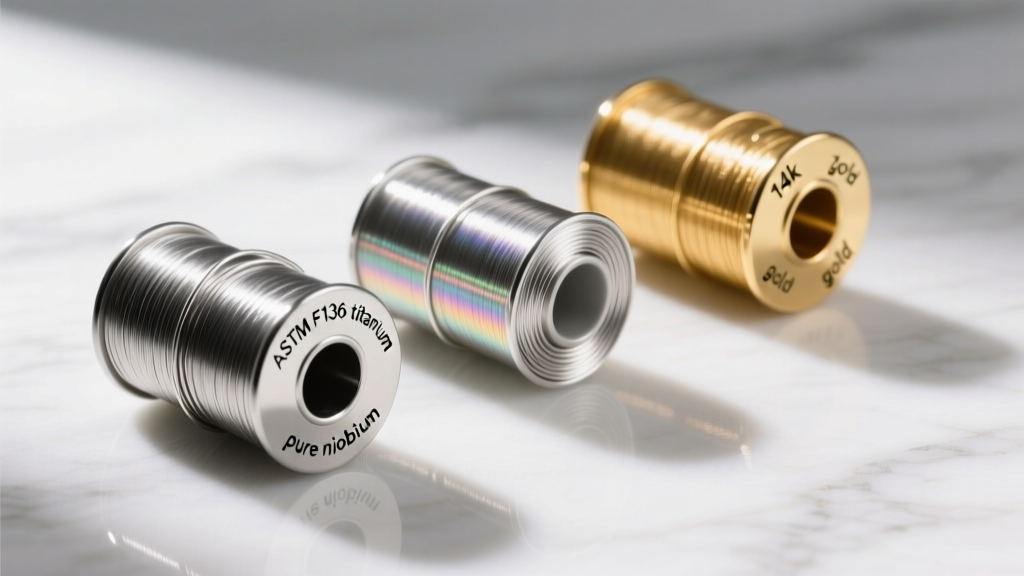
| ASTM F136 Titanium | MR Safe (Non-magnetic) | Minimal | Requires argon gas shielding during pulse arc welding to prevent oxidation and brittle welds. |
| Pure Niobium | MR Safe (Non-magnetic) | Minimal | Excellent for anodizing; welds cleanly but is softer than titanium, limiting heavy-duty chain options. |
| 14k / 18k Gold | MR Conditional | Moderate to High | Welds beautifully with standard pulse arc settings. Alloys may contain trace nickel; always verify with the refiner. |
| 316L Surgical Steel | MR Unsafe (Ferromagnetic) | Severe | AVOID FOR PERMANENT JEWELRY. Contains iron; poses severe projectile and heating risks in 3T scanners. |
For the ultimate peace of mind, The Institute for Magnetic Resonance Safety recommends sticking strictly to implant-grade titanium (ASTM F136) or pure niobium for any jewelry intended to be worn continuously through medical procedures. When sourcing titanium chains, ensure your jump rings are also solid titanium; using a steel jump ring to close a titanium chain defeats the entire safety mechanism.
DIY Design Solutions for Medical Emergencies
The core philosophy of permanent jewelry is that it lacks a clasp. However, when gifting to someone with a complex medical history, you must engineer a "medical breakaway" feature. This allows emergency room staff or MRI technicians to remove the piece quickly without resorting to heavy bolt cutters that could injure the patient's wrist.
The Strategic Jump Ring Method
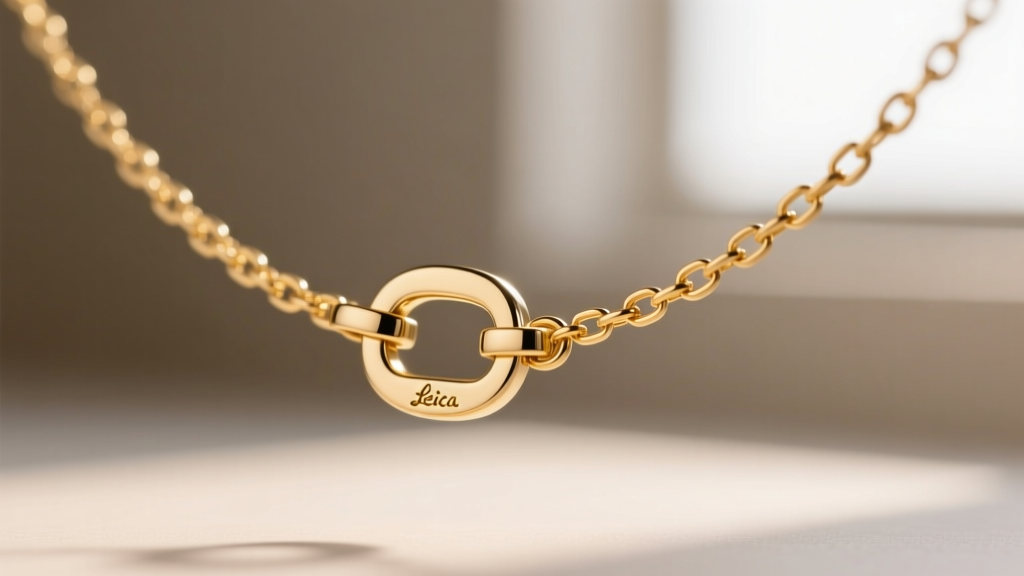
Instead of welding the chain directly to itself, incorporate a single, strategically placed 16-gauge (1.2mm) solid titanium jump ring. Weld the chain to this jump ring on both sides. In an emergency, medical staff can easily snip a 16-gauge titanium wire with standard trauma shears or flush cutters. Titanium's low hardness compared to steel makes it surprisingly easy to cut in a high-stress hospital environment.
The Hidden Magnetic Clasp
For a more sophisticated approach, integrate a micro-magnetic breakaway clasp disguised as a decorative bead or charm. Brands like Mag-Lok produce incredibly strong, tiny neodymium magnetic clasps. While the neodymium magnet itself is ferromagnetic and must be removed before an MRI, the benefit here is that the wearer can easily detach the chain before entering the MRI Zone 3 or 4 areas. This preserves the "permanent" aesthetic for daily wear while offering effortless removal for medical occasions.
Occasion Matching: Who to Gift (and Who to Avoid)
Matching the jewelry to the recipient's lifestyle and medical probability is a hallmark of an expert DIY gifting strategy. Use this framework to decide how to approach your next permanent jewelry gift.
Ideal Occasions for ASTM F136 Titanium
- Marathon Runners & Triathletes: Athletes frequently suffer joint injuries requiring MRI diagnostics. Titanium is lightweight, sweat-proof, and entirely MR Safe.
- Milestone Birthdays for Older Relatives: Gifting a welded titanium bracelet to a mother or grandmother for a 60th birthday is beautiful, but statistically, they are more likely to require joint or neurological MRIs in the coming decades.
- Individuals with Chronic Conditions: For friends managing conditions like MS or Crohn's disease, where routine MRI monitoring is a part of life, a titanium breakaway design shows deep empathy and foresight.
When to Pivot to Traditional Clasped Jewelry
If the recipient works as an MRI technician, an electrician, or heavy machinery operator, permanent jewelry is a workplace hazard regardless of the metal. In these cases, gift a high-quality chain with a secure lobster clasp and a beautifully crafted DIY charm instead.
Educating the Recipient: The Ultimate Gift Add-On
When you gift a piece of permanent jewelry designed for MRI safety, the physical item is only half the gift. The other half is education. Hospital protocols regarding jewelry vary wildly, and radiology technicians will always err on the side of caution.
"According to the American College of Radiology (ACR) Manual on MR Safety, all metallic objects must be evaluated before entering the scanner room. Providing documentation of your jewelry's exact metallurgical composition can save the wearer from having to destroy a sentimental piece unnecessarily."
Create a small, laminated "Metal ID Card" to include in your gift box. This card should list:
- The exact metal grade (e.g., "Solid ASTM F136 Implant-Grade Titanium").
- The absence of ferromagnetic elements (Iron, Nickel, Cobalt).
- Instructions on where the breakaway jump ring is located and what tool is needed to cut it.
Final Thoughts on Responsible DIY Gifting
Mastering the nuances of permanent jewelry and MRI compatibility elevates you from a hobbyist to a true artisan. By sourcing verified implant-grade titanium, utilizing argon-shielded pulse arc welding, and engineering intelligent breakaway points, you ensure that your sentimental gifts never become medical liabilities. The most profound gift you can give is one that honors your bond while fiercely protecting the wearer's health and safety.


