How to Make Framed Jewelry Art: Archival Mounting Guide
Learn how to make framed jewelry art using archival mounting techniques. Expert guide on adhesives, shadowbox depths, and UV protection for gems.

The Chemistry of Jewelry Adhesives: What to Avoid
When learning how to make framed jewelry art, the most critical mistake beginners make is selecting the wrong adhesive. Jewelry pieces are complex assemblies of metals, porous gemstones, and delicate enamels. Standard craft glues and cyanoacrylates (Super Glue) are fundamentally incompatible with long-term archival display.
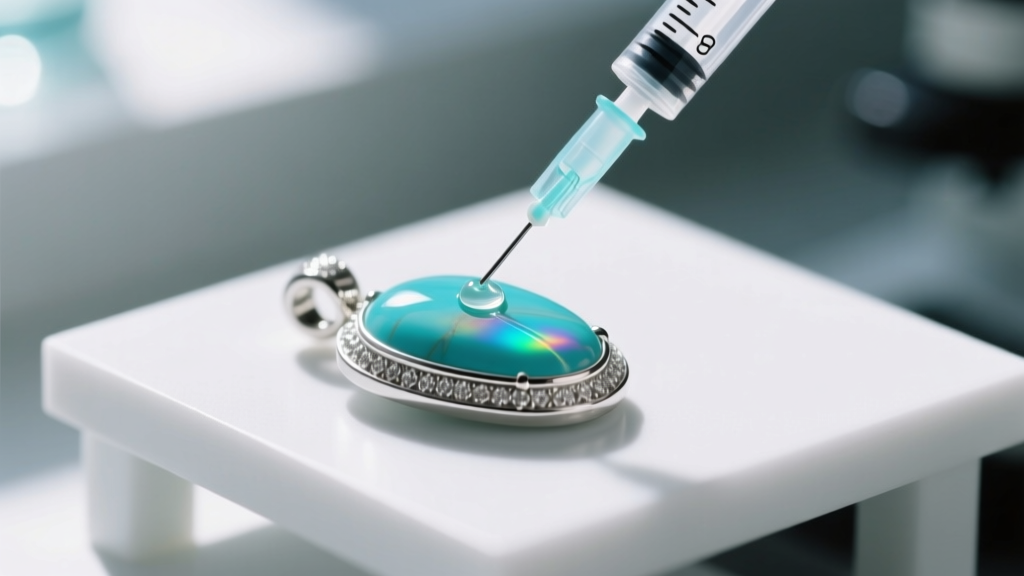
Cyanoacrylate adhesives undergo a curing process that releases volatile gases. In the enclosed microclimate of a sealed picture frame, these gases cause "blooming"—a permanent, chalky white frost that settles on porous stones like turquoise, pearls, opals, and malachite. Furthermore, hot melt glue is a structural liability. Under gallery lighting or direct sunlight, the interior temperature of a glass frame can easily reach 110°F (43°C), causing hot glue to soften and the jewelry piece to detach and shatter against the glass.
The Conservator’s Choice: Paraloid B-72 and Structural Epoxies
For museum-grade framing, professionals rely on conservation standards set by the AIC. The gold standard for reversible mounting is Paraloid B-72, an ethyl methacrylate copolymer dissolved in acetone. It remains clear, does not outgas, and can be safely dissolved decades later if the piece needs to be removed. For heavy, non-porous metal items (like solid brass cuff bracelets or thick wire-wrapped pendants), a two-part structural epoxy like Loctite EA 3423 provides a permanent, high-shear bond that tolerates thermal expansion without degrading.
Selecting the Right Frame and Glazing
The physical architecture of your frame dictates the survival of the jewelry. Standard picture frames (typically 0.5 inches deep) are only suitable for flat items like stamped metal bookmarks or delicate chains. For dimensional jewelry, you must use a shadowbox frame.
| Jewelry Profile Type | Required Shadowbox Depth | Mounting Recommendation |
|---|---|---|
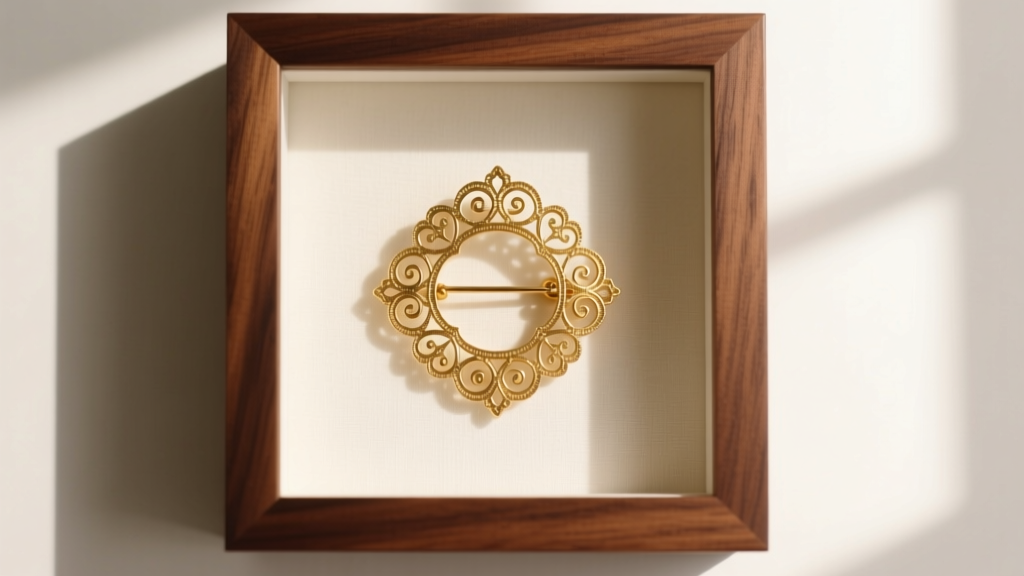
| Flat Filigree / Chains | 0.75" to 1.0" | Direct archival adhesive to matboard |
| Cabochon Rings / Brooches | 1.5" to 2.0" | Reversible resin or monofilament |
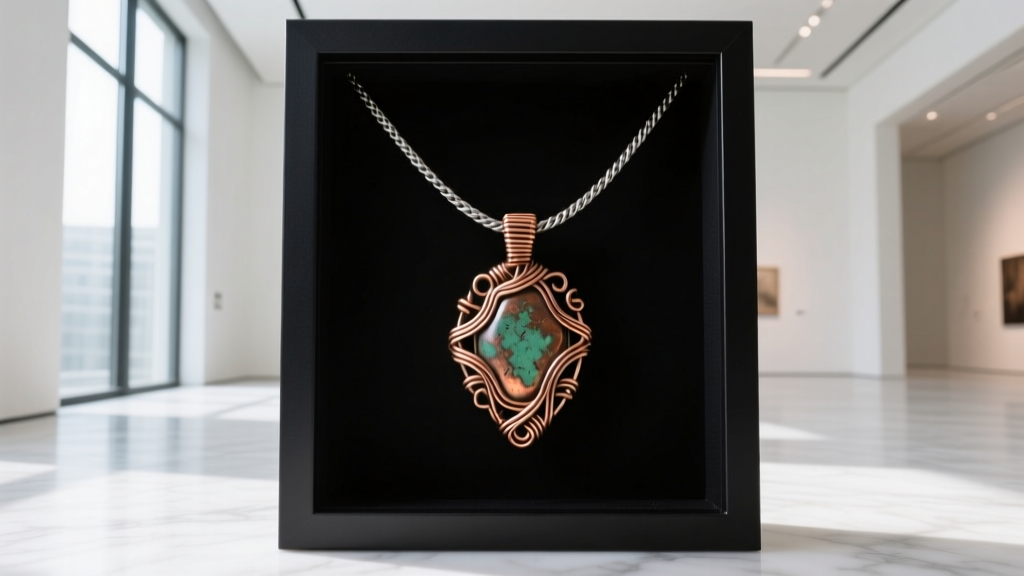
| Wire-Wrapped / Resin Pendants | 2.5" to 3.0" | Braided steel suspension |
The Necessity of Museum Glass
As of 2026, advanced UV-filtering acrylics and glasses are more accessible than ever, making them mandatory for jewelry art. Standard soda-lime glass blocks only about 45% of ultraviolet light. UV radiation accelerates the oxidation (tarnishing) of silver and copper, and will rapidly fade dyed gemstones and organic materials like coral. Upgrading to Tru Vue Museum Glass or Optium Museum Acrylic blocks 99% of UV rays and features an anti-reflective coating, ensuring the intricate facets of your gems remain visible from any angle without glare.
Archival Mounting Techniques: Step-by-Step
The backing material is just as important as the glazing. Never mount jewelry directly to standard wood-pulp cardboard or foam core. These materials contain lignin and acids that will off-gas and cause severe silver tarnishing and gold discoloration over time. You must use 4-ply cotton rag matboard, which is naturally acid-free and buffered with calcium carbonate to maintain an alkaline pH (around 8.5).
Method 1: The Monofilament Suspension (For Heavy Pieces)
Adhesives can fail over decades, especially on pieces with high center-of-gravity profiles. The suspension method uses gravity and tension to hold the piece securely.
- Material: Use 0.015-inch braided stainless steel beading wire (capable of holding 20+ lbs) or 10lb test fluorocarbon fishing line for an invisible look.
- Execution: Use a 23-gauge micro drill bit to pierce two tiny holes through the cotton rag matboard, spaced exactly to the width of the jewelry's top loop or bail.
- Securing: Thread the wire through the bail, pull it to the back of the matboard, and secure it using acid-free linen hinging tape. Never use standard masking or duct tape, as the rubber-based adhesives will bleed through the cotton rag.
Method 2: Direct Archival Adhesive (For Flat Filigree)
For pieces that lay completely flat, direct mounting is visually cleaner. Apply three tiny, distinct dots of Paraloid B-72 or conservation-grade silicone to the back of the metal. Press firmly onto the matboard and use a light weight (like a clean glass paperweight) to hold it in place while the solvent flashes off. Avoid applying adhesive near any gemstone settings, as capillary action can draw the resin under the prongs and cloud the stone.
Environmental Controls: Tarnish and Moisture Mitigation
Sealing a shadowbox frame traps the ambient humidity inside. If you live in a high-humidity climate, sealing a piece of silver jewelry inside a frame without environmental controls will result in a thick layer of black silver sulfide within months.
Expert Tip: Always include a strip of 3M Silver Protector anti-tarnish paper hidden in the bottom rabbet of the frame behind the matboard. These strips absorb hydrogen sulfide and sulfur dioxide from the trapped air, protecting the metal for up to 5 years in a sealed environment.
Additionally, if you are framing organic jewelry (like pearls or untreated wood beads), you must control the moisture. Silica gel packets can be conditioned to exactly 40% Relative Humidity (RH) by baking them and then letting them equilibrate in a sealed chamber with a saturated salt solution. Place these conditioned packets behind the backing board to maintain a stable microclimate.
Troubleshooting Common Mounting Failures
Failure Mode 1: The Glass is Touching the Gemstone.
If a shadowbox is too shallow, the glass will press against the jewelry. Condensation can form on the inside of the glass due to temperature fluctuations, and if the glass touches a porous stone or raw metal, that moisture will transfer directly to the piece, causing water spots or localized oxidation. Always ensure a minimum 0.25-inch clearance between the highest point of the jewelry and the glazing.
Failure Mode 2: MDF Frame Outgassing.
Cheap shadowbox frames are often made of Medium-Density Fiberboard (MDF), which offgasses formaldehyde and acidic vapors. If you must use an MDF frame, seal the interior rabbet (the groove where the glass and mat sit) with Marvelseal 360. This aluminum foil and polyethylene laminate barrier completely blocks acidic vapors from migrating into the display cavity.
By treating your framed jewelry art with the same chemical and structural respect as a museum exhibit, you ensure that your wire-wrapped pendants, vintage brooches, and beaded masterpieces remain pristine for generations.


