Is Permanent Jewelry Training Near Me Worth It? 2026 Cost Guide
Evaluating the ROI of local permanent jewelry training in 2026. Compare costs, vet starter kits, and avoid overpriced micro-welder traps.

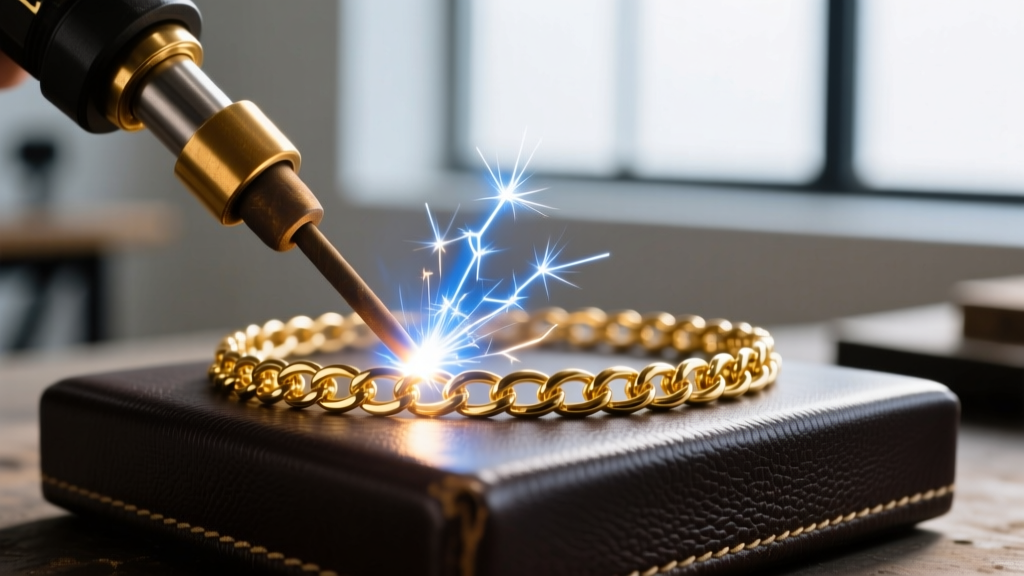
When you type 'permanent jewelry training near me' into a search engine, you are likely looking for hands-on, in-person experience. The appeal of sitting next to an expert, feeling the heat of the micro-welder, and getting immediate feedback on your weld puddle is undeniable. However, the local training market in 2026 is flooded with wildly inconsistent pricing and questionable equipment standards. Some local workshops offer masterclasses with top-tier machinery, while others charge premium prices to teach you on unbranded, dropshipped inverters that will ruin your gold-filled inventory.
As a DIY jewelry maker or aspiring studio owner, your budget is your most critical tool. This guide breaks down the true costs, hidden fees, and equipment traps associated with local permanent jewelry certification, helping you determine if that nearby workshop is a sound investment or an overpriced hobby session.
The True Cost of Local Permanent Jewelry Certification
The sticker price of a local, one-day permanent jewelry workshop typically ranges from $850 to $2,500. But the base tuition is rarely the final amount you will spend. To accurately assess the value, you must factor in the hidden operational costs that local trainers often gloss over in their marketing materials.
- Base Tuition: $850 - $2,500 (Usually includes 4-6 hours of instruction and basic practice materials).
- Argon Gas Deposits: Welding titanium and stainless steel requires argon shielding gas to prevent oxidation (the dreaded black soot mark). Local classes rarely include a tank. You will need to source a local welding supply shop, pay a $150-$250 cylinder deposit, and buy a regulator ($50).
- Travel and Lost Wages: If the nearest reputable trainer is two states away, add hotel, gas, and a day of lost income to your ROI calculation.
- The 'Starter Kit' Upsell: Many trainers require you to purchase their proprietary starter kit for an additional $400-$800 to receive your 'certificate.'
When you add these up, a '$999 local class' can easily become a $1,600 weekend endeavor. Before handing over your deposit, you need to know exactly what hardware is waiting for you on the bench.
In-Person vs. Online Training: A 2026 ROI Comparison
Is the premium you pay for proximity actually buying you better skills? Let us compare the financial and educational return on investment between local in-person classes, brand-sponsored events, and comprehensive online academies.
| Training Format | Average Cost | Equipment Provided | Best For |
|---|---|---|---|
| Local Indie Workshop | $850 - $1,500 | Shared unbranded or entry-level welders; basic chain scraps. | Hobbyists wanting a fun, low-stakes introduction to welding. |
| Brand-Sponsored (e.g., Stuller) | $1,200 - $2,000 | Professional Sunstone or Orion welders; premium findings. | Serious entrepreneurs needing industry-standard technique and vendor networking. |
| Comprehensive Online Academy | $400 - $900 | None (You buy your own gear, but keep it all). | Self-starters on a strict budget who learn well from macro-video demonstrations. |
While online courses offer a better pure-dollar ROI, the tactile feedback of a local class is invaluable for mastering the 'pulse' timing on a micro-TIG welder. If you choose the local route, the equipment they provide must justify the premium price tag.
Evaluating the 'Starter Kit' Trap in Local Workshops
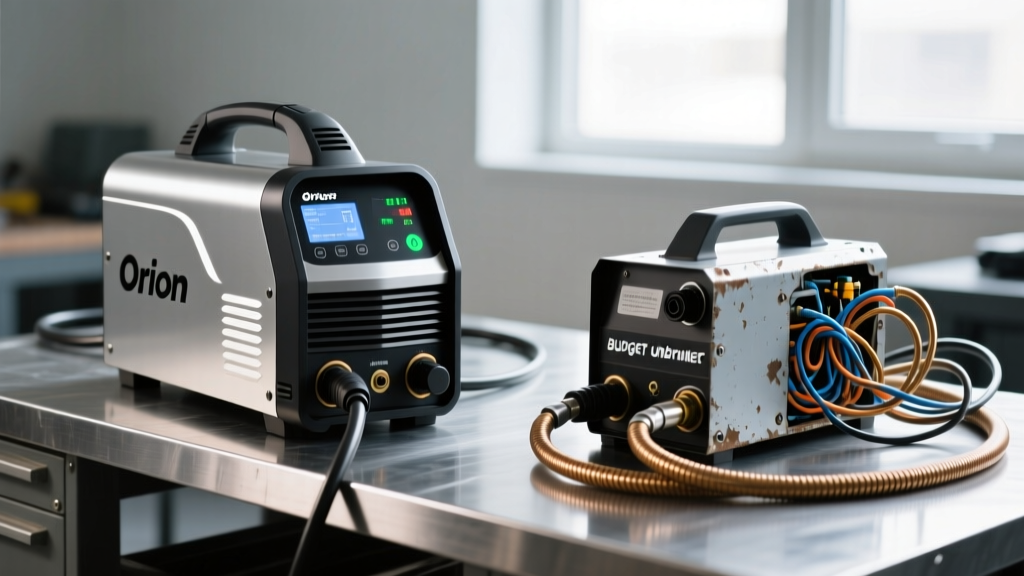
The most common point of failure in local permanent jewelry training is the equipment. Many local trainers purchase $150 unbranded capacitive discharge (CD) welders or cheap micro-TIG inverters from overseas marketplaces, rebrand them, and include them in mandatory '$600 starter kits.'
As an informed maker, you must ask the trainer exactly which welder model is used in the class. According to industry standards outlined by Sunstone Welders, professional jewelry welding requires precise pulse-time control to fuse 14k gold-filled links without melting the delicate wire. If your local trainer is using a machine that lacks adjustable pulse width or an argon gas post-flow setting, you are learning on compromised hardware. When you eventually upgrade to an Orion mPulse 150 or a Sunstone DentaStar for your own studio, your muscle memory will be entirely wrong, leading to blown links and wasted gold.
Material Grade Red Flags to Watch For
Beyond the welder, scrutinize the chain and jump rings provided in the training kit. A high-value local class will teach you how to weld specific material grades:
- Stainless Steel: Must be 316L (surgical grade), not 304. 304 stainless contains higher carbon and will rust or cause contact dermatitis when exposed to sweat and water over time.
- Gold-Filled: Ensure the trainer uses 14k or 12k gold-filled wire (minimum 1/20th weight ratio). Avoid classes that practice on 18k gold-plated brass, as the plating will vaporize under the welder's arc, releasing toxic fumes and leaving a weak, brittle joint.
- Jump Ring Gauges: Proper training should teach you to use 22-gauge or 20-gauge flush-cut jump rings for delicate cable chains, and 18-gauge for heavier Cuban links. If the class only provides pre-cut, poorly filed rings that leave gaps, your welds will fail.
How to Vet a Local Trainer Before Paying the Deposit
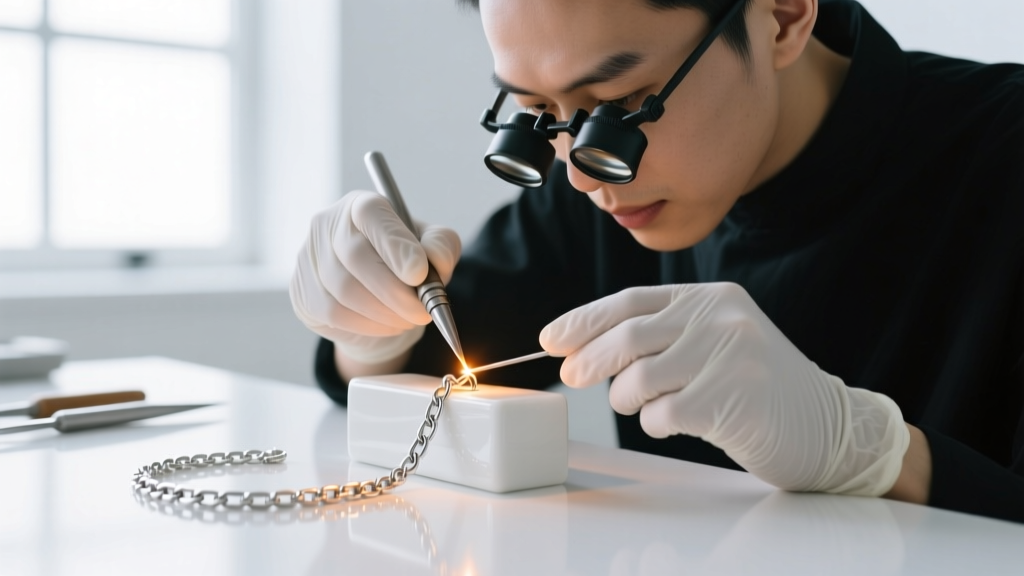
Do not rely solely on Instagram aesthetics or a polished website. Before booking that permanent jewelry training near you, send the instructor an email with these three technical questions. Their answers will immediately reveal their depth of bench experience.
- 'Do you teach argon gas flow rates and post-flow shielding?' If they say argon is optional or only needed for silver, walk away. Argon is mandatory for clean titanium and steel welds, and post-flow prevents the weld puddle from oxidizing as it cools.
- 'What is your protocol for welding near gemstone beads or pearls?' A true expert will teach you about thermal conductivity and how to use ceramic heat-shielding putty or wet cotton to protect heat-sensitive stones from the ambient temperature of the arc.
- 'Do you provide a wholesale vendor list?' Ethical trainers want you to succeed and will point you toward reputable wholesale suppliers like Stuller or Rio Grande for your chain and findings. Trainers who refuse to share their sources and force you to buy chain exclusively from them are operating a multi-level marketing scheme, not an educational academy.
Final Verdict: Should You Book That Local Class?
Searching for permanent jewelry training near you is a great first step toward building a local network and getting tactile experience. However, the value is entirely dependent on the hardware and the instructor's technical transparency. If the local workshop utilizes professional-grade micro-welders, enforces strict argon gas protocols, and provides 316L or genuine gold-filled practice materials, the $1,500 tuition is a highly worthwhile business investment.
Conversely, if the class relies on unbranded inverters, glosses over material grades, and forces you to buy an overpriced, dropshipped starter kit to get certified, save your money. In that scenario, you are better off investing in a high-quality online masterclass and putting the remaining $1,000 toward a reliable, entry-level professional welder for your own home studio. In the permanent jewelry business, your equipment and your technique are your actual credentials—not a printed certificate from a compromised local workshop.


