Best Online Jewelry Making Classes for Beginners: 2026 Guide
Discover the best online jewelry making classes for beginners in 2026. Compare platforms, starter toolkits, and core wire-wrapping skills to start right.

The Shift to Digital Bench Learning
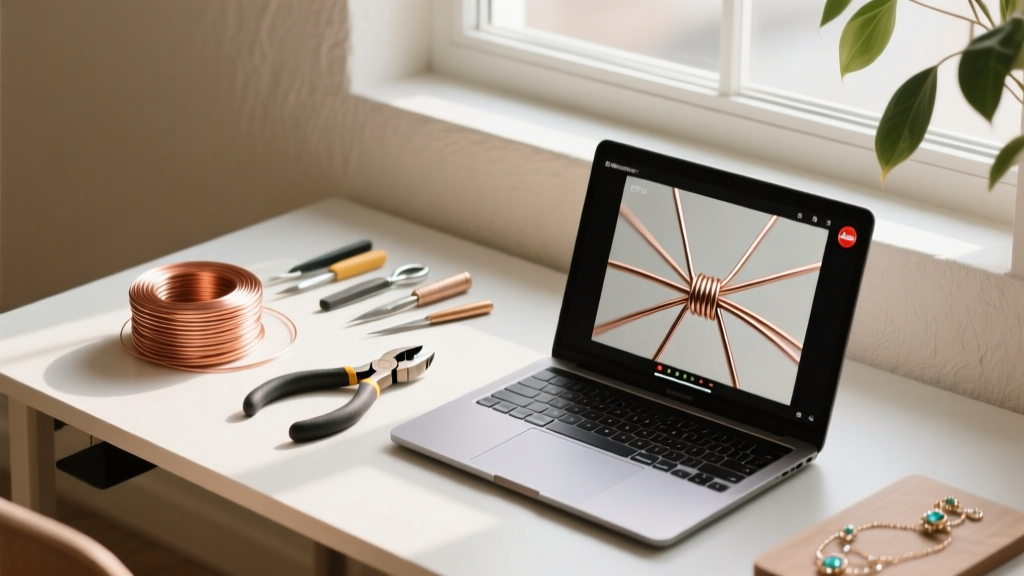
The landscape of jewelry education has transformed dramatically. While local bead shops and community college annexes were once the only places to learn, the best online jewelry making classes in 2026 offer multi-camera macro setups, downloadable PDF schematics, and direct instructor feedback. For absolute beginners, this digital shift means you can pause, rewind, and watch a 24-gauge wire wrap in extreme close-up until your muscle memory locks in. However, not all courses are created equal. The internet is flooded with fragmented, five-minute tutorials that skip crucial metallurgical foundations, leaving beginners frustrated with broken wires and malformed loops. This guide breaks down exactly how to choose the right online jewelry making classes, what core skills your syllabus must cover, and the precise starter toolkit you need before hitting play.
Why Structured Online Jewelry Making Classes Beat Random Videos
Free video platforms are excellent for inspiration, but they are notoriously poor for sequential skill-building. A structured online course provides a pedagogical arc. You start with basic wire straightening and flush cutting, progress to simple loops, and eventually tackle wrapped briolette pendants and French wire ear hooks. Structured online jewelry making classes also teach you why a technique works. For instance, understanding work-hardening—the process where metal becomes brittle and snaps if bent too many times—is a concept rarely explained in quick social media reels but heavily emphasized in premium courses. When you invest in a structured curriculum, you are paying for the instructor's troubleshooting framework, saving you hundreds of dollars in ruined sterling silver and gemstone beads.
The 2026 Platform Showdown: Where to Enroll
Choosing the right platform depends on your learning style, budget, and commitment level. Here is how the top contenders stack up for beginners this year:
| Platform | Best For | Pricing Model (2026) | Beginner Friendliness |
|---|---|---|---|
| Domestika | Project-based, aesthetic-focused learning (e.g., resin, basic beading) | A la carte ($10–$18 per course) | High (Excellent macro-video production) |
| Skillshare | Exploring multiple niches (wire wrapping, polymer clay, chainmaille) | Subscription (~$14/month) | Medium (Quality varies by independent creator) |
| Craftsy | Deep-dive, traditional techniques and comprehensive tool mastery | Subscription or per-class ($30–$50) | Very High (Taught by master jewelers and guild members) |
| Metal Clay Academy | Niche focus on precious metal clay (PMC) and kiln firing | Specialized Membership ($25/month) | Low (Better for intermediate makers) |
For a pure beginner wanting to test the waters without a massive upfront investment, Domestika offers the best balance of high-production macro-videography and low a la carte pricing. If you want to binge-watch various techniques from wire weaving to bead looming, a Skillshare subscription is the most cost-effective route.
The Core Curriculum: What You Must Learn First
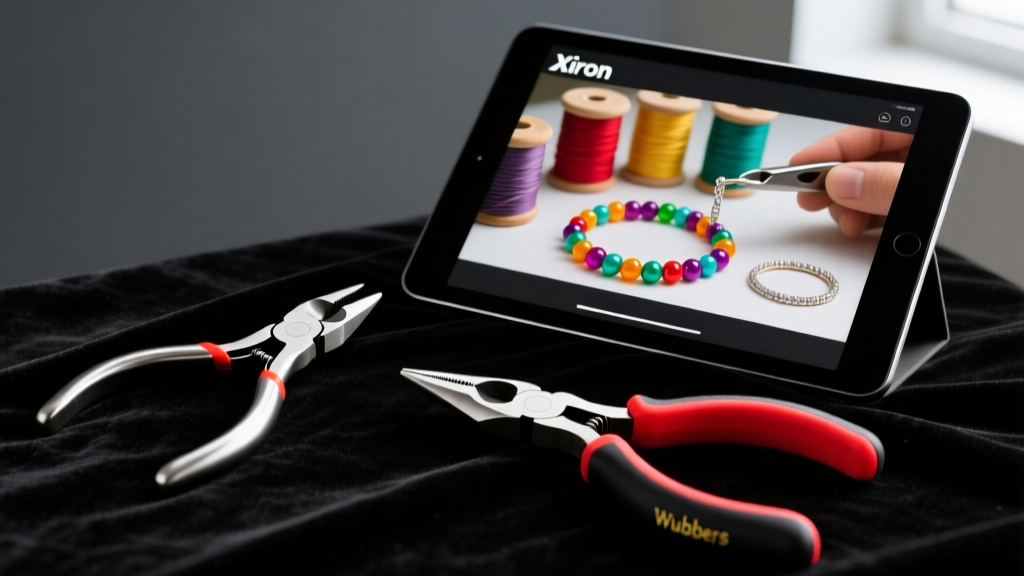
Before purchasing any course, review the syllabus. A legitimate beginner course in wire wrapping and assembly should explicitly cover the following foundational skills. If a course promises you will make a complex wire-woven pendant in lesson one without covering these basics, look elsewhere.
- Flush Cutting Mechanics: Learning which side of the cutter is the 'pinch' side and which is the 'flush' side to avoid leaving sharp, jagged wire pigtails.
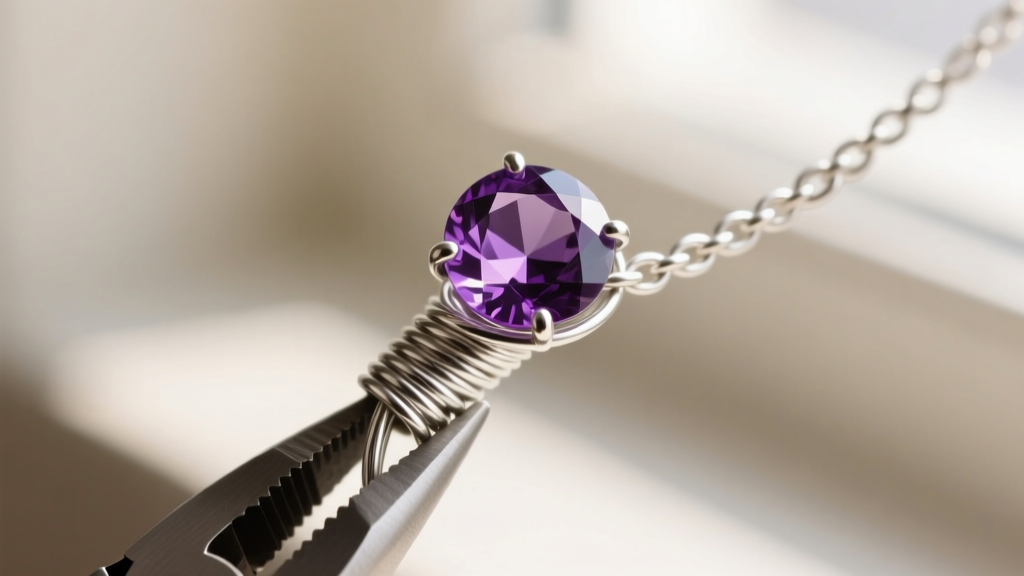
- Simple vs. Wrapped Loops: The structural difference between a simple loop (which can pull open under the weight of a heavy gemstone) and a wrapped loop (which is mechanically locked).
- Crimping Science: How to properly compress a crimp tube using micro-crimping pliers, and why using the wrong size crimp for 0.018-inch beading wire leads to catastrophic strand failure.
- Ear Wire Forging: Shaping 20-gauge half-hard wire into French hooks and work-hardening them with a rawhide mallet so they retain their tension in the ear.
Wire Temper & Gauge: The Litmus Test of a Good Course
The hallmark of an expert-led online jewelry making class is the attention paid to wire temper and gauge. Beginners often buy 'craft wire' from big-box stores without understanding its metallurgical properties, leading to severe frustration. According to the metallurgical guidelines outlined by Halstead Bead's guide on wire temper, wire is categorized by its hardness:
- Dead Soft: Extremely pliable. Ideal for weaving, wrapping around briolettes, and sculptural wire art. It will not hold a structural shape on its own.
- Half-Hard: The workhorse of jewelry making. It offers a balance of malleability for bending and stiffness for holding shapes. This is the mandatory temper for ear wires, jump rings, and clasps.
- Full-Hard / Spring-Hard: Very stiff and brittle. Rarely used by beginners except for specific pin-making applications.
A quality course will explicitly tell you to buy 20-gauge half-hard sterling silver for ear wires, and 24-gauge dead soft for wrapping. If an instructor simply says 'grab some wire,' they are setting you up for structural failure.
Essential Starter Toolkit (What Your Class Should Require)
Beware of courses that require you to purchase proprietary, overpriced 'starter kits' directly from the instructor. A reputable course will provide a transparent shopping list of industry-standard tools that you will use for decades. Based on professional bench standards detailed in Rio Grande's tool guide, here is the exact beginner toolkit you should source:
| Tool Category | Recommended Brand / Model | Estimated Price | Purpose |
|---|---|---|---|
| Flush Cutters | Xuron 410 Micro-Shears | $22 - $26 | Cutting wire up to 20g cleanly without pinching. |
| Chain Nose Pliers | Tronex 5020 (Smooth Jaw) | $45 - $55 | Gripping, bending, and closing jump rings without marring metal. |
| Round Nose Pliers | Wubbers 5350 | $18 - $22 | Forming consistent loops of varying diameters. |
| Nylon Jaw Pliers | Wubbers 5325 | $16 - $20 | Straightening wire and work-hardening without scratching. |
Pro-Tip for Beginners: Never use your fine jewelry flush cutters to cut memory wire or steel beading cable. The hardened steel will instantly dent the precision blades of your Xuron cutters. Buy a cheap pair of hardware store diagonal cutters exclusively for heavy-duty stringing materials.
Red Flags in Beginner Courses
As you browse for the perfect online jewelry making classes, keep your radar up for these common pedagogical red flags:
- The 'Glue and Pray' Approach: Courses that rely heavily on E6000 or superglue for structural connections rather than teaching mechanical joins (like wrapped loops or cold connections).
- Lack of Material Sourcing Transparency: Instructors who hide the exact gauge, temper, or bead hole size (e.g., requiring a 0.8mm hole for a 20-gauge wire wrap) from the course description.
- Poor Camera Angles: Jewelry making is a micro-art. If the course is filmed from a single, distant overhead angle without macro-lens close-ups of the plier grips, you will not be able to see the subtle wrist rotations required for a flush wrap.
Final Verdict: Start Your Digital Bench Journey
The best online jewelry making classes for beginners in 2026 are those that respect the metallurgy of the materials and the learning curve of the student. Start with a highly-rated Domestika or Skillshare course focused strictly on wire wrapping or basic beading assembly. Invest in your Xuron and Tronex tools immediately, practice your wrapped loops on cheap 24-gauge brass wire, and only transition to sterling silver and semi-precious gemstones once your muscle memory is secure. The digital bench is open; it is time to start building your skills.


