How Does Permanent Jewelry Work? The Beginner's Welding Guide
Discover how does permanent jewelry work, from pulse arc welding techniques to chain gauge selection, in this beginner-friendly DIY explainer.

The Magic Behind the Spark: Introduction to Permanent Jewelry
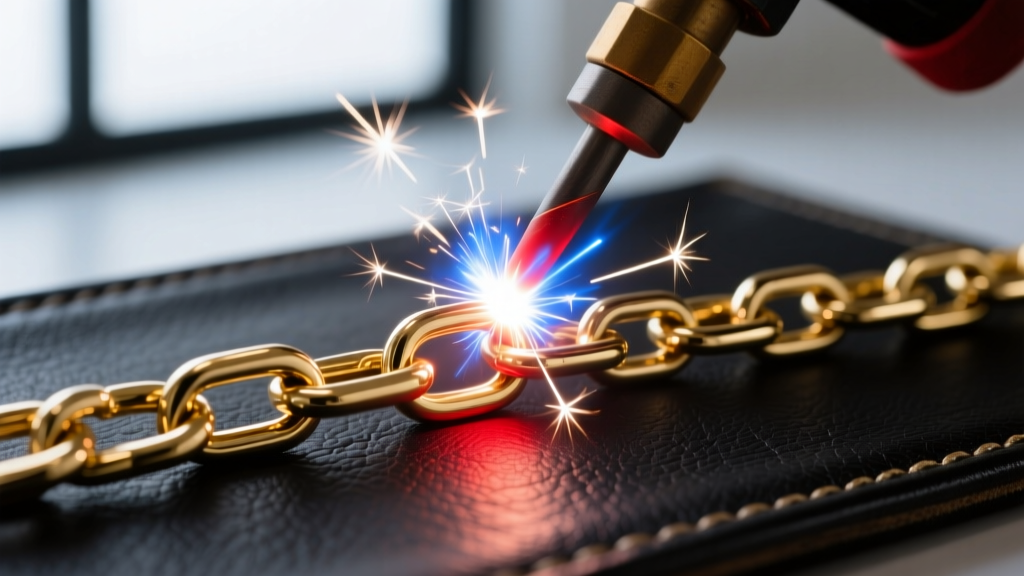
If you have scrolled through social media or walked past a boutique jewelry studio recently, you have likely seen the flash of a micro-welder and wondered: how does permanent jewelry work? Unlike traditional bracelets or necklaces that rely on mechanical clasps, permanent jewelry is custom-fitted to the wearer and welded shut, creating a seamless loop that is meant to be worn continuously. While the concept feels like modern magic, the reality is rooted in precise metallurgy and specialized electrical engineering.
For DIY jewelry makers and aspiring entrepreneurs, understanding the mechanics behind this trend is crucial. You cannot simply use a standard jewelry soldering torch; the heat would destroy delicate chain links and burn the client. Instead, the industry relies on pulse arc welding. In this comprehensive guide, we will break down the exact technology, material science, and step-by-step methodology required to master permanent jewelry welding.
The Core Technology: Pulse Arc Welding Explained
To truly understand how does permanent jewelry work, you must understand the tool that makes it possible: the pulse arc welder. Brands like PepeTools and Orion manufacture specialized welders designed specifically for delicate jewelry applications. These machines do not use filler metal or solder. Instead, they use a high-frequency, low-voltage electrical current to create a microscopic arc of plasma between a tungsten electrode and the metal chain.
The Role of Argon Gas in Oxidation Prevention
When metal is exposed to extreme heat in the presence of oxygen, it oxidizes, turning black and brittle. To prevent this, pulse arc welders are hooked up to a tank of pure Argon gas. The argon flows through the welding handpiece at a rate of roughly 3 to 5 CFH (Cubic Feet per Hour), creating an inert shield around the weld zone. This ensures the metal fuses cleanly, retaining its original color and structural integrity without the need for post-weld pickling or polishing.
Why TIG and Laser Welders Fall Short
Beginners often ask if they can use a standard TIG welder or a laser welder. Standard TIG welders operate at amperages far too high for chains measuring under 2mm in width; they will instantly vaporize the links. Laser welders, while precise, are prohibitively expensive for most startups (often exceeding $15,000) and require strict safety enclosures. Pulse arc welders, which typically cost between $1,200 and $2,500, offer the perfect balance of precision, portability, and affordability for permanent jewelry applications.
Step-by-Step: How Does Permanent Jewelry Work in Practice?
Executing a perfect weld requires a meticulous workflow. Here is the professional step-by-step process used by master jewelers:
- Custom Sizing: Wrap the chain around the client's wrist or ankle. Add 0.5 to 1 inch of slack for comfort, ensuring it slides easily over the hand or foot.
- Flush Cutting: Use high-precision flush cutters to snip the chain. A flush cut ensures the end links sit perfectly flat against the jump ring, which is critical for a strong weld.
- Jump Ring Selection: Select a jump ring that matches the chain's metal and wire gauge. For most delicate chains, a 20-gauge or 22-gauge jump ring with an outer diameter of 2.5mm to 3.0mm is ideal.
- Alignment: Thread the jump ring through both end links. Using ceramic-tipped tweezers, pinch the jump ring closed. Never use steel tweezers during the weld, as the electricity will arc to the steel, ruining your tool and the chain.
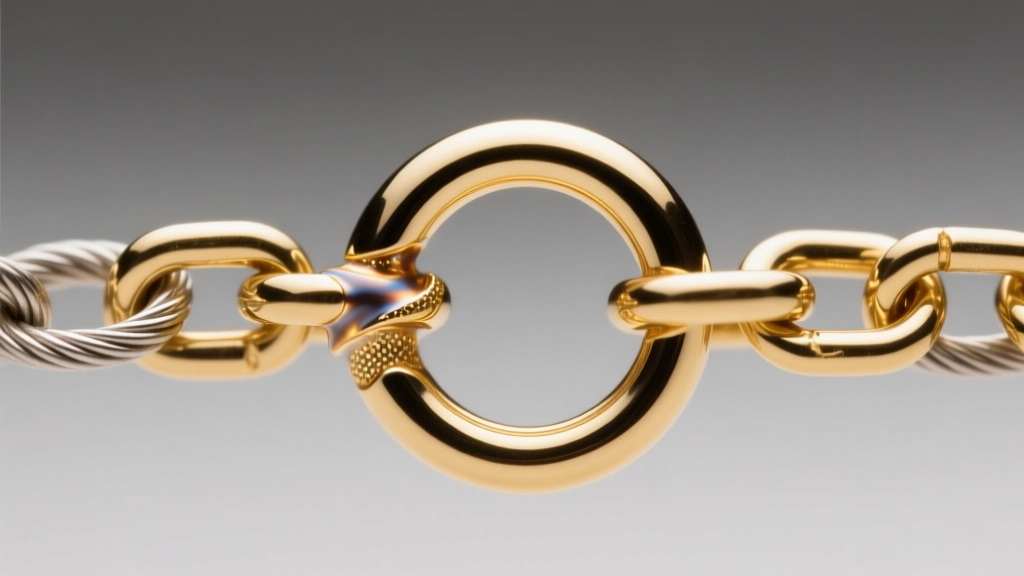
- The Weld: Position the tungsten electrode approximately 1mm above the seam of the jump ring. Press the foot pedal to release the argon gas and trigger the spark. The metal will instantly fuse.
Material Science: Choosing the Right Chain and Jump Rings
The success of your weld depends heavily on the metallurgical composition of your supplies. According to metal suppliers like Stuller, the karat and alloy mix dictate how the metal reacts to the electrical arc. Below is a breakdown of common permanent jewelry materials and their welding characteristics.
| Material | Typical Wire Gauge | Weld Energy (WS) | Welding Characteristics |
|---|---|---|---|
| 14k Solid Gold | 0.25mm - 0.35mm | 15 - 25 WS | Excellent. Fuses smoothly with minimal spatter. High success rate. |
| 14k Gold Filled | 0.30mm - 0.40mm | 12 - 20 WS | Good. Requires lower energy to avoid burning through the brass core. |
| Sterling Silver | 0.35mm - 0.50mm | 20 - 30 WS | Moderate. Silver is highly thermally conductive and may require a second pulse. |
| Brass / Base Metals | Varies | N/A | Poor. Zinc vaporizes under the arc, causing severe pitting and weak joints. |
The 14k Gold Filled vs. Solid Gold Debate
While 14k solid gold is the premium standard, 14k gold filled (GF) is incredibly popular for its accessible price point. However, gold filled chains consist of a brass core bonded to a thick outer layer of gold. If your pulse arc welder's energy setting (measured in Watt-Seconds, or WS) is too high, you will burn through the gold layer and melt the brass core, resulting in a dark, brittle weld. Always test your GF scrap pieces first, starting at a low energy setting (around 12 WS) and increasing incrementally.
Safety Protocols and Troubleshooting Common Welds
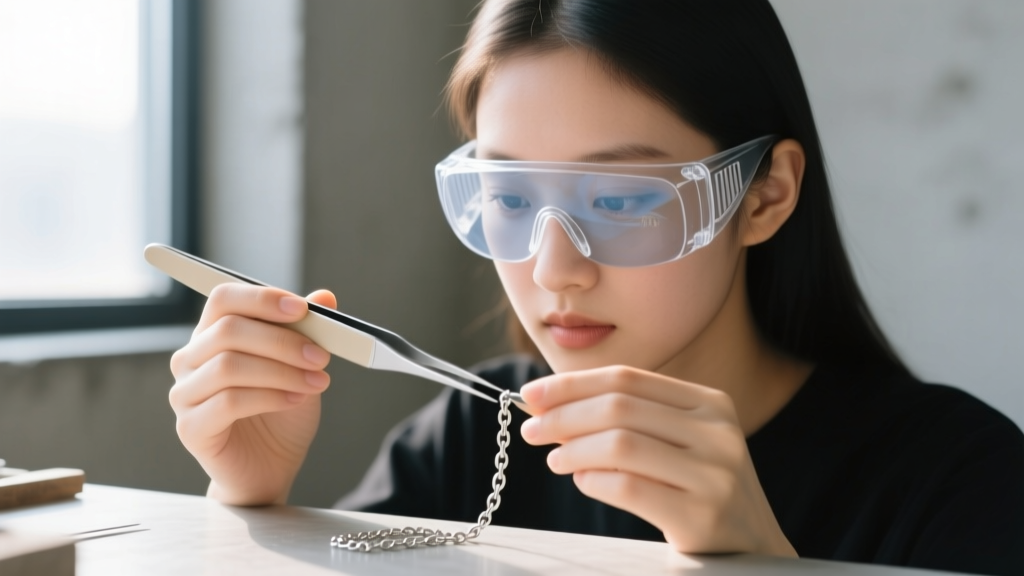
Working with electricity, pressurized gas, and microscopic molten metal requires strict adherence to safety protocols. The Gemological Institute of America (GIA) emphasizes the importance of proper eye protection in all jewelry fabrication. You must wear auto-darkening welding glasses specifically rated for pulse arc welding (typically Shade 8 to 11) to protect your retinas from the intense UV flash.
Expert Troubleshooting Tip: If your weld looks like a tiny crater (pitting), your metal is likely dirty, or your argon gas flow is too low. Oxygen is sneaking into the weld pool. Clean the jump ring with a fiberglass scratch brush before welding, and verify your argon tank is not empty.
Common Failure Modes and Solutions
- Weak or Brittle Welds: Usually caused by a gap between the jump ring ends. The arc cannot bridge a gap wider than 0.2mm without creating a porous, weak joint. Ensure your flush cuts are perfectly flat.
- Burning Through the Chain: Your Watt-Second (WS) setting is too high. Dial the energy back by 5 WS and pulse again.
- Spark Hitting the Tweezers: You are using conductive metal tweezers, or your finger is touching the bare metal of the chain while grounding. Switch to ceramic-tipped tweezers and hold the chain by the outer insulation or leather pad.
Conclusion: Starting Your Permanent Jewelry Journey
Understanding how does permanent jewelry work is the first step toward mastering this highly lucrative and creative craft. By investing in a quality pulse arc welder, sourcing high-karat materials, and respecting the metallurgical properties of your chains, you can create seamless, durable pieces that clients will cherish for years. Practice on scrap chains, master your energy settings, and always prioritize safety. With patience and precision, you will be welding flawless permanent bracelets in no time.