UV Resin Jewelry Making Trends 2026: Styles & Techniques
Discover 2026 UV resin jewelry making trends. Explore trending aesthetics, advanced layering techniques, and top non-yellowing resin brands for DIYers.

The Evolution of UV Resin in DIY Jewelry
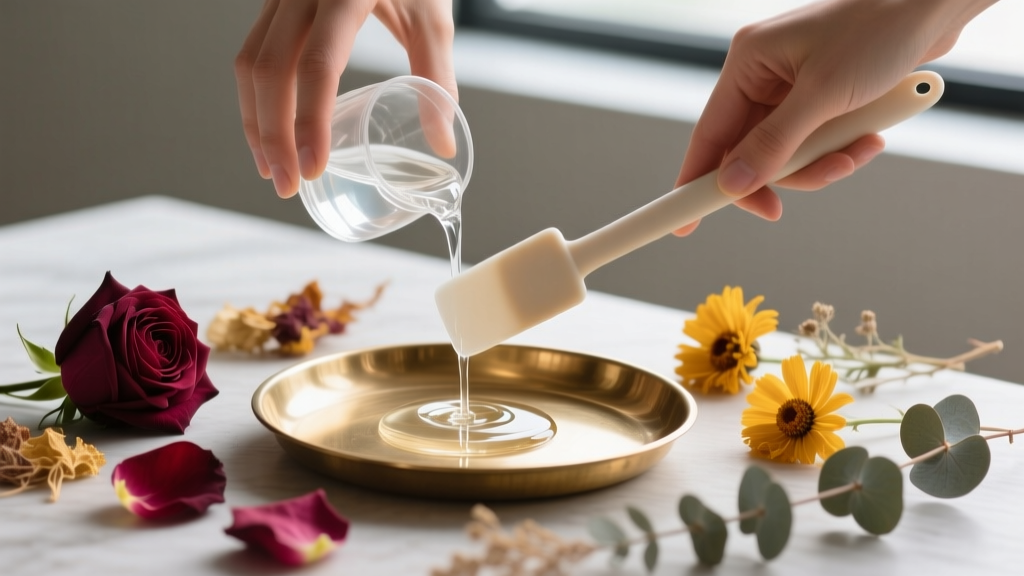
Over the past few years, the landscape of DIY jewelry fabrication has shifted dramatically. While traditional two-part epoxy resins were once the undisputed kings of the craft, uv resin jewelry making has surged to the forefront of the industry by 2026. The appeal is undeniable: zero mixing ratios, instant curing times, and the ability to build complex, multi-layered dimensional pieces in a single afternoon. However, as the medium has matured, so have the expectations of both artisans and consumers. Today's market demands water-clear clarity, advanced aesthetic techniques, and long-term durability. This guide breaks down the defining style trends and technical innovations shaping UV resin jewelry this year.
2026 Aesthetic Trends: What's Selling & Wearing
The days of simply suspending glitter in a silicone mold are long gone. Contemporary UV resin jewelry is defined by precision, optical illusions, and mixed-media integration. Here are the three dominant aesthetics driving the market right now.
Hyper-Realism & Botanical Encapsulation
Botanical jewelry remains a staple, but the 2026 approach is rooted in optical physics. The refractive index (RI) of standard UV resin sits around 1.50 to 1.52, while dried plant matter typically rests at 1.33. When raw dried flowers are submerged, the resin fills microscopic air pockets, causing petals to appear dark, translucent, or artificially 'wet.' To combat this, top-tier artisans now pre-seal botanicals with a micro-thin layer of PVA (polyvinyl acetate) sealant or a specialized aerosol fixative. This preserves the flower's natural opacity and vibrant color profile before encapsulation, resulting in hyper-realistic, museum-quality pendants.
Glassmorphism and Frosted Finishes
Borrowing from digital UI design, 'glassmorphism' has entered the physical jewelry space. This trend features translucent, frosted resin pieces that mimic etched glass or sea glass. Artisans achieve this not by sanding, but by integrating ultra-fine silica matting powders (at a 0.5% to 1% ratio by weight) directly into the UV resin before curing. The result is a soft, diffused light transmission that pairs beautifully with minimalist sterling silver and titanium wire-wrapping frameworks.
Dichroic & Holographic Inclusions
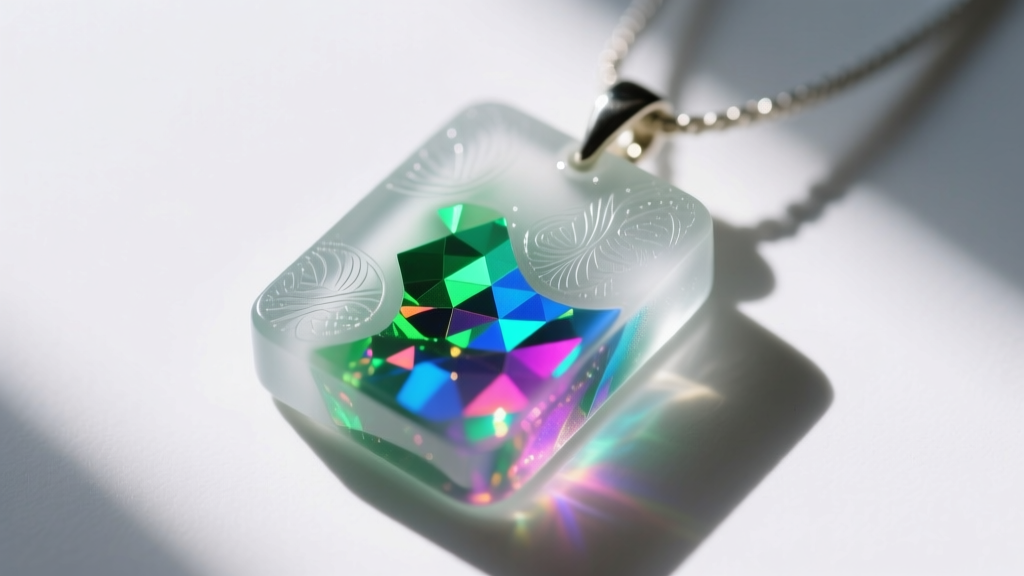
Dichroic glass is expensive and difficult to cut, but PET dichroic films offer a lightweight, shatterproof alternative. By embedding precision-cut geometric shards of dichroic film between layers of hard-clear UV resin, makers are creating pieces that shift color dramatically depending on the angle of ambient light. The key to this trend is layering: a base layer of opaque black or dark blue resin is cured first, which acts as a backdrop to amplify the holographic reflections of the dichroic inclusions suspended in the clear topcoat.
Technical Deep Dive: Choosing the Right UV Resin
Not all UV resins are created equal. The chemical formulations vary wildly between brands, impacting everything from bubble release to long-term UV stability. According to material testing discussed on Ganoksin, selecting the right viscosity and hardness is critical for your specific jewelry application. Below is a comparison of the top-tier resins dominating the 2026 market.
| Brand / Formula | Viscosity | Cure Time (36W LED) | Yellowing Resistance | Best Application |
|---|---|---|---|---|
| Padico UV-LED Resin (Hard) | Medium-High | 2-4 Minutes | Exceptional (HATS/UVA Blend) | Bezel trays, dome tops, structural rings |
| Let's Resin Fast Cure | Low (Water-like) | 60-90 Seconds | Very Good | Intricate silicone molds, bubble-heavy inclusions |
| Limino Premium Clear | Medium | 3-5 Minutes | Excellent | Layered botanical encapsulation, thick pours |
| JDRESIN Crystal UV | High (Syrup-like) | 4-6 Minutes | Moderate | High-dome cabochons, edge-beading |
For those sourcing materials, platforms like Fire Mountain Gems and specialized suppliers like Let's Resin offer detailed safety data sheets (SDS) that outline the exact photoinitiators used in these formulas, allowing advanced makers to make informed chemical choices.
Hardware & Curing: Wavelengths and Wattages
The most common point of failure in uv resin jewelry making is improper curing hardware. While cheap 9-watt mini flashlights were popular a decade ago, they lack the photon density to cure depths beyond 1mm, leading to internal wrinkling, thermal boiling, and structural weakness.
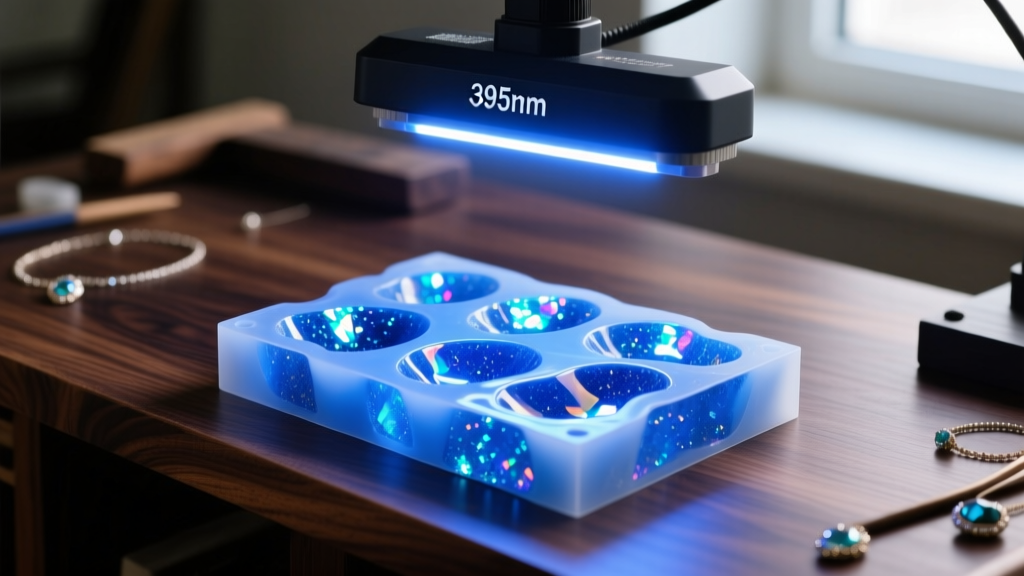
The 2026 standard is a 36W to 48W multi-directional UV/LED lamp. Furthermore, wavelength specificity is paramount. Most consumer lamps emit at 395nm. While effective and affordable, 395nm can sometimes leave a faint violet hue in ultra-clear, thick pieces. Upgrading to a 365nm lab-grade UV lamp provides a tighter wavelength spectrum, yielding a more water-clear finish and reducing the risk of thermal shock. When pouring, always adhere to the 3mm rule: never pour layers thicker than 3mm to 4mm at a time. Thicker pours trap the exothermic heat generated during polymerization, which can scorch embedded botanicals or warp silicone molds.
Conquering the Oxygen Inhibition Layer
When UV resin cures, the surface exposed to ambient air often remains slightly tacky. This phenomenon, known as oxygen inhibition, occurs because atmospheric oxygen interferes with the free-radical polymerization process at the resin's boundary layer. Professional DIYers bypass this by employing two methods: wiping the cured surface with 99% isopropyl alcohol (IPA) to remove the uncured monomer layer, or pressing a flexible silicone mat directly onto the resin for the final 60 seconds of curing to physically block oxygen. The silicone mat method is preferred for high-gloss finishes, as it leaves a perfectly smooth, glass-like surface without the need for sanding or polishing.
Overcoming the Yellowing Factor
The historical Achilles' heel of UV resin is photo-oxidation—the tendency to turn yellow when exposed to prolonged sunlight. In 2026, premium resin manufacturers have mitigated this by incorporating HALS (Hindered Amine Light Stabilizers) and UVAs (Ultraviolet Absorbers) directly into the monomer blend. HALS work by scavenging the free radicals generated by UV exposure before they can form chromophores (color-causing molecules). However, no UV resin is 100% immune to the sun forever. To maximize the lifespan of your jewelry, store finished pieces in UV-blocking velvet pouches and advise customers to avoid leaving their resin jewelry on sun-baked car dashboards. For pieces destined for high-sun environments, consider applying a final topcoat of UV-blocking polyurethane spray designed for archival art conservation.
Final Thoughts on the 2026 Market
The barrier to entry for uv resin jewelry making is low, but the ceiling for mastery is incredibly high. By understanding the underlying chemistry of photoinitiators, respecting the physics of refractive indexes, and investing in proper 365nm curing hardware, DIY artisans can produce boutique-quality jewelry that rivals traditional glass and gemstone work. As we move through 2026, the makers who will dominate the market are those who treat UV resin not just as a craft supply, but as a sophisticated optical medium.


