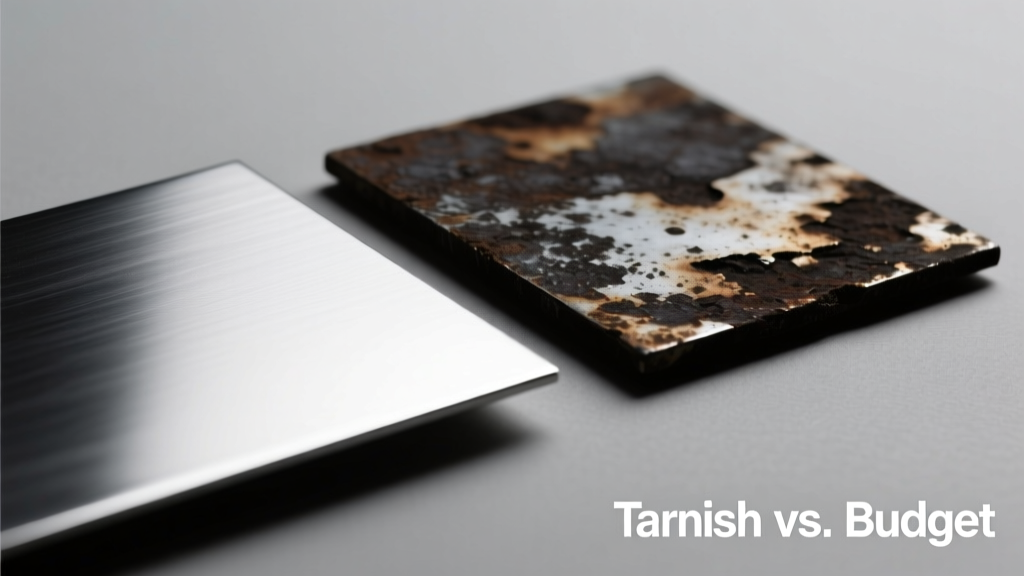
Wanderful Permanent Jewelry: Expert Welding & Chain Guide
Master the technical art of wanderful permanent jewelry. Explore pulse arc welding parameters, travel-grade metals, and high-tensile chain specs.

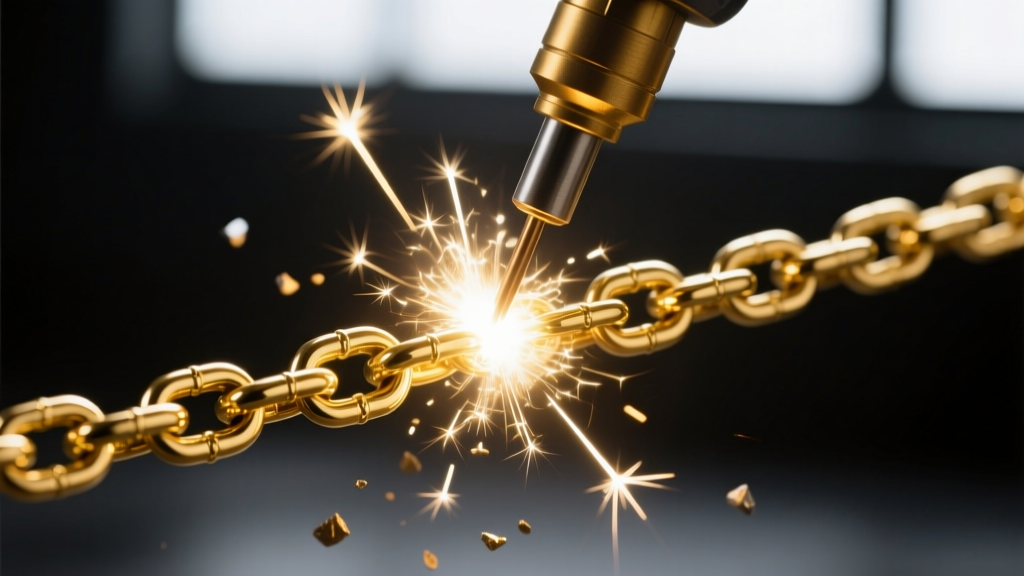
The Engineering Behind Wanderful Permanent Jewelry
The concept of wanderful permanent jewelry represents a highly specialized evolution within the welded jewelry niche. While standard permanent jewelry focuses on everyday wear, the 'wanderful' aesthetic and functional requirement demand pieces engineered for rigorous travel, outdoor exploration, and exposure to harsh environments like saltwater, high humidity, and extreme temperature fluctuations. As of 2026, the market has shifted away from delicate, easily snapped chains toward high-tensile, travel-ready architectures that maintain the seamless 'permanent' illusion while surviving the physical demands of a globetrotting lifestyle.
Creating jewelry that survives a trek through the Andes or a month of island-hopping in Southeast Asia requires a deep understanding of metallurgy, tensile strength, and micro-welding physics. This guide provides an expert-level deep dive into the materials, chain geometries, and pulse arc welding parameters required to fabricate permanent jewelry that refuses to fail.
Metallurgy: Selecting Travel-Grade Alloys
When designing wanderful permanent jewelry, the choice of metal dictates the lifespan of the piece. Many beginners default to 18k gold for its rich color, but this is a critical failure point for active travelers. 18k gold (75% pure gold) is relatively soft and prone to micro-abrasions and link deformation when subjected to the friction of hiking gear or heavy backpacks.
The 14k Gold Advantage
For high-mobility clients, 14k solid gold (58.5% pure gold alloyed with copper, silver, and zinc) is the superior choice. The higher alloy content increases the tensile strength and yield point of the wire, making the chain links significantly more resistant to pulling apart. According to Rio Grande's metallurgical specifications, 14k yellow gold offers an optimal balance of corrosion resistance and structural rigidity, making it ideal for welded jump rings and chain links that will endure physical stress.
ASTM F136 Titanium for Ocean Travelers
For clients who spend extensive time in saltwater, even solid gold can suffer from surface dulling over time. The ultimate wanderful material is ASTM F136 Grade 23 Titanium (Ti 6Al-4V ELI). This medical-grade alloy is entirely impervious to saltwater corrosion, hypoallergenic, and boasts a strength-to-weight ratio that outperforms steel. Welding titanium, however, requires strict argon gas shielding to prevent atmospheric contamination, which we will cover in the welding parameters section.
Chain Architecture & Tensile Strength
The geometry of the chain link determines how force is distributed across the weld. A poorly chosen chain style will snap at the weld point under minimal torque. Below is a technical comparison of chain types suited for wanderful permanent jewelry.
| Chain Style | Optimal Gauge | Tensile Profile | Weldability & Travel Use Case |
|---|---|---|---|
| Cable (Standard) | 1.1mm - 1.3mm | Moderate (Linear stress) | Excellent. Best for lightweight charm integration and low-impact travel. |
| Rolo | 1.2mm - 1.5mm | High (Distributed stress) | Superior. Flat inner surfaces allow for flush, high-surface-area pulse arc welds. |
| Box | 1.0mm - 1.4mm | Very High (Multi-axis) | Difficult. Requires precise angle alignment; best for heavy-duty, charm-free bracelets. |
| Mariner | 1.5mm+ | Extreme (Reinforced center) | Advanced. The center bar distributes torque, making it nearly snap-proof for rugged hikes. |

Pulse Arc Welding Parameters for Durability
The permanence of the jewelry relies entirely on the integrity of the weld. Pulse arc welding uses a capacitor discharge to create a localized micro-plasma arc, melting the metal in milliseconds without transferring heat to the surrounding links. To achieve a structural weld capable of withstanding travel rigors, precise machine calibration is required. Modern units like the Sunstone Orion series allow for exact energy manipulation.
Energy and Voltage Settings
For a standard 1.2mm 14k gold rolo chain, the optimal energy setting typically falls between 15 and 22 watts (or joules, depending on the machine's readout). Setting the voltage too high results in 'spitting' and porosity—tiny microscopic voids inside the weld that act as structural weak points. Setting it too low results in a cold weld, where the metal merely sticks together on the surface but lacks crystalline fusion, leading to immediate failure under tension.
The Critical Role of Argon Gas
Argon gas shielding is non-negotiable for wanderful permanent jewelry. The gas displaces oxygen at the weld site, preventing oxidation. If your argon flow rate is too low (below 1.5 PSI), the weld will draw in atmospheric oxygen, resulting in a brittle, dark soot ring around the joint. This oxidation severely compromises the ductility of the gold or titanium. Maintain a steady flow of 99.99% pure argon at 1.5 to 2.5 PSI, utilizing a dual-nozzle setup to ensure the gas envelopes the chain link from both the top and the underside during the capacitor discharge.
Electrode Maintenance
A pitted tungsten electrode will scatter the arc, leading to asymmetrical welds. Grind your electrode to a precise 45-degree angle using a diamond lap, and inspect it under a loupe after every 10-15 welds. If the tip shows any blue discoloration or pitting, snip it with dedicated tungsten cutters and re-grind immediately.
Engineering the Safety Breakaway
A common misconception in permanent jewelry is that the chain must be unbreakable under all circumstances. In a travel context, an unbreakable chain is a severe safety hazard. If a bracelet snags on a rock face or a piece of heavy luggage, an unbreakable chain can cause degloving injuries or severe lacerations.
Expert jewelers engineer an intentional 'breakaway' point into wanderful designs. This is achieved by incorporating a single, slightly thinner jump ring (e.g., using 20-gauge wire for the jump ring while the chain is 18-gauge) or by selecting a chain style with a known yield point just below the threshold of human skin tearing (approximately 15-20 lbs of tensile force). The weld itself should be stronger than the base metal of the breakaway link, ensuring that if a catastrophic snag occurs, the metal stretches and pops open at the designated weak point rather than cutting into the wearer's skin.
Integrating Wanderlust Charms Without Compromising Integrity
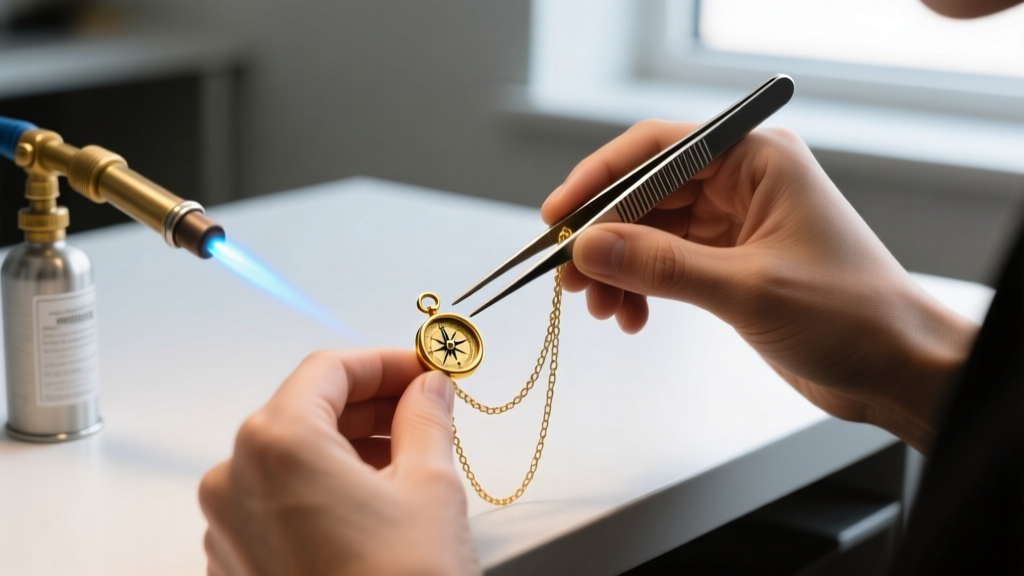
Wanderful permanent jewelry frequently incorporates thematic charms—compasses, coordinates, or topographical map pendants. The challenge lies in welding these charms to the chain without melting their delicate details or compromising the structural link.
The Jump Ring Bridge Technique
Never weld a charm directly to a continuous chain link, as the mass differential will cause the smaller charm to absorb the heat and melt before the chain link fuses. Instead, use a 'bridge' jump ring. Thread the jump ring through both the chain link and the charm loop. Align the jump ring seam perfectly under the microscope. Because the jump ring is a uniform gauge of wire, the pulse arc welder can fuse it cleanly with a standard 18-watt burst. The charm remains thermally isolated from the direct arc, preserving its intricate stamping or enamel work.
Post-Weld Finishing for Corrosion Resistance
After the weld is complete, the joint must be smoothed and passivated. For titanium pieces, use a specialized titanium pickling solution to remove any microscopic heat tint, followed by a light polish with a rouge wheel. For gold, a quick dip in a mild ultrasonic cleaner removes any residual argon soot or handling oils, ensuring the piece is completely sealed and ready to face the elements. By adhering to these strict metallurgical and welding protocols, you elevate permanent jewelry from a fleeting fashion trend into a reliable, lifelong travel companion.