Restore Your Black Ballerina Jewelry Box: Care & Cleaning Guide
Learn how to properly clean, maintain, and restore your black ballerina jewelry box. Expert tips for velvet interiors and mechanisms.

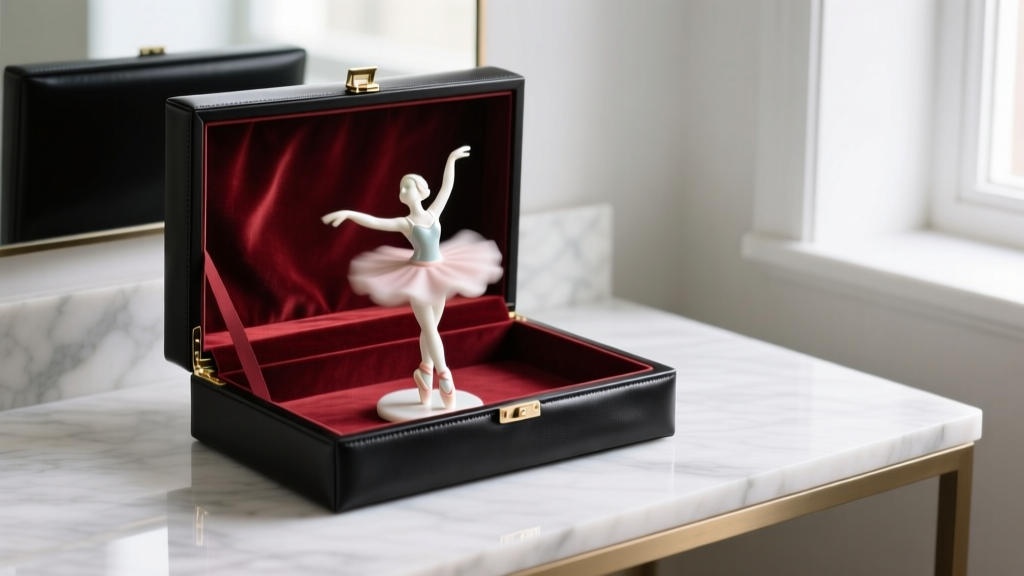
The Anatomy of a Ballerina Box: What Needs Special Care?
A black ballerina jewelry box is more than just a storage vessel; it is a complex assembly of horological mechanics, delicate textiles, and specialized exterior finishes. Whether you have inherited a vintage 1970s Sankyo movement box or purchased a modern artisan-crafted piece, maintaining its pristine condition requires a targeted approach. The stark black exterior—often crafted from polyurethane (PU) leather, lacquered wood, or painted resin—shows dust, fingerprints, and micro-scratches far more easily than lighter tones. Meanwhile, the internal 18-note or 36-note mechanical movement demands precise horological care to prevent gear stripping and mainspring fatigue.
In this comprehensive guide, we break down the exact cleaning protocols, lubrication schedules, and material-specific maintenance routines required to keep your black ballerina jewelry box functioning flawlessly and looking immaculate for decades.
Exterior Maintenance: Cleaning Black Leather, Wood, and Resin
The exterior shell of your box dictates its visual impact. Black finishes are notoriously unforgiving when exposed to harsh chemical cleaners, which can strip dyes, cloud lacquers, or cause synthetic leathers to peel.
Faux Leather and Polyurethane (PU) Shells
Most contemporary ballerina boxes utilize a PU leather wrap over a compressed wood or MDF core. Polyurethane is highly susceptible to hydrolysis (breakdown from moisture) and alcohol-based solvents. To clean a black PU exterior:
- Dust Removal: Use a static-charged microfiber cloth. Avoid feather dusters, which can snag on microscopic peeling edges.
- Deep Cleaning: Mix a solution of distilled water and a single drop of pH-neutral baby shampoo. Dampen a microfiber cloth—never spray directly onto the box—and wipe in gentle, circular motions.
- Conditioning: Traditional animal-based leather conditioners (like mink oil) will rot PU leather. Instead, apply a water-based synthetic leather protectant every six months to maintain the black pigment and prevent cracking.
Lacquered Wood and Painted Resin
For vintage or high-end boxes featuring a black piano-lacquer finish or cast resin, the goal is to enhance the gloss without introducing swirl marks. Use a high-grade carnauba paste wax applied with a foam applicator pad. Allow it to haze for five minutes, then buff with a clean, 300-GSM microfiber towel. Avoid silicone-based polishes, which build up over time and attract dust to the dark surface.

Preserving the Music Box Mechanism and Gear Train
The soul of a ballerina jewelry box is its mechanical movement, typically manufactured by heritage brands like Reuge, Sankyo, or Yunsheng. These wind-up mechanisms feature a mainspring barrel, a gear train, a pinned brass cylinder, and a centrifugal governor (the fan that regulates tempo). According to the Music Box Society International, improper lubrication and overwinding are the primary causes of catastrophic movement failure.
The Golden Rules of Winding
Never force the winding key. A standard 18-note movement requires only three to five half-turns to reach full tension. When you feel a distinct increase in mechanical resistance, stop immediately. Forcing the key past this point will snap the mainspring or strip the ratchet gear teeth, requiring a complete movement replacement.
Lubrication Protocol: What to Use and What to Avoid
The most common mistake owners make is applying WD-40 or standard household oils to a squeaking mechanism. These products contain solvents that degrade the factory-applied greases and eventually turn into a sticky varnish that seizes the gears. If the mechanism sounds dry or the governor fan spins too rapidly (causing the music to play out of tune), the pivots require synthetic clock oil.
- Recommended Lubricant: Moebius 8000 or a similar high-grade synthetic horological oil.
- Application: Using a fine oiler pin, apply a microscopic drop only to the pivot points where the brass arbors meet the steel plates. Never oil the gear teeth or the pinned cylinder, as oil here will attract dust and deaden the sound of the steel tines.
| Mechanism Issue | Root Cause | Expert Solution |
|---|---|---|
| Music plays too fast / distorted | Governor fan friction or dried grease | Clean fan pivot with naphtha; apply synthetic clock oil |
| Key will not turn at all | Broken mainspring or stripped ratchet | Stop winding; replace the entire mechanical movement |
| Grinding noise during playback | Dust in the gear train or bent tines | Use compressed air to clear debris; consult a horologist |
| Music stops halfway through | Insufficient winding or sticky barrel | Wind fully; if issue persists, clean mainspring barrel |
Interior Care: Refreshing Velvet Linings and Mirrors
The interior of a black ballerina jewelry box is typically lined with plush velvet, felt, or suede, paired with an angled glass or acrylic mirror. These materials require vastly different cleaning methodologies to avoid permanent water spots, matting, or chemical damage.
Velvet and Felt Lining Revival
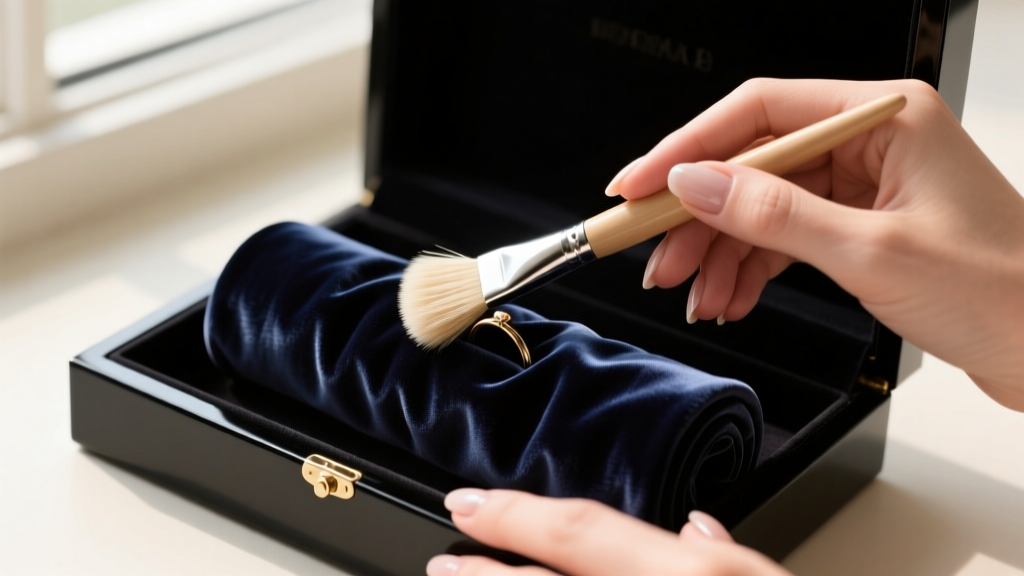
Velvet is highly prone to crushing, dust accumulation, and absorbing ambient humidity, which can transfer to your stored metals. To restore the nap (the raised fibers) of crushed velvet ring rolls and necklace cushions:
- Dry Agitation: Use a clean, soft-bristled horsehair detailing brush. Gently brush the velvet in one direction to lift embedded dust and restore the fabric's texture.
- Lint Removal: Pass a high-tack lint roller over flat velvet surfaces. Avoid using tape directly on the fabric, as the adhesive residue will attract more dirt over time.
- Spot Cleaning: If a stain occurs, do not use water. Use a specialized dry-cleaning upholstery foam. Apply the foam to a cotton swab, dab the stain gently, and let it dry completely before closing the box to prevent mildew.
Streak-Free Mirror Polishing
The interior mirror is essential for trying on earrings and necklaces, but it is highly vulnerable to chemical damage. Never use ammonia-based glass cleaners (like Windex) on a jewelry box mirror. Ammonia will seep into the edges and destroy the silvering backing, causing the dreaded 'black edge' rot. Instead, mix a 50/50 solution of distilled water and white vinegar. Spray it lightly onto a microfiber cloth—not the mirror—and wipe in a Z-pattern. For acrylic mirrors found in budget-friendly boxes, use only a dedicated plastic polish to prevent micro-scratching.
Anti-Tarnish Upgrades for Vintage Compartments
While the black exterior hides dust, the interior environment can silently destroy your silver and copper jewelry. Traditional velvet and the adhesives used to bind it often emit sulfur-bearing gases that accelerate tarnishing. To transform your ballerina box into a true preservation vault, integrate modern anti-tarnish technology without altering the vintage aesthetic.
- Intercept Copper Strips: Cut 3M Anti-Tarnish strips (which utilize a copper-infused polyethylene that absorbs corrosive gases) and discreetly slide them beneath the velvet cushions or tape them to the underside of the lid.
- Pacific Silvercloth: For larger compartments, line the bottom with Pacific Silvercloth. This specialized cotton fabric is embedded with microscopic silver particles that tarnish themselves, sacrificing their surface to protect your jewelry.
- Silica Gel Packs: Humidity is the catalyst for tarnish. Place two color-indicating silica gel packets in the deepest compartment of the box. When the beads turn from orange to green, recharge them in a 250°F oven for two hours.
Summary Checklist for Bi-Annual Maintenance
To ensure your black ballerina jewelry box remains a functional heirloom, the Smithsonian Institution's conservation guidelines suggest a bi-annual maintenance schedule. Follow this checklist every six months:
- [ ] Wipe down the black exterior with a damp microfiber cloth and pH-neutral cleaner.
- [ ] Inspect the hinges and brass clasps; apply a microscopic drop of sewing machine oil to the hinge pins if they squeak.
- [ ] Brush the velvet interior with a horsehair brush and run a lint roller over flat surfaces.
- [ ] Clean the interior mirror with a distilled water and vinegar solution.
- [ ] Wind the music box mechanism exactly three half-turns and let it play completely down to keep the mainspring supple.
- [ ] Replace or recharge silica gel packets and anti-tarnish strips.
By treating your black ballerina jewelry box as both a delicate textile archive and a precision mechanical instrument, you preserve not just the physical object, but the nostalgia and artistry it represents.


